Question: Mail - Latania S x (39 unread) - Ith BUS 5211-01 orum/discuss.php?d=1128888 Construction Le Loan Application X Statutory Declar X + courses Resources ~ Links
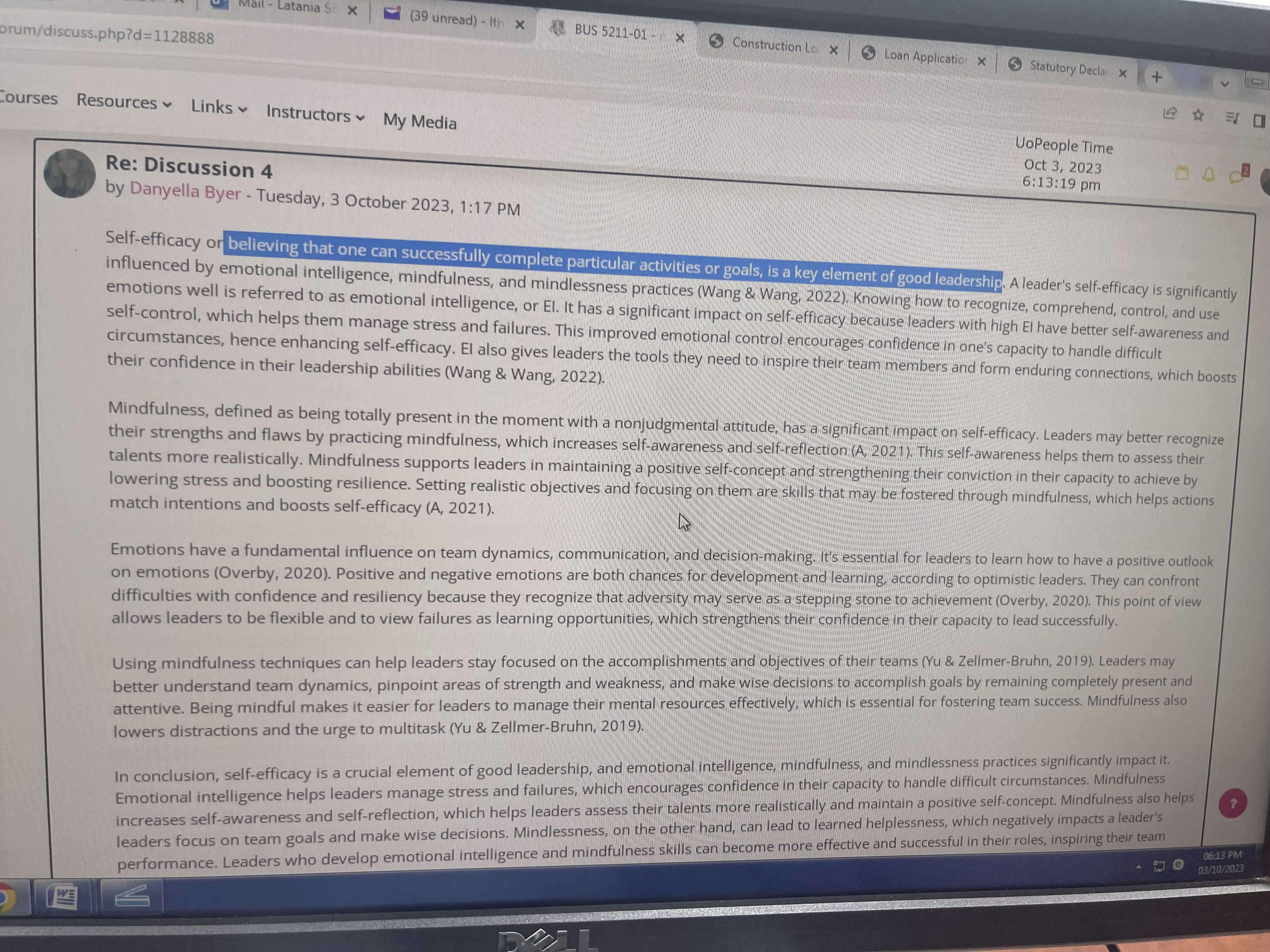
Mail - Latania S x (39 unread) - Ith BUS 5211-01 orum/discuss.php?d=1128888 Construction Le Loan Application X Statutory Declar X + courses Resources ~ Links ~ Instructors ~ My Media UoPeople Time Oct 3, 2023 Re: Discussion 4 6:13:19 pm by Danyella Byer - Tuesday, 3 October 2023, 1:17 PM Self-efficacy or believing that one can successfully complete particular activities or goals, is a key element of good leadership. A leader's self-efficacy is significantly influenced by emotional intelligence, mindfulness, and mindlessness practices (Wang & Wang, 2022). Knowing how to recognize, comprehend, control, and use emotions well is referred to as emotional intelligence, or El. It has a significant impact on self-efficacy because leaders with high El have better self-awareness and self-control, which helps them manage stress and failures. This improved emotional control encourages confidence in one's capacity to handle difficult circumstances, hence enhancing self-efficacy. El also gives leaders the tools they need to inspire their team members and form enduring connections, which boosts their confidence in their leadership abilities (Wang & Wang, 2022). Mindfulness, defined as being totally present in the moment with a nonjudgmental attitude, has a significant impact on self-efficacy. Leaders may better recognize their strengths and flaws by practicing mindfulness, which increases self-awareness and self-reflection (A, 2021). This self-awareness helps them to assess their talents more realistically. Mindfulness supports leaders in maintaining a positive self-concept and strengthening their conviction in their capacity to achieve by lowering stress and boosting resilience. Setting realistic objectives and focusing on them are skills that may be fostered through mindfulness, which helps actions match intentions and boosts self-efficacy (A, 2021). Emotions have a fundamental influence on team dynamics, communication, and decision-making. It's essential for leaders to learn how to have a positive outlook on emotions (Overby, 2020). Positive and negative emotions are both chances for development and learning, according to optimistic leaders. They can confront difficulties with confidence and resiliency because they recognize that adversity may serve as a stepping stone to achievement (Overby, 2020). This point of view allows leaders to be flexible and to view failures as learning opportunities, which strengthens their confidence in their capacity to lead successfully. Using mindfulness techniques can help leaders stay focused on the accomplishments and objectives of their teams (Yu & Zellmer-Bruhn, 2019). Leaders may better understand team dynamics, pinpoint areas of strength and weakness, and make wise decisions to accomplish goals by remaining completely present and attentive. Being mindful makes it easier for leaders to manage their mental resources effectively, which is essential for fostering team success. Mindfulness also lowers distractions and the urge to multitask (Yu & Zellmer-Bruhn, 2019). In conclusion, self-efficacy is a crucial element of good leadership, and emotional intelligence, mindfulness, and mindlessness practices significantly impact it. Emotional intelligence helps leaders manage stress and failures, which encourages confidence in their capacity to handle difficult circumstances. Mindfulness increases self-awareness and self-reflection, which helps leaders assess their talents more realistically and maintain a positive self-concept. Mindfulness also helps leaders focus on team goals and make wise decisions. Mindlessness, on the other hand, can lead to learned helplessness, which negatively impacts a leader's 06:13 PM performance. Leaders who develop emotional intelligence and mindfulness skills can become more effective and successful in their roles, inspiring their team 03/10/2023 WE
Step by Step Solution
There are 3 Steps involved in it
1 Expert Approved Answer
Step: 1 Unlock
Question Has Been Solved by an Expert!
Get step-by-step solutions from verified subject matter experts
Step: 2 Unlock
Step: 3 Unlock
Students Have Also Explored These Related General Management Questions!