Question: Make a Recommended Solution, Implementation, and Justification based on how you will address the problems and causes of the problems you identified in the case
Make a Recommended Solution, Implementation, and Justification based on how you will address the problems and causes of the problems you identified in the case (Identify who, what, when, where, and how in your recommended plan of action). Refer to the case provided.
Please answer properly and correctly. I will surely give a positive rate and leave good feedback. Thank you :)
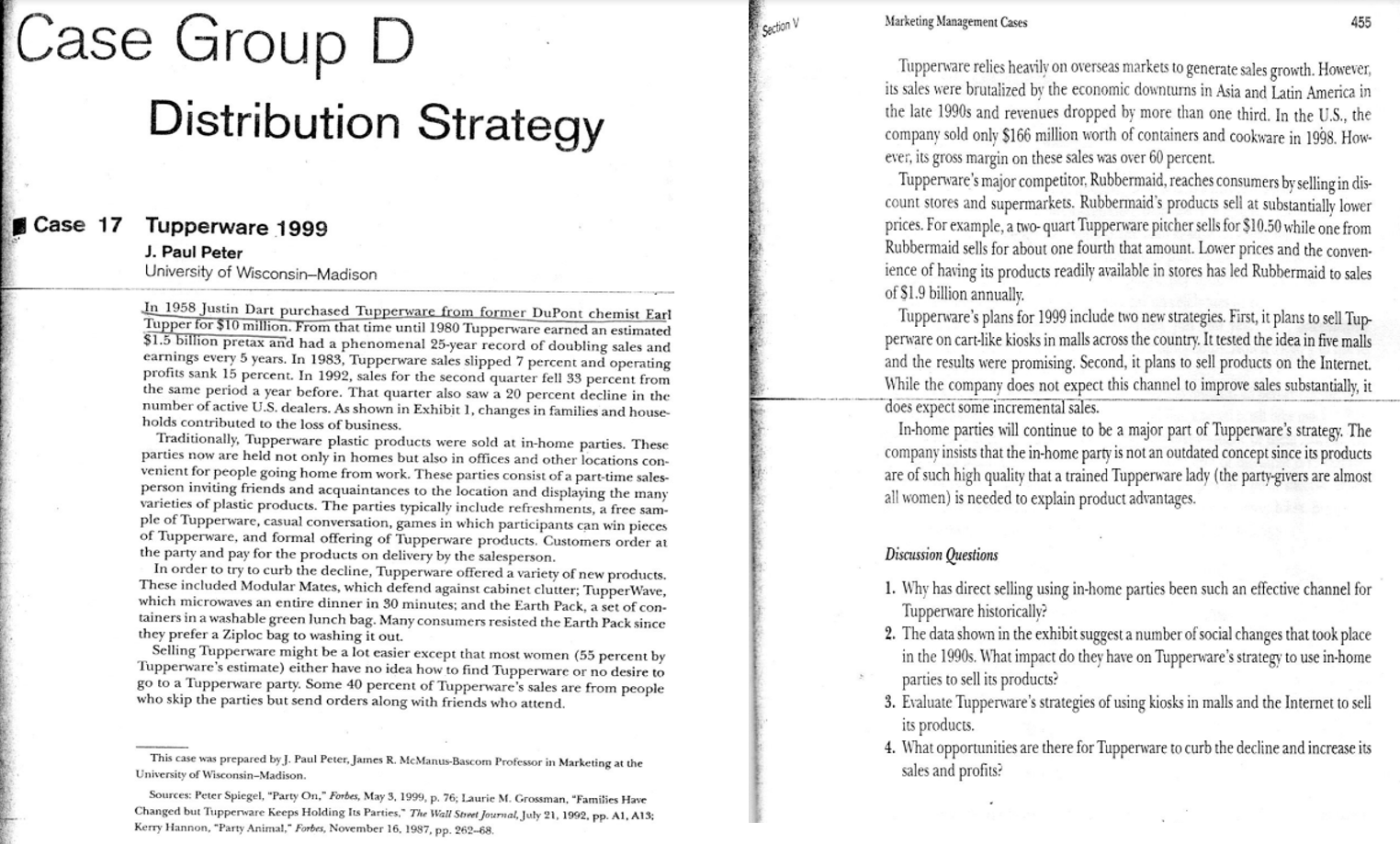
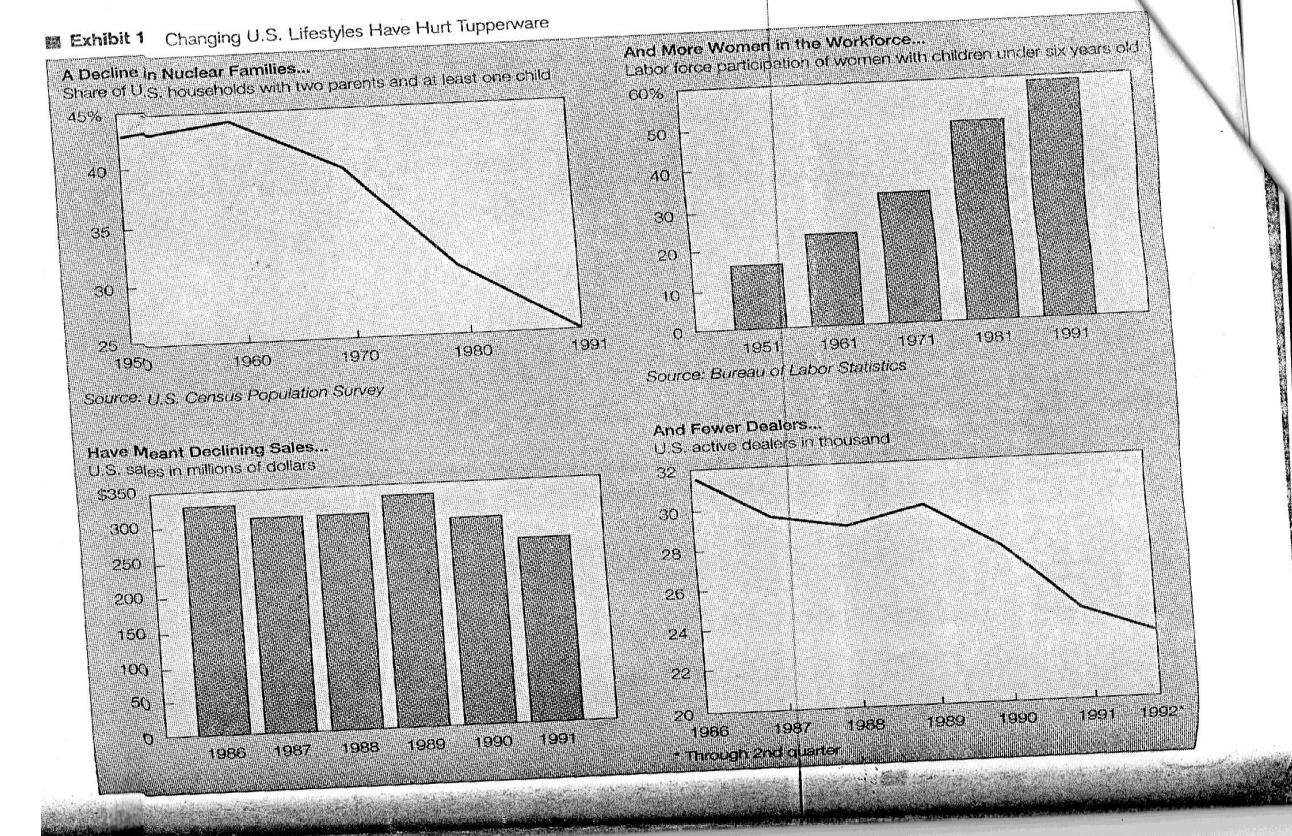
Marketing Management Cases 455 Case Group D Section V Tupperware relies heavily on overseas markets to generate sales growth. However, its sales were brutalized by the economic downturns in Asia and Latin America in Distribution Strategy the late 1990s and revenues dropped by more than one third. In the U.S., the company sold only $166 million worth of containers and cookware in 1998. How- ever, its gross margin on these sales was over 60 percent. Tupperware's major competitor, Rubbermaid, reaches consumers by selling in dis- count stores and supermarkets. Rubbermaid's products sell at substantially lower Case 17 Tupperware 1999 prices. For example, a two-quart Tupperware pitcher sells for $10.50 while one from J. Paul Peter Rubbermaid sells for about one fourth that amount. Lower prices and the conven- University of Wisconsin-Madison ience of having its products readily available in stores has led Rubbermaid to sales of $1.9 billion annually. In 1958 Justin Dart purchased Tupperware from former DuPont chemist Earl Tupperware's plans for 1999 include two new strategies. First, it plans to sell Tup- Tupper for $10 million. From that time until 1980 Tupperware earned an estimated $1.5 billion pretax and had a phenomenal 25-year record of doubling sales and perware on cart-like kiosks in malls across the country. It tested the idea in five malls earnings every 5 years. In 1983, Tupperware sales slipped 7 percent and operating and the results were promising. Second, it plans to sell products on the Internet. profits sank 15 percent. In 1992, sales for the second quarter fell 33 percent from While the company does not expect this channel to improve sales substantially, it the same period a year before. That quarter also saw a 20 percent decline in the number of active U.S. dealers. As shown in Exhibit 1, changes in families and house- does expect some incremental sales. holds contributed to the loss of business. In-home parties will continue to be a major part of Tupperware's strategy. The Traditionally, Tupperware plastic products were sold at in-home parties. These company insists that the in-home party is not an outdated concept since its products parties now are held not only in homes but also in offices and other locations con- venient for people going home from work. These parties consist of a part-time sales- are of such high quality that a trained Tupperware lady (the party-givers are almost person inviting friends and acquaintances to the location and displaying the many all women) is needed to explain product advantages. varieties of plastic products. The parties typically include refreshments, a free sam- ple of Tupperware, casual conversation, games in which participants can win pieces of Tupperware, and formal offering of Tupperware products. Customers order at the party and pay for the products on delivery by the salesperson. Discussion Questions In order to try to curb the decline, Tupperware offered a variety of new products. These included Modular Mates, which defend against cabinet clutter; TupperWave, 1. Why has direct selling using in-home parties been such an effective channel for which microwaves an entire dinner in 30 minutes; and the Earth Pack, a set of con- Tupperware historically? tainers in a washable green lunch bag. Many consumers resisted the Earth Pack since they prefer a Ziploc bag to washing it out. 2. The data shown in the exhibit suggest a number of social changes that took place Selling Tupperware might be a lot easier except that most women (55 percent by in the 1990s. What impact do they have on Tupperware's strategy to use in-home Tupperware's estimate) either have no idea how to find Tupperware or no desire to parties to sell its products? go to a Tupperware party. Some 40 percent of Tupperware's sales are from people who skip the parties but send orders along with friends who attend. 3. Evaluate Tupperware's strategies of using kiosks in malls and the Internet to sell its products. 4. What opportunities are there for Tupperware to curb the decline and increase its This case was prepared by J. Paul Peter, James R. McManus-Bascom Professor in Marketing at the sales and profits? University of Wisconsin-Madison. Sources: Peter Spiegel, "Party On," Forbes, May 3, 1999, p. 76; Laurie M. Grossman, "Families Have Changed but Tupperware Keeps Holding Its Parties," The Wall Street Journal, July 21, 1992, pp. Al, A13; Kerry Hannon, "Party Animal," Forbes, November 16, 1987, pp. 262-68.Exhibit 1 Changing U.S. Lifestyles Have Hurt Tupperware A Decline in Nuclear Families... And More Women in the Workforce... Share of U.S. households with two parents and at least one child Labor force participation of women with children under six years old 45% 60% 50 40 35 30 20 10 25 O 1950 1960 1970 1980 1991 1951 1961 1971 1981 1991 Source: U.S. Census Population Survey Source: Bureau of Labor Statistics Have Meant Declining Sales.. And Fewer Dealers... U.S. Sales in millions of dollars U.S. active dealers in thousand $350 32 300 30 250 28 200 26 150 24 109 50 22 20 1986 1987 1988 1989 1990 1991 1986 1987 1988 1289 1990 1 991 1992: through and quarter









 Study Help