







Question: Many high level computer languages have a switch or case statement which compares the value of an expression against one or more labels and executes
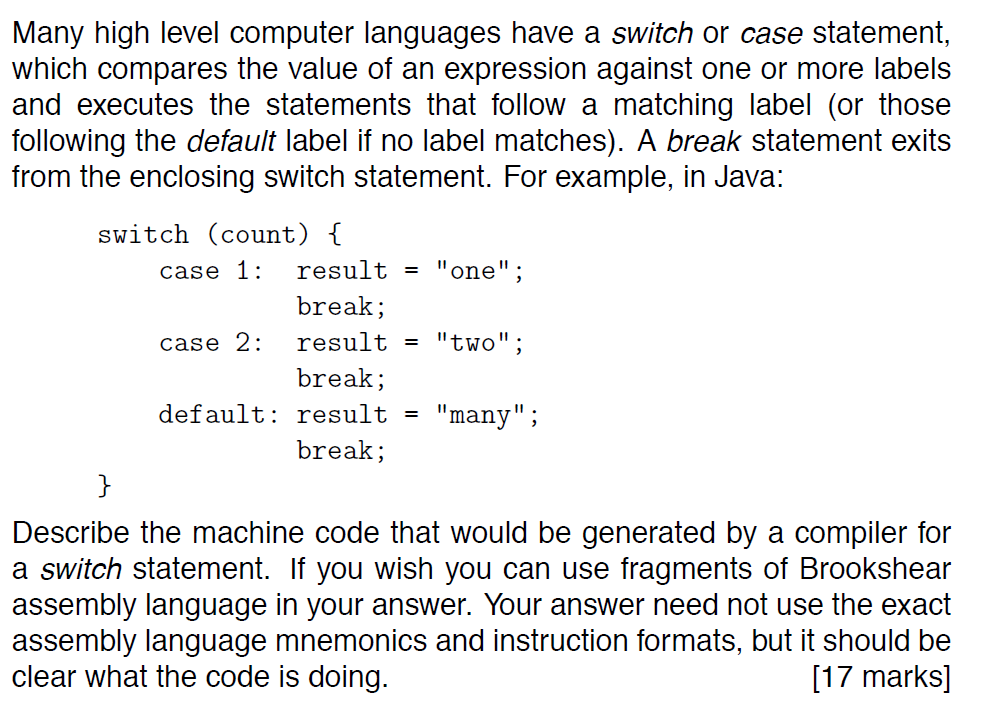
Many high level computer languages have a switch or case statement which compares the value of an expression against one or more labels and executes the statements that follow a matching label (or those following the default label if no label matches). A break statement exits from the enclosing switch statement. For example, in Java: switch (count) I case 1 result-"one" break; case 2: result - "two"; break; default: result"many"; break; Describe the machine code that would be generated by a compiler for a switch statement. If you wish you can use fragments of Brookshear assembly language in your answer. Your answer need not use the exact assembly language mnemonics and instruction formats, but it should be clear what the code is doing [17 marks]
Step by Step Solution
There are 3 Steps involved in it

Get step-by-step solutions from verified subject matter experts
 Study Help