







Question: Many project managers find that their projects fail to meet the approved schedule and are over budget. Review the module resources and then put down
Many project managers find that their projects fail to meet the approved schedule and are over budget. Review the module resources and then put down a short paper in which you:
- Describe how the phases of the project areas are essential for successful project management.
- Include specific examples from your experience.
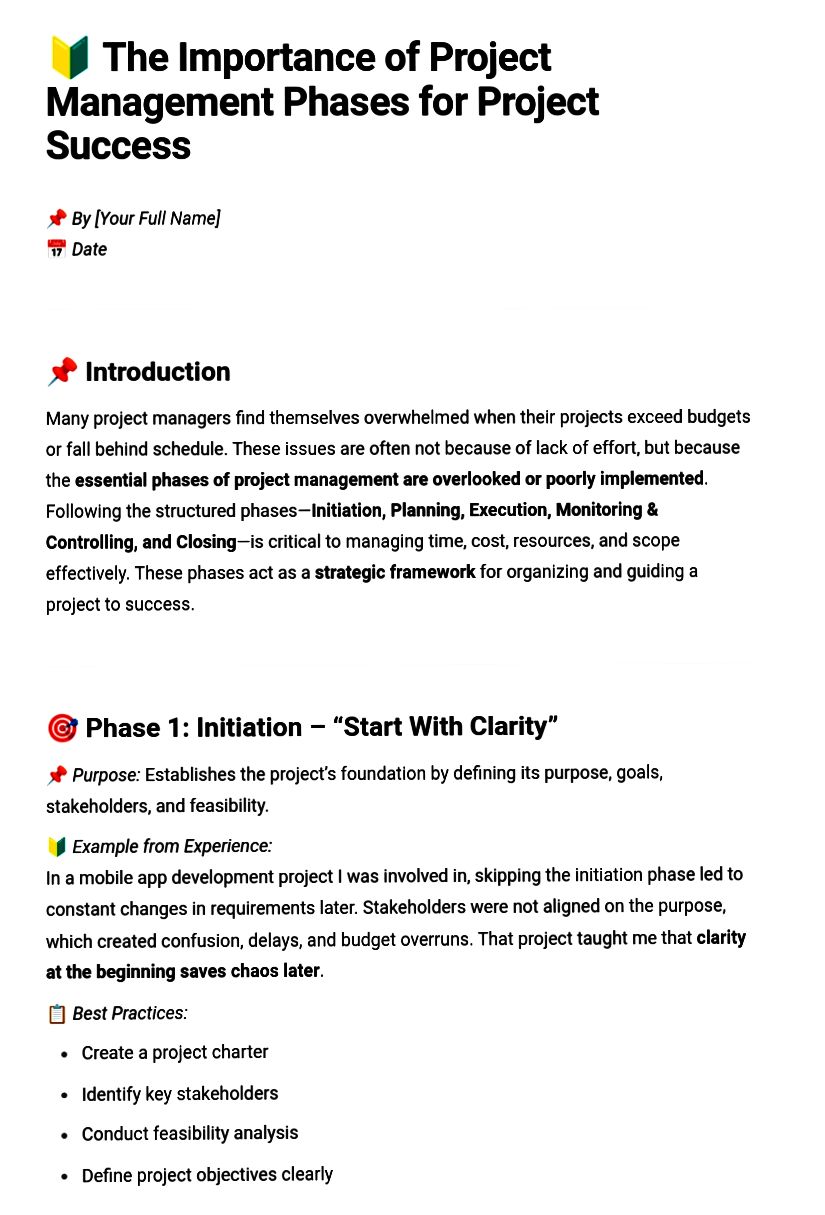
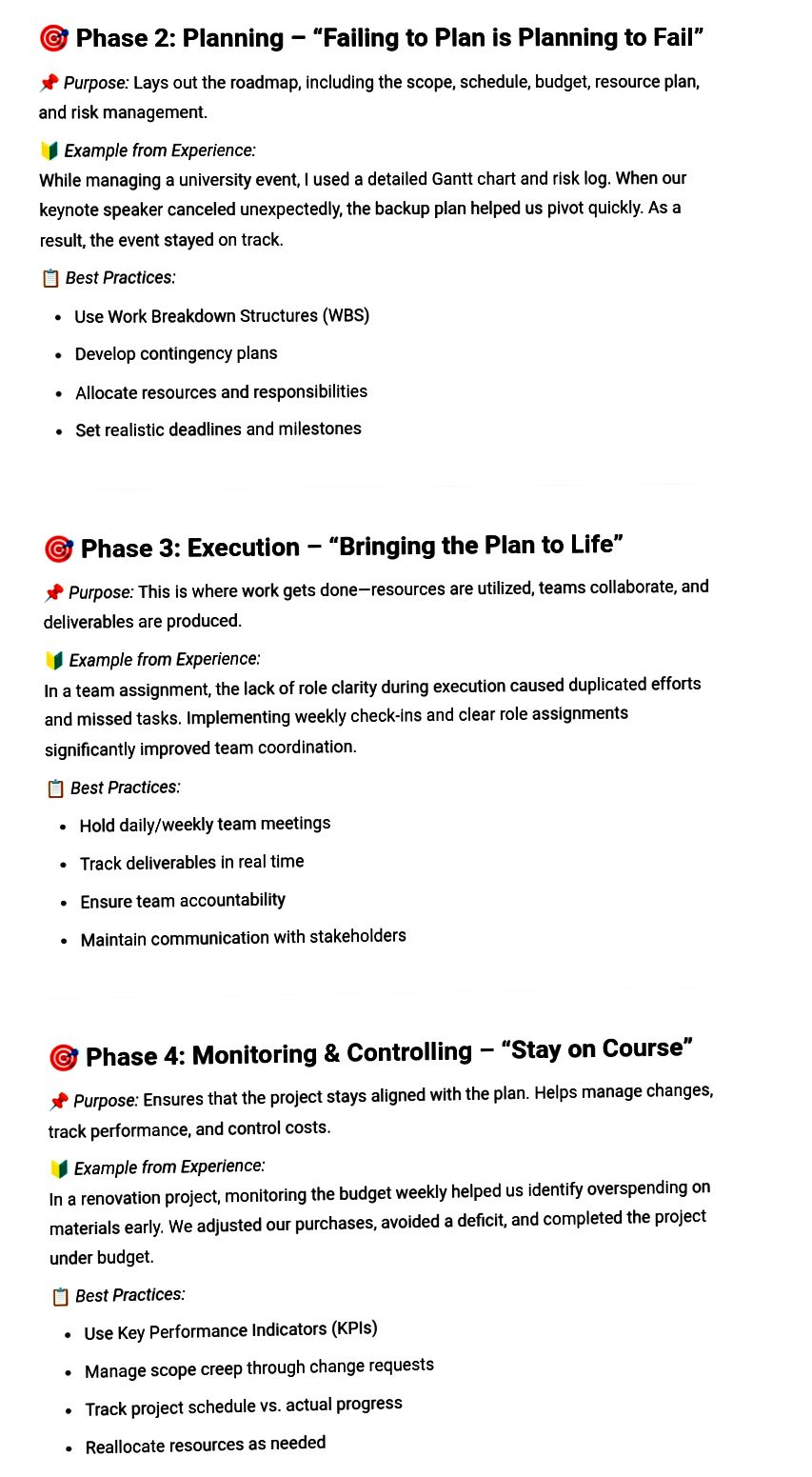
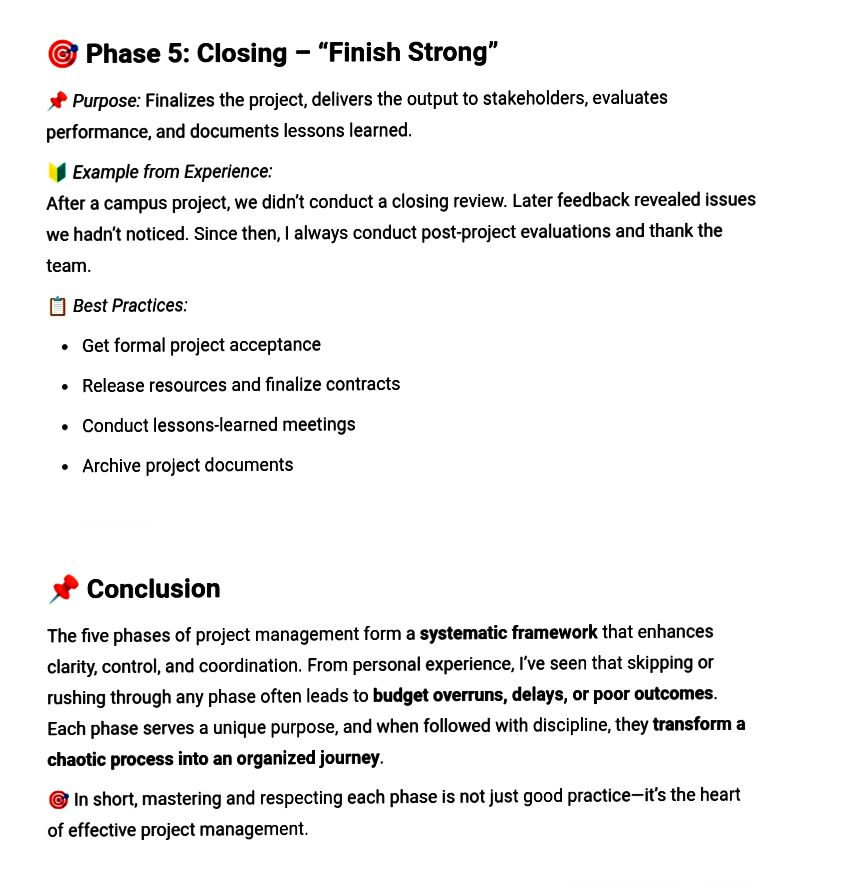 The Importance of Project Management Phases for Project Success sf By [Your Full Name] "7 Date xf Introduction Many project managers find themselves overwhelmed when their projects exceed budgets or fall behind schedule. These issues are often not because of lack of effort, but because the essential phases of project management are overlooked or poorly implemented. Following the structured phasesInitiation, Planning, Execution, Monitoring & Controlling, and Closingis critical to managing time, cost, resources, and scope effectively. These phases act as a strategic framework for organizing and guiding a project to success. Phase 1: Initiation \"Start With Clarity\" sf Purpose: Establishes the project's foundation by defining its purpose, goals, stakeholders, and feasibility. Example from Experience: In a mobile app development project | was involved in, skipping the initiation phase led to constant changes in requirements later. Stakeholders were not aligned on the purpose, which created confusion, delays, and budget overruns. That project taught me that clarity at the beginning saves chaos later. ["] Best Practices: Create a project charter Identify key stakeholders Conduct feasibility analysis * Define project objectives clearly @ Phase 2: Planning \"Failing to Plan is Planning to Fail\" sf Purpose: Lays out the roadmap, including the scope, schedule, budget, resource plan, and risk management. ) Example from Experience: While managing a university event, | used a detailed Gantt chart and risk log. When our keynote speaker canceled unexpectedly, the backup plan helped us pivot quickly. As a result, the event stayed on track. E] Best Practices: Use Work Breakdown Structures (WBS) Develop contingency plans Allocate resources and responsibilities Set realistic deadlines and milestones @ Phase 3: Execution \"Bringing the Plan to Life\" s Purpose: This is where work gets doneresources are utilized, teams collaborate, and deliverables are produced. Example from Experience: In a team assignment, the lack of role clarity during execution caused duplicated efforts and missed tasks. Implementing weekly check-ins and clear role assignments significantly improved team coordination. Best Practices: * Hold daily/weekly team meetings * Track deliverables in real time Ensure team accountability * Maintain communication with stakeholders @ Phase 4: Monitoring & Controlling \"Stay on Course\" sf Purpose: Ensures that the project stays aligned with the plan. Helps manage changes, track performance, and control costs. Example from Experience: In a renovation project, monitoring the budget weekly helped us identify overspending on materials early. We adjusted our purchases, avoided a deficit, and completed the project under budget. ["] Best Practices: Use Key Performance Indicators (KPls) * Manage scope creep through change requests + Track project schedule vs. actual progress * Reallocate resources as needed Phase 5: Closing - \"Finish Strong\" x Purpose: Finalizes the project, delivers the output to stakeholders, evaluates performance, and documents lessons learned. Example from Experience: After a campus project, we didn't conduct a closing review. Later feedback revealed issues we hadn't noticed. Since then, | always conduct post-project evaluations and thank the team. [-] Best Practices: Get formal project acceptance e Release resources and finalize contracts e Conduct lessons-learned meetings Archive project documents sf Conclusion The five phases of project management form a systematic framework that enhances clarity, control, and coordination. From personal experience, I've seen that skipping or rushing through any phase often leads to budget overruns, delays, or poor outcomes. Each phase serves a unique purpose, and when followed with discipline, they transform a chaotic process into an organized journey. @ In short, mastering and respecting each phase is not just good practiceit's the heart of effective project management
Step by Step Solution
There are 3 Steps involved in it
1 Expert Approved Answer
Step: 1 Unlock

Question Has Been Solved by an Expert!
Get step-by-step solutions from verified subject matter experts
Step: 2 Unlock
Step: 3 Unlock
 Study Help