



Question: Markov chain 5. Consider this geoboard quadrilateral: Write T or F before each of the following state- ments to indicate that it is true or
Markov chain
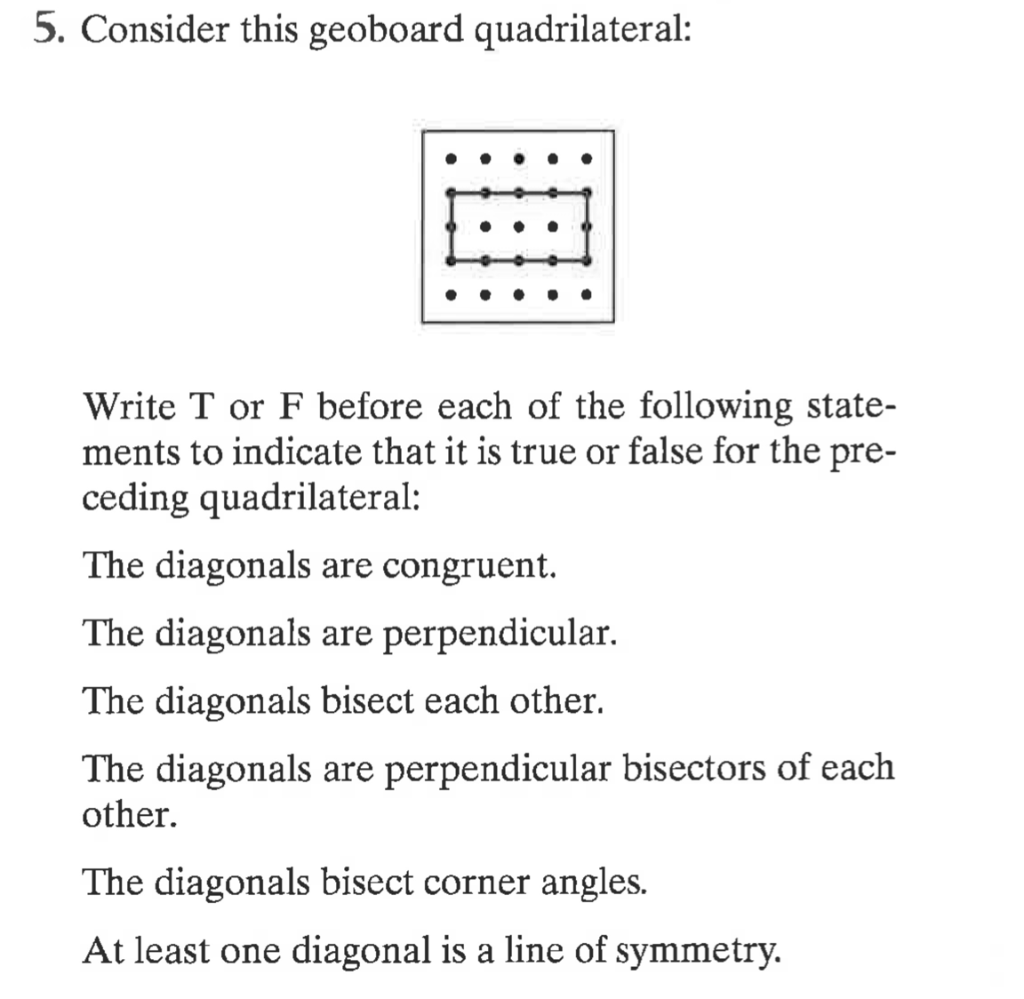
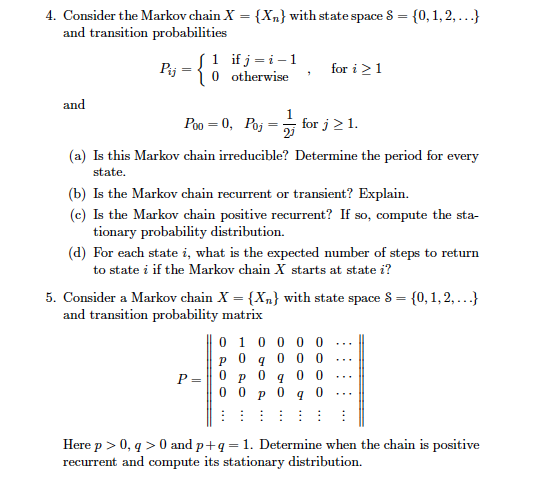
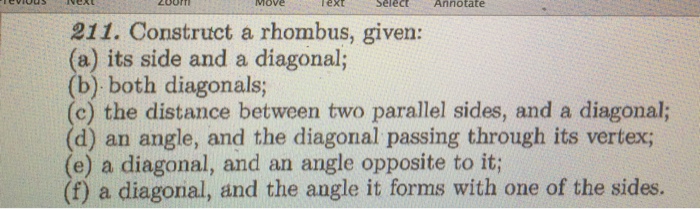
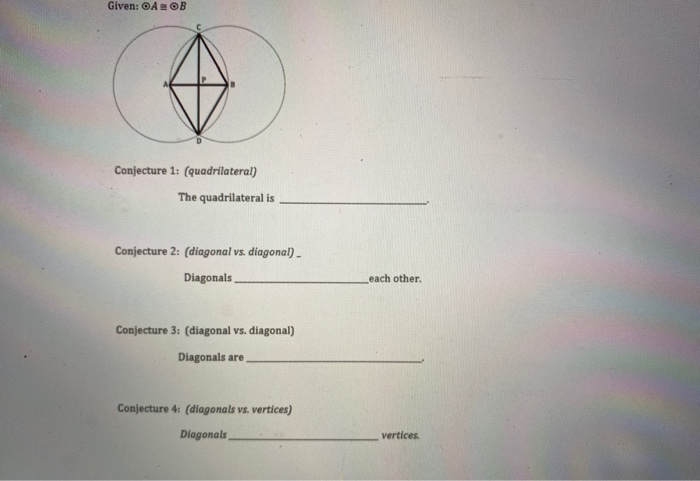
5. Consider this geoboard quadrilateral: Write T or F before each of the following state- ments to indicate that it is true or false for the pre- ceding quadrilateral: The diagonals are congruent. The diagonals are perpendicular. The diagonals bisect each other. The diagonals are perpendicular bisectors of each other. The diagonals bisect corner angles. At least one diagonal is a line of symmetry. 4. Consider the Markov chain X" = {X,} with state space S = {0, 1, 2, ...} and transition probabilities 1 ifj=i-1 Puj = 10 otherwise , for i 2 1 and Poo = 0, Poj = for j > 1. (a) Is this Markov chain irreducible? Determine the period for every state. (b) Is the Markov chain recurrent or transient? Explain. (c) Is the Markov chain positive recurrent? If so, compute the sta- tionary probability distribution. (d) For each state i, what is the expected number of steps to return to state i if the Markov chain X starts at state i? 5. Consider a Markov chain X = {X} with state space S = {0, 1, 2, ...} and transition probability matrix 0 1 0 0 P 0 0 P = O p 0 q 0 0 . . . 0 0 P 0 4 0 Here p > 0, q > 0 and p+q =1. Determine when the chain is positive recurrent and compute its stationary distribution.Select Annotate 211. Construct a rhombus, given: (a) its side and a diagonal; (b). both diagonals; c) the distance between two parallel sides, and a diagonal; d) an angle, and the diagonal passing through its vertex; e) a diagonal, and an angle opposite to it; (f) a diagonal, and the angle it forms with one of the sides.Given: OACOB Conjecture 1: (quadrilateral) The quadrilateral is Conjecture 2: (diagonal vs. diagonal) _ Diagonals each other. Conjecture 3: (diagonal vs. diagonal) Diagonals are Conjecture 4: (diagonals vs. vertices) Diagonals vertices
Step by Step Solution
There are 3 Steps involved in it

Get step-by-step solutions from verified subject matter experts