







Question: MAT 133: 1.5 WS 2 p.2 2. A cluster sample was conducted to assess the mortality rates in Iraq before and after Operation Iraqi Freedom
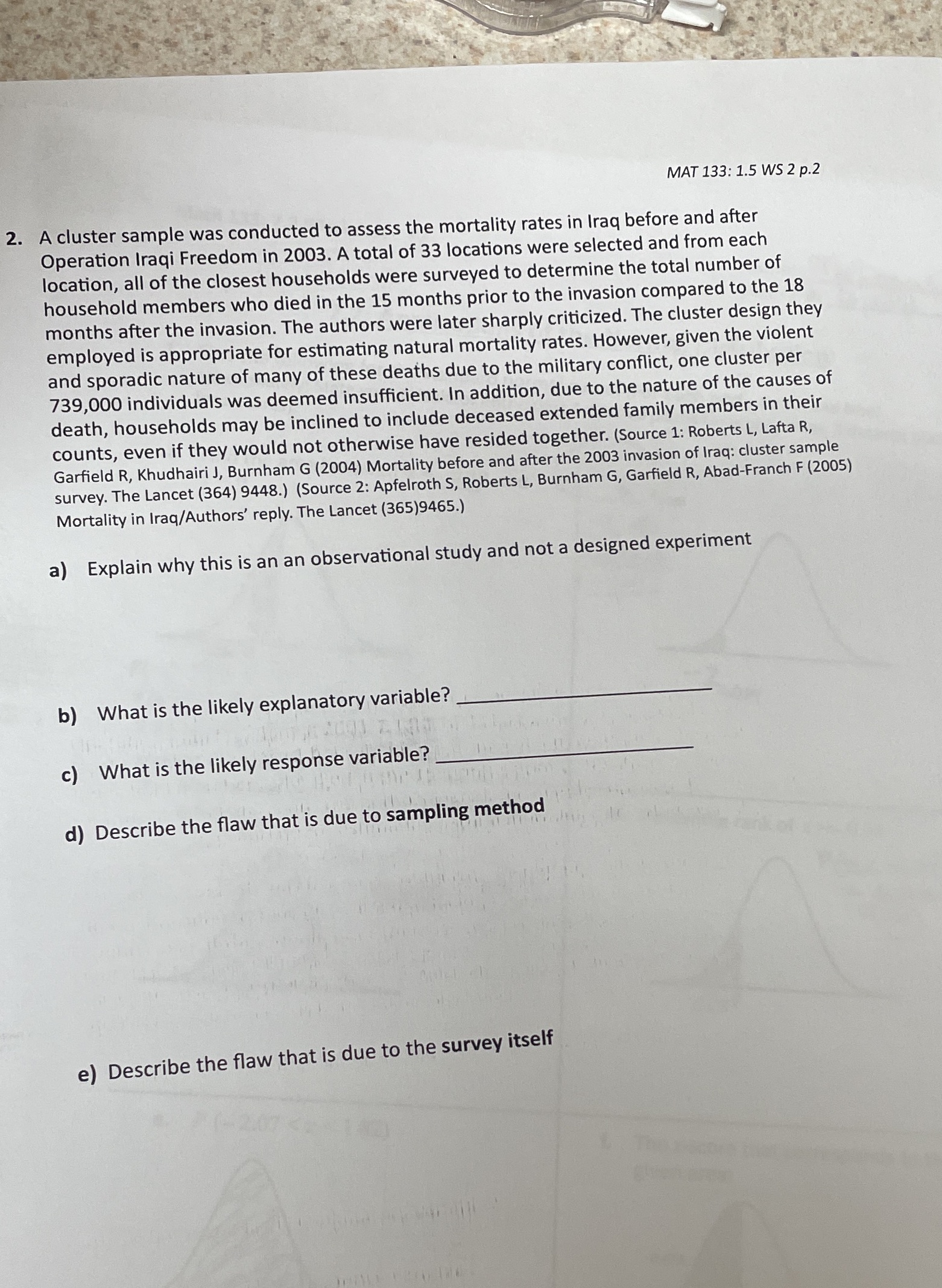
MAT 133: 1.5 WS 2 p.2 2. A cluster sample was conducted to assess the mortality rates in Iraq before and after Operation Iraqi Freedom in 2003. A total of 33 locations were selected and from each location, all of the closest households were surveyed to determine the total number of household members who died in the 15 months prior to the invasion compared to the 18 months after the invasion. The authors were later sharply criticized. The cluster design they employed is appropriate for estimating natural mortality rates. However, given the violent and sporadic nature of many of these deaths due to the military conflict, one cluster per 739,000 individuals was deemed insufficient. In addition, due to the nature of the causes of death, households may be inclined to include deceased extended family members in their counts, even if they would not otherwise have resided together. (Source 1: Roberts L, Lafta R, Garfield R, Khudhairi J, Burnham G (2004) Mortality before and after the 2003 invasion of Iraq: cluster sample survey. The Lancet (364) 9448.) (Source 2: Apfelroth S, Roberts L, Burnham G, Garfield R, Abad-Franch F (2005) Mortality in Iraq/Authors' reply. The Lancet (365)9465.) a) Explain why this is an an observational study and not a designed experiment b) What is the likely explanatory variable? c) What is the likely response variable? d) Describe the flaw that is due to sampling method e) Describe the flaw that is due to the survey itself
Step by Step Solution
There are 3 Steps involved in it

Get step-by-step solutions from verified subject matter experts
 Study Help