







Question: Match each term or phrase with its description below. a Expenses paid in cash before they are used or consumed. The difference between the cost
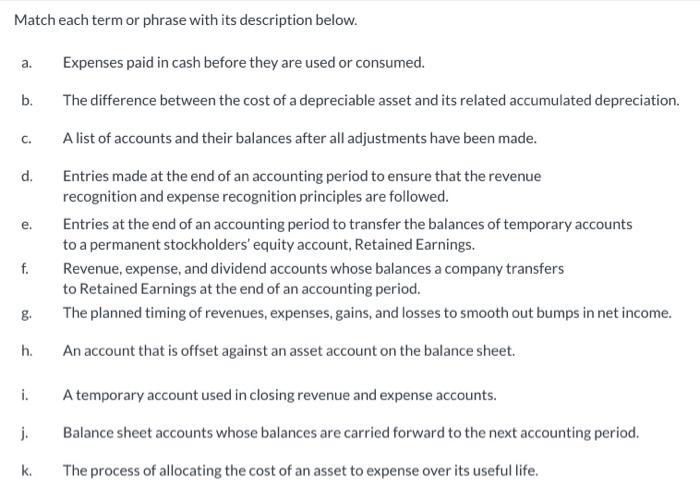
Match each term or phrase with its description below. a Expenses paid in cash before they are used or consumed. The difference between the cost of a depreciable asset and its related accumulated depreciation. b. A list of accounts and their balances after all adjustments have been made. d. e. f. Entries made at the end of an accounting period to ensure that the revenue recognition and expense recognition principles are followed. Entries at the end of an accounting period to transfer the balances of temporary accounts to a permanent stockholders' equity account, Retained Earnings. Revenue, expense, and dividend accounts whose balances a company transfers to Retained Earnings at the end of an accounting period. The planned timing of revenues, expenses, gains, and losses to smooth out bumps in net income. An account that is offset against an asset account on the balance sheet. 8 h. i. j. A temporary account used in closing revenue and expense accounts. Balance sheet accounts whose balances are carried forward to the next accounting period. The process of allocating the cost of an asset to expense over its useful life. k. Match each term or phrase with its description below. a Expenses paid in cash before they are used or consumed. The difference between the cost of a depreciable asset and its related accumulated depreciation. b. A list of accounts and their balances after all adjustments have been made. d. e. f. Entries made at the end of an accounting period to ensure that the revenue recognition and expense recognition principles are followed. Entries at the end of an accounting period to transfer the balances of temporary accounts to a permanent stockholders' equity account, Retained Earnings. Revenue, expense, and dividend accounts whose balances a company transfers to Retained Earnings at the end of an accounting period. The planned timing of revenues, expenses, gains, and losses to smooth out bumps in net income. An account that is offset against an asset account on the balance sheet. 8 h. i. j. A temporary account used in closing revenue and expense accounts. Balance sheet accounts whose balances are carried forward to the next accounting period. The process of allocating the cost of an asset to expense over its useful life. k
Step by Step Solution
There are 3 Steps involved in it

Get step-by-step solutions from verified subject matter experts
 Study Help