







Question: Materials a medium stretchy spring (not a slinky, that's too stretchy), 50g, 100g, and 200g weights Procedure 1. Attach the spring at least two meters
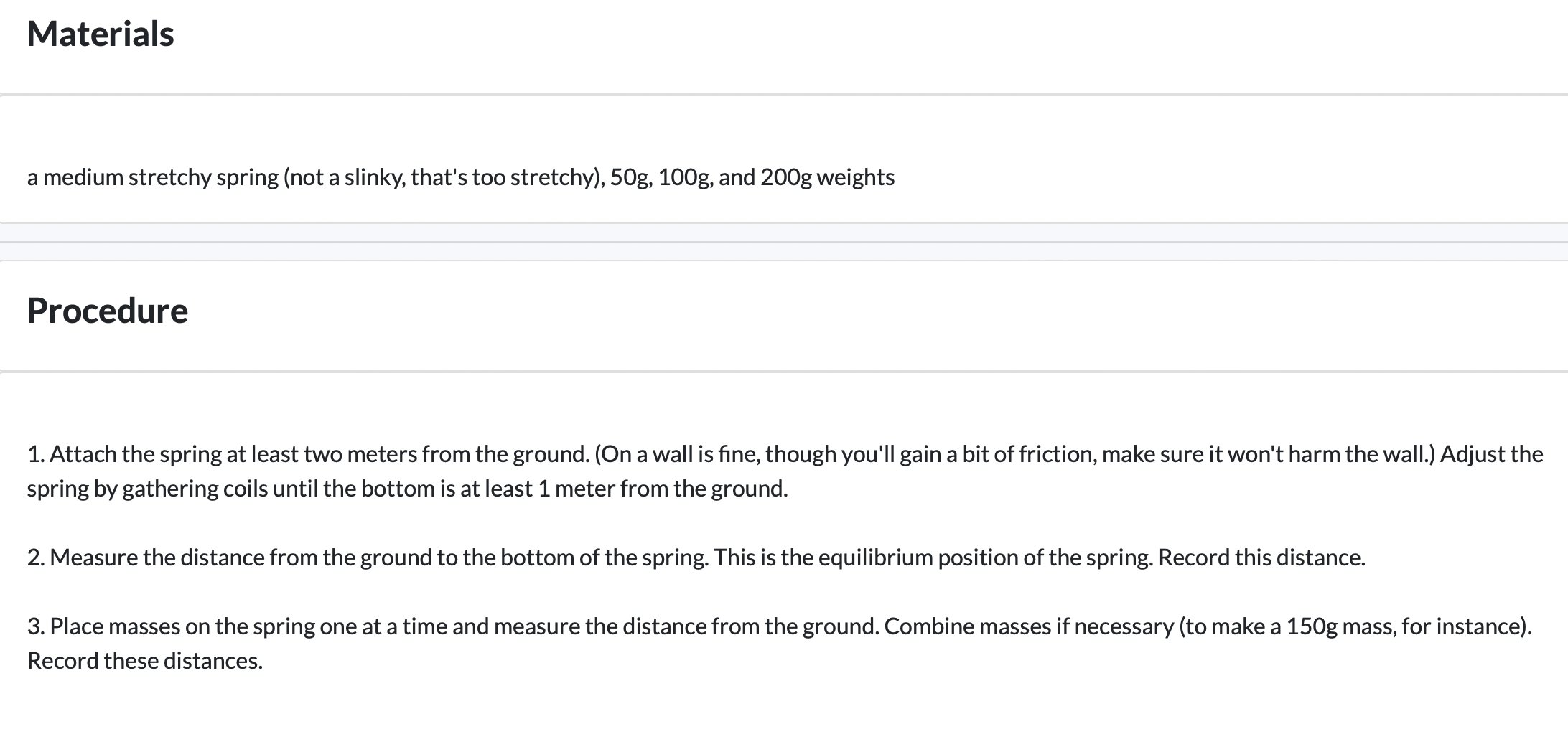
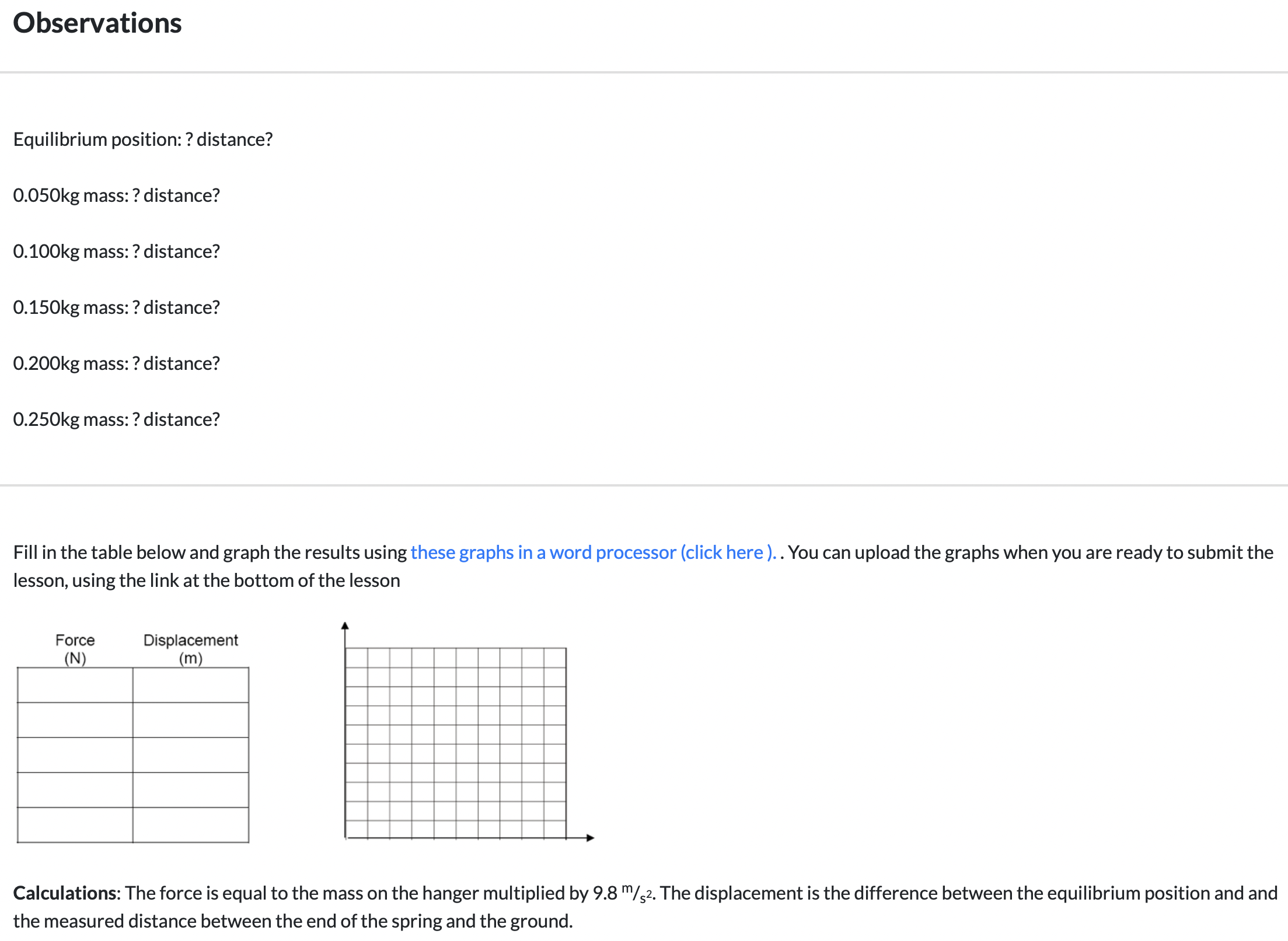
Materials a medium stretchy spring (not a slinky, that's too stretchy), 50g, 100g, and 200g weights Procedure 1. Attach the spring at least two meters from the ground. (On a wall is ne, though you'll gain a bit of friction, make sure it won't ha rm the wall.) Adjust the spring by gathering coils until the bottom is at least 1 meter from the ground. 2. Measure the distance from the ground to the bottom of the spring. This is the equilibrium position of the spring. Record this distance. 3. Place masses on the spring one at a time and measure the distance from the ground. Combine masses if necessary (to make a 150g mass, for instance). Record these distances. Observations Equilibrium position: ? distance? 0.050kg mass: ? distance? 0.100kg mass: ? distance? 0.150kg mass: ? distance? 0.200kg mass: ? distance? 0.250kg mass: ? distance? Fill in the table below and graph the results using these graphs in a word processor (click here ). .You can upload the graphs when you are ready to submit the lesson, using the link at the bottom of the lesson Force Displacement W) m) Calculations: The force is equal to the mass on the hanger multiplied by 9.8 m/Sz. The displacement is the difference between the equilibrium position and and the measured distance between the end of the spring and the ground
Step by Step Solution
There are 3 Steps involved in it

Get step-by-step solutions from verified subject matter experts
 Study Help