







Question: MATH 11111 : Chapter 10 : Lab 10.2Name_______________________ A binary digit (0 or 1), or bit for short, can represent a variety of situations.For example,
MATH 11111 : Chapter 10 : Lab 10.2Name_______________________
A binary digit (0 or 1), or "bit" for short, can represent a variety of situations.For example, 0 and 1 could represent "false" and "true", respectively; or "off" and "on", respectively; or unshaded and shaded, respectively; or "dot" and "dash", respectively.
A collection of 8 bits is called a "byte" (sounds like "bite").Historically, a byte was the number of bits used to encode a single character of text in a computer.A byte has 28 = 256 possible values.
A collection of 4 bits is half a byte, or a "nibble" (a nibble is half a byte - get it?).A nibble has
24 = 16 possible values, and thus can be conveniently represented by a single hexadecimal digit ("hex digit").
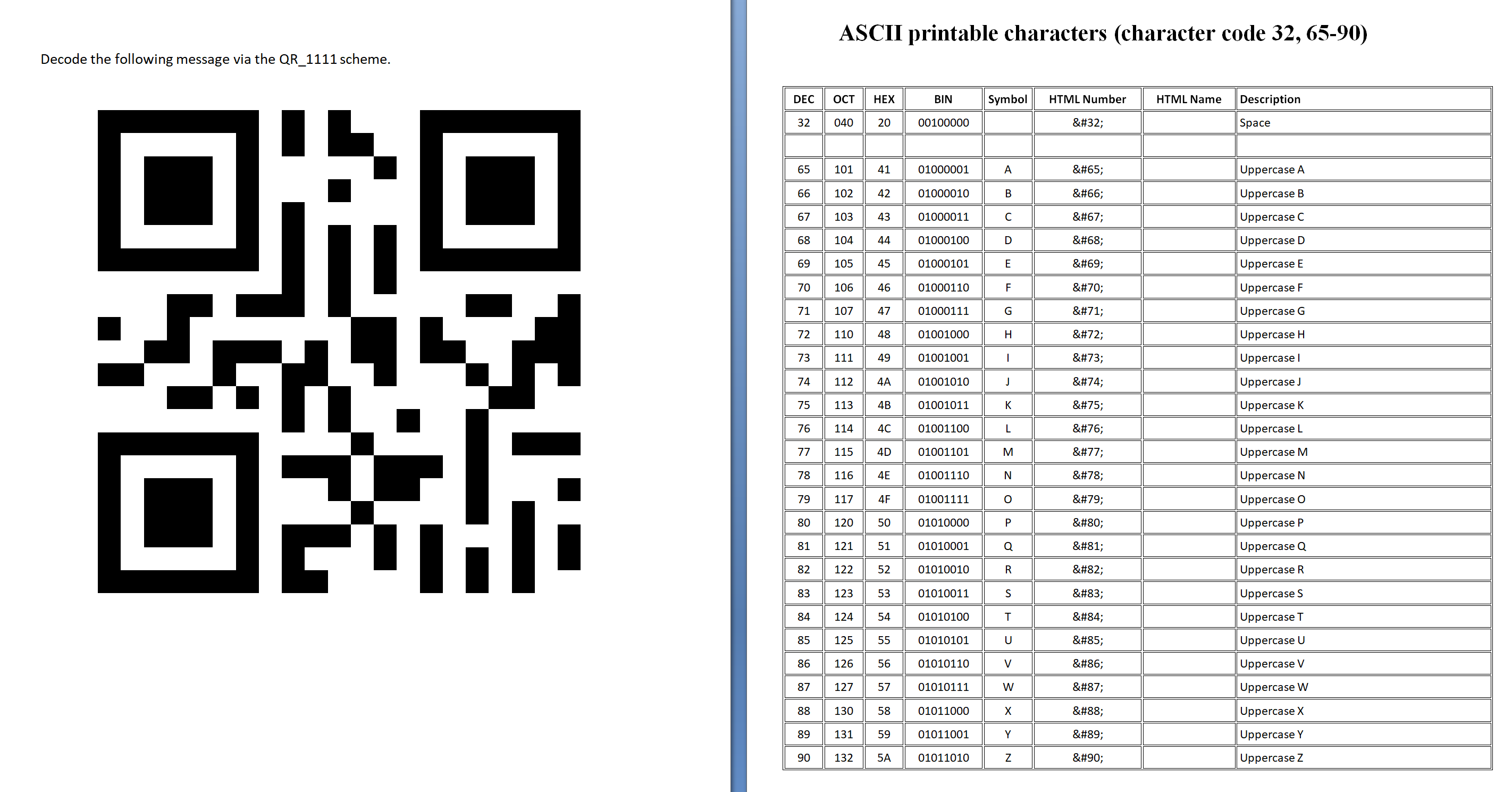
The American Standard Code for Information Interchange (ASCII) is a character-encoding standard for representing text in computers and various other telecommunications equipment.You can find a partial ASCII table at the end of this lab.
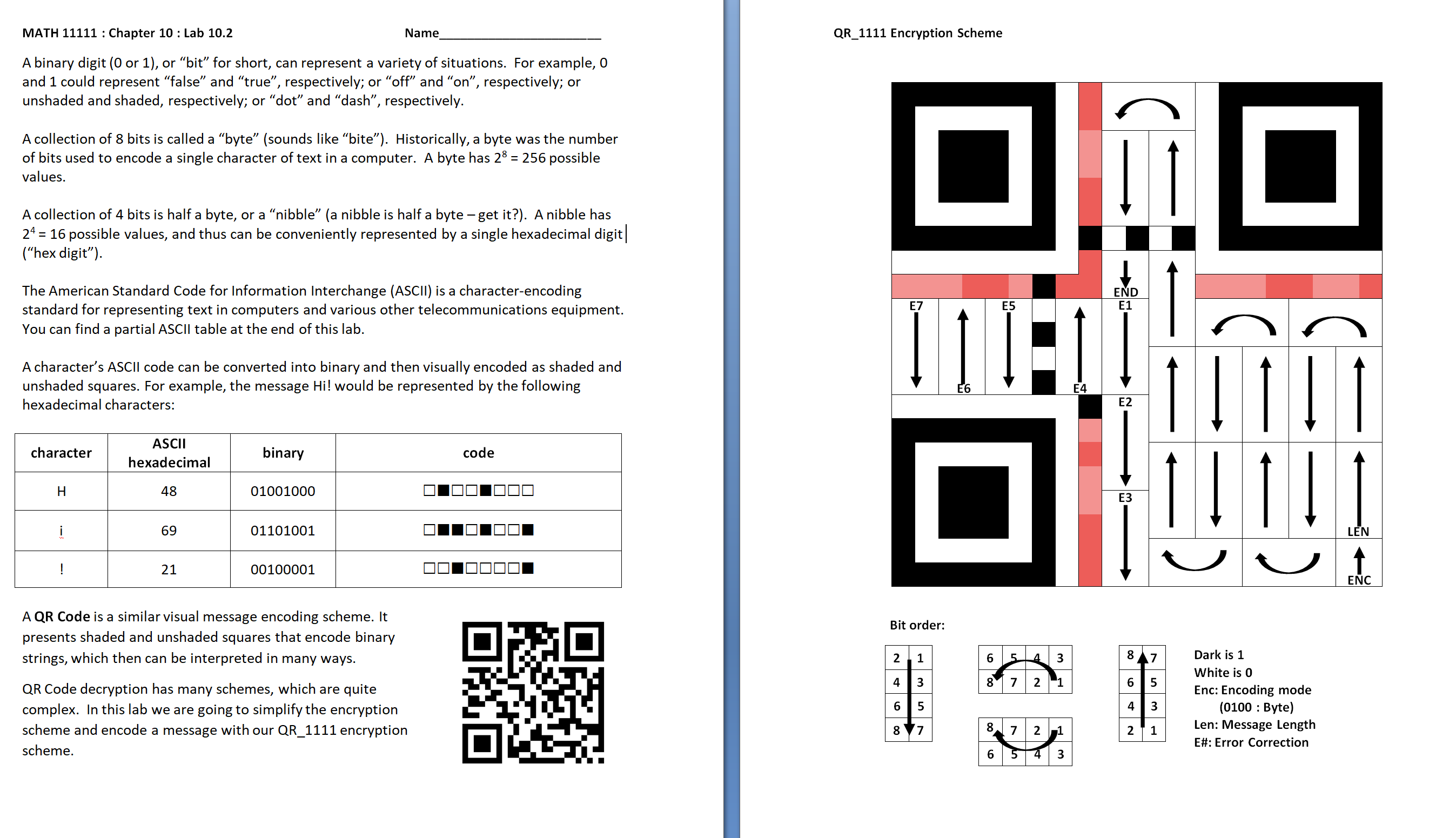
A character's ASCII code can be converted into binary and then visually encoded as shaded and unshaded squares. For example, the message Hi! would be represented by the following hexadecimal characters:
\f\f
Step by Step Solution
There are 3 Steps involved in it

Get step-by-step solutions from verified subject matter experts
 Study Help