







Question: MAX:Subjectto:5x1+4x22x1+4x2203x1+5x215x1,x20 decrease, enter . ) The objective function coefficient for variable X1 can decrease by or increase by without changing the optimal solution. (b) Is
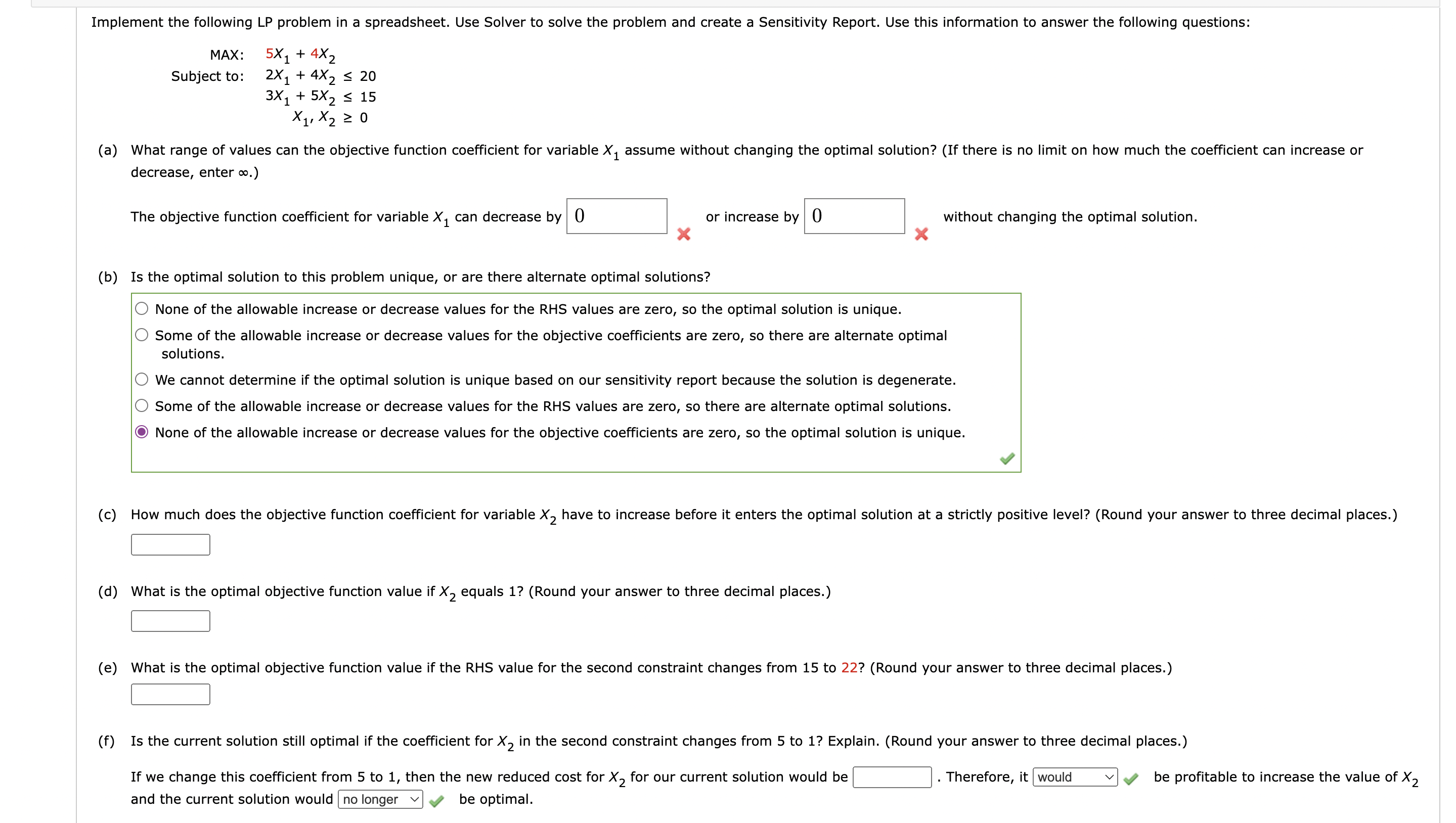
MAX:Subjectto:5x1+4x22x1+4x2203x1+5x215x1,x20 decrease, enter . ) The objective function coefficient for variable X1 can decrease by or increase by without changing the optimal solution. (b) Is the optimal solution to this problem unique, or are there alternate optimal solutions? None of the allowable increase or decrease values for the RHS values are zero, so the optimal solution is unique. Some of the allowable increase or decrease values for the objective coefficients are zero, so there are alternate optimal solutions. We cannot determine if the optimal solution is unique based on our sensitivity report because the solution is degenerate. Some of the allowable increase or decrease values for the RHS values are zero, so there are alternate optimal solutions. None of the allowable increase or decrease values for the objective coefficients are zero, so the optimal solution is unique. (d) What is the optimal objective function value if X2 equals 1 ? (Round your answer to three decimal places.) (e) What is the optimal objective function value if the RHS value for the second constraint changes from 15 to 22 ? (Round your answer to three decimal places.) (f) Is the current solution still optimal if the coefficient for X2 in the second constraint changes from 5 to 1 ? Explain. (Round your answer to three decimal places.) If we change this coefficient from 5 to 1 , then the new reduced cost for x2 for our current solution would be . Therefore, it be profitable to increase the value of x2 and the current solution would be optimal
Step by Step Solution
There are 3 Steps involved in it

Get step-by-step solutions from verified subject matter experts
 Study Help