



Question: (Measuring growth) Solarpower Systems earned $20 per share at the beginning of the year and paid out $8 in dividends to shareholders (30. Dy=5a) and
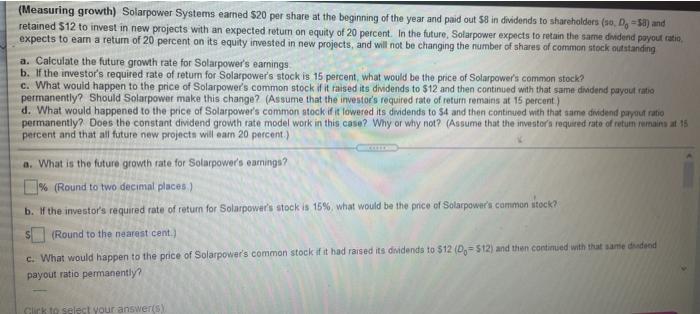
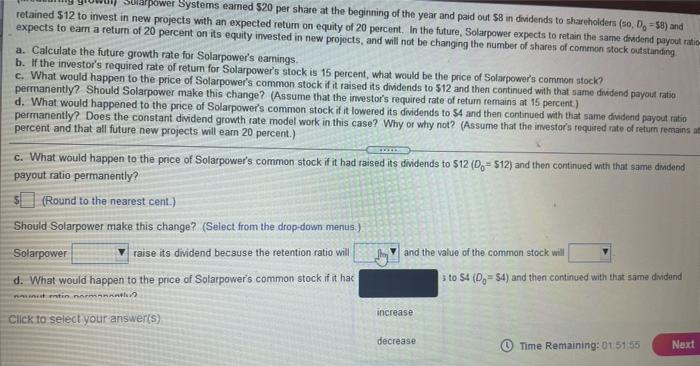
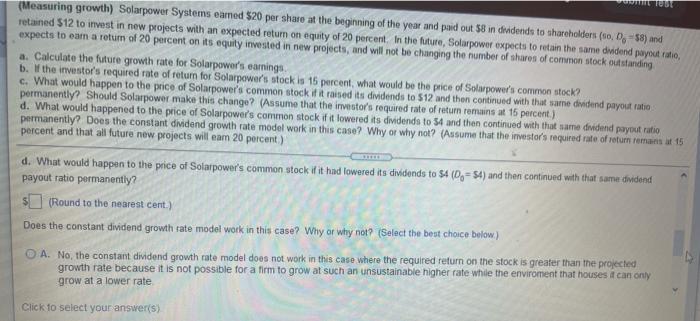
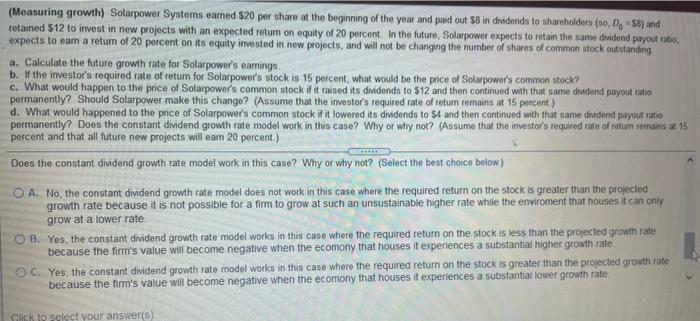
(Measuring growth) Solarpower Systems earned $20 per share at the beginning of the year and paid out $8 in dividends to shareholders (30. Dy=5a) and retained 512 to invest in new projects with an expected return on equity of 20 percent. In the future, Solarpower expects to retain the same dividend payout ratio, expects to earn a return of 20 percent on its equity invested in new projects, and will not be changing the number of shares of common stock outstanding a. Calculate the future growth rate for Solarpower's earnings b. If the investor's required rate of return for Solarpower's stock is 15 percent, what would be the price of Solarpower's common stock? c. What would happen to the price of Solarpower's common stock if it raised its dividends to $12 and then continued with that same dividend payout ratio permanently? Should Solarpower make this change? (Assume that the investor's required rate of return remains at 15 percent) d. What would happened to the price of Solarpower's common stock if it lowered its dividends to $4 and then continued with that same dividend payout ratio permanently? Does the constant dividend growth rate model work in this case? Why or why not? (Assume that the investora required rato of rotum rumains at 15 percent and that all future new projects will earn 20 percent.) a. What is the future growth rate for Solarpower's comings? % (Round to two decimal places) b. the investor's required rate of return for Solarpower's stock is 15%, what would be the price of Solarpower's common stock? (Round to the nearest cent. c. What would happen to the price of Solarpower's common stock if it had raised its dividends to $12 (D=512) and then continued with that same didend payout ratio permanently? Click to select your answers Sularpower Systems earned $20 per share at the beginning of the year and paid out $8 in dividends to shareholders (10, 0$8) and retained $12 to invest in new projects with an expected return on equity of 20 percent. In the future, Solarpower expects to retain the same dividend payout ratio expects to eam a return of 20 percent on its equity invested in new projects, and will not be changing the number of shares of common stock outstanding a. Calculate the future growth rate for Solarpower's earnings b. If the investor's required rate of return for Solarpower's stock is 15 percent, what would be the price of Solarpower's common stock? c. What would happen to the price of Solarpower's common stock if it raised its dividends to $12 and then continued with that same dividend payout ratio permanently? Should Solarpower make this change? (Assume that the investor's required rate of return remains at 15 percent.) d. What would happened to the price of Solarpower's common stock if it lowered its dividends to 54 and then continued with that same dividend payout ratio permanently? Does the constant dividend growth rate model work in this case? Why or why not? (Assume that the investor's required rate of return remains a percent and that all future new projects will earn 20 percent.) c. What would happen to the price of Solarpower's common stock if it had raised its dividends to $12 (D.-512and then continued with that same dradend payout ratio permanently? s(Round to the nearest cent.) Should Solarpower make this change? (Select from the drop-down menus.) Solarpower raise its dividend because the retention ratio will and the value of the common stock will d. What would happen to the price of Solarpower's common stock if it hac 3 to 54 (D = $4) and then continued with that same dividend tin normaat increase Click to select your answers) decrease Time Remaining: 015155 Next (Measuring growth) Solarpower Systems earned $20 per share at the beginning of the year and paid out $8 in dividends to shareholders (10, 0 =$8) and retained 512 to invest in new projects with an expected return on equity of 20 percent. In the future, Solarpower expects to retain the same dividend payout ratio, expects to earn a retum of 20 percent on its equity invested in new projects, and will not be changing the number of shares of common stock outstanding a. Calculate the future growth rate for Solarpower's earnings b. the investor's required rate of return for Solarpower's stock is 15 percent, what would be the price of Solarpower's common stock? c. What would happen to the price of Solarpower's common stock if it raised its dividends to 512 and then continued with that are dividend payout ratio permanently? Should Solarpower make this change? (Assume that the investor's required rate of return remains at 15 percent) d. What would happened to the price of Solarpower's common stock if it lowered its dividends to 34 and then continued with that same dividend payout ratio permanently? Does the constant dividend growth rate model work in this case? Why or why not? (Assume that the investor's required rate of returnernam at 15 percent and that all futute new projects will eam 20 percent) d. What would happen to the price of Solarpower's common stock if it had lowered its dividends to S4 (0, -54) and then continued with that same dividend payout ratio permanently s Round to the nearest cent.) Does the constant dividend growth rate model work in this case? Why or why not? (Select the best choice below) A. No, the constant dividend growth rate model does not work in this case where the required return on the stock is greater than the projected growth rate because it is not possible for a firm to grow at such an unsustainable higher rate while the enviroment that houses it can only grow at a lower rate Click to select your answer(s) (Measuring growth) Solarpower Systems earned $20 per share at the beginning of the year and paid out $8 in dividends to shareholders (so, D-55) and retained 512 to invest in new projects with an expected return on equity of 20 percent. In the future, Solarpower expects to retain the same didend payout ratio, expects to eam a return of 20 percent on its equity invested in new projects, and will not be changing the number of shares of common stock outstanding a. Calculate the future growth rate for Solarpower's earnings b. If the investor's required rate of retum for Solarpower's stock is 15 percent, what would be the price of Solarpower's common stock? c. What would happen to the price of Solarpower's common stock if it raised its dividends to 512 and then continued with that same dividend payout ratio permanently? Should Solarpower make this change? (Assume that the investor's required rate of return remains at 15 percent) d. What would happened to the price of Solarpower's common stock if it lowered its dividends to SA and then continued with that same dividend payout ratio permanently? Does the constant dividend growth rate model work in this case? Why or why not? (Assume that the investor's required rate of retum temains at 15 percent and that all future new projects will earn 20 percent.) Does the constant dividend growth rate model work in this case? Why or why not? (Select the best choice below) O A. No, the constant dividend growth rate model does not work in this case where the required return on the stock is greater than the projected growth rate because it is not possible for a firm to grow at such an unsustainable higher rate while the enviroment that houses it can only grow at a lower rate OB. Yes, the constant dividend growth rate model works in this case where the required return on the stock is less than the projected growth because the firm's value will become negative when the ecomony that houses it experiences a substantial higher growth rate OC. Yes, the constant dividend growth rate model works in this case where the required return on the stock is greater than the projected growth rate because the firm's value will become negative when the ecomony that houses it experiences a substantial lower growth rate Click to select your answer(s)
Step by Step Solution
There are 3 Steps involved in it

Get step-by-step solutions from verified subject matter experts