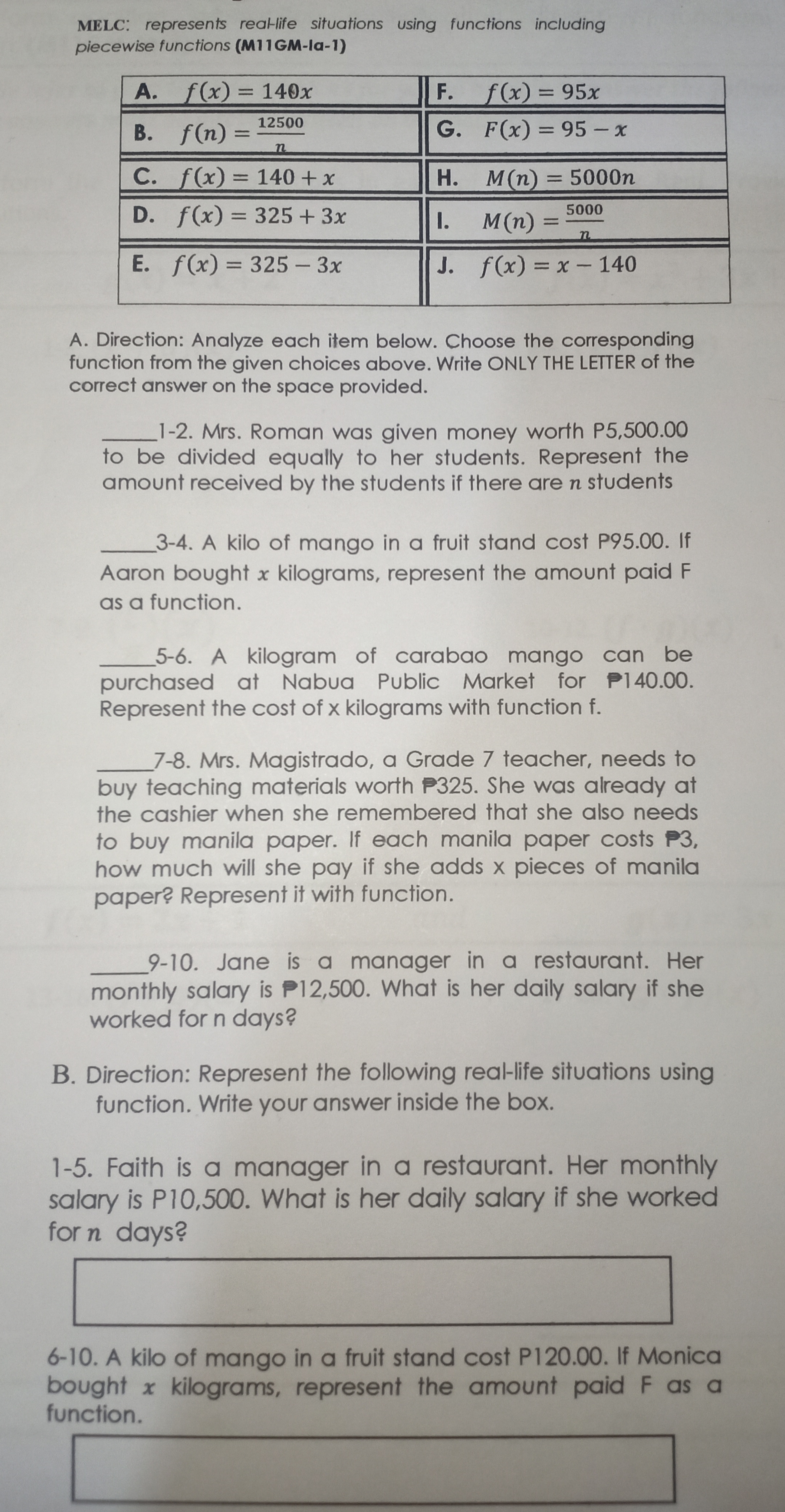
Question: MELC: represents reallife situations using functions including piecewise functions (M1 1GM-la-1) A. f(x) = 140x F. f(x) = 95x B. f(n) = 12500 G. F(x)
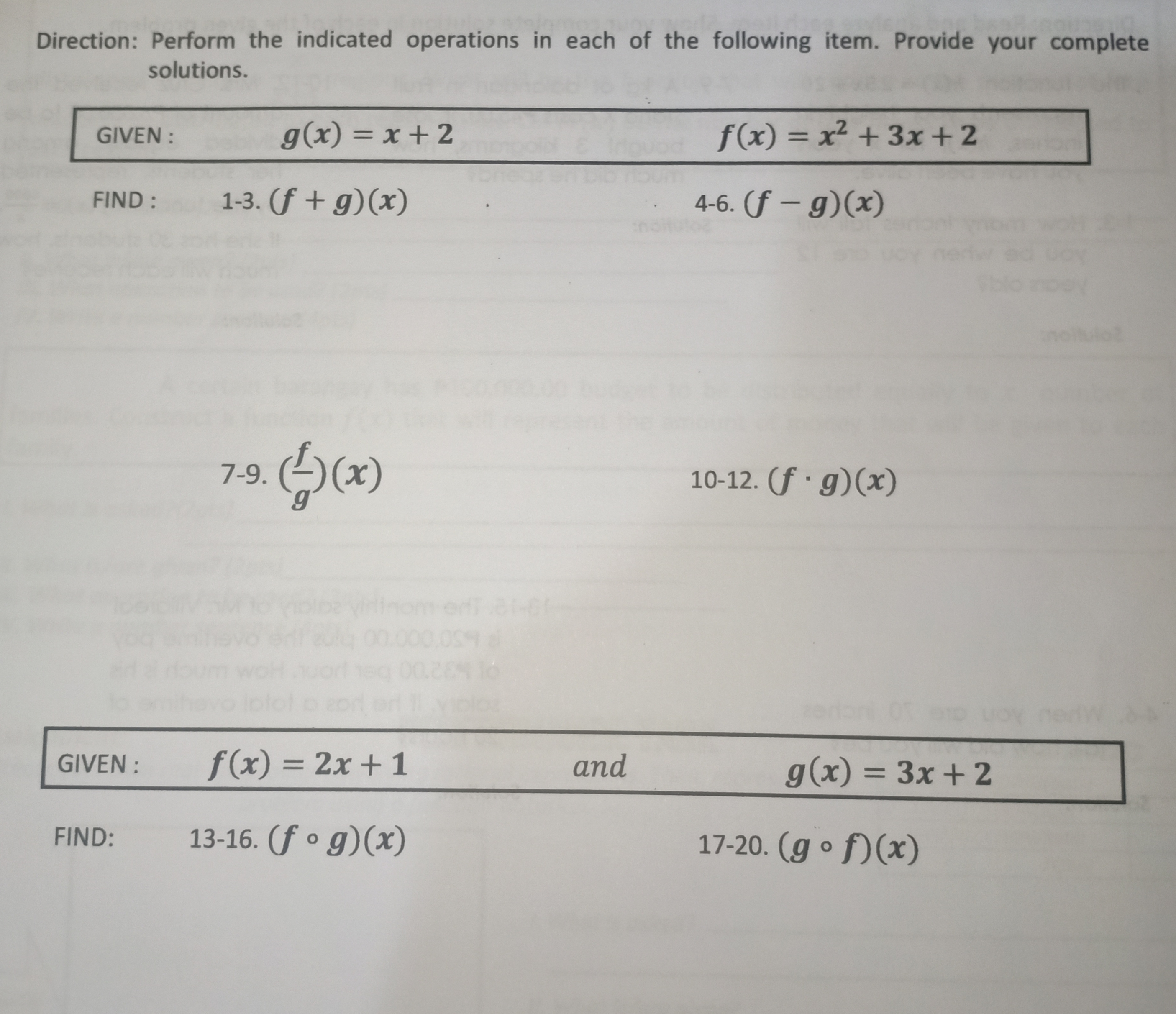
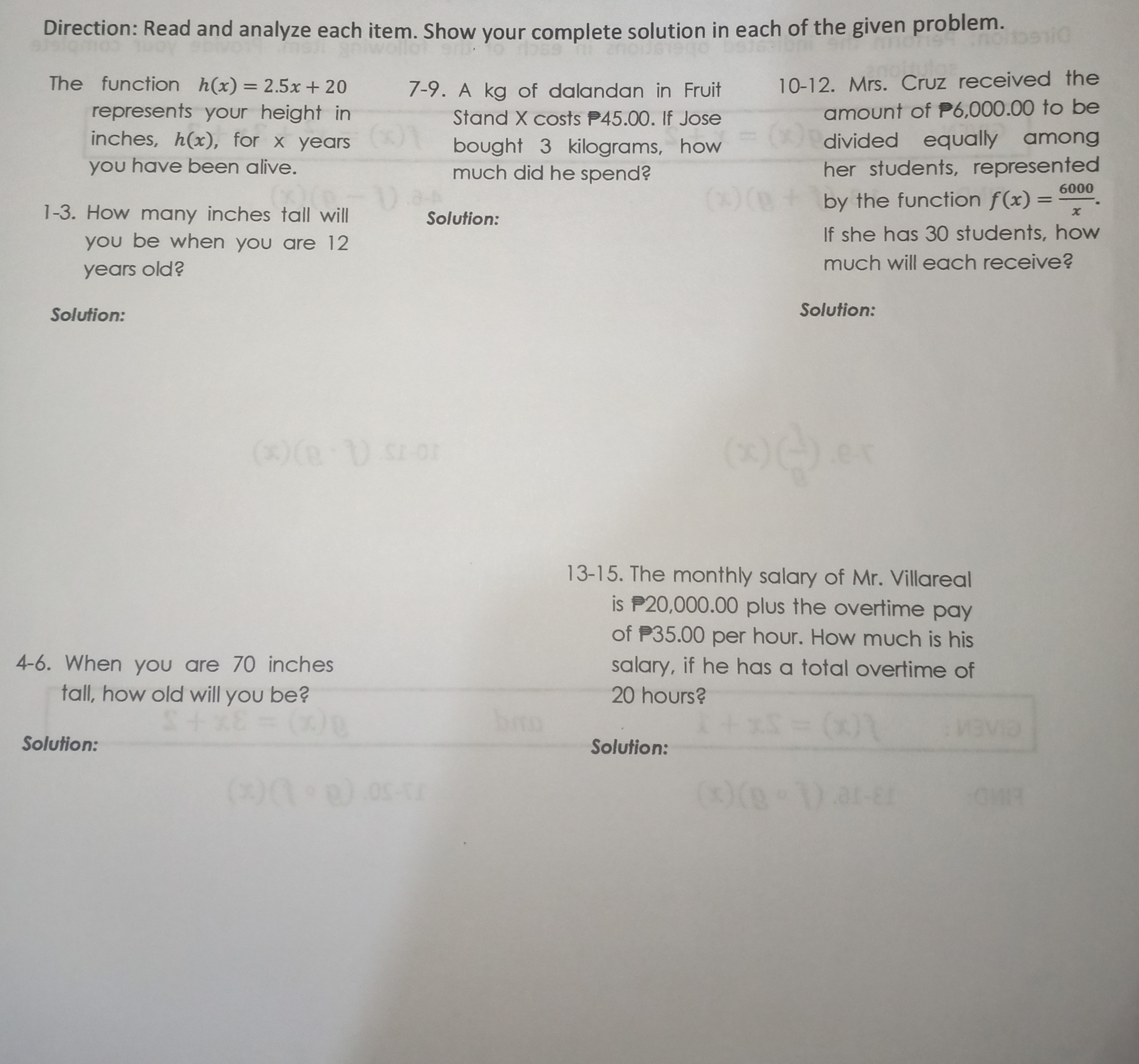
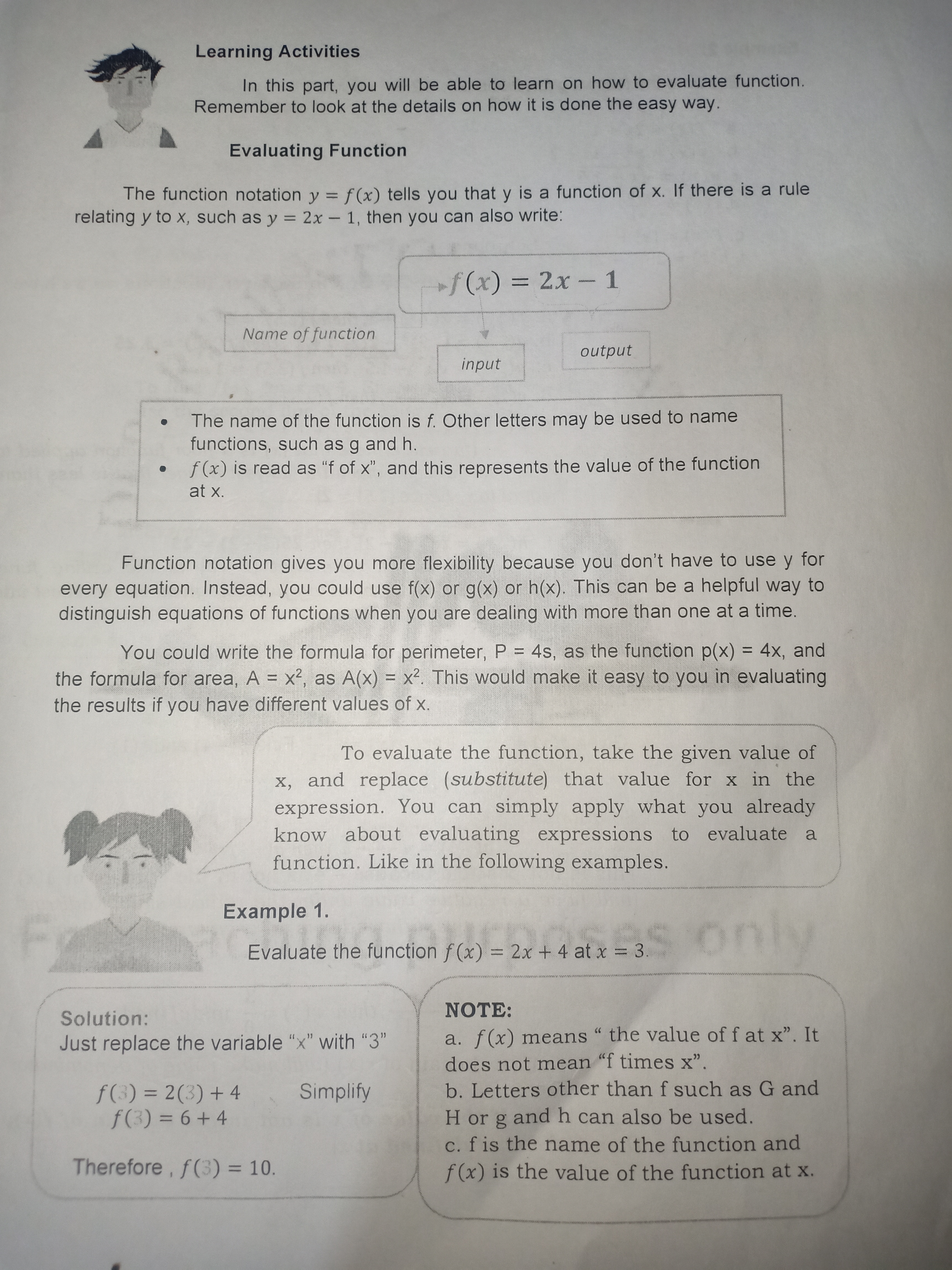
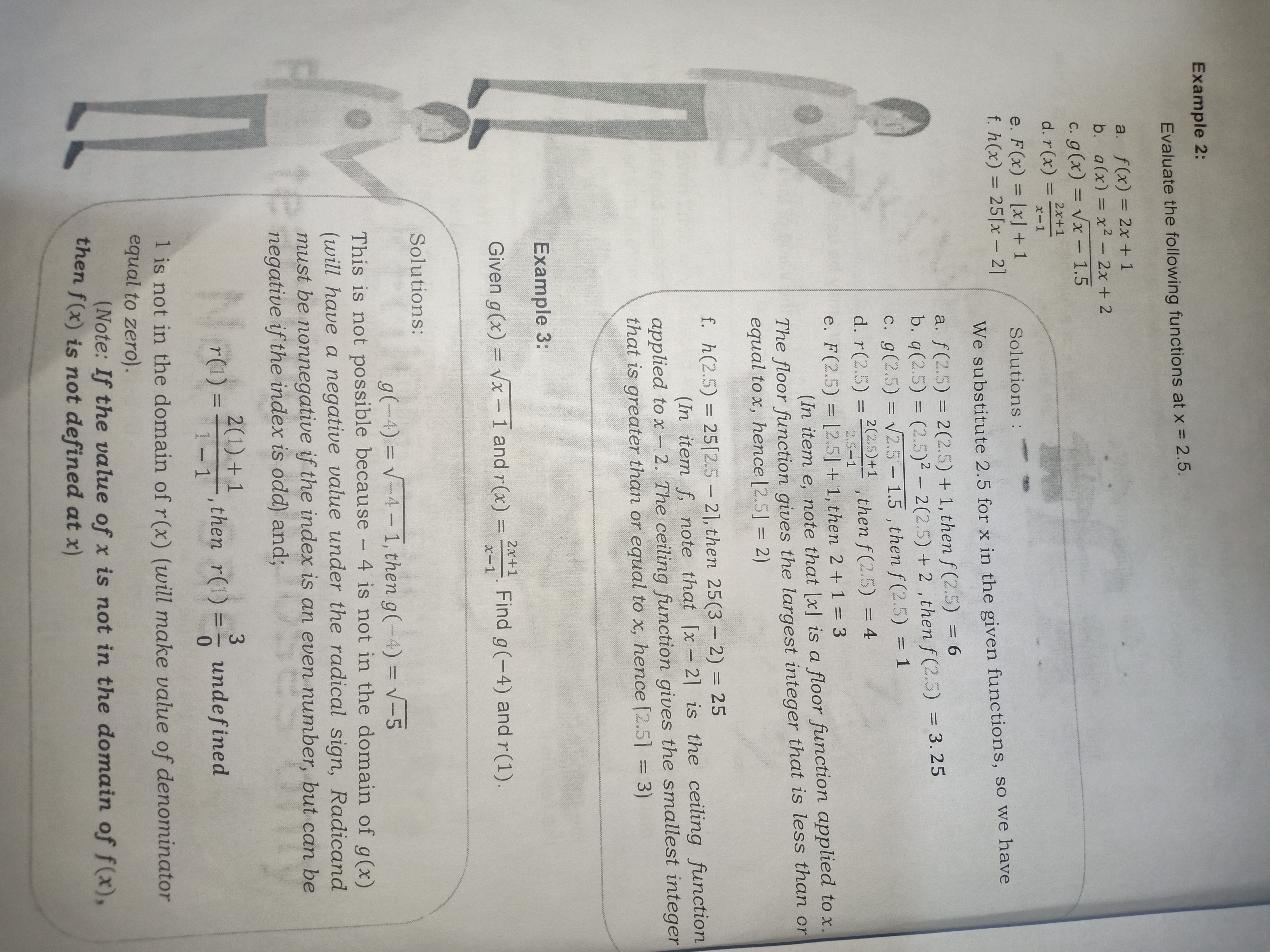
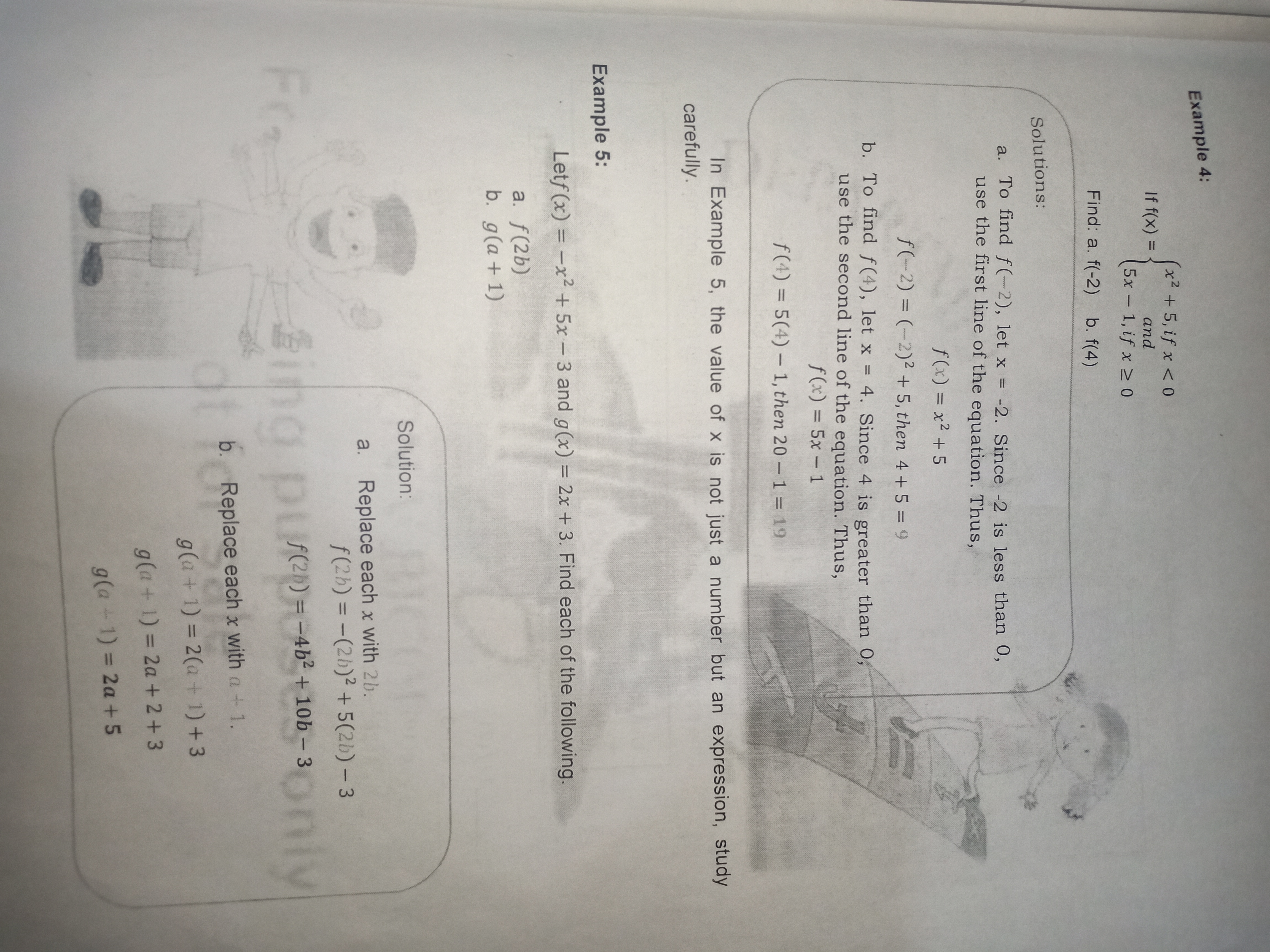
MELC: represents reallife situations using functions including piecewise functions (M1 1GM-la-1) A. f(x) = 140x F. f(x) = 95x B. f(n) = 12500 G. F(x) = 95 - x C. f(x) = 140 + x H. M(n) = 5000n D. f(x) = 325 +3x 1. M(n) 5000 n E. f(x) = 325 - 3x J. f(x) = x-140 A. Direction: Analyze each item below. Choose the corresponding function from the given choices above. Write ONLY THE LETTER of the correct answer on the space provided. 1-2. Mrs. Roman was given money worth P5,500.00 to be divided equally to her students. Represent the amount received by the students if there are n students 3-4. A kilo of mango in a fruit stand cost P95.00. If Aaron bought x kilograms, represent the amount paid F as a function. 5-6. A kilogram of carabao mango can be purchased at Nabua Public Market for P140.00. Represent the cost of x kilograms with function f. 7-8. Mrs. Magistrado, a Grade 7 teacher, needs to buy teaching materials worth P325. She was already at the cashier when she remembered that she also needs to buy manila paper. If each manila paper costs P3, how much will she pay if she adds x pieces of manila paper? Represent it with function. 9-10. Jane is a manager in a restaurant. Her monthly salary is P12,500. What is her daily salary if she worked for n days? B. Direction: Represent the following real-life situations using function. Write your answer inside the box. 1-5. Faith is a manager in a restaurant. Her monthly salary is P10,500. What is her daily salary if she worked for n days? 6-10. A kilo of mango in a fruit stand cost P120.00. If Monica bought x kilograms, represent the amount paid F as a function.Direction: Perform the indicated operations in each of the following item. Provide your complete solutions. GIVEN : g(x) =x+2 f(x) = x2+3x+2 FIND : 1-3. (f + g)(x) 4-6. (f - g)(x) 7-9. ( 2 ) (x ) 10-12. (f . g) (x) 00.000.059 GIVEN : f(x) = 2x+1 and g(x) = 3x +2 FIND: 13-16. (fog)(x) 17-20. (go f) (x)Direction: Read and analyze each item. Show your complete solution in each of the given problem. The function h(x) = 2.5x + 20 7-9. A kg of dalandan in Fruit 10-12. Mrs. Cruz received the represents your height in Stand X costs P45.00. If Jose amount of P6,000.00 to be inches, h(x), for x years bought 3 kilograms, how divided equally among you have been alive. much did he spend? her students, represented by the function f (x ) = -6000 1-3. How many inches tall will Solution: x you be when you are 12 If she has 30 students, how years old? much will each receive? Solution: Solution: 13-15. The monthly salary of Mr. Villareal is P20,000.00 plus the overtime pay of P35.00 per hour. How much is his 4-6. When you are 70 inches salary, if he has a total overtime of tall, how old will you be? 20 hours? MEVID Solution: Solution: ()(8 . D).at-erLearning Activities In this part, you will be able to learn on how to evaluate function. Remember to look at the details on how it is done the easy way. Evaluating Function The function notation y = f(x) tells you that y is a function of x. If there is a rule relating y to x, such as y = 2x - 1, then you can also write: of (x) = 2x-1 Name of function output input The name of the function is f. Other letters may be used to name functions, such as g and h. f(x) is read as "f of x", and this represents the value of the function at X. Function notation gives you more flexibility because you don't have to use y for every equation. Instead, you could use f(x) or g(x) or h(x). This can be a helpful way to distinguish equations of functions when you are dealing with more than one at a time. You could write the formula for perimeter, P = 4s, as the function p(x) = 4x, and the formula for area, A = x2, as A(x) = x2. This would make it easy to you in evaluating the results if you have different values of x. To evaluate the function, take the given value of x, and replace (substitute) that value for x in the expression. You can simply apply what you already know about evaluating expressions to evaluate a function. Like in the following examples. Example 1. Evaluate the function f (x) = 2x + 4 at x = 3. Solution: NOTE: Just replace the variable "x" with "3" a. f(x) means " the value of f at x". It does not mean "f times x". f (3 ) = 2(3) + 4 Simplify b. Letters other than f such as G and f ( 3 ) = 6+4 H or g and h can also be used. c. f is the name of the function and Therefore , f (3) = 10. f (x) is the value of the function at x.Example 2: Evaluate the following functions at x = 2.5. a. f(x) = 2x+1 b. a (x ) = x2 - 2x+2 c. g(x) = Vx-1.5 d. r (x ) = 2x+1 x - 1 e. F(x) = [x] +1 Solutions : f. h(x) = 25/x - 21 We substitute 2.5 for x in the given functions, so we have a. f (2.5) = 2(2.5) + 1, then f (25) = 6 b. q (2.5) = (2.5)2 - 2(2.5) + 2 , then f (2.5) = 3.25 c. g (2.5) = V2.5 -1.5 , then f(2.5) = 1 2.5-1 d. r(2.5) = 2(25)+1 , then f(2.5) = 4 e. F(2.5) = [2.5] + 1, then 2 + 1 = 3 (In item e, note that [x] is a floor function applied to x. The floor function gives the largest integer that is less than or equal to x, hence [2.5] = 2) f. h(2.5) = 25[2.5 - 21, then 25(3 - 2) = 25 (In item f, note that [x - 2] is the ceiling function applied to x - 2. The ceiling function gives the smallest integer that is greater than or equal to x, hence [2.51 = 3) Example 3: Given g(x) = Vx - 1 and r(x) =+1 . Find g (-4) and r(1). Solutions: 9 ( 4. ) = V-4 - 1, then g( 4) = V-5 This is not possible because - 4 is not in the domain of g(x) (will have a negative value under the radical sign, Radicand must be nonnegative if the index is an even number, but can be negative if the index is odd) and; NT() = 2(1)+1 1- 1, then r (1 ) = - undefined 1 is not in the domain of r(x) (will make value of denominator equal to zero). (Note: If the value of x is not in the domain of f(x), then f(x) is not defined at x)Example 4: x2 + 5, if x
Step by Step Solution
There are 3 Steps involved in it
1 Expert Approved Answer
Step: 1 Unlock
Question Has Been Solved by an Expert!
Get step-by-step solutions from verified subject matter experts
Step: 2 Unlock
Step: 3 Unlock
Students Have Also Explored These Related Mathematics Questions!









 Study Help