







Question: Merchandise Management Process Read the overview below and complete the activities that follow. Merchandise management activities are undertaken primarily by buyers and their superiors, divisional
Merchandise Management Process
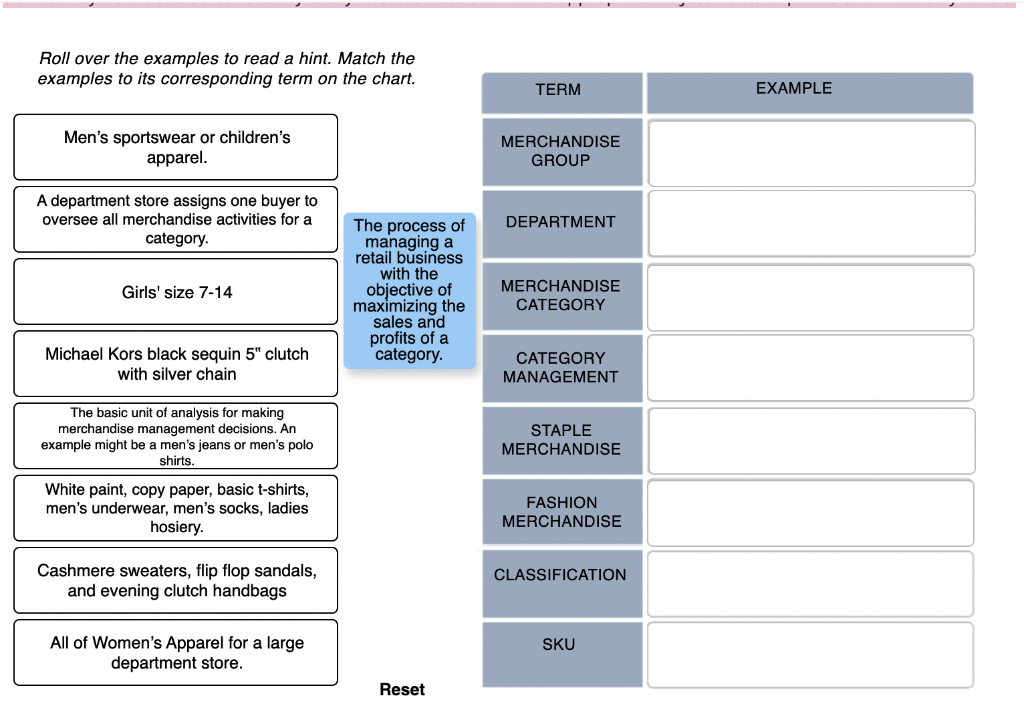
Read the overview below and complete the activities that follow.
Merchandise management activities are undertaken primarily by buyers and their superiors, divisional merchandise managers (DMMs) and general merchandise managers (GMMs). Retailers manage a portfolio of merchandise inventory. They buy merchandise they think will be popular with their customers. The steps in the merchandise management process include: forecasting sales, formulating an assortment plan, determining the appropriate inventory levels, developing a merchandise management plan, allocating merchandise to stores, and monitoring performance. The first stages of the merchandise management process involve forecasting demand and managing inventory levels to meet the needs of customers but to avoid excess inventory costs.
Merchandise management is the process by which a retailer attempts to offer the right quantity of merchandise in the right place at the right time and meet the company's financial goals. Buyers need to anticipate what customers will want to buy and understand market trends. Buyers must also continually analyze sales data and make appropriate adjustments in prices and inventory levels.
Step by Step Solution
There are 3 Steps involved in it

Get step-by-step solutions from verified subject matter experts
 Study Help