



Question: MGMT 332 Corporate Finance ! Module 6: Return, Risk, and the Cost of Capital Problem Set 6 - Return, Risk, and the Cost of Capital
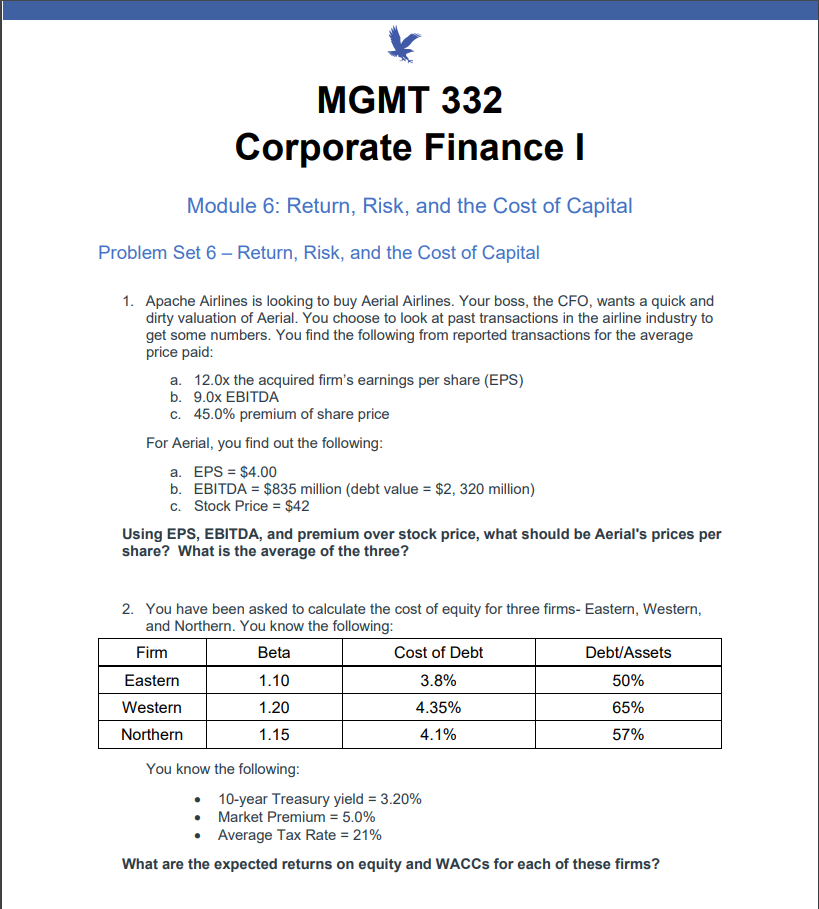
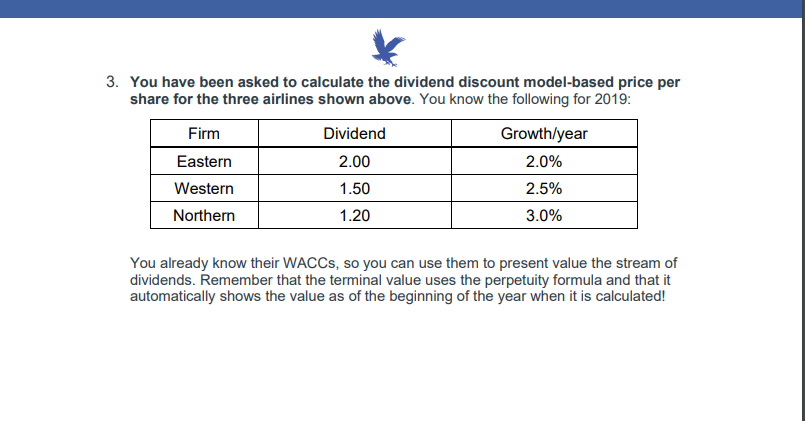
MGMT 332 Corporate Finance ! Module 6: Return, Risk, and the Cost of Capital Problem Set 6 - Return, Risk, and the Cost of Capital 1. Apache Airlines is looking to buy Aerial Airlines. Your boss, the CFO, wants a quick and dirty valuation of Aerial. You choose to look at past transactions in the airline industry to get some numbers. You find the following from reported transactions for the average price paid: a. 12.0x the acquired firm's earnings per share (EPS) b. 9.0x EBITDA C. 45.0% premium of share price For Aerial, you find out the following: a. EPS = $4.00 b. EBITDA = $835 million (debt value = $2, 320 million) c. Stock Price = $42 Using EPS, EBITDA, and premium over stock price, what should be Aerial's prices per share? What is the average of the three? 2. You have been asked to calculate the cost of equity for three firms- Eastern, Western, and Northern. You know the following: Firm Beta Cost of Debt Debt/Assets Eastern 1.10 3.8% 50% Western 1.20 4.35% 65% Northern 1.15 4.1% 57% You know the following: 10-year Treasury yield = 3.20% Market Premium = 5.0% Average Tax Rate = 21% What are the expected returns on equity and WACCs for each of these firms? 3. You have been asked to calculate the dividend discount model-based price per share for the three airlines shown above. You know the following for 2019: Firm Dividend Growth/year Eastern 2.00 2.0% Western 1.50 2.5% Northern 1.20 3.0% You already know their WACCs, so you can use them to present value the stream of dividends. Remember that the terminal value uses the perpetuity formula and that it automatically shows the value as of the beginning of the year when it is calculated! MGMT 332 Corporate Finance ! Module 6: Return, Risk, and the Cost of Capital Problem Set 6 - Return, Risk, and the Cost of Capital 1. Apache Airlines is looking to buy Aerial Airlines. Your boss, the CFO, wants a quick and dirty valuation of Aerial. You choose to look at past transactions in the airline industry to get some numbers. You find the following from reported transactions for the average price paid: a. 12.0x the acquired firm's earnings per share (EPS) b. 9.0x EBITDA C. 45.0% premium of share price For Aerial, you find out the following: a. EPS = $4.00 b. EBITDA = $835 million (debt value = $2, 320 million) c. Stock Price = $42 Using EPS, EBITDA, and premium over stock price, what should be Aerial's prices per share? What is the average of the three? 2. You have been asked to calculate the cost of equity for three firms- Eastern, Western, and Northern. You know the following: Firm Beta Cost of Debt Debt/Assets Eastern 1.10 3.8% 50% Western 1.20 4.35% 65% Northern 1.15 4.1% 57% You know the following: 10-year Treasury yield = 3.20% Market Premium = 5.0% Average Tax Rate = 21% What are the expected returns on equity and WACCs for each of these firms? 3. You have been asked to calculate the dividend discount model-based price per share for the three airlines shown above. You know the following for 2019: Firm Dividend Growth/year Eastern 2.00 2.0% Western 1.50 2.5% Northern 1.20 3.0% You already know their WACCs, so you can use them to present value the stream of dividends. Remember that the terminal value uses the perpetuity formula and that it automatically shows the value as of the beginning of the year when it is calculated
Step by Step Solution
There are 3 Steps involved in it

Get step-by-step solutions from verified subject matter experts