







Question: Module 2: Participation Activity #1 Find the limit. To enter oo in your answer field, . When you are in text entry mode (when your
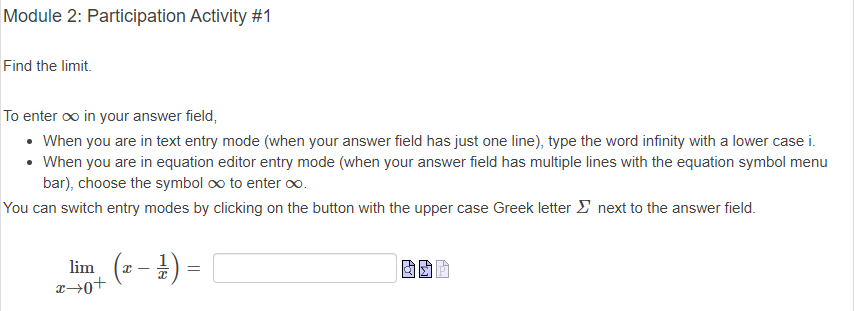
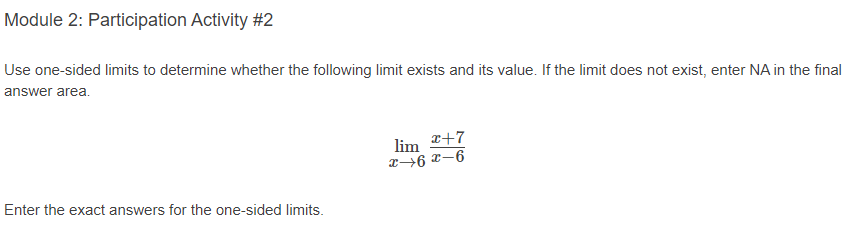
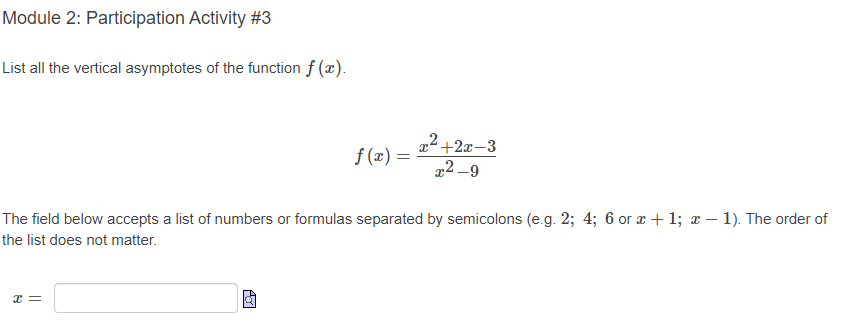





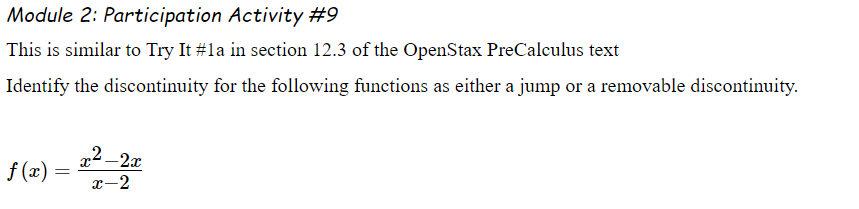
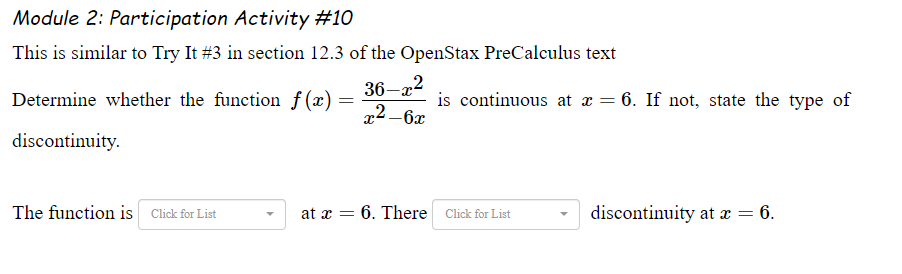
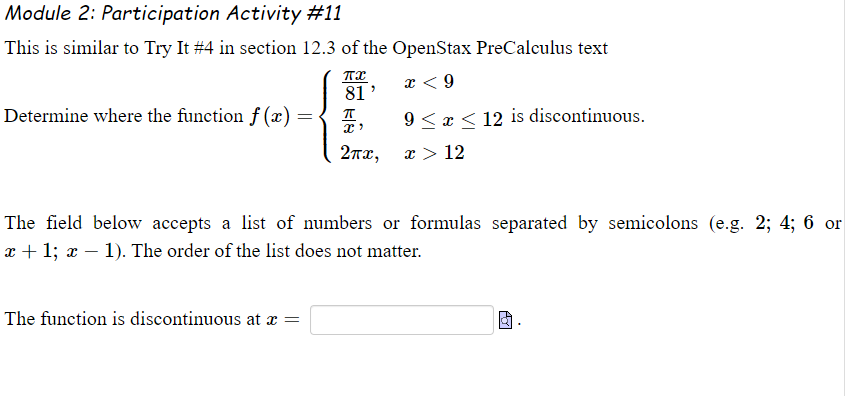
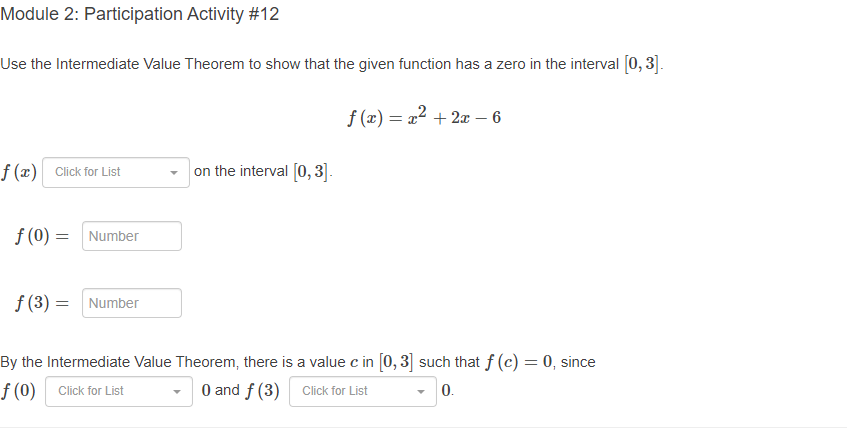
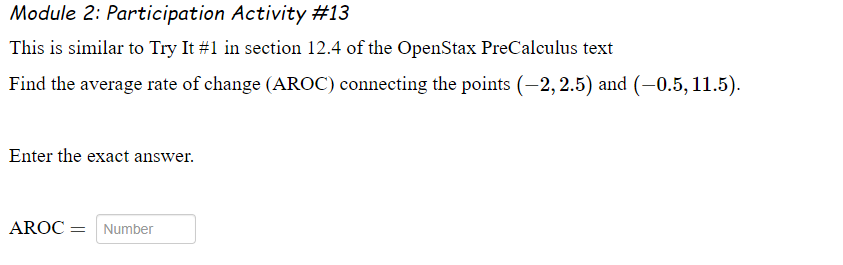
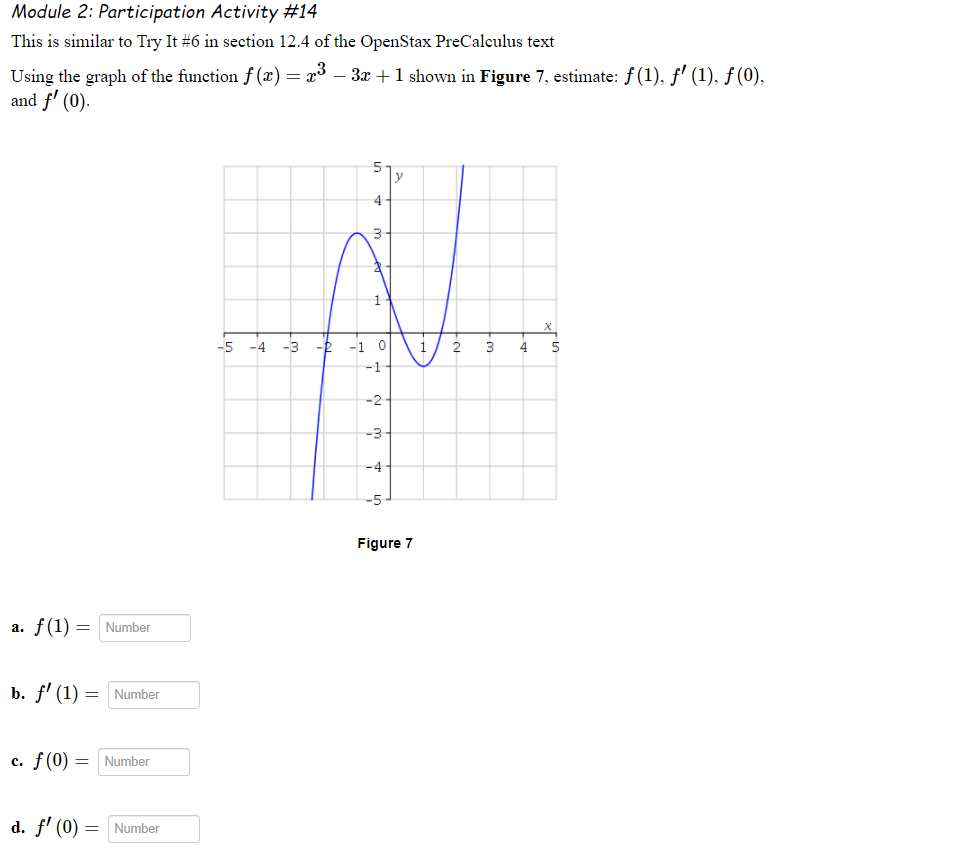
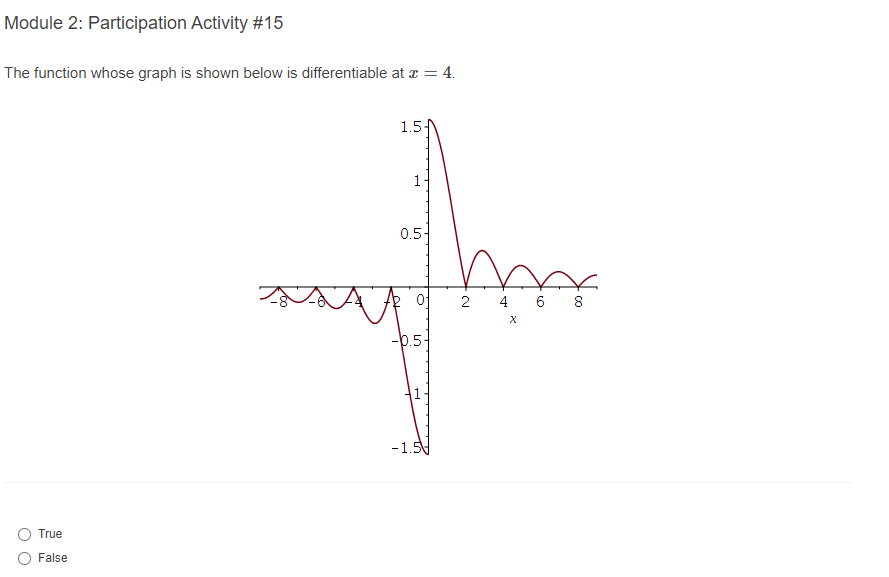
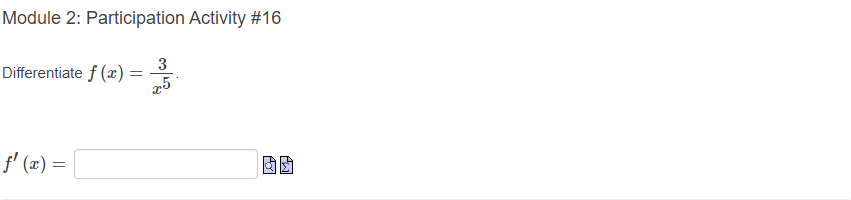
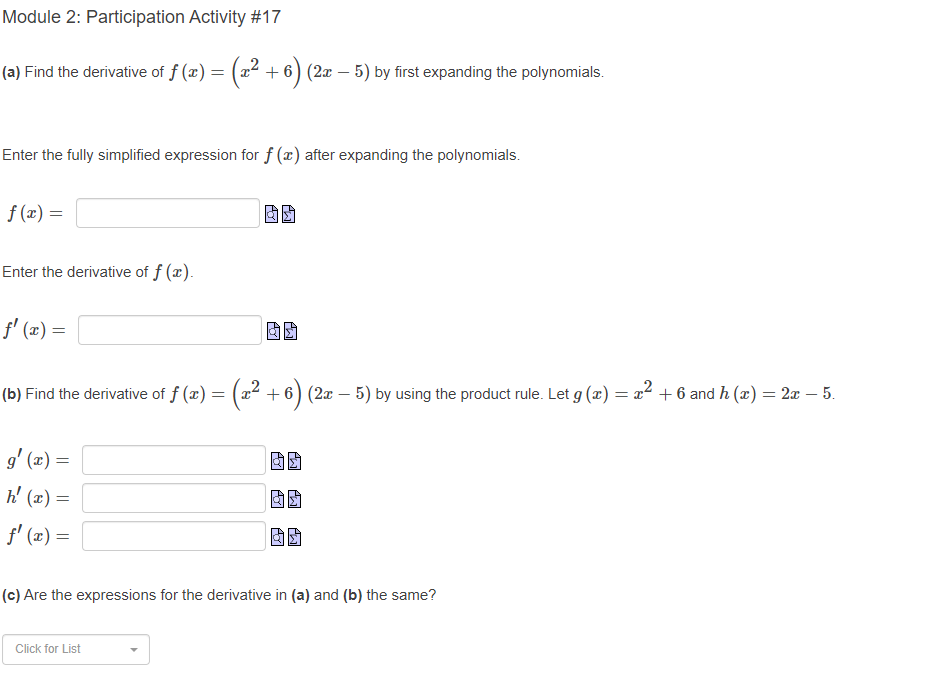
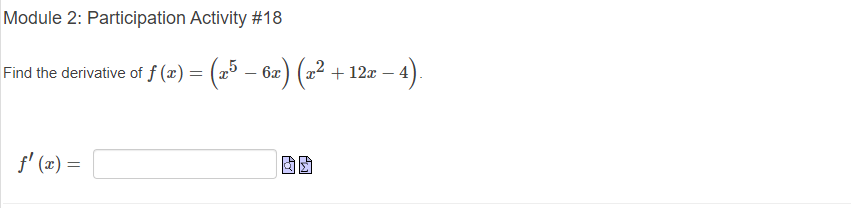
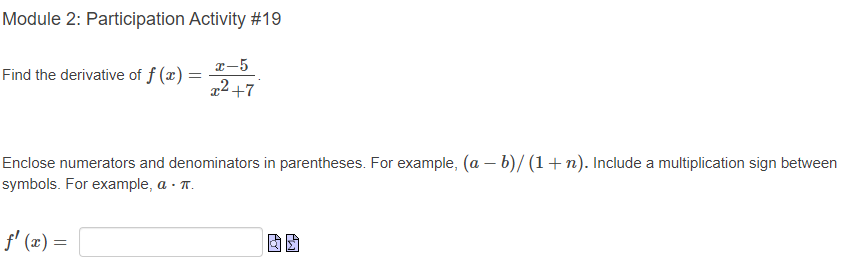
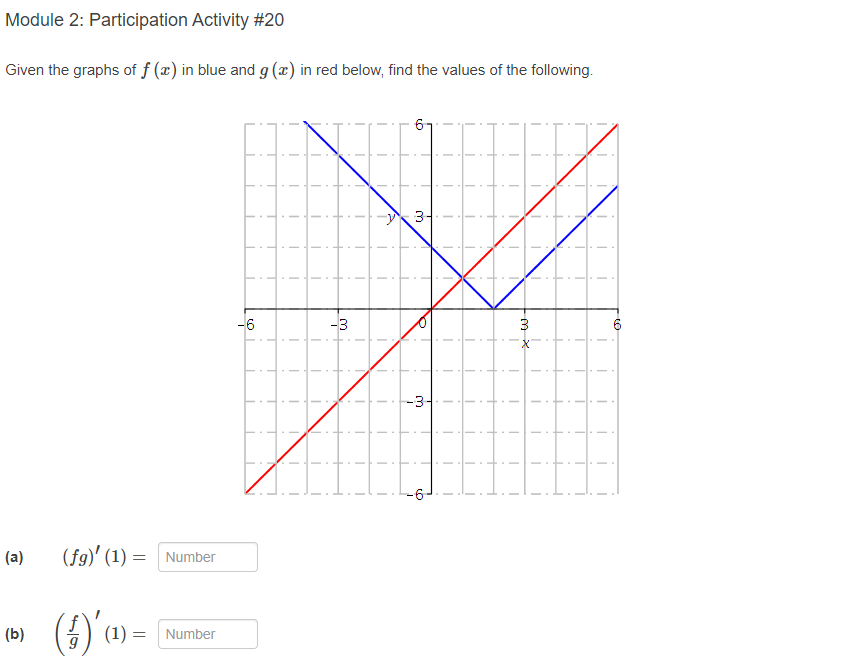
Module 2: Participation Activity #1 Find the limit. To enter oo in your answer field, . When you are in text entry mode (when your answer field has just one line), type the word infinity with a lower case i. . When you are in equation editor entry mode (when your answer field has multiple lines with the equation symbol menu bar), choose the symbol oo to enter co. You can switch entry modes by clicking on the button with the upper case Greek letter _ next to the answer field. lim -07Module 2: Participation Activity #2 Use onesided limits to determine whether the following limit exists and its value. If the limit does not exist, enter NA in the nal answer area. Hm $+7 :1:>6 36 Enter the exact answers for the oneSided limits. Module 2: Participation Activity #3 List all the vertical asymptotes of the function f (x). f (x) = +2x-3 x2-9 The field below accepts a list of numbers or formulas separated by semicolons (e.g. 2; 4; 6 or x + 1; x - 1). The order of the list does not matter.Module 2: Participation Activity #4 Find lim 325 C-+00Module 2: Participation Activity #5 Find lim 72-6Module 2: Participation Activity #6 Evaluate the following limit. Enter the exact answer in fraction form, if necessary.Module 2: Participation Activity #7 Evaluate the following limit. Enter the exact answer in fraction form, if necessary.Module 2: Participation Activity #3 Evaluate the following limit. Enter the exact answer in fraction form, if necessary. Moduie 2: Participation Activity #9 This is similar to Try It #121 in section 12.3 of the OpenStax PreCaloulus text Identify the discontinuity for the following functions as either a jump or a removable discontinuity. 2 :1: HI} = 23 Module 2: Participation Activity #10 This is similar to Try It #3 in section 12.3 of the OpenStax PreCalculus text Determine whether the function f(x) - 36-2-2 is continuous at * = 6. If not, state the type of x2 -6x discontinuity. The function is Click for List at x = 6. There Click for List discontinuity at x = 6.Module 2: Participation Activity #11 This is similar to Try It #4 in section 12.3 of the OpenStax PreCalculus text 81 ' a 12 The field below accepts a list of numbers or formulas separated by semicolons (e.g. 2; 4; 6 or x + 1; x -1). The order of the list does not matter. The function is discontinuous at x =Module 2: Participation Activity #12 Use the Intermediate Value Theorem to shew that the given function has a zero in the interval [0, 3]. ft$]=22 +2z6 f [z] I Clickiur List If Ion the interval [0,3]_ 3' {} = I Number I f {3) = I Number I By the Intermediate Value Theorem. there is a value c in It}, 3] such that f {c} = II]. since ft} [WI [land g) Imp Module 2: Participation Activity #13 This is similar to Try It #1 in section 12.4 of the OpenStax PreCalculus text Find the average rate of change (AROC) connecting the points (-2, 2.5) and (-0.5, 11.5). Enter the exact answer. AROC = NumberModule 2: Participation Activity #14 This is similar to Try It #6 in section 12.4 of the OpenStax PreCalculus text Using the graph of the function f (x) = x3 - 3x + 1 shown in Figure 7, estimate: f (1), f' (1), f (0), and f' (0). 57 4- 3. 5 -4 -3 2 W - 4 -2 -3 -4 Figure 7 a. f (1) = Number b. f' (1) = Number c. f(0) = Number d. f' (0) = NumberModule 2: Participation Activity #15 The function whose graph is shown below is differentiable at x = 4. 1.5- 1 0.5- of 2 4 6 8 X -0.5 -1.53 O True O FalseModule 2: Participation Activity #16 Differentiate f (x) = f (x) =Module 2: Participation Activity #17 (a) Find the derivative of f (x) = (x2 + 6 ) (2x - 5) by first expanding the polynomials. Enter the fully simplified expression for f () after expanding the polynomials. f (z) = Enter the derivative of f (I). f (x) = (b) Find the derivative of f (x) = (x2 + 6) (2x - 5) by using the product rule. Let g (x) = x2 + 6 and h (x) = 2x - 5. g (x) = h (x) = f (x) = (c) Are the expressions for the derivative in (a) and (b) the same? Click for List\fModule 2: Participation Activity #19 Find the derivative of f (@) = -5 12+7 Enclose numerators and denominators in parentheses. For example, (a - b)/ (1 + n). Include a multiplication sign between symbols. For example, a . IT. f (x) =Module 2: Participation Activity #20 Given the graphs of f (x) in blue and g () in red below, find the values of the following. 3- -6 -3 6 * W -3 (a) (fg) (1) = Number (b ) (1 ) : Number
Step by Step Solution
There are 3 Steps involved in it

Get step-by-step solutions from verified subject matter experts
 Study Help