Question: Module Four Discussion: F-Test for Comparing Nested Models Impaortant: You will not be doing a problem set in this module so as to allow you
Module Four Discussion: F-Test for ComparingModule Four Discussion: F-Test for ComparingModule Four Discussion: F-Test for ComparingModule Four Discussion: F-Test for ComparingModule Four Discussion: F-Test for ComparingModule Four Discussion: F-Test for ComparingModule Four Discussion: F-Test for ComparingModule Four Discussion: F-Test for Comparing
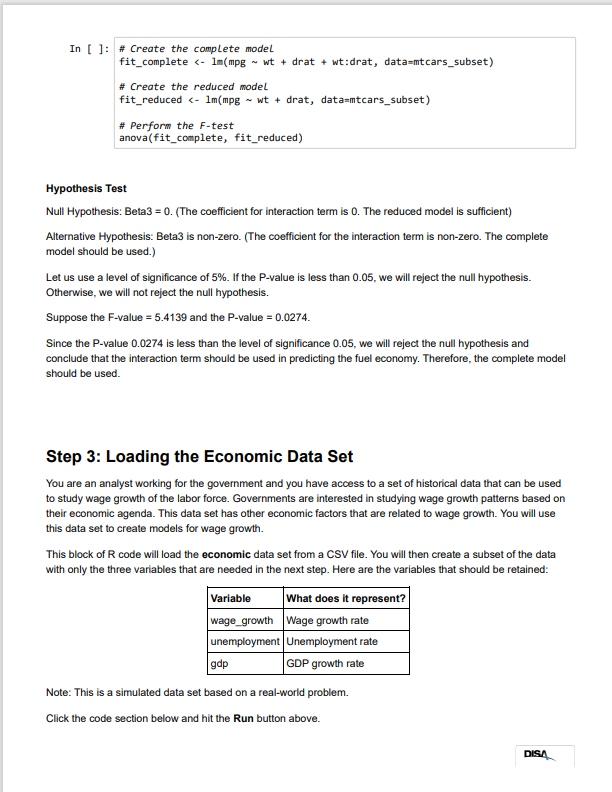
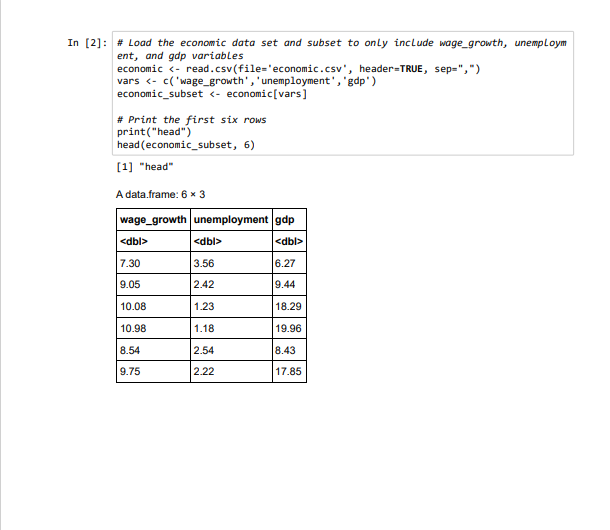
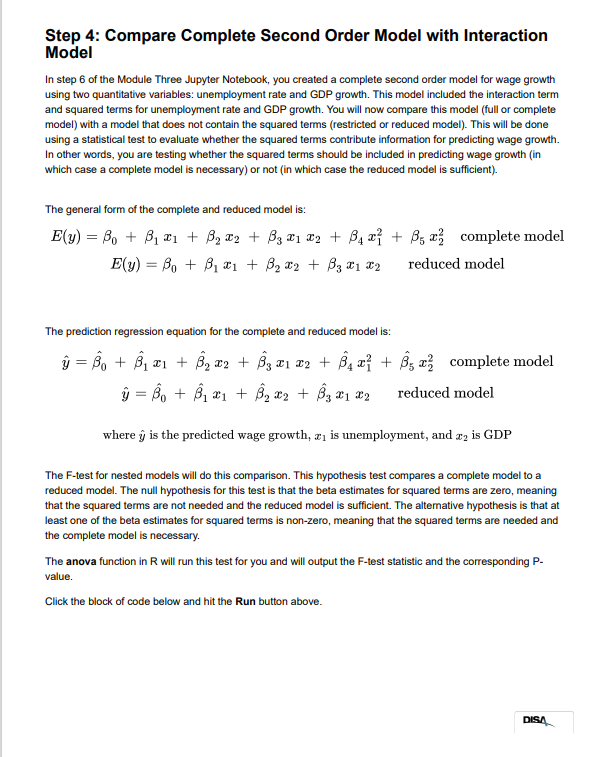
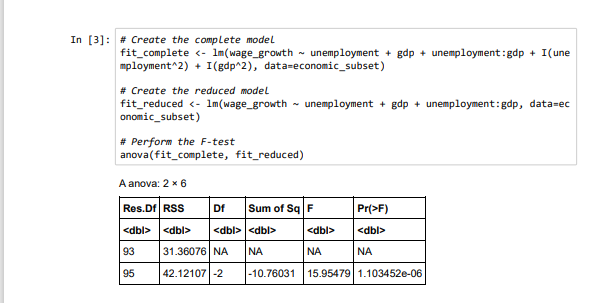
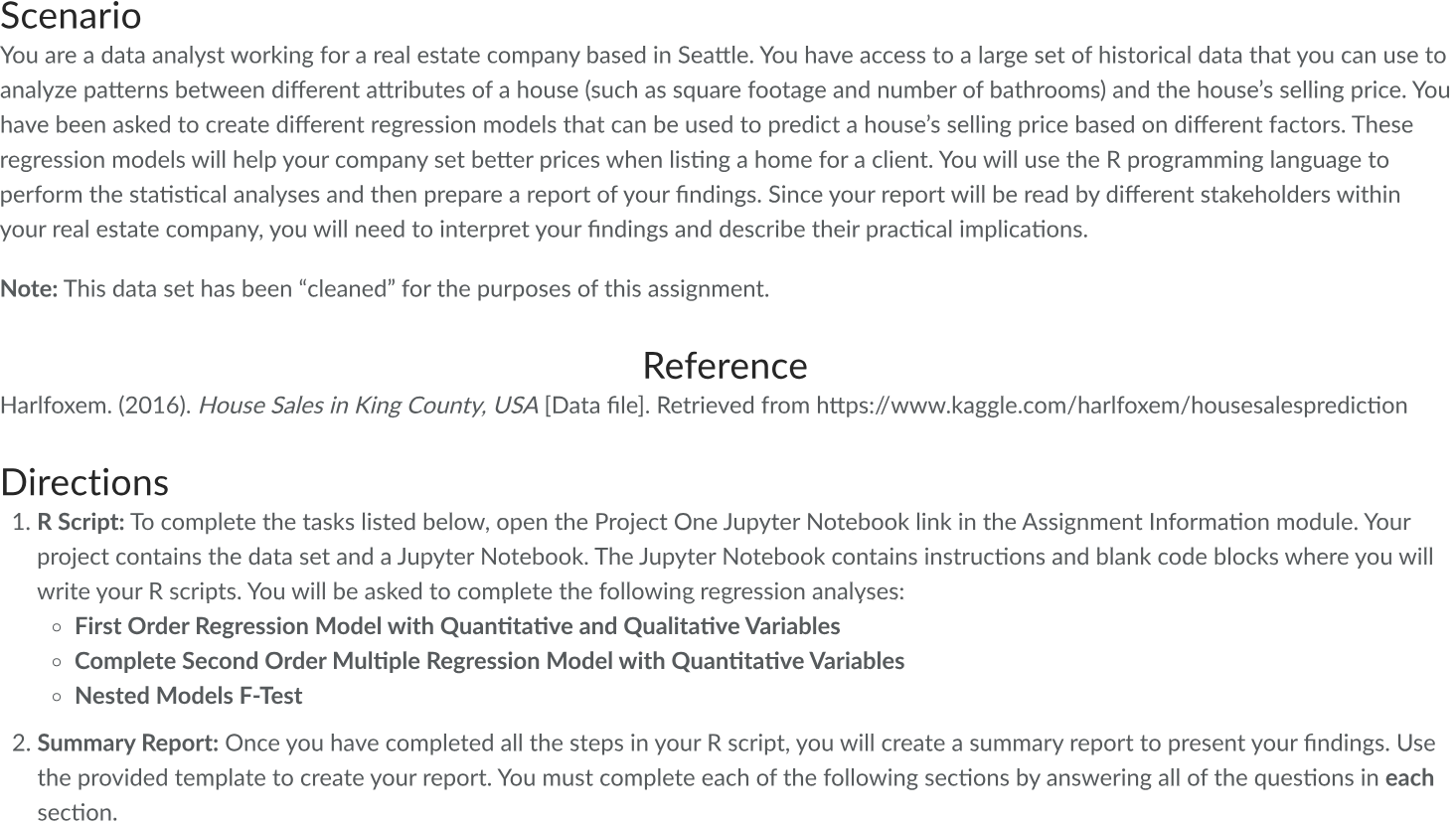
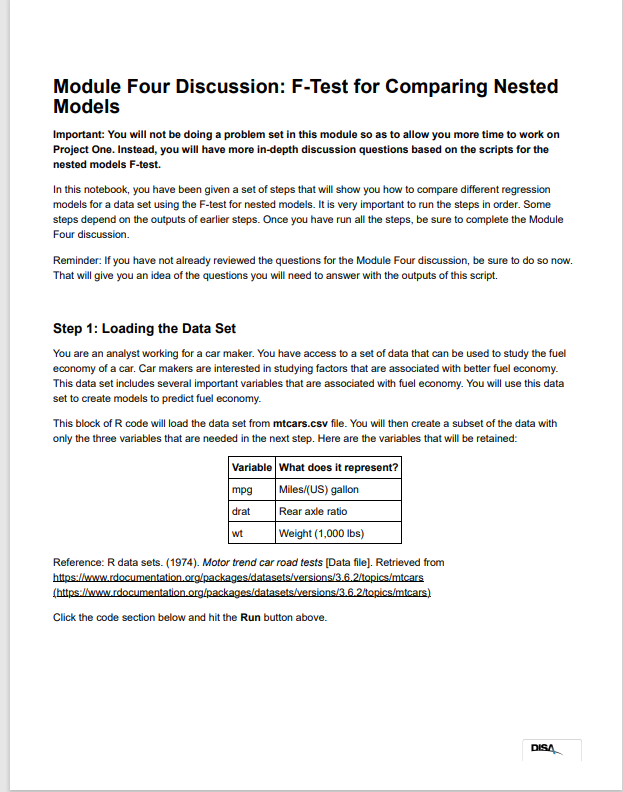
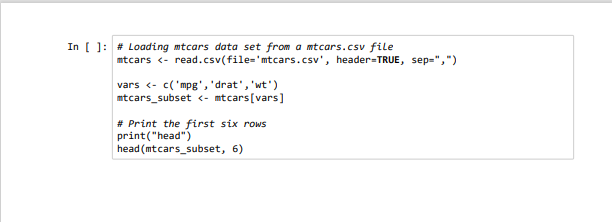
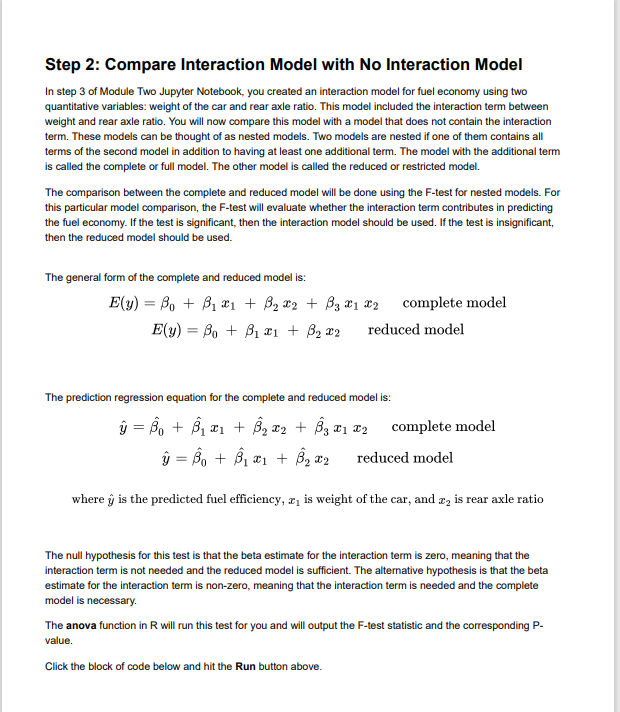
Module Four Discussion: F-Test for Comparing Nested Models Impaortant: You will not be doing a problem set in this module so as to allow you more time to work on Project One. Instead, you will have more in-dapth discussion questions based on the scripts for the nested models F-test. In this notebook, you have been given a set of steps that will show you how to compare different regression madels for a data set using the F-test for nested models. It is very important to run the steps in order. Some steps depend on the outputs of earlier steps. Once you have run all the steps, be sure to complata the Module Four discussion. Reminder: If you have not already reviewed the questions for the Module Four discussion, be sure to do so now. That will give you an idea of the questions you will need to answer with the outputs of this script. Step 1: Loading the Data Set You are an analyst working for a car maker. You have acoess to a set of data that can be used to study the fusl economy of a car. Car makers are interesied in studying factors that are associated with better fuel economy. This data set includes several Important variables that are associated with fuel economy. You will use this data set to create models to predict fuel economy. This block of R code will load the data set from mtcars.csv file. You will then create a subset of the data with only the three variables that are needed in the next step. Here are the variables that will be retained: What does it represent? Miles/{US) gallon Rear axbe ratio Weight (1,000 Ibs) Click the code section below and hit the Run button above. In [ ]: # Loading atcars data set from a mtcors. cav file mtcars Edbl> 7.30 3.56 6.27 9.05 2.42 9.44 10.08 1.23 18.29 10.98 1.18 19.96 8.54 2.54 3.43 9.75 2.22 17.85Step 4: Compare Complete Second Order Model with Interaction Model In step 6 of the Module Three Jupyter Notebook, you created a complete second order model for wage growth using two quantitative variables: unemployment rate and GDP growth. This model included the interaction term and squared terms for unemployment rate and GDP growth. You will now compare this model (full or complete model) with a model that does not contain the squared terms (restricted or reduced model). This will be done using a statistical test to evaluate whether the squared terms contribute information for predicting wage growth. In other words, you are testing whether the squared terms should be included in predicting wage growth (in which case a complete model is necessary) or not (in which case the reduced model is sufficient). The general form of the complete and reduced model is: E(y) = Bo + B1 1 + By + By mix, + Bar; + Box; complete model E(y) = Bo + Bit + Boxz + By x x2 reduced model The prediction regression equation for the complete and reduced model is: y =Bo+ 8x1 + 82x2 + 8321 x2 + 8, x; + 85 x, complete model y = Bo + Bix1 + 82x2 + 83 x1 22 reduced model where y is the predicted wage growth, z1 is unemployment, and x2 is GDP The F-test for nested models will do this comparison. This hypothesis test compares a complete model to a reduced model. The null hypothesis for this test is that the beta estimates for squared terms are zero, meaning that the squared terms are not needed and the reduced model is sufficient. The alternative hypothesis is that at least one of the beta estimates for squared terms is non-zero, meaning that the squared terms are needed and the complete model is necessary. The anova function in R will run this test for you and will output the F-test statistic and the corresponding P- value. Click the block of code below and hit the Run button above. DISAIn [3]: # Create the complete model fit_complete F) 93 31.36076 NA NA NA NA 95 42.12107 -2 -10.76031 15.95479 1.103452e-06Scenario You are a data analyst working for a real estate company based in Seattle. You have access to a large set of historical data that you can use to analyze patterns between different attributes of a house (such as square footage and number of bathrooms) and the house's selling price. You have been asked to create different regression models that can be used to predict a house's selling price based on different factors. These regression models will help your company set better prices when listing a home for a client. You will use the R programming language to perform the statistical analyses and then prepare a report of your findings. Since your report will be read by different stakeholders within your real estate company, you will need to interpret your findings and describe their practical implications. Note: This data set has been \"cleaned\" for the purposes of this assignment. Reference Harlfoxem. (2016). House Sales in King County, USA [Data file]. Retrieved from https:/www.kaggle.com/harlfoxem/housesalesprediction Directions 1. R Script: To complete the tasks listed below, open the Project One Jupyter Notebook link in the Assignment Information module. Your project contains the data set and a Jupyter Notebook. The Jupyter Notebook contains instructions and blank code blocks where you will write your R scripts. You will be asked to complete the following regression analyses: o First Order Regression Model with Quantitative and Qualitative Variables o Complete Second Order Multiple Regression Model with Quantitative Variables o Nested Models F-Test 2. Summary Report: Once you have completed all the steps in your R script, you will create a summary report to present your findings. Use the provided template to create your report. You must complete each of the following sections by answering all of the questions in each
Step by Step Solution

There are 3 Steps involved in it

1 Expert Approved Answer
Step: 1 Unlock blur-text-image

Question Has Been Solved by an Expert!

Get step-by-step solutions from verified subject matter experts

Step: 2 Unlock
Step: 3 Unlock

Students Have Also Explored These Related Mathematics Questions!