







Question: Monetary Policy Problem Set1 1. Suppose the Fed decreases the discount rate. As a result of this policy, what will happen to the money supply
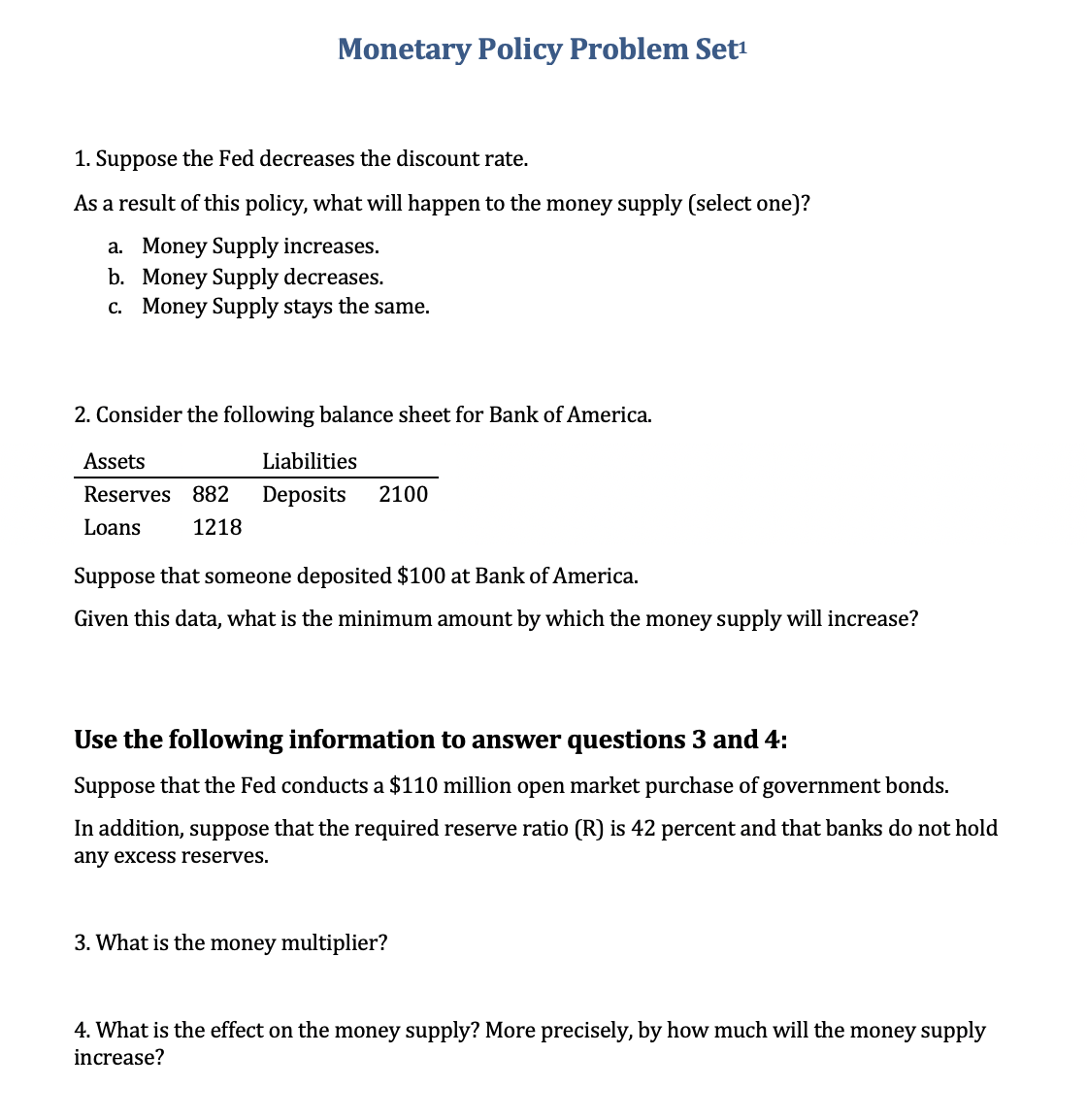
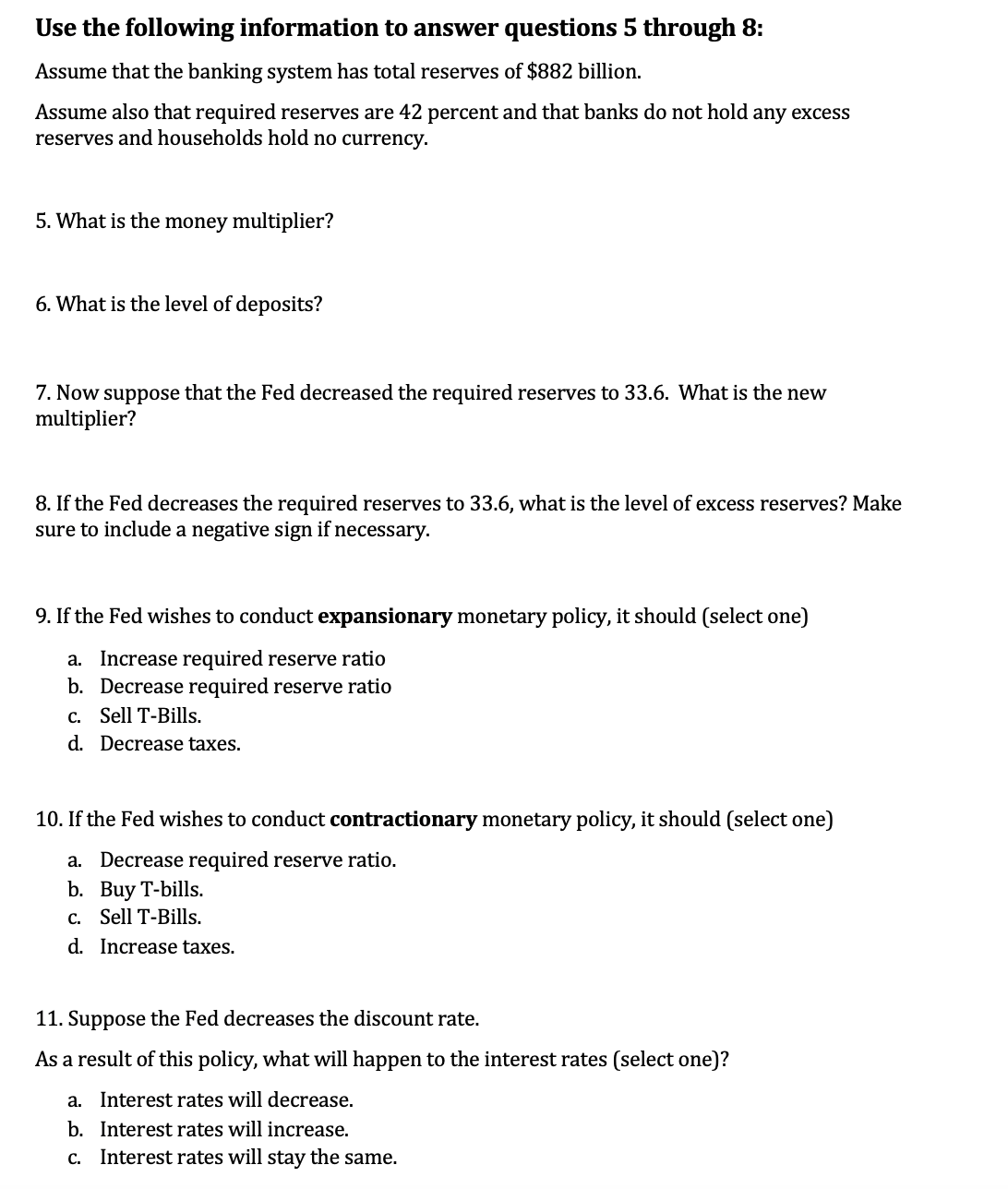
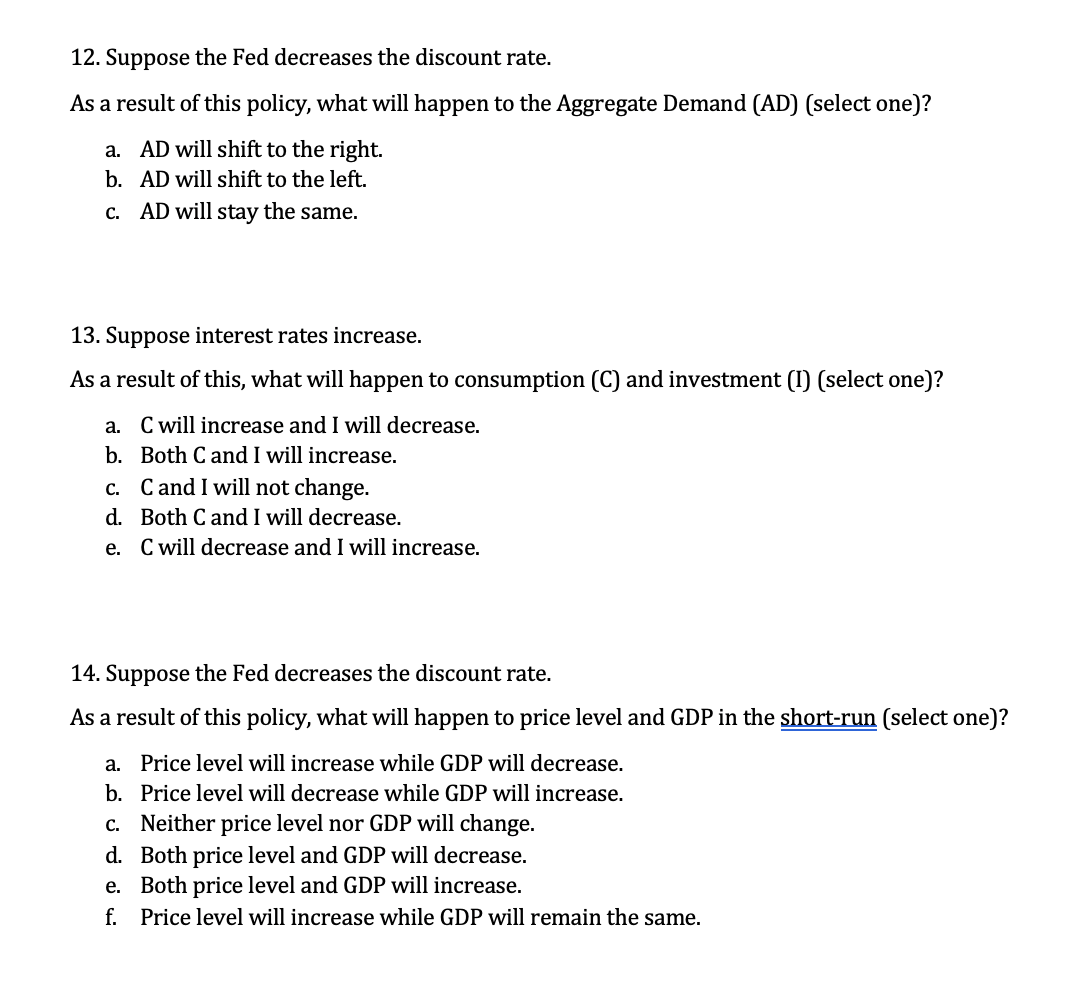
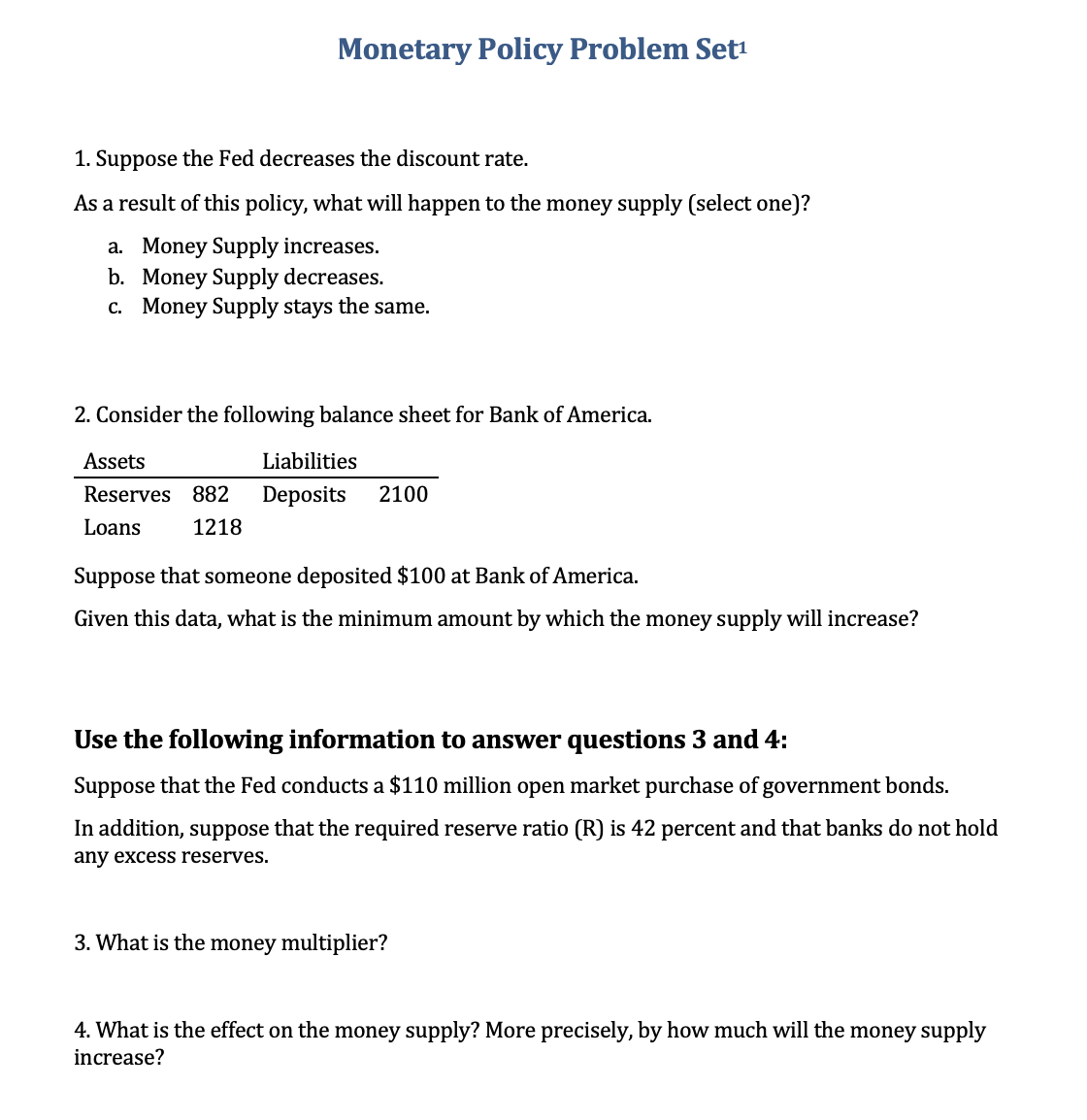
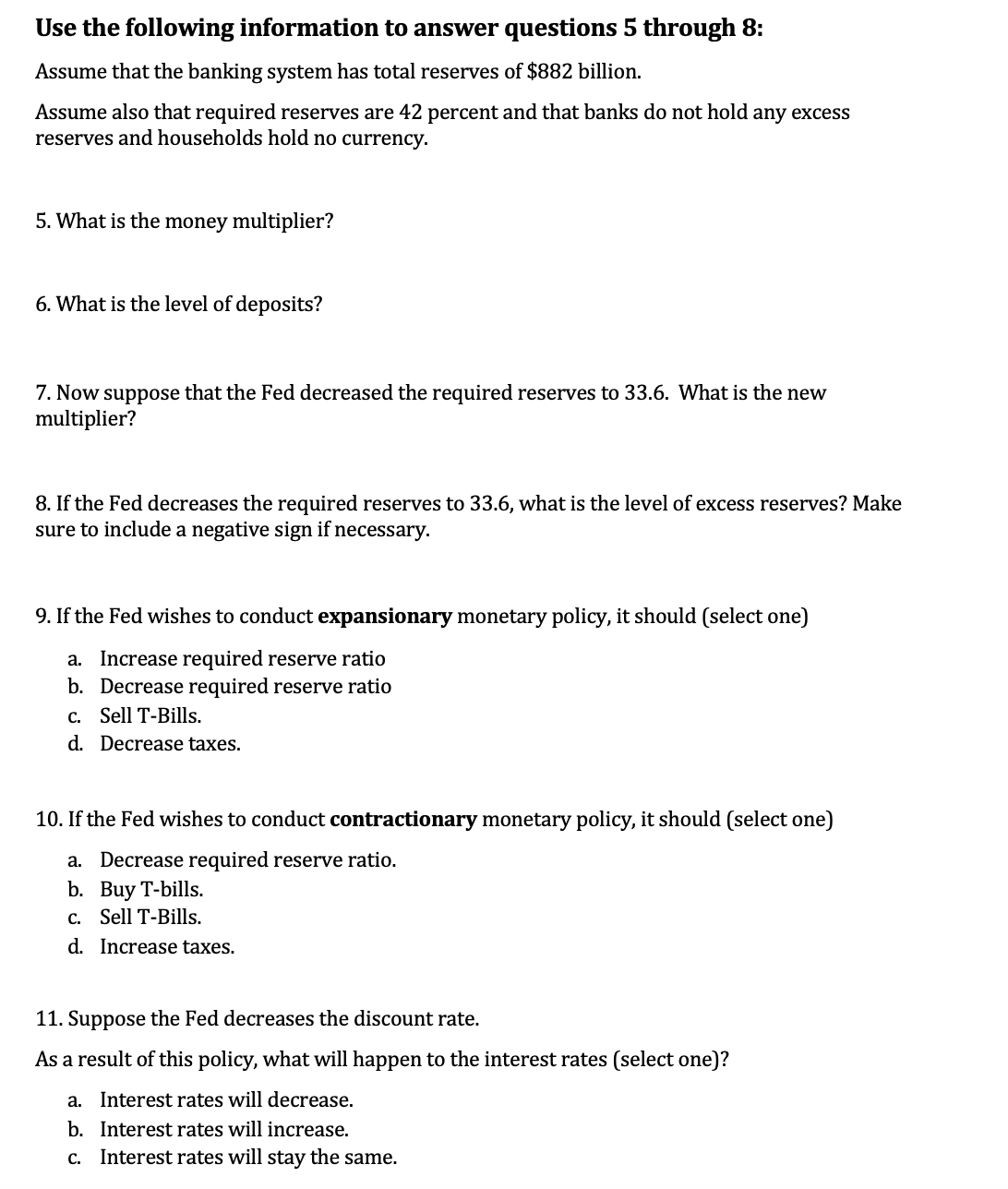
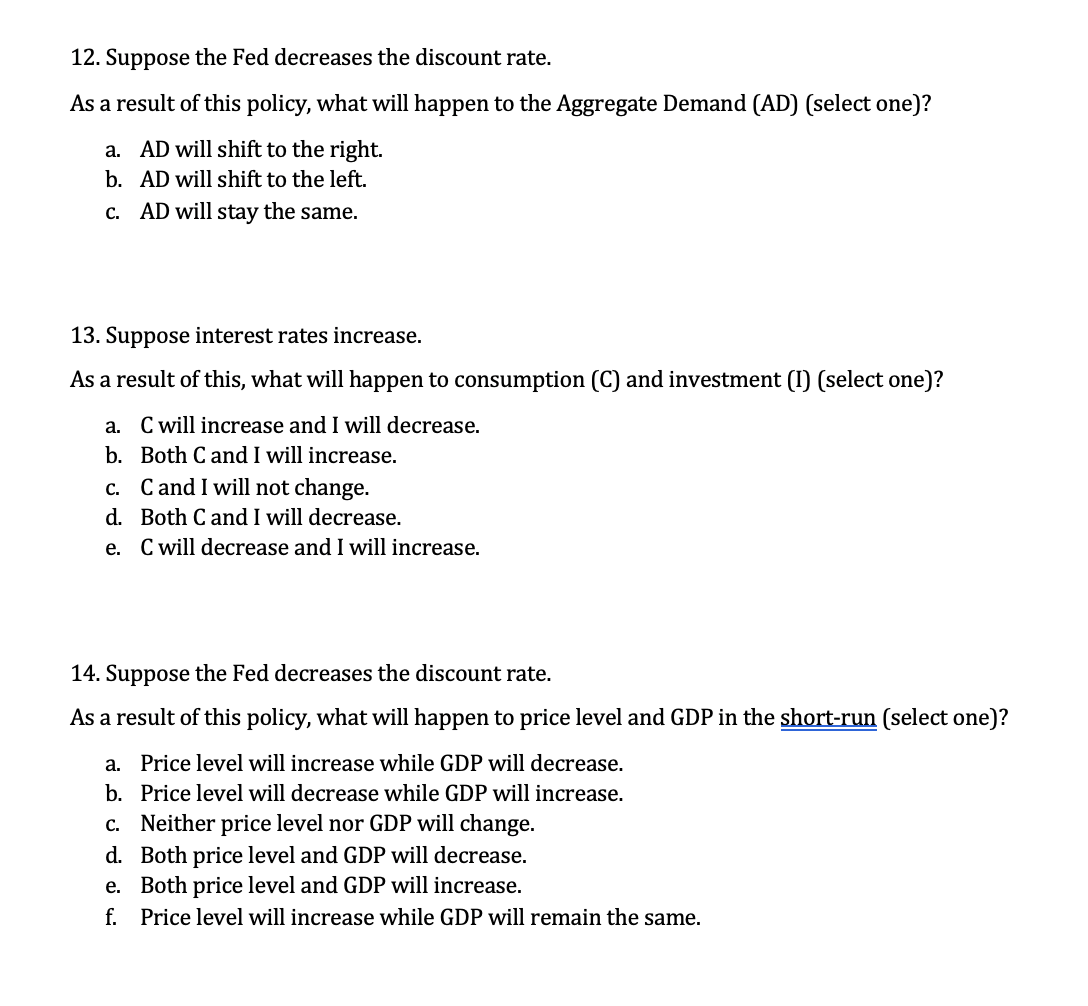
Monetary Policy Problem Set1 1. Suppose the Fed decreases the discount rate. As a result of this policy, what will happen to the money supply [select one)? a. Money Supply increases. b. Money Supply decreases. c. Money Supply stays the same. 2. Consider the following balance sheet for Bank of America. Assets Liabilities Reserves 882 Deposits 2100 Loans 1218 Suppose that someone deposited $100 at Bank of America. Given this data, what is the minimum amount by which the money supply will increase? Use the following information to answer questions 3 and 4: Suppose that the Fed conducts a $110 million open market purchase of government bonds. In addition, suppose that the required reserve ratio [R] is 42 percent and that banks do not hold any excess reserves. 3. What is the money multiplier? 4. What is the effect on the money supply? More precisely, by how much will the money supply increase? Use the following information to answer questions 5 through 8: Assume that the banking system has total reserves of $882 billion. Assume also that required reserves are 4-2 percent and that banks do not hold any excess reserves and households hold no currency. 5. What is the money multiplier? 6. What is the level of deposits? 7. Now suppose that the Fed decreased the required reserves to 33.6. What is the new multiplier? 8. If the Fed decreases the required reserves to 33.6, what is the level of excess reserves? Make sure to include a negative sign if necessary. 9. If the Fed wishes to conduct expansionary monetary policy, it should (select one) Increase required reserve ratio Decrease required reserve ratio Sell T-Bills. Decrease taxes. 9r: 9'9 10. If the Fed wishes to conduct contractionary monetary policy, it should [select one) a. Decrease required reserve ratio. b. Buy T-bills. c. Sell T-Bills. d. Increase taxes. 11. Suppose the Fed decreases the discount rate. As a result of this policy, what will happen to the interest rates [select one]? a. Interest rates will decrease. b. Interest rates will increase. c. Interest rates will stay the same. 12. Suppose the Fed decreases the discount rate. As a result of this policy, what will happen to the Aggregate Demand (AD) (select one)? a. AD will shift to the right. b. AD will shift to the left. c. AD will stay the same. 13. Suppose interest rates increase. As a result of this, what will happen to consumption (C) and investment {1) (select one)? C will increase and I will decrease. Both C and 1 will increase. C and I will not change. Both C and 1 will decrease. C will decrease and I will increase. raps-aster 14. Suppose the Fed decreases the discount rate. As a result of this policy, what will happen to price level and GDP in the shawl]. (select one)? Price level will increase while GDP will decrease. Price level will decrease while GDP will increase. Neither price level nor GDP will change. Both price level and GDP will decrease. Both price level and GDP will increase. Price level will increase while GDP will remain the same. Hops-awe
Step by Step Solution
There are 3 Steps involved in it

Get step-by-step solutions from verified subject matter experts
 Study Help