







Question: Multiple choices QUESTION 15 Given the following declaration: int x(5), y(7), ptrl (6x), ptzr2(6v) Which of the statements given in the choices below is not
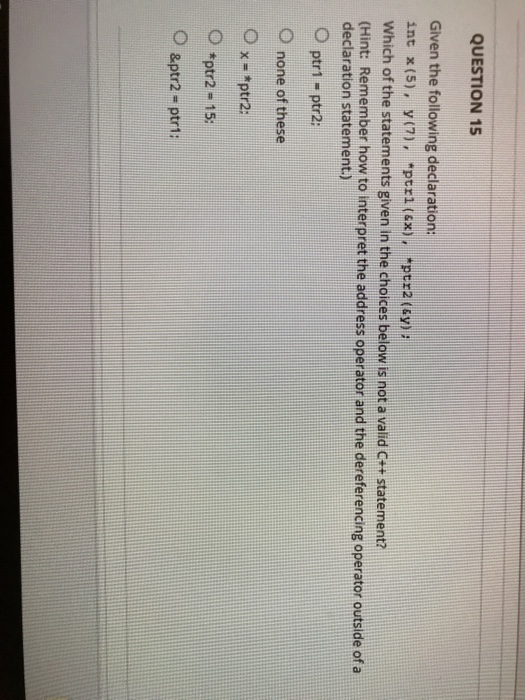



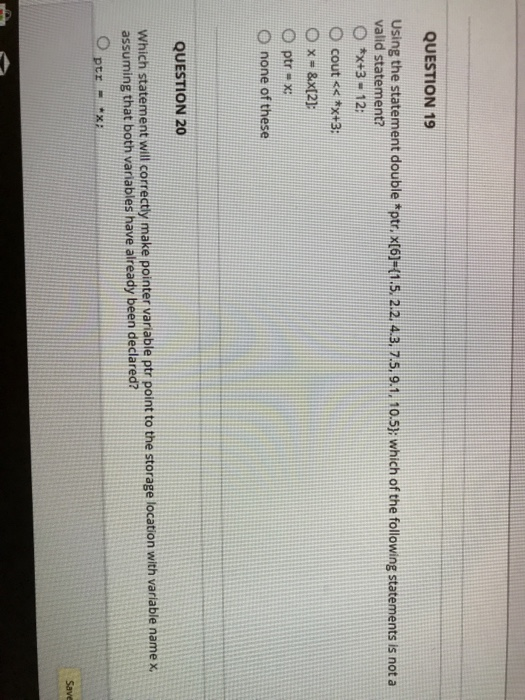
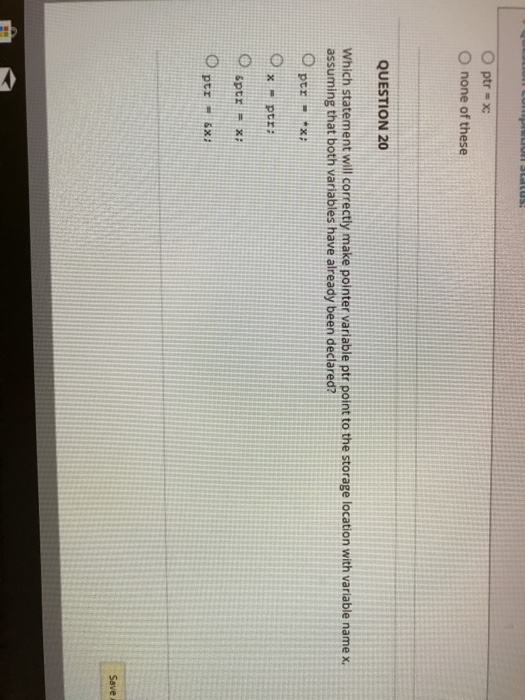
QUESTION 15 Given the following declaration: int x(5), y(7), "ptrl (6x), ptzr2(6v) Which of the statements given in the choices below is not a valid C+t statement? (Hint: Remember how to interpret the address operator and the dereferencing operator outside of a declaration statement.) O ptr1 - ptr2 O none of these O +ptr2-15: &ptr2-ptr1 ; QUESTION 16 Which C++ statement will correctly declare a pointer variable ptr, which has base type double? O double double ptrE O double ptrt: O double pointer "ptr: O none of these QUESTION 17 Which of the following is the address operator? QUESTION 17 Which of the following is the address operator? O none of these QUESTION 18 Using the following C++ statements, which option correctly describes the result of t member how to interpret the dereferencing operator in the second statement which s Question Completion Status: Using the following C+n statements, which option correctly describes the result of the statement a- ptr (Hint: Remember how to interpret the dereferencing operator in the second statement which is NOT a declaration.) the code displayed is the following (in case you cannot see it: int a(6), b(9Prt (6b) a ptE int a(6), b(9), prr&b) a-ptr: O The value of variable b is changed to the value of variable a. O The value of variable a is changed to the value of variable b. O none of these The value of variable ptris changed to point to the address of variable a. O The address of variable a is changed to the address of variable b. QUESTION 19 Using the statement double *ptr, xI6)-11.5, 2.2. 4.3.7.5. 9.1. 10.5h which of the following statements is not a O tx+3 12: O cout
Step by Step Solution
There are 3 Steps involved in it

Get step-by-step solutions from verified subject matter experts
 Study Help