







Question: MVT. Approximate values 4.2 10.Given f'(x) = 6x + 1, find all possible functions f. Use C as an arbitrary constant.11. Given y = x3
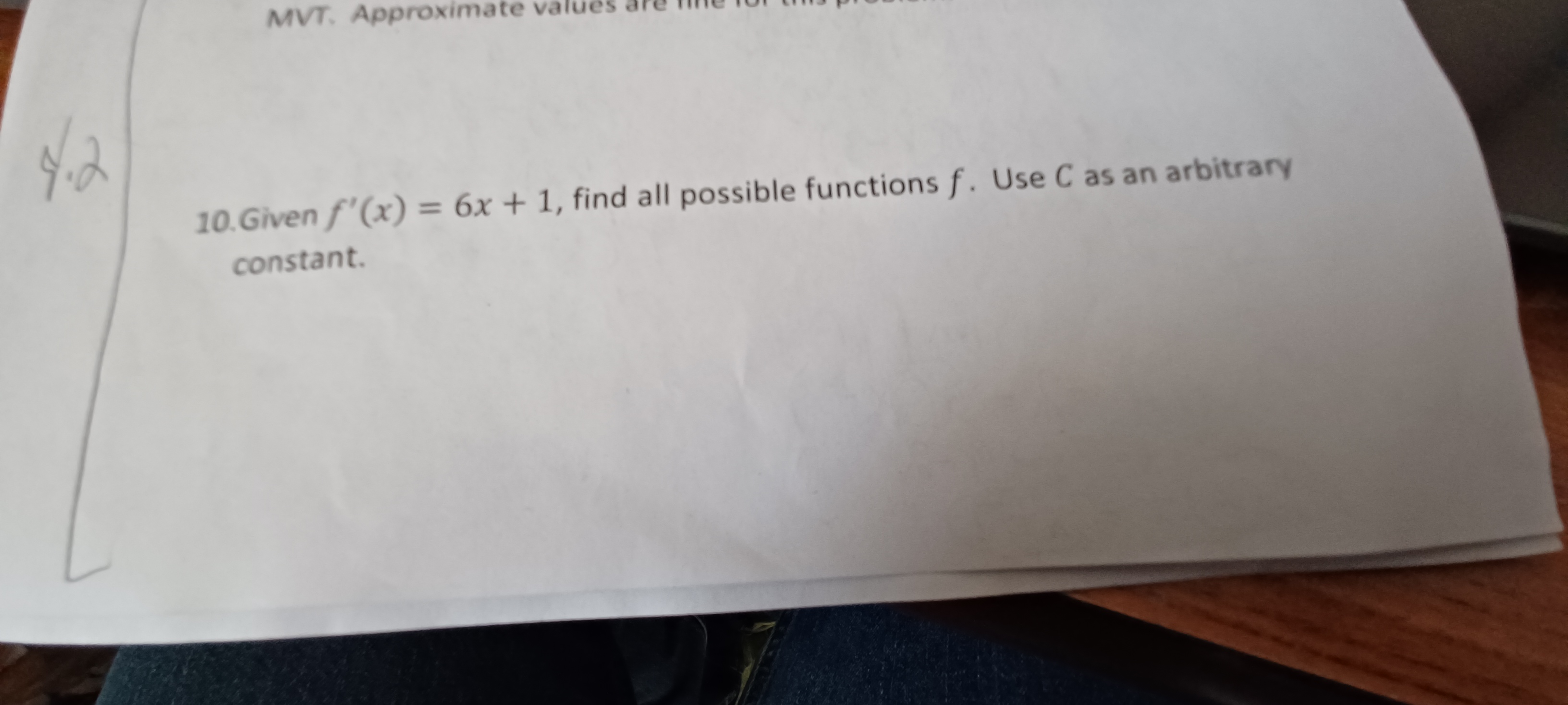
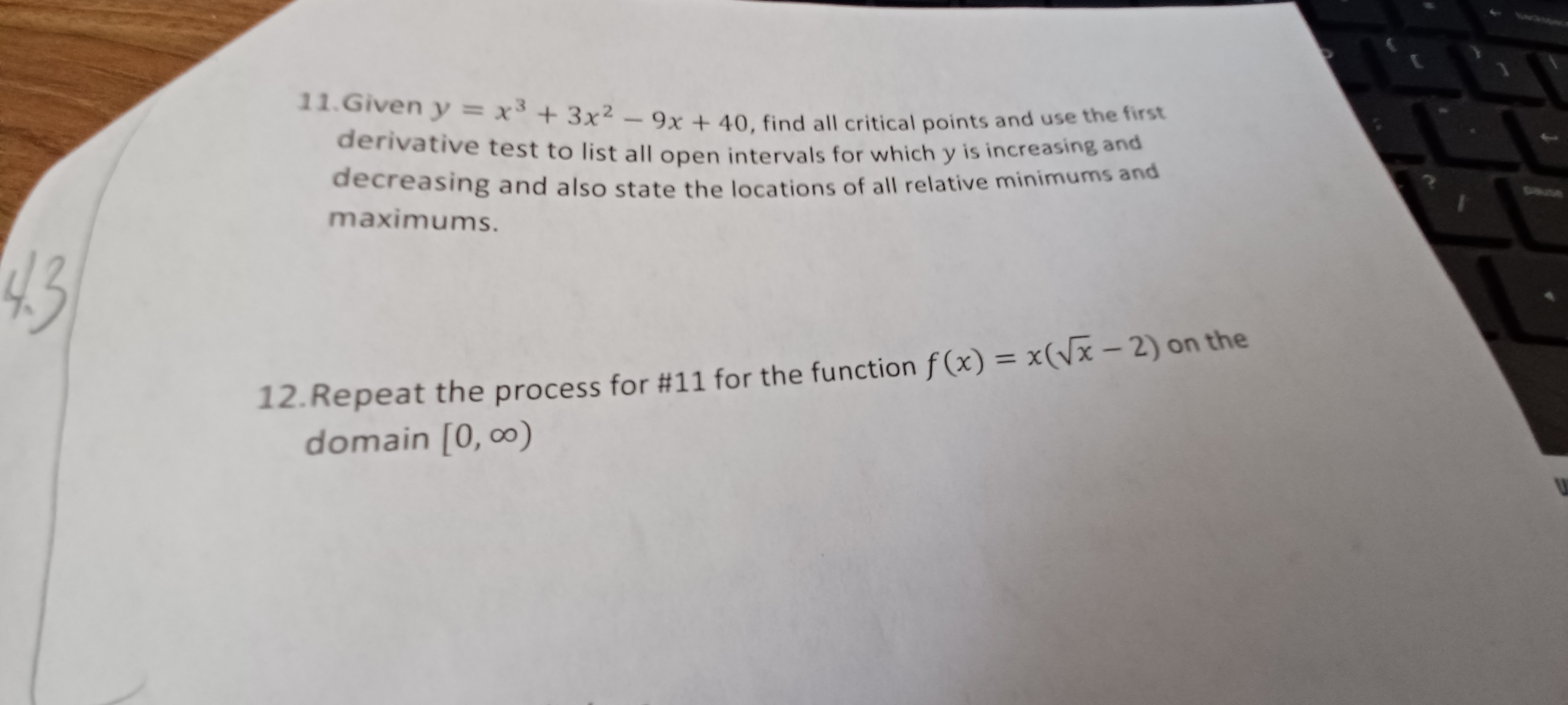
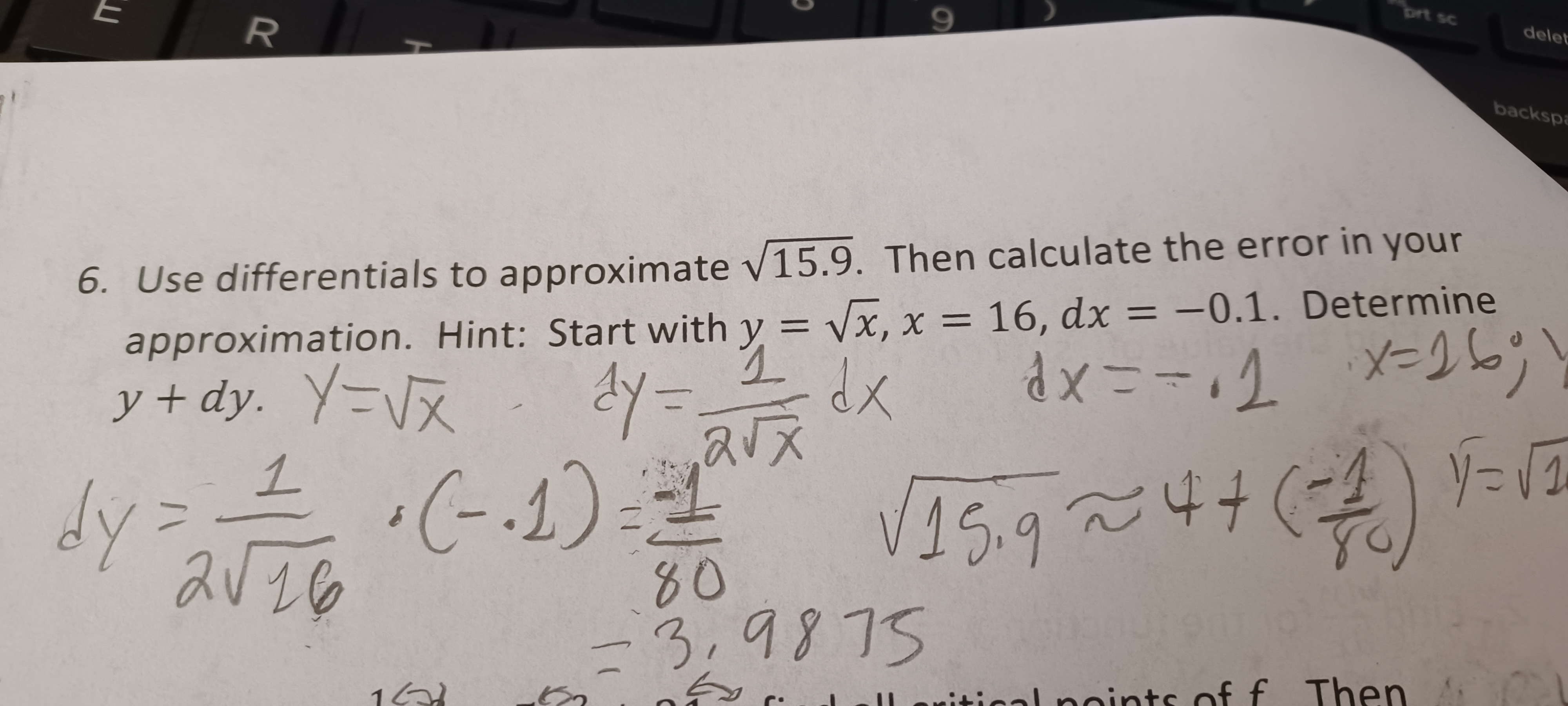
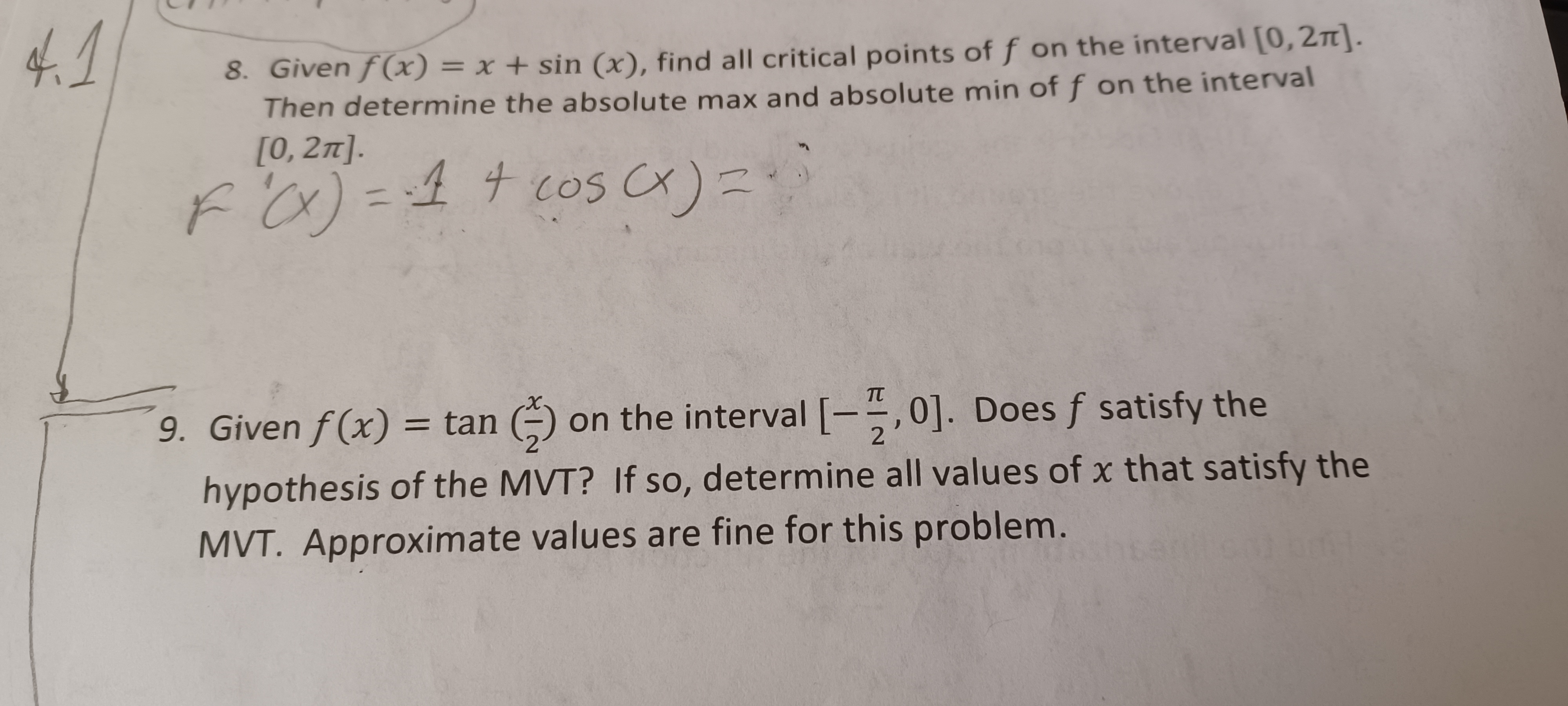
MVT. Approximate values 4.2 10.Given f'(x) = 6x + 1, find all possible functions f. Use C as an arbitrary constant.11. Given y = x3 + 3x2 - 9x + 40, find all critical points and use the first derivative test to list all open intervals for which y is increasing and decreasing and also state the locations of all relative minimums and maximums. 4.3 12. Repeat the process for #11 for the function f (x) = x(Vx -2) on the domain [0, co)E 9 prt sc R delet backsp 6. Use differentials to approximate v15.9. Then calculate the error in your approximation. Hint: Start with y = Vx, x = 16, dx = -0.1. Determine y + dy. /= Vx ay = dx dx = =1 Q V X 1 dy " ( - . 1 ) Z V 19.9 2 4 + ( - 2 ) 2026 80 3, 98 75 te off Then4. 1 8. Given f(x) = x + sin (x), find all critical points of f on the interval [0, 27t]. Then determine the absolute max and absolute min of f on the interval [0, 27]. F (x ) = 1 4 cos (x ) = 9. Given f(x) = tan ) on the interval [- >, 0]. Does f satisfy the hypothesis of the MVT? If so, determine all values of x that satisfy the MVT. Approximate values are fine for this
Step by Step Solution
There are 3 Steps involved in it

Get step-by-step solutions from verified subject matter experts
 Study Help