Question: My Post When you make a decision you do not think if you are making a quantitative or qualitative decision, but when you stop and

My Post
My Post When you make a decision you do not thinkMy Post When you make a decision you do not think
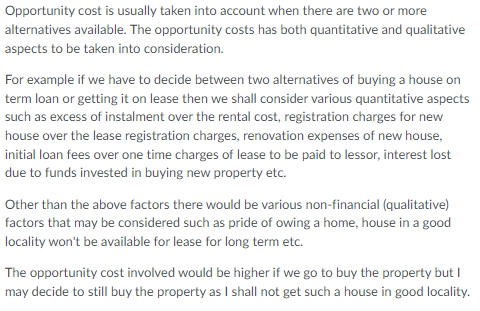
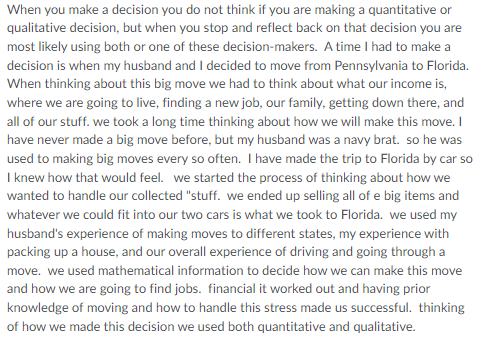
When you make a decision you do not think if you are making a quantitative or qualitative decision, but when you stop and reflect back on that decision you are most likely using both or one of these decision-makers. A time I had to make a decision is when my husband and I decided to move from Pennsylvania to Florida. When thinking about this big move we had to think about what our income is, where we are going to live, finding a new job, our family, getting down there, and all of our stuff. we took a long time thinking about how we will make this move. I have never made a big move before, but my husband was a navy brat. so he was used to making big moves every so often. I have made the trip to Florida by car so I knew how that would feel. we started the process of thinking about how we wanted to handle our collected "stuff. we ended up selling all of e big items and whatever we could fit into our two cars is what we took to Florida. we used my husband's experience of making moves to different states, my experience with packing up a house, and our overall experience of driving and going through a move. we used mathematical information to decide how we can make this move and how we are going to find jobs. financial it worked out and having prior knowledge of moving and how to handle this stress made us successful. thinking of how we made this decision we used both quantitative and qualitative.Opportunity cost is usually taken into account when there are two or more alternatives available. The opportunity costs has both quantitative and qualitative aspects to be taken into consideration. For example if we have to decide between two alternatives of buying a house on term loan or getting it on lease then we shall consider various quantitative aspects such as excess of instalment over the rental cost, registration charges for new house over the lease registration charges, renovation expenses of new house, initial loan fees over one time charges of lease to be paid to lessor, interest lost due to funds invested in buying new property etc. Other than the above factors there would be various non-financial (qualitative) factors that may be considered such as pride of owing a home, house in a good locality won't be available for lease for long term etc. The opportunity cost involved would be higher if we go to buy the property but I may decide to still buy the property as I shall not get such a house in good locality

Step by Step Solution

There are 3 Steps involved in it

1 Expert Approved Answer
Step: 1 Unlock blur-text-image

Question Has Been Solved by an Expert!

Get step-by-step solutions from verified subject matter experts

Step: 2 Unlock
Step: 3 Unlock

Students Have Also Explored These Related Accounting Questions!