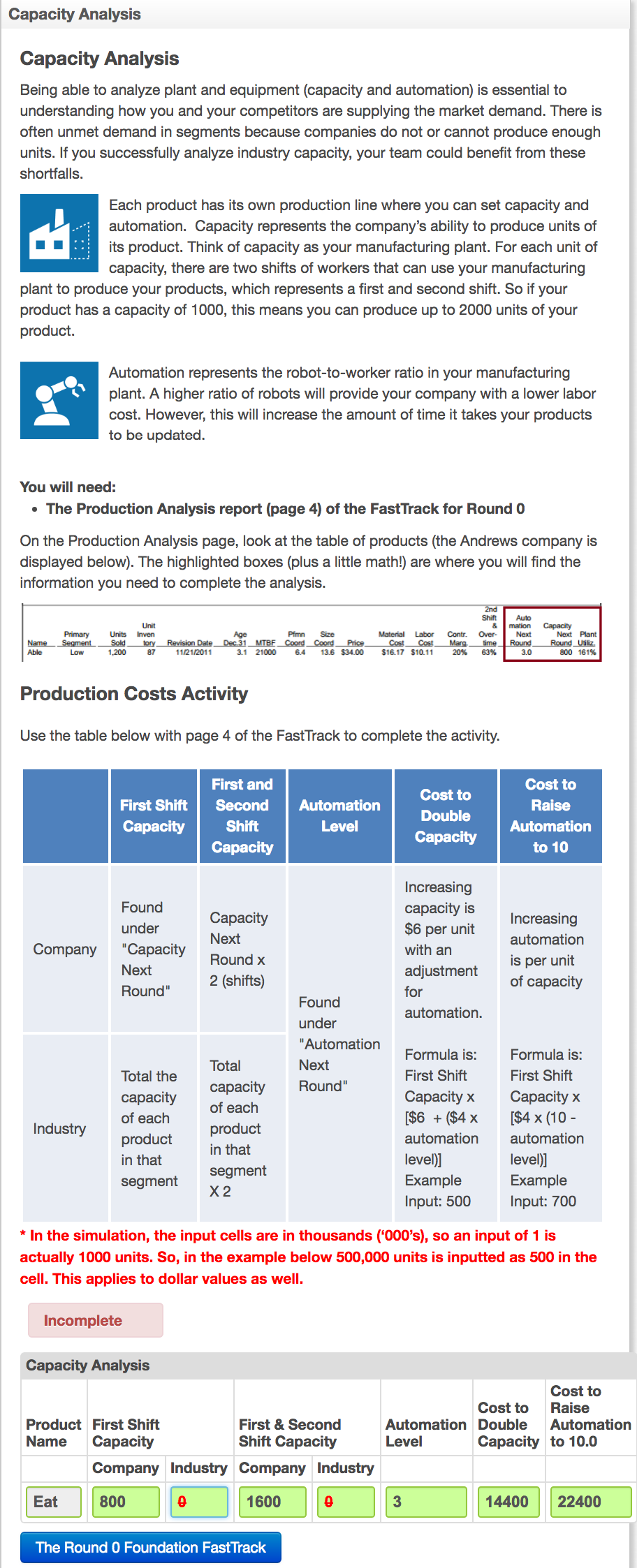
Question: My question is what is the first shift capacity and first and second shift of industry? Capacity Analysis Capacity Analysis Being able to analyze plant

My question is what is the first shift capacity and first and second shift of industry?
My question is what is the first shift capacityMy question is what is the first shift capacity
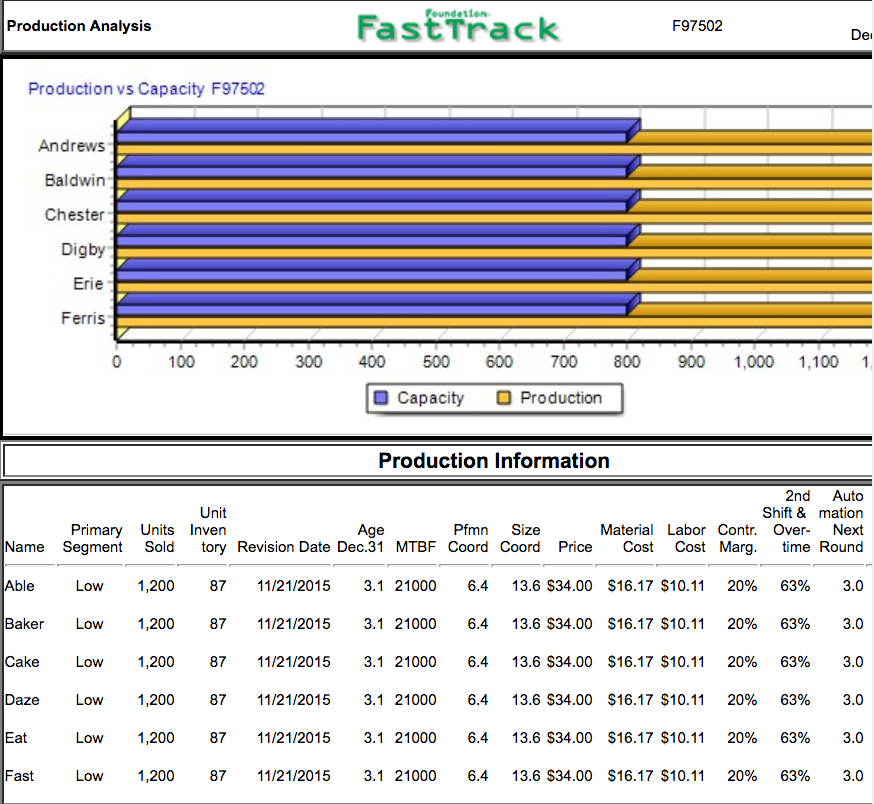
Capacity Analysis Capacity Analysis Being able to analyze plant and equipment (capacity and automation) is essential to understanding how you and your competitors are supplying the market demand. There is often unmet demand in segments because companies do not or cannot produce enough units. If you successfully analyze industry capacity, your team could benefit from these shortfalls. Each product has its own production line where you can set capacity and automation. Capacity represents the company's ability to produce units of its product. Think of capacity as your manufacturing plant. For each unit of capacity, there are two shifts of workers that can use your manufacturing plant to produce your products. which represents a first and second shift. So if your product has a capacity of 1000, this means you can produce up to 2000 units of your product. Automation represents the robot-to-worker ratio in your manufacturing plant. A higher ratio of robots will provide your company with a lower labor cost. However, this will increase the amount of time it takes your products to be updated. You will need: - The Production Analysis report (page 4) of the Fast'l'i'ack for Round 0 0n the Production Analysis page, look at the table of products (the Andrews company is displayed below). The highlighted boxes (plus a little math!) are where you will find the information you need to complete the analysis. Lira Flt-nary Unha Inn m Ph- M \"laid Labor can: 0:- \"mimmmmbmiJJ m- Lul- 12m 31 "mac" 11 am an m m 5113111111 an m Production Costs Activity Use the table below with page 4 of the FastTrack to complete the activity. Cost to 6051 to First Shift Second Automation Double Raise Capacity Level Capacity Autrtzli'antlon Increasing Found ' ' Capacity capacity I? Increasing under $6 per unit . _ _ Next . automation Company Capacity With an . . Flound x _ IS per unit Next 2 (shifts) adjustment of ca ac\" Round" for p rty Found . automation. under "Automation _ _ Total Next Formula Is: Formula Is: Total the ca ac' FIound" First Shift First Shift capacity of 2&0? Capacity x Capacity x lndust of each roduct [$6 + ($4 x [$4 x (10 - ry product p automation automation . in that in that level)] level)] segment segment X2 Example Example Input: 500 Input: 700 * In the simulation, the input cells are in thousands 0000's), so an input of 1 is actually 1000 units. 50, in the example below 500,000 units is inputted as 500 in the cell. This applies to dollar values as well. Incomplete Capaclty Analysis Cost to Cost to Raise Product First Shift First & Second Automation Double Automation Name Capacity Shift Capacity Level Capacity to 10.0 Company Industry Company Industry Inn-m minim Production Analysis F. at". c k F97502 Dei Production vs Capacity F9502 I Andrews Baldwin Chester Digby Erie Ferris F 0 1m 2m 3m 4m 5m em me 300 $30 1.0433 1.1!!) 1. I Production Information 2nd Auto Unit Shifts. mation Primary Unite Inven Age men Size Material Labor Contr. Over Next Name Segment Sold tory Revision Date Dec.31 MTBF Board Board Price Coat Goat Marg. time Round Low ET mmmsi'MZ'E MWEEEWF Baker Low 1,200 6? 10202015 3.1 21000 6.4 13.6 $34.00 $16.1? $10.11 20% 63% 3.0 Cake Low 1,200 6? 102112015 3.1 21000 6.4 13.6 $34.00 $16.1? $10.11 20% 63% 3.0 Daze Low 1,200 6? 10202015 3.1 21000 6.4 13.6 $34.00 $16.1? $10.11 20% 63% 3.0 Eat Low 1,200 6? 11112112015 3.1 21000 6.4 13.6 $34.00 $16.1? $10.11 20% 63% 3.0 Fast Low 1,200 8? 10202015 3.121000 6.4 13.6 $34.00 $16.1? $10.11 20% 63% 3.0

Step by Step Solution

There are 3 Steps involved in it

1 Expert Approved Answer
Step: 1 Unlock blur-text-image

Question Has Been Solved by an Expert!

Get step-by-step solutions from verified subject matter experts

Step: 2 Unlock
Step: 3 Unlock

Students Have Also Explored These Related General Management Questions!