







Question: MY SQL MY SQL 2. Create a table named activityLevel with the following attributes, data types, and constraints: a. ID, integer, not null, auto increment
MY SQL MY SQL
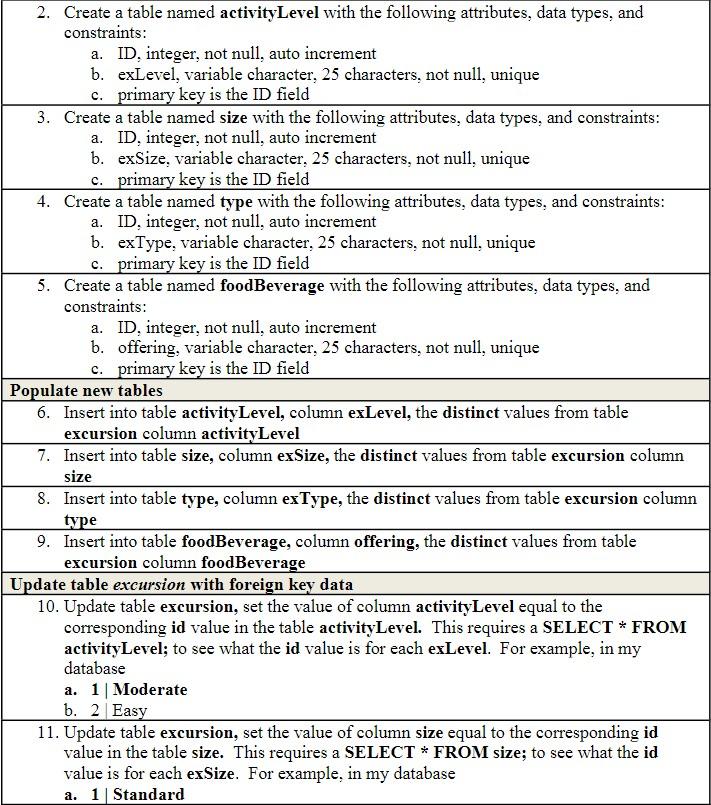

2. Create a table named activityLevel with the following attributes, data types, and constraints: a. ID, integer, not null, auto increment b. exLevel, variable character, 25 characters, not null, unique c. primary key is the ID field 3. Create a table named size with the following attributes, data types, and constraints: a. ID, integer, not null, auto increment b. exSize, variable character, 25 characters, not null, unique c. primary key is the ID field 4. Create a table named type with the following attributes, data types, and constraints: a. ID, integer, not null, auto increment b. exType, variable character, 25 characters, not null, unique c. primary key is the ID field 5. Create a table named foodBeverage with the following attributes, data types, and constraints: a. ID, integer, not null, auto increment b. offering, variable character, 25 characters, not null, unique c. primary key is the ID field opulate new tables 6. Insert into table activityLevel, column exLevel, the distinct values from table excursion column activityLevel 7. Insert into table size, column exSize, the distinct values from table excursion column size 8. Insert into table type, column exType, the distinct values from table excursion colum type 9. Insert into table foodBeverage, column offering, the distinct values from table excursion column foodBeverage pdate table excursion with foreign key data 10. Update table excursion, set the value of column activityLevel equal to the corresponding id value in the table activityLevel. This requires a SELECT FROM activityLevel; to see what the id value is for each exLevel. For example, in my database a. 1 Moderate b. 2 Easy 11. Update table excursion, set the value of column size equal to the corresponding id value in the table size. This requires a SELECT * FROM size; to see what the id value is for each exSize. For example, in my database a. 1 Standard b. 2 Small
Step by Step Solution
There are 3 Steps involved in it

Get step-by-step solutions from verified subject matter experts
 Study Help