







Question: My ted.pdf 5 / 13 - 67% + information . [Testimony of C. Susi, S-7] The Student scored in the average range on these subtests.
![of C. Susi, S-7] The Student scored in the average range on](https://s3.amazonaws.com/si.experts.images/answers/2024/06/6669acb40efe7_5236669acb3b99e9.jpg)
![the average range. [Testimony of K. Roth, S-6] Ms. Roth also has](https://s3.amazonaws.com/si.experts.images/answers/2024/06/6669acbb9c402_5306669acbac55fd.jpg)
![Roth, S-6] Ms. Roth did not do the alternate phonological awareness test](https://s3.amazonaws.com/si.experts.images/answers/2024/06/6669acc1b5903_5376669acc17547d.jpg)
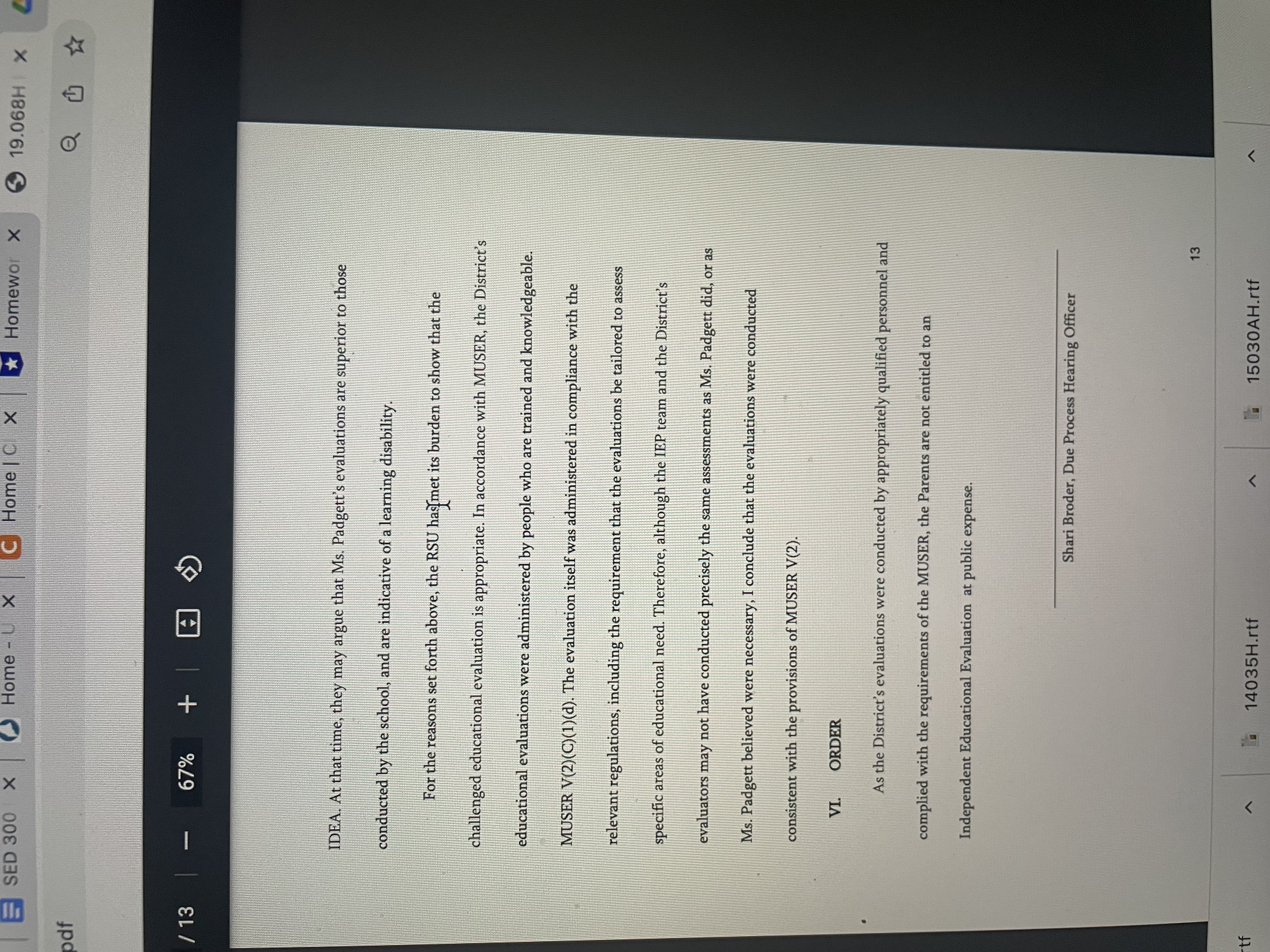
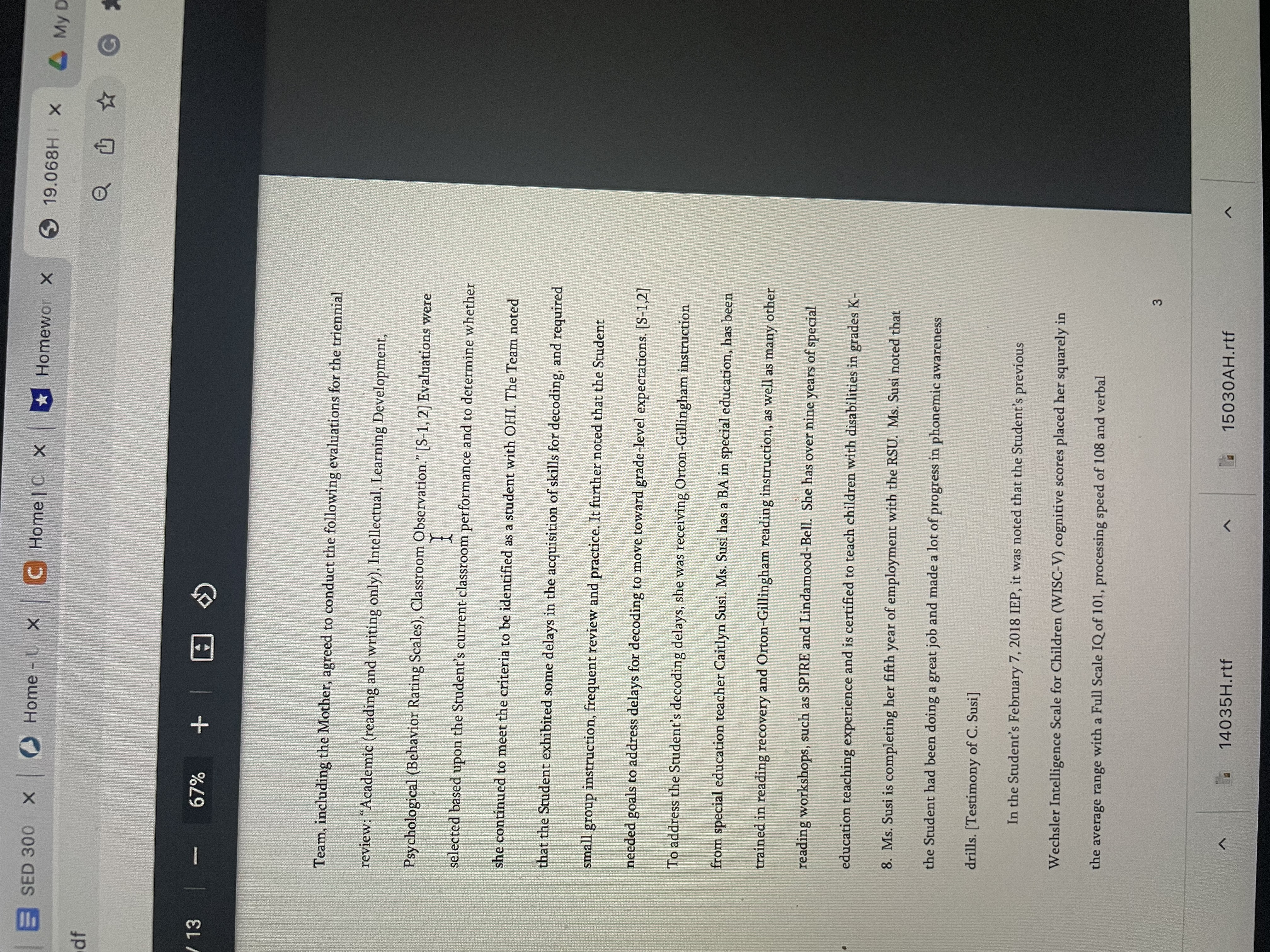
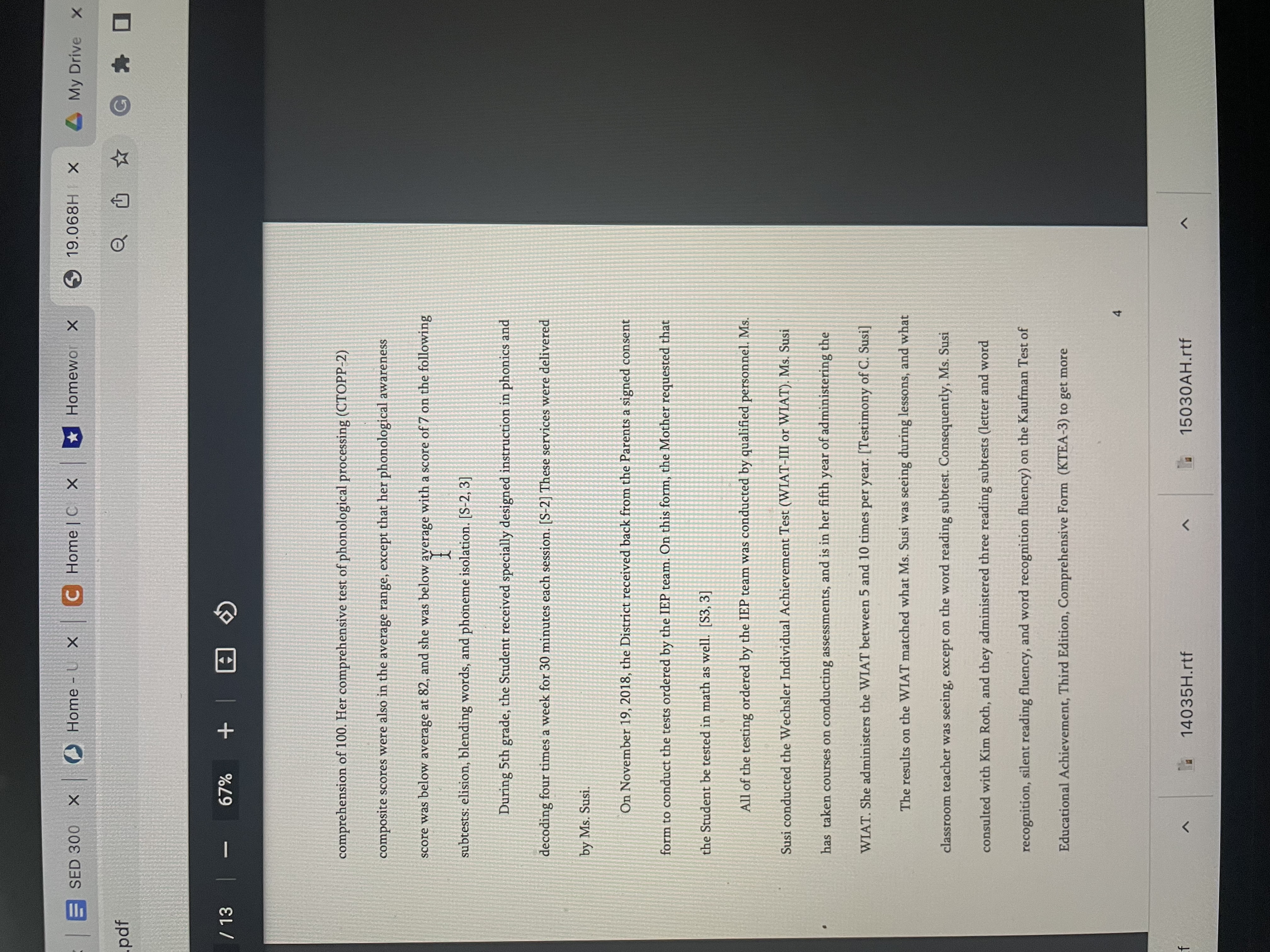
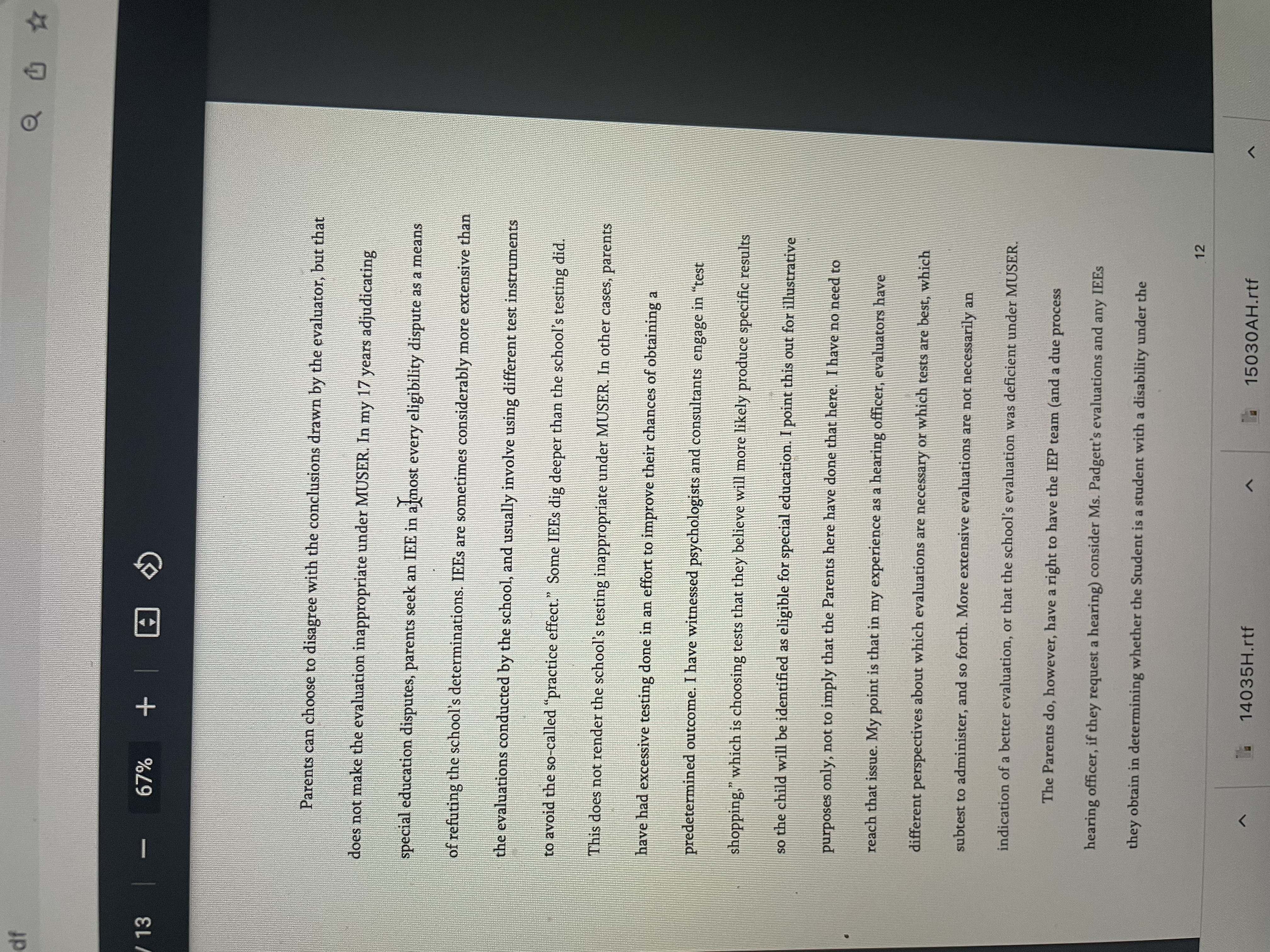
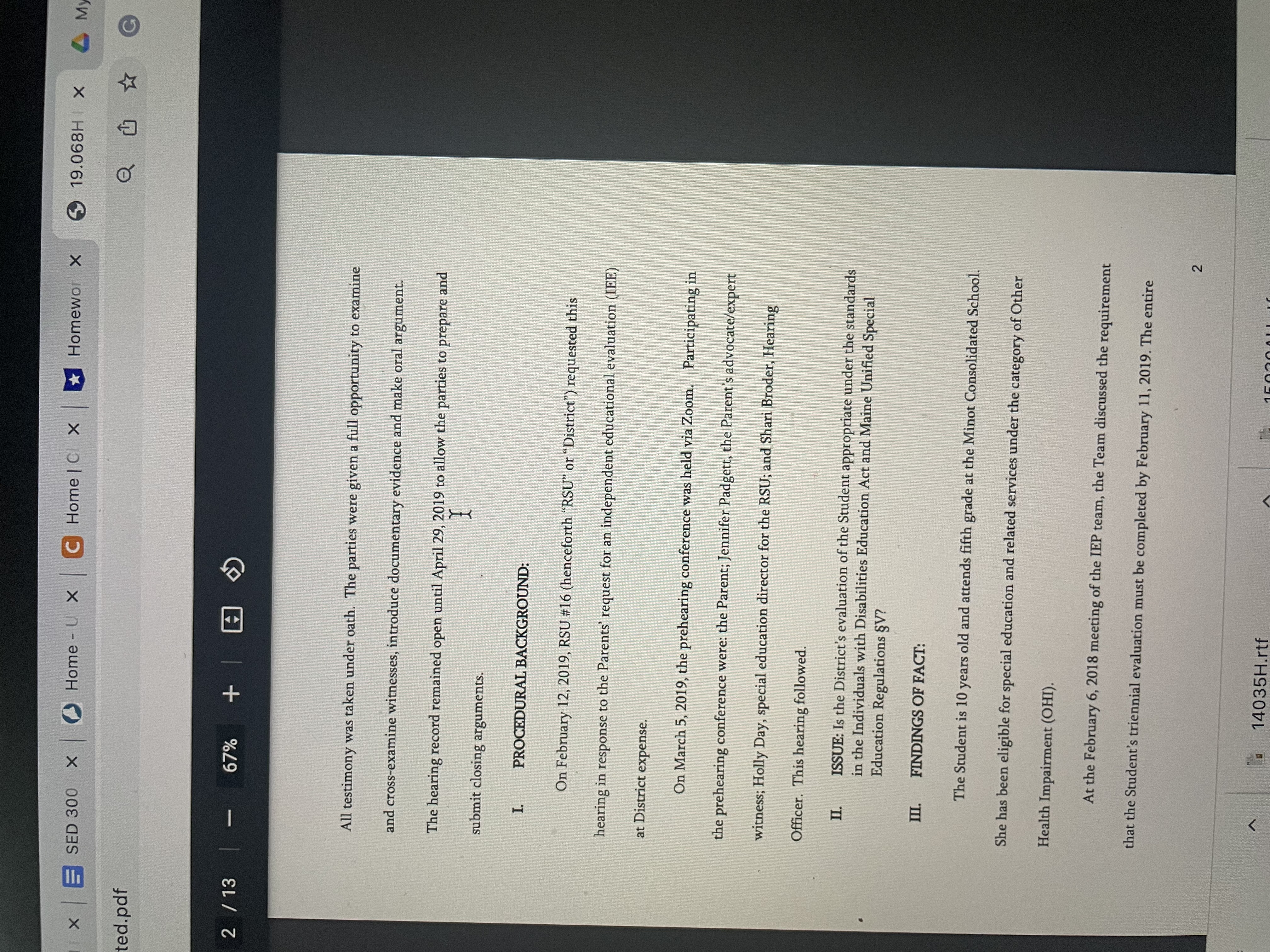
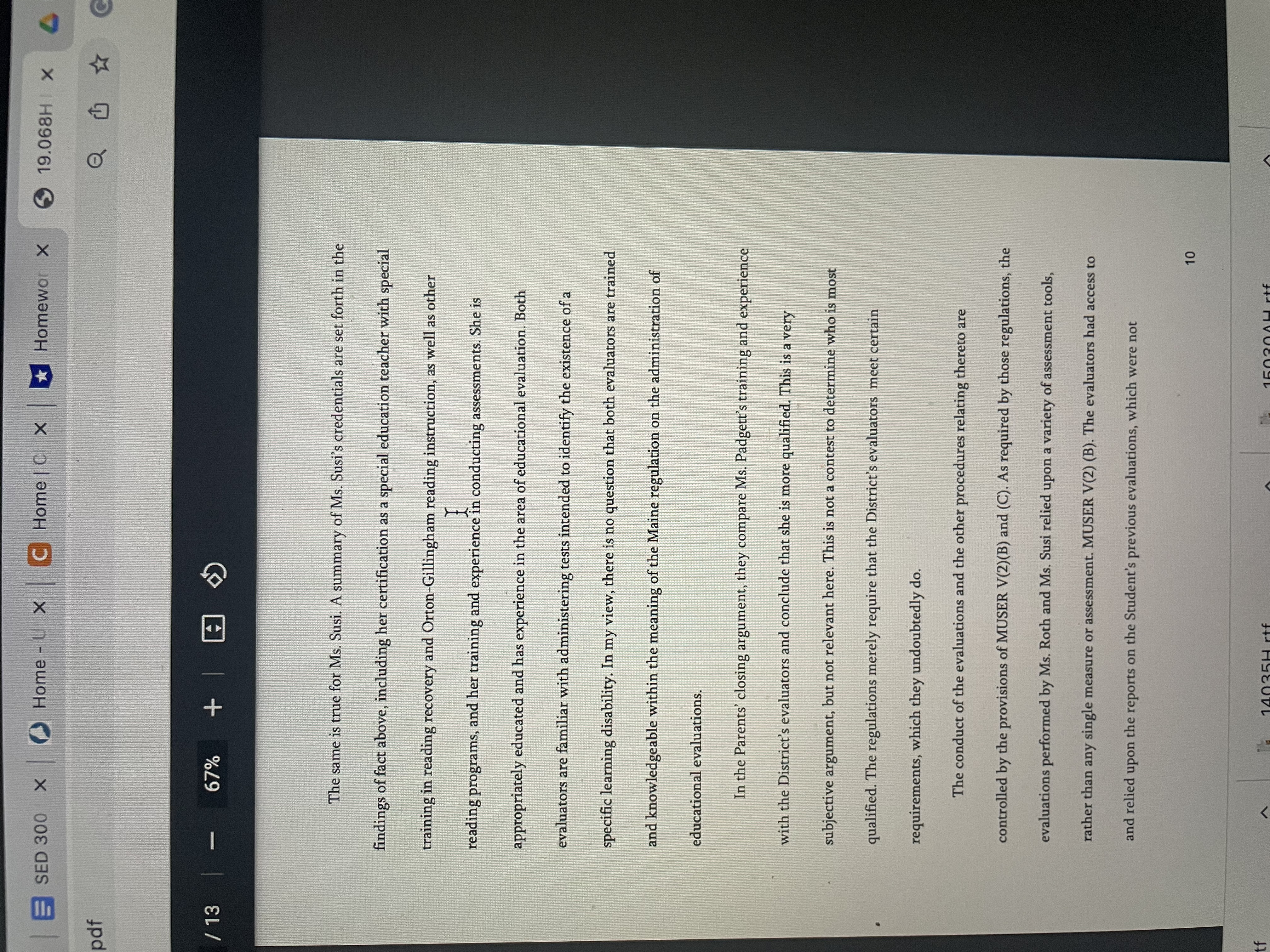
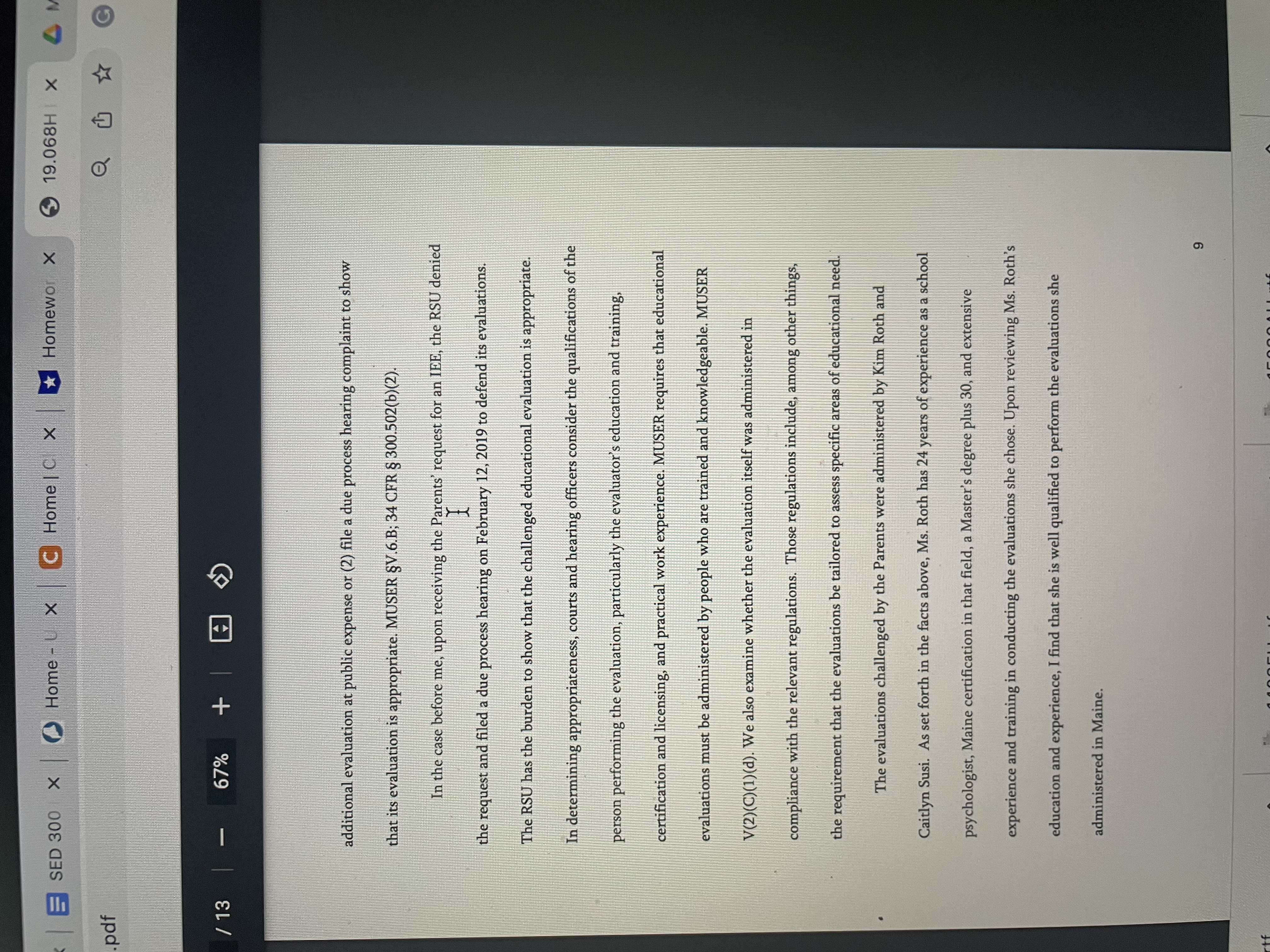
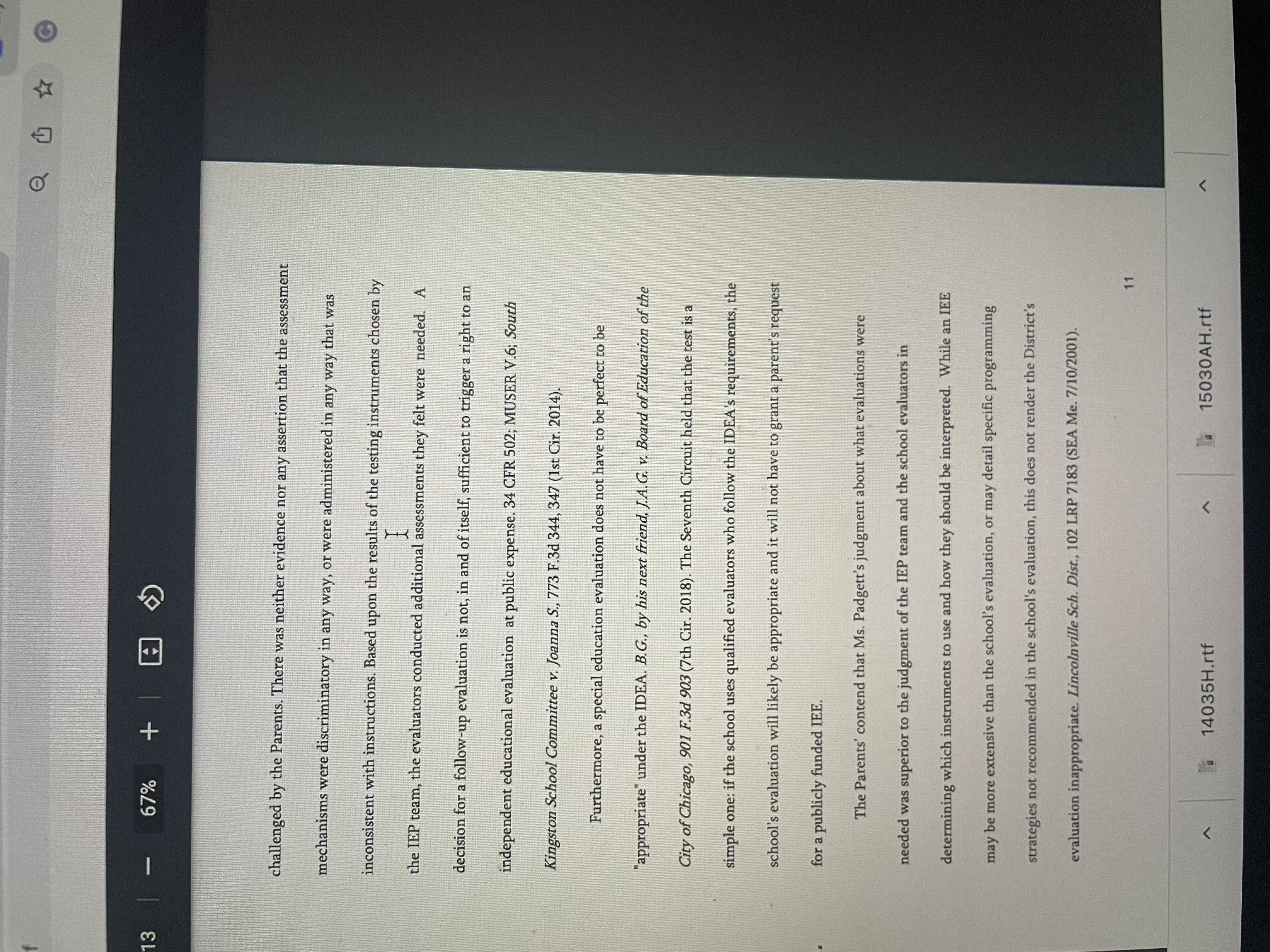
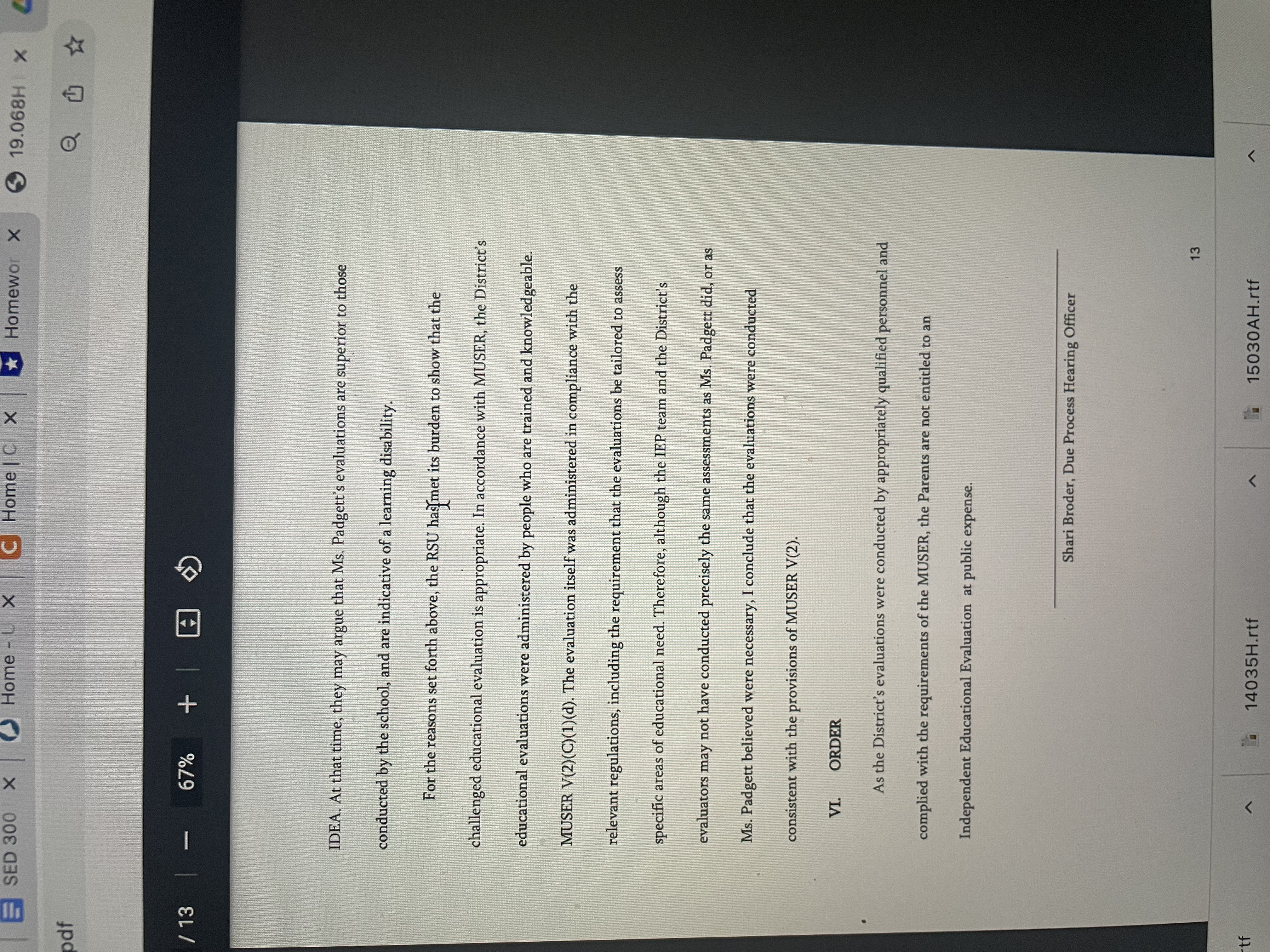
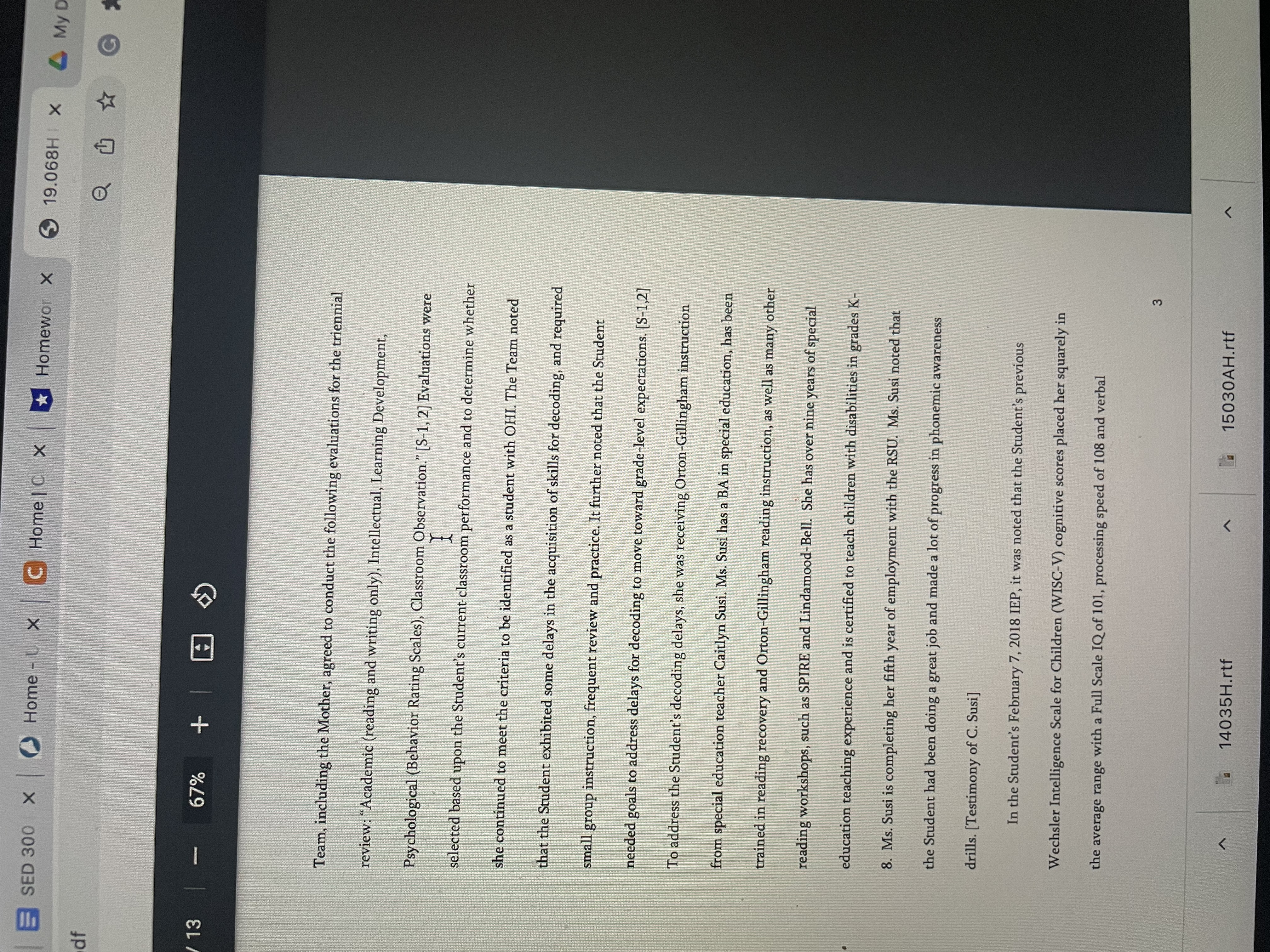
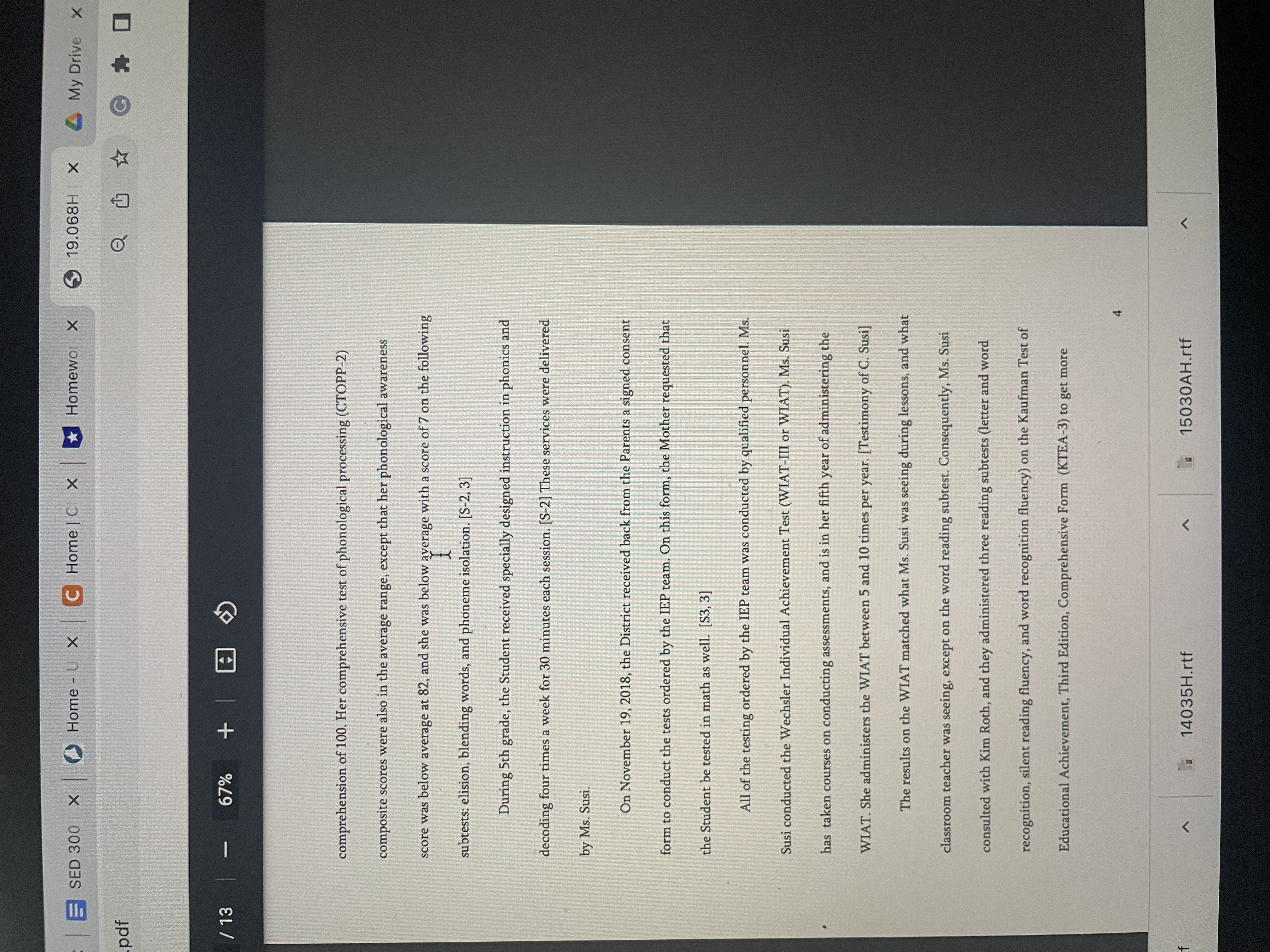
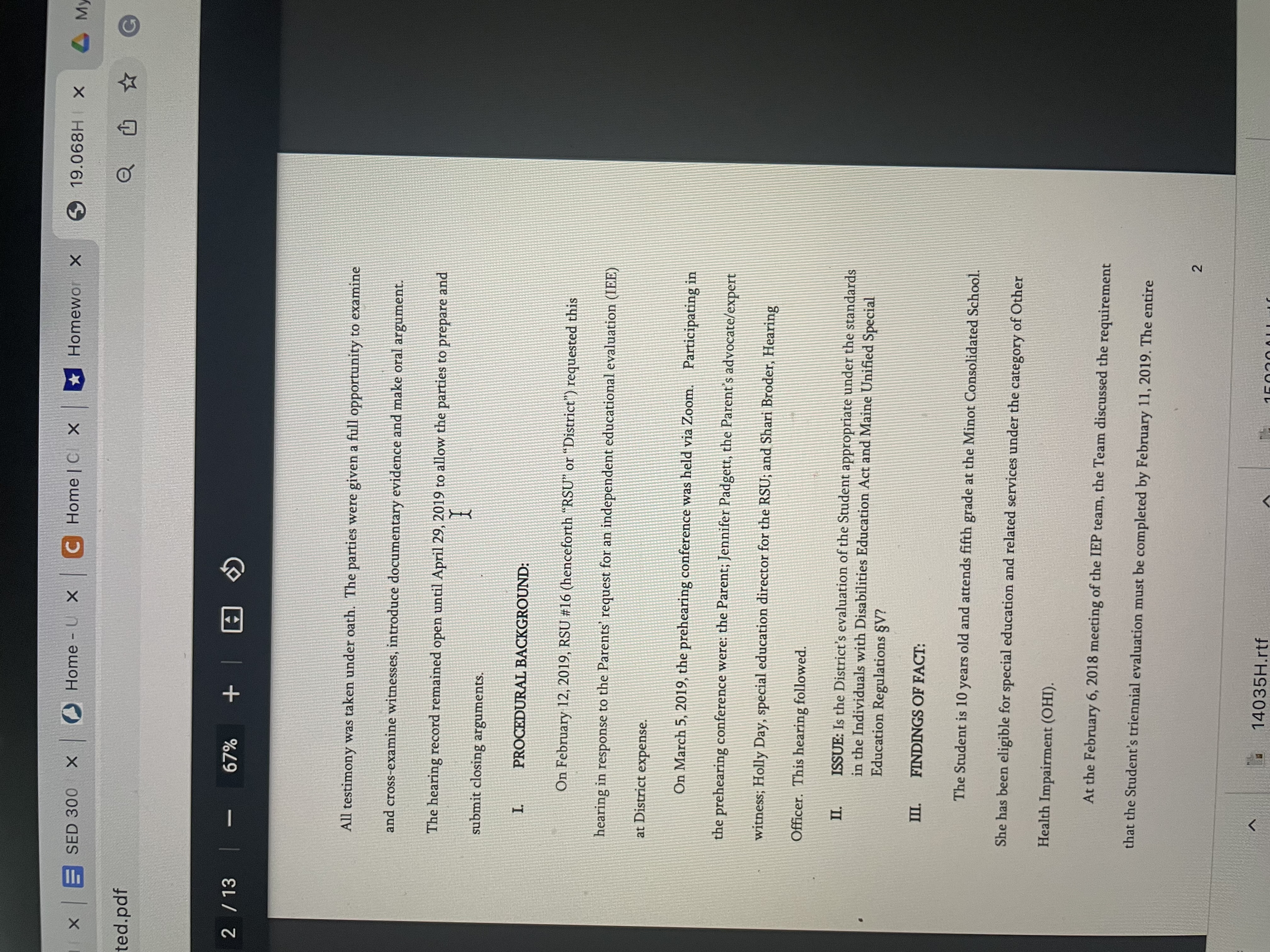
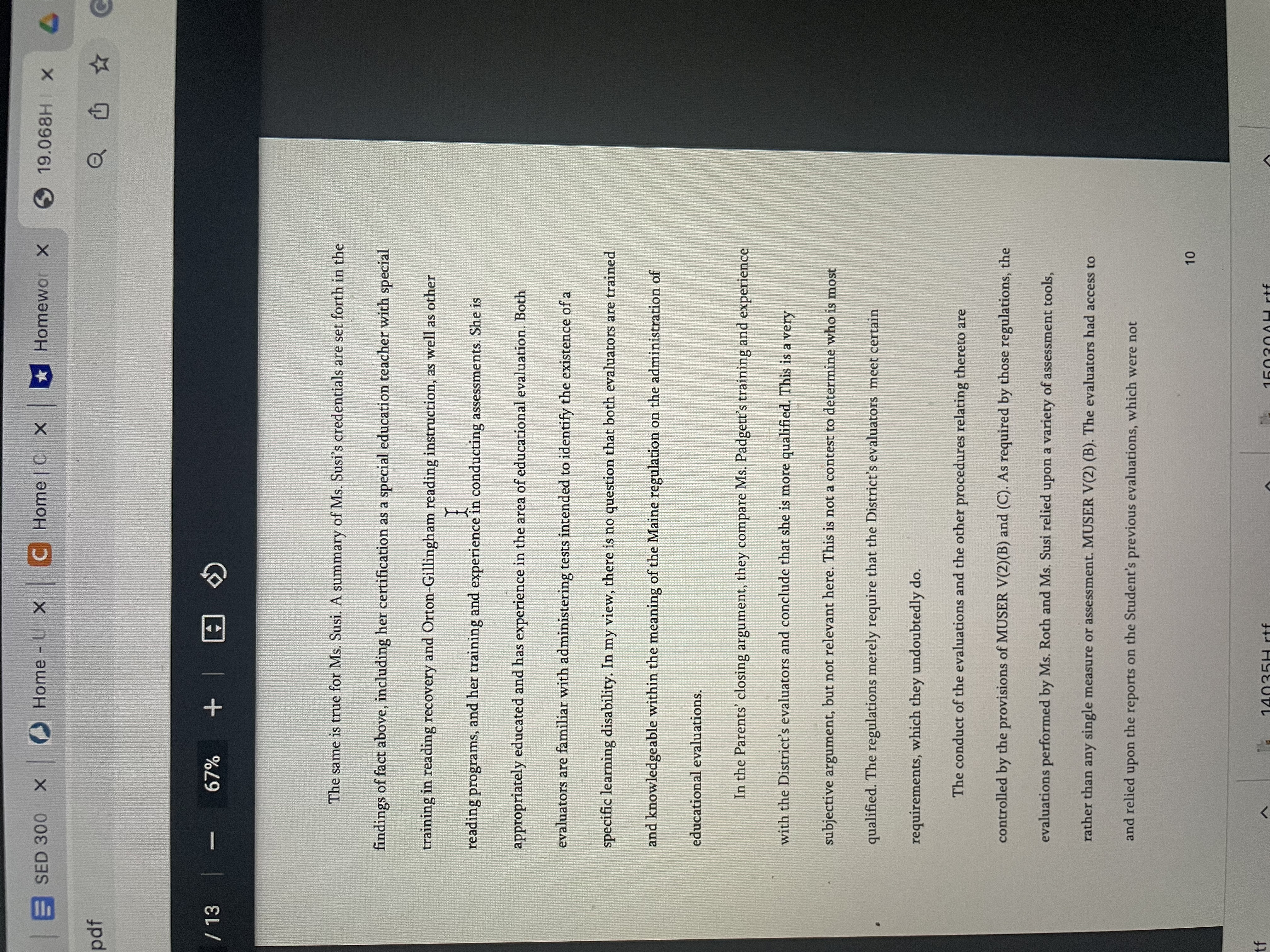
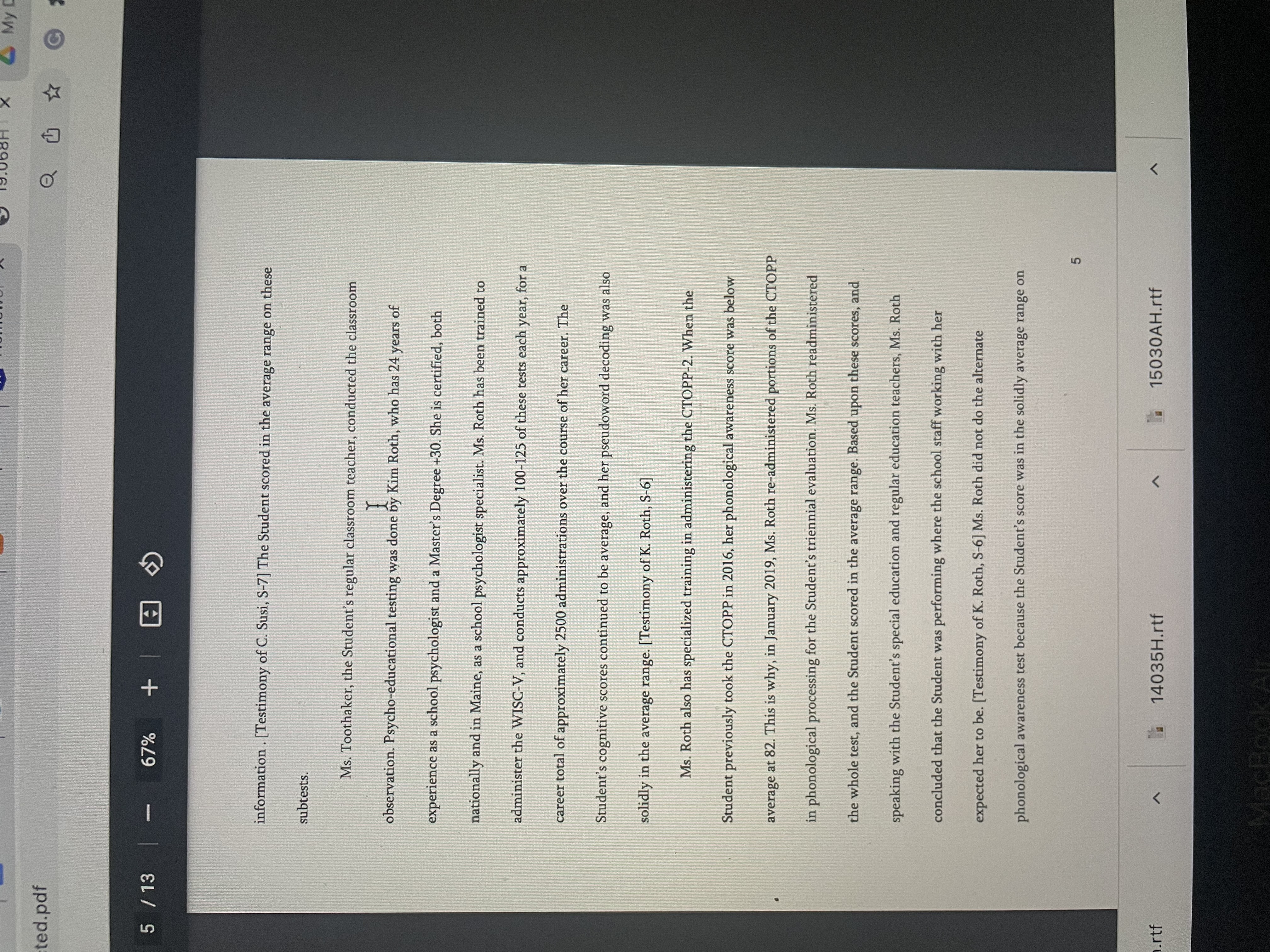
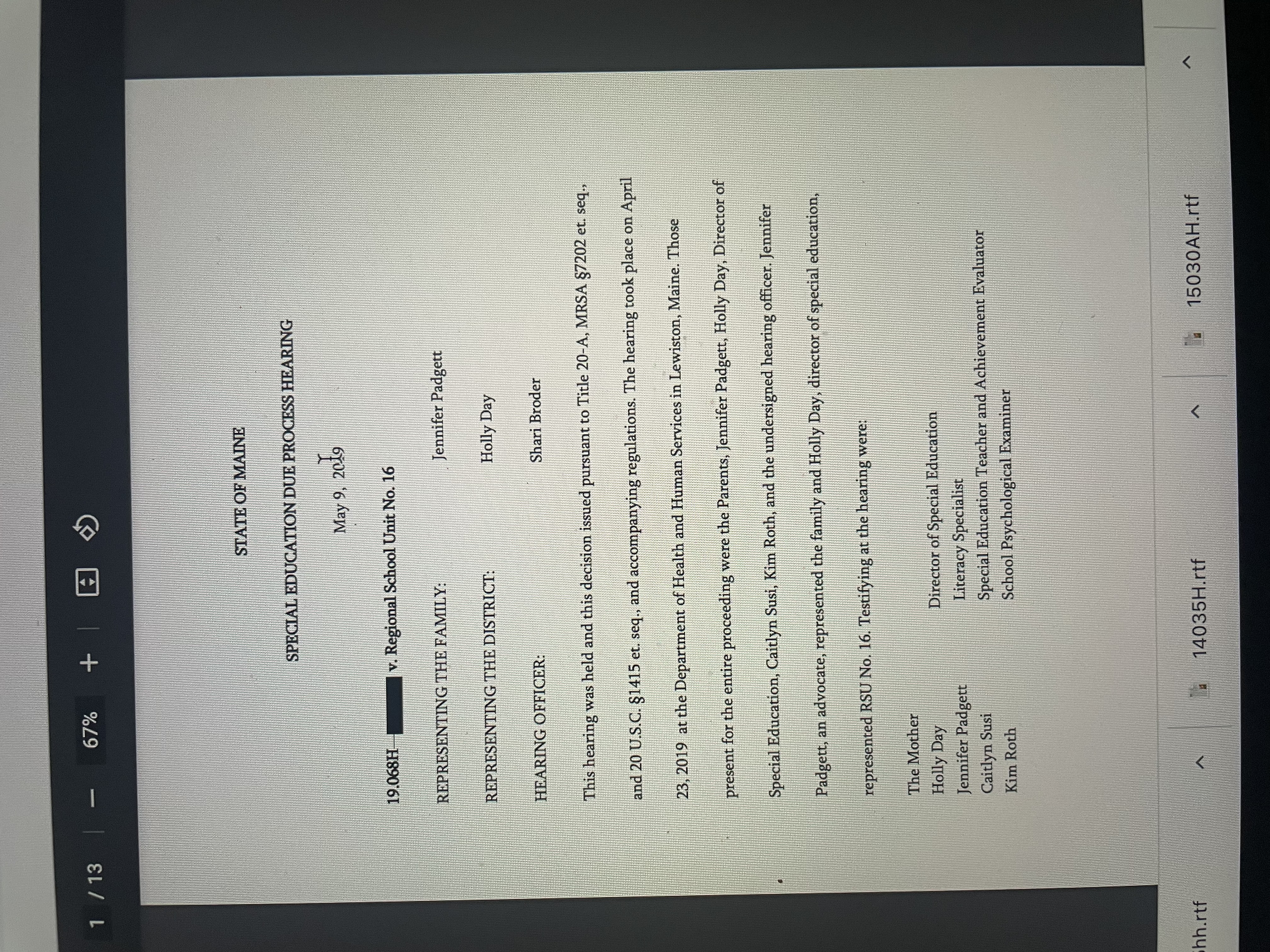
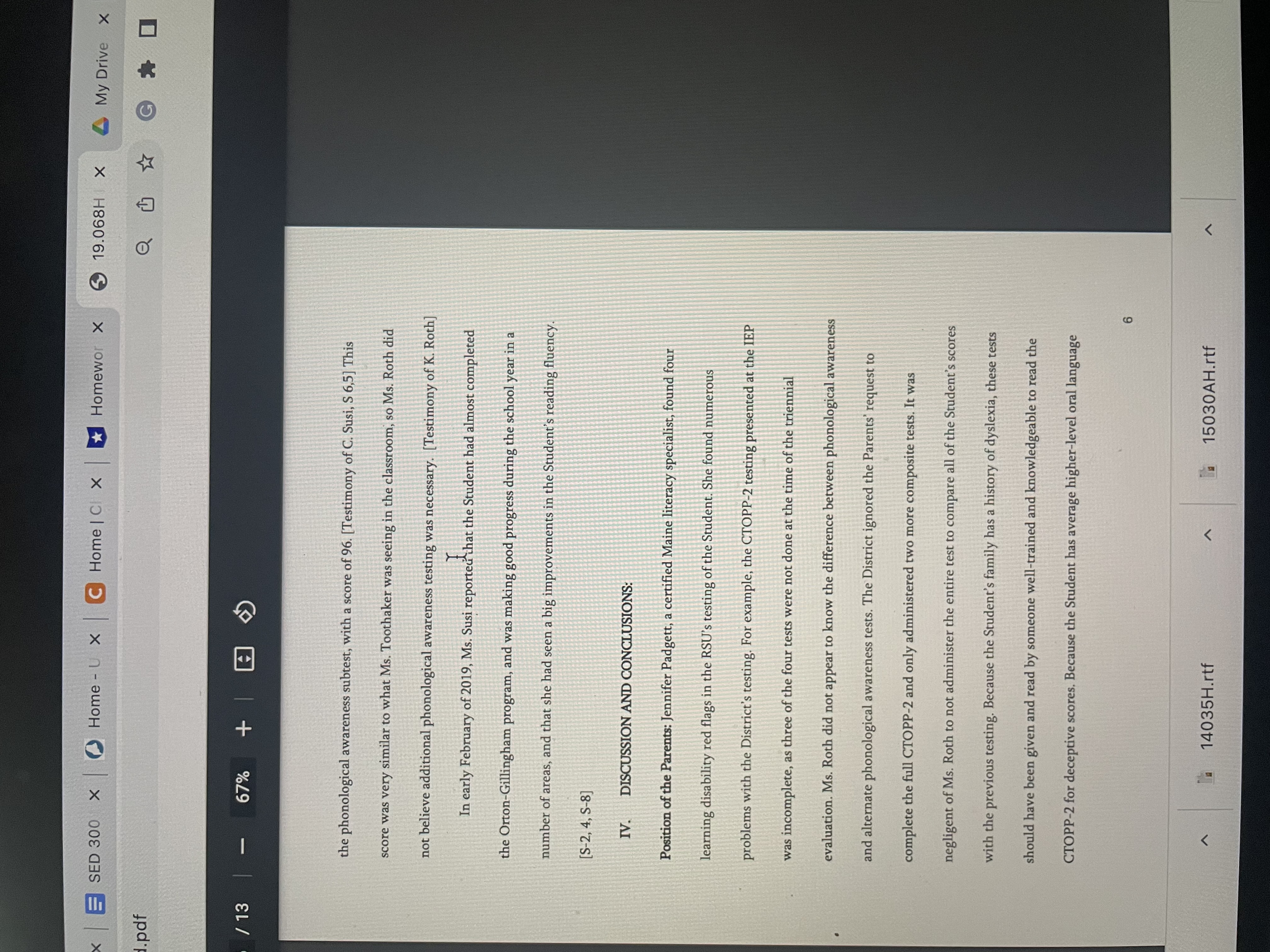
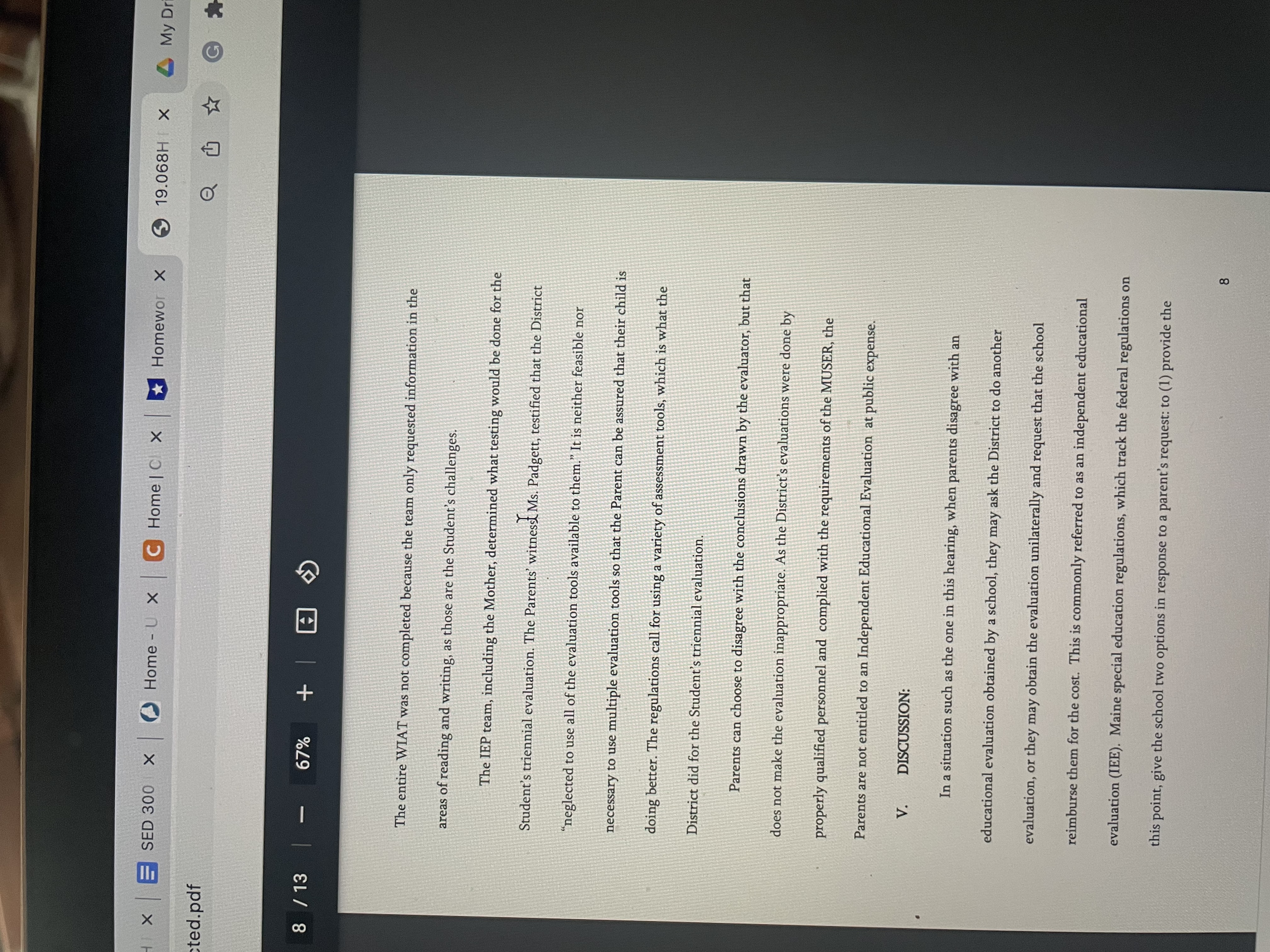
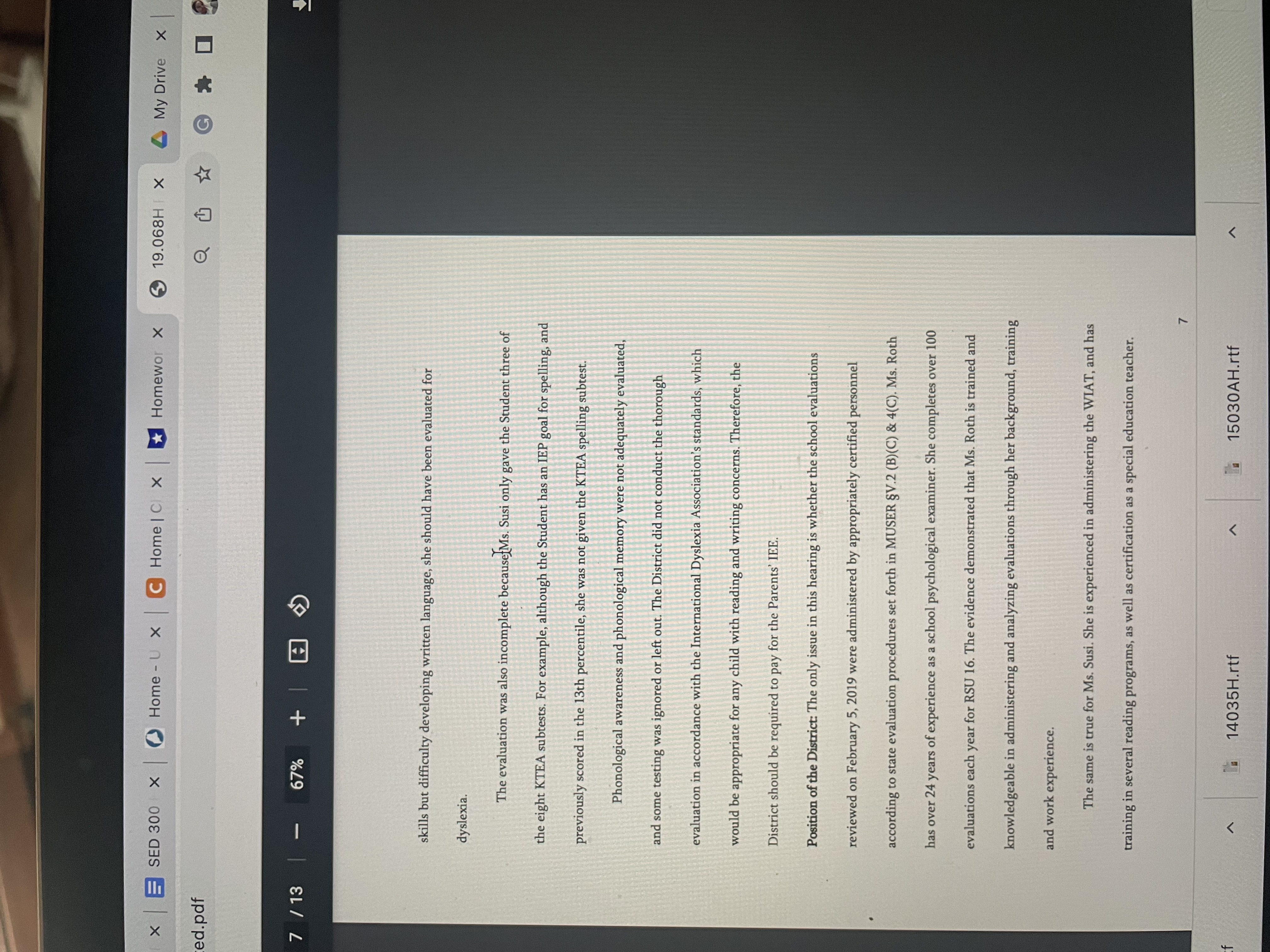
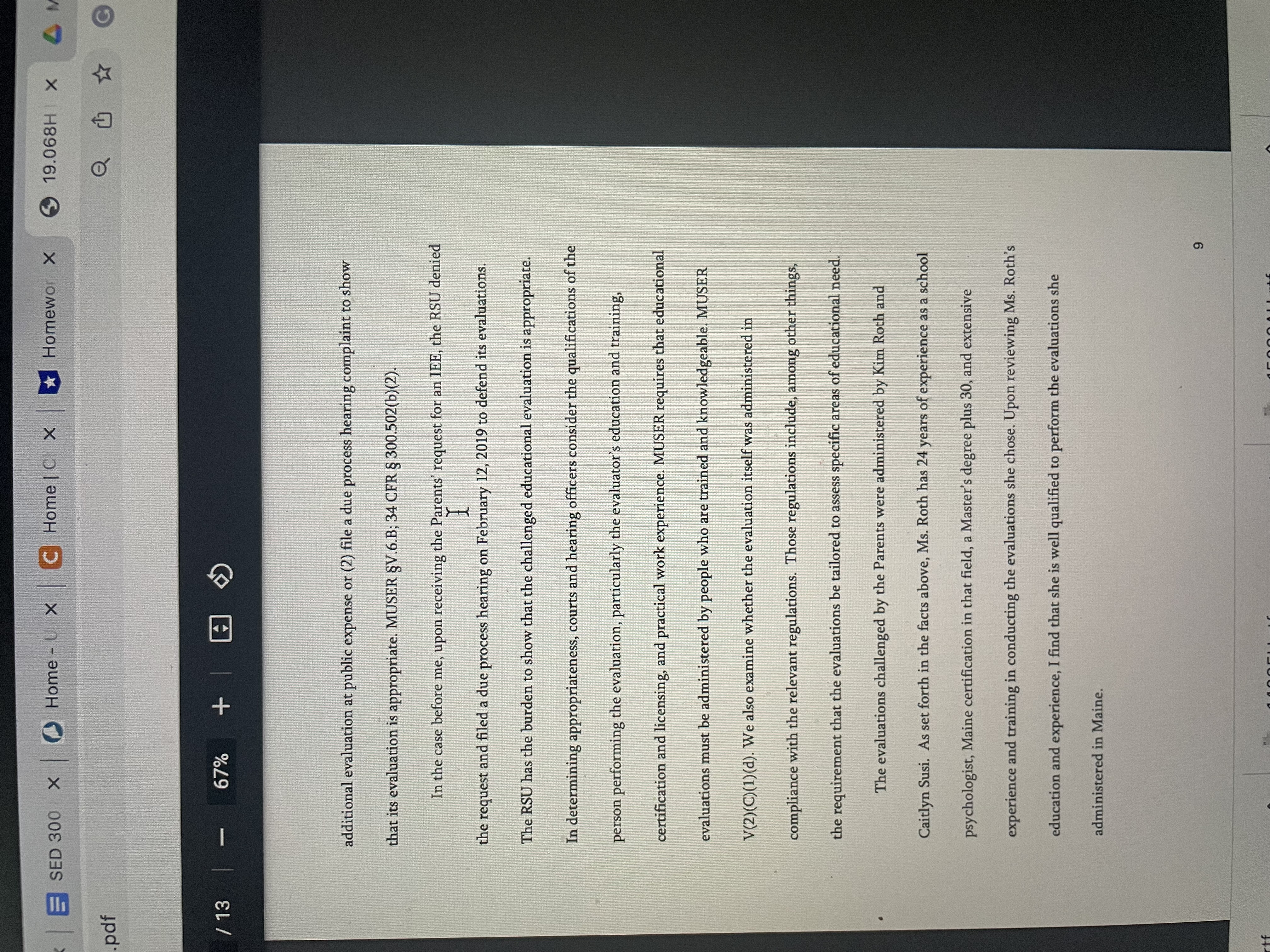
My ted.pdf 5 / 13 - 67% + information . [Testimony of C. Susi, S-7] The Student scored in the average range on these subtests. Ms. Toothaker, the Student's regular classroom teacher, conducted the classroom observation. Psycho-educational testing was done by Kim Roth, who has 24 years of experience as a school psychologist and a Master's Degree +30. She is certified, both nationally and in Maine, as a school psychologist specialist. Ms. Roth has been trained to administer the WISC-V, and conducts approximately 100-125 of these tests each year, for a career total of approximately 2500 administrations over the course of her career. The Student's cognitive scores continued to be average, and her pseudoword decoding was also solidly in the average range. [Testimony of K. Roth, S-6] Ms. Roth also has specialized training in administering the CTOPP-2. When the Student previously took the CTOPP in 2016, her phonological awareness score was below average at 82. This is why, in January 2019, Ms. Roth re-administered portions of the CTOPP in phonological processing for the Student's triennial evaluation. Ms. Roth readministered the whole test, and the Student scored in the average range, Based upon these scores, and speaking with the Student's special education and regular education teachers, Ms. Roth concluded that the Student was performing where the school staff working with her expected her to be. [Testimony of K. Roth, S-6] Ms. Roth did not do the alternate phonological awareness test because the Student's score was in the solidly average range on .rtf 14035H.rtf 15030AH.rtf1 / 13 67% + STATE OF MAINE SPECIAL EDUCATION DUE PROCESS HEARING May 9, 2019 19.068H v. Regional School Unit No. 16 REPRESENTING THE FAMILY: Jennifer Padgett REPRESENTING THE DISTRICT: Holly Day HEARING OFFICER: Shari Broder This hearing was held and this decision issued pursuant to Title 20-A, MRSA $7202 et. seq., and 20 U.S.C. $1415 et. seq., and accompanying regulations. The hearing took place on April 23, 2019 at the Department of Health and Human Services in Lewiston, Maine. Those present for the entire proceeding were the Parents, Jennifer Padgett, Holly Day, Director of Special Education, Caitlyn Susi, Kim Roth, and the undersigned hearing officer. Jennifer Padgett, an advocate, represented the family and Holly Day, director of special education, represented RSU No. 16. Testifying at the hearing were: The Mother Holly Day Director of Special Education Jennifer Padgett Literacy Specialist Caitlyn Susi Special Education Teacher and Achievement Evaluator Kim Roth School Psychological Examiner hh.rtf 14035H.rtf 15030AH.rtfx SED 300 x Home - U X C Home | C X Homewor X 19.068H | X My Drive X ed.pdf 7 / 13 - 67% + skills but difficulty developing written language, she should have been evaluated for dyslexia. The evaluation was also incomplete because Ms. Susi only gave the Student three of the eight KTEA subtests. For example, although the Student has an IEP goal for spelling, and previously scored in the 13th percentile, she was not given the KTEA spelling subtest. Phonological awareness and phonological memory were not adequately evaluated, and some testing was ignored or left out. The District did not conduct the thorough evaluation in accordance with the International Dyslexia Association's standards, which would be appropriate for any child with reading and writing concerns. Therefore, the District should be required to pay for the Parents' IEE. Position of the District: The only issue in this hearing is whether the school evaluations reviewed on February 5, 2019 were administered by appropriately certified personnel according to state evaluation procedures set forth in MUSER SV.2 (B)(C) & 4(C), Ms. Roth has over 24 years of experience as a school psychological examiner. She completes over 100 evaluations each year for RSU 16. The evidence demonstrated that Ms. Roth is trained and knowledgeable in administering and analyzing evaluations through her background, training and work experience. The same is true for Ms. Susi. She is experienced in administering the WIAT, and has training in several reading programs, as well as certification as a special education teacher. 14035H.rtf 15030AH.rtf\fC 13 - 67% + challenged by the Parents. There was neither evidence nor any assertion that the assessment mechanisms were discriminatory in any way, or were administered in any way that was inconsistent with instructions. Based upon the results of the testing instruments chosen by the IEP team, the evaluators conducted additional assessments they felt were needed. A decision for a follow-up evaluation is not, in and of itself, sufficient to trigger a right to an independent educational evaluation at public expense. 34 CFR 502; MUSER V.6; South Kingston School Committee v. Joanna S., 773 F.3d 344, 347 (1st Cir. 2014). Furthermore, a special education evaluation does not have to be perfect to be 'appropriate" under the IDEA. B.G., by his next friend, J.A.G. v. Board of Education of the City of Chicago, 901 F.3d 903 (7th Cir. 2018). The Seventh Circuit held that the test is a simple one: if the school uses qualified evaluators who follow the IDEA's requirements, the school's evaluation will likely be appropriate and it will not have to grant a parent's request for a publicly funded IEE. The Parents' contend that Ms. Padgett's judgment about what evaluations were needed was superior to the judgment of the IEP team and the school evaluators in determining which instruments to use and how they should be interpreted. While an LEE may be more extensive than the school's evaluation, or may detail specific programming strategies not recommended in the school's evaluation, this does not render the District's evaluation inappropriate. Lincolnville Sch. Dist., 102 LRP 7183 (SEA Me. 7/10/2001). 11 14035H.rtf 15030AH.rtfSED 300 x Home -U X C Home | C X Homewor X 19.068H X My Drive X pat GAI / 13 - 67% + comprehension of 100. Her comprehensive test of phonological processing (CTOPP-2) composite scores were also in the average range, except that her phonological awareness score was below average at 82, and she was below average with a score of 7 on the following subtests: elision, blending words, and phoneme isolation. [S-2, 3] During 5th grade, the Student received specially designed instruction in phonics and decoding four times a week for 30 minutes each session. [S-2] These services were delivered by Ms. Susi. On November 19, 2018, the District received back from the Parents a signed consent form to conduct the tests ordered by the IEP team. On this form, the Mother requested that the Student be tested in math as well. [$3, 3] All of the testing ordered by the IEP team was conducted by qualified personnel. Ms. Susi conducted the Wechsler Individual Achievement Test (WIAT-III or WIAT). Ms. Susi has taken courses on conducting assessments, and is in her fifth year of administering the WIAT. She administers the WIAT between 5 and 10 times per year. [Testimony of C. Susi] The results on the WIAT matched what Ms. Susi was seeing during lessons, and what classroom teacher was seeing, except on the word reading subtest. Consequently, Ms. Susi consulted with Kim Roth, and they administered three reading subtests (letter and word recognition, silent reading fluency, and word recognition fluency) on the Kaufman Test of Educational Achievement, Third Edition, Comprehensive Form (KTEA-3) to get more 14035H.rtf 15030AH.rtfdf 13 67% + Parents can choose to disagree with the conclusions drawn by the evaluator, but that does not make the evaluation inappropriate under MUSER. In my 17 years adjudicationg special education disputes, parents seek an IEE in almost every eligibility dispute as a means of refuting the school's determinations. IEEs are sometimes considerably more extensive than the evaluations conducted by the school, and usually involve using different test instruments to avoid the so-called "practice effect." Some IEEs dig deeper than the school's testing did. This does not render the school's testing inappropriate under MUSER. In other cases, parents have had excessive testing done in an effort to improve their chances of obtaining a predetermined outcome. I have witnessed psychologists and consultants engage in "test shopping," which is choosing tests that they believe will more likely produce specific results so the child will be identified as eligible for special education. I point this out for illustrative purposes only, not to imply that the Parents here have done that here. I have no need to reach that issue. My point is that in my experience as a hearing officer, evaluators have different perspectives about which evaluations are necessary or which tests are best, which subtest to administer, and so forth. More extensive evaluations are not necessarily an indication of a better evaluation, or that the school's evaluation was deficient under MUSER. The Parents do, however, have a right to have the IEP team (and a due process hearing officer, if they request a hearing) consider Ms. Padgett's evaluations and any IEEs they obtain in determining whether the Student is a student with a disability under the 12 14035H.rtf 15030AH.rtf19.068H | X X SED 300 x Home - U X C Home | C X Homewor X ted.pdf G 2 / 13 67% + All testimony was taken under oath. The parties were given a full opportunity to examine and cross-examine witnesses, introduce documentary evidence and make oral argument. The hearing record remained open until April 29, 2019 to allow the parties to prepare and submit closing arguments. I. PROCEDURAL BACKGROUND: On February 12, 2019, RSU #16 (henceforth "RSU" or "District") requested this hearing in response to the Parents' request for an independent educational evaluation (IEE) at District expense. On March 5, 2019, the prehearing conference was held via Zoom. Participating in the prehearing conference were: the Parent; Jennifer Padgett, the Parent's advocate/expert witness; Holly Day, special education director for the RSU; and Shari Broder, Hearing Officer. This hearing followed. II. ISSUE: Is the District's evaluation of the Student appropriate under the standards in the Individuals with Disabilities Education Act and Maine Unified Special Education Regulations SV? III. FINDINGS OF FACT: The Student is 10 years old and attends fifth grade at the Minot Consolidated School. She has been eligible for special education and related services under the category of Other Health Impairment (OHI). At the February 6, 2018 meeting of the IEP team, the Team discussed the requirement that the Student's triennial evaluation must be completed by February 11, 2019. The entire 2 14035H.rtfSED 300 x Home -L X C Home |C X Homewor X 19.068H X 4 pdf / 13 67% + The same is true for Ms. Susi. A summary of Ms. Susi's credentials are set forth in the findings of fact above, including her certification as a special education teacher with special training in reading recovery and Orton-Gillingham reading instruction, as well as other reading programs, and her training and experience in conducting assessments. She is appropriately educated and has experience in the area of educational evaluation. Both evaluators are familiar with administering tests intended to identify the existence of a specific learning disability. In my view, there is no question that both evaluators are trained and knowledgeable within the meaning of the Maine regulation on the administration of educational evaluations. In the Parents' closing argument, they compare Ms. Padgett's training and experience with the District's evaluators and conclude that she is more qualified. This is a very subjective argument, but not relevant here. This is not a contest to determine who is most qualified. The regulations merely require that the District's evaluators meet certain requirements, which they undoubtedly do. The conduct of the evaluations and the other procedures relating thereto are controlled by the provisions of MUSER V(2)(B) and (C). As required by those regulations, the evaluations performed by Ms. Roth and Ms. Susi relied upon a variety of assessment tools, rather than any single measure or assessment. MUSER V(2) (B). The evaluators had access to and relied upon the reports on the Student's previous evaluations, which were not 10
Step by Step Solution
There are 3 Steps involved in it

Get step-by-step solutions from verified subject matter experts
 Study Help