







Question: n Protocol: ARP iIt was stated that, in newer implementations repeat ARP queries about a timed out entry are first sent unicas, in order to
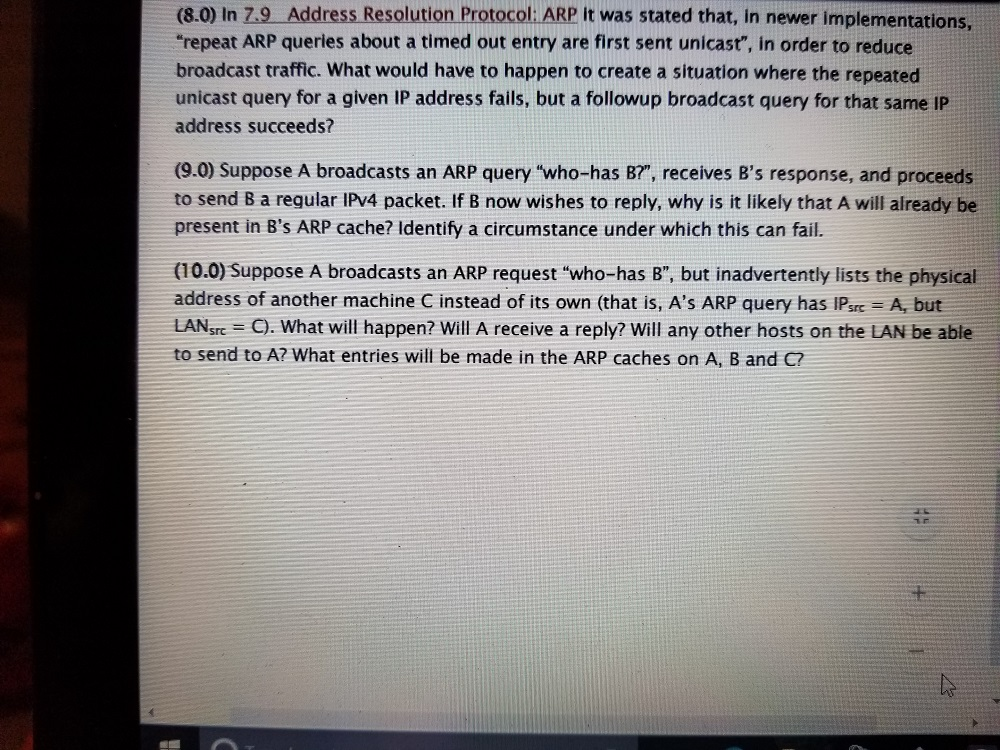
n Protocol: ARP iIt was stated that, in newer implementations repeat ARP queries about a timed out entry are first sent unicas", in order to reduce broadcast traffic. What would have to happen to create a situation where the repeated unicast query for a given IP address fails, but a followup broadcast query for that same IP address succeeds? (9.0) Suppose A broadcasts an ARP query "who-has B7, receives B's response, and proceeds to send B a reqular IPv4 packet. If B now wishes to reply, why is it likely that A will already be present in B's ARP cache? Identify a circumstance under which this can fail (10.0) Suppose A broadcasts an ARP request "who-has B", but inadvertently lists the physical address of another machine C instead of its own (that is, A's ARP query has IPsre A, but LANs.-C). What will happen? Will A receive a reply? Will any other hosts on the LAN be able to send to A? What entries will be made in the ARP caches on A, B and C
Step by Step Solution
There are 3 Steps involved in it

Get step-by-step solutions from verified subject matter experts
 Study Help