Question: n this unit you will learn to do the following: Think critically about issues related to work. Use different reading strategies: skimming, scanning, and careful
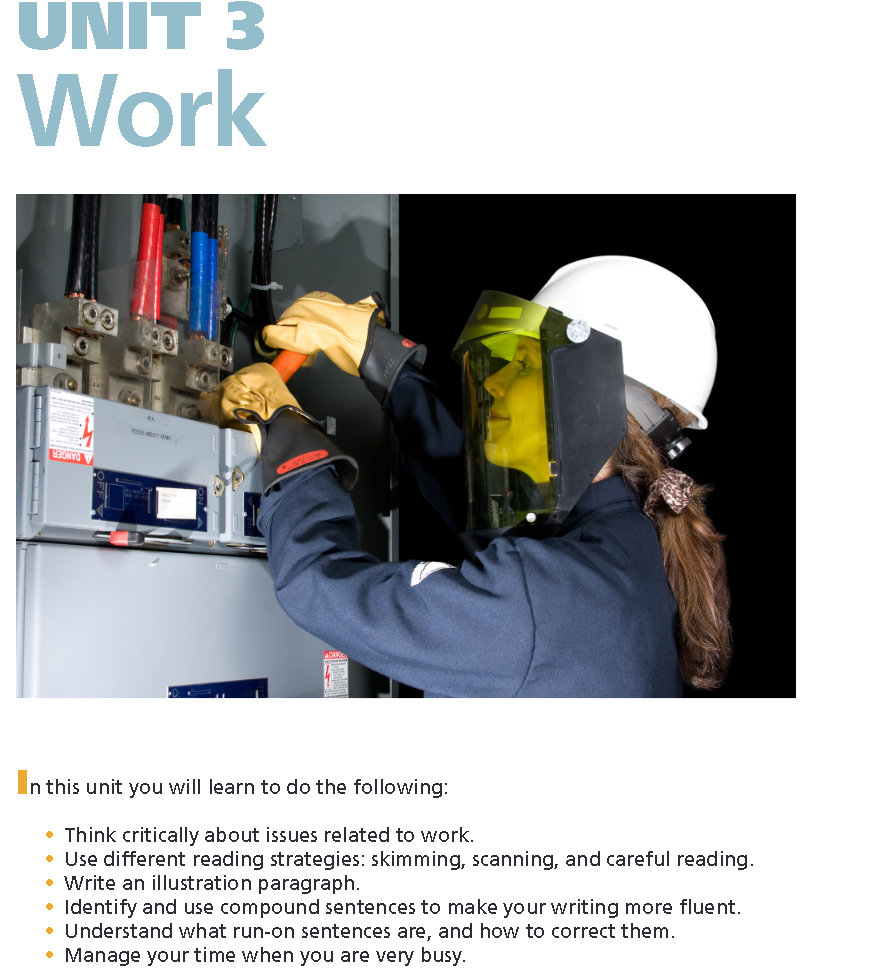
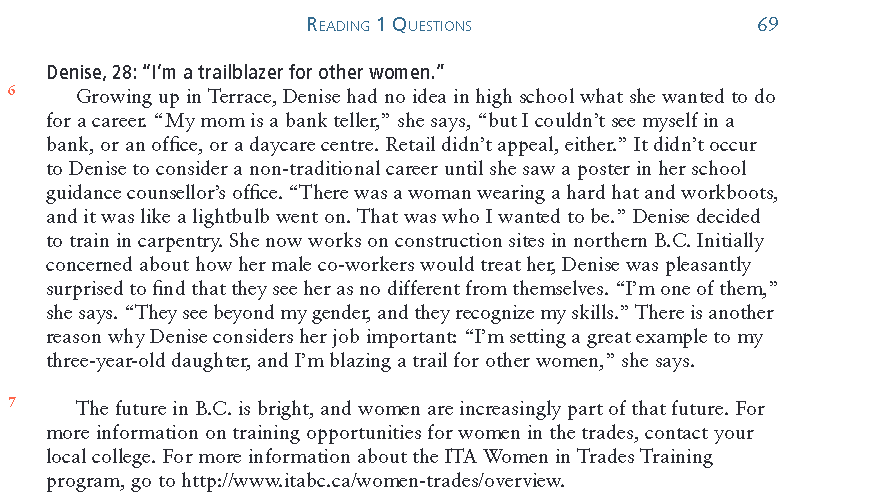
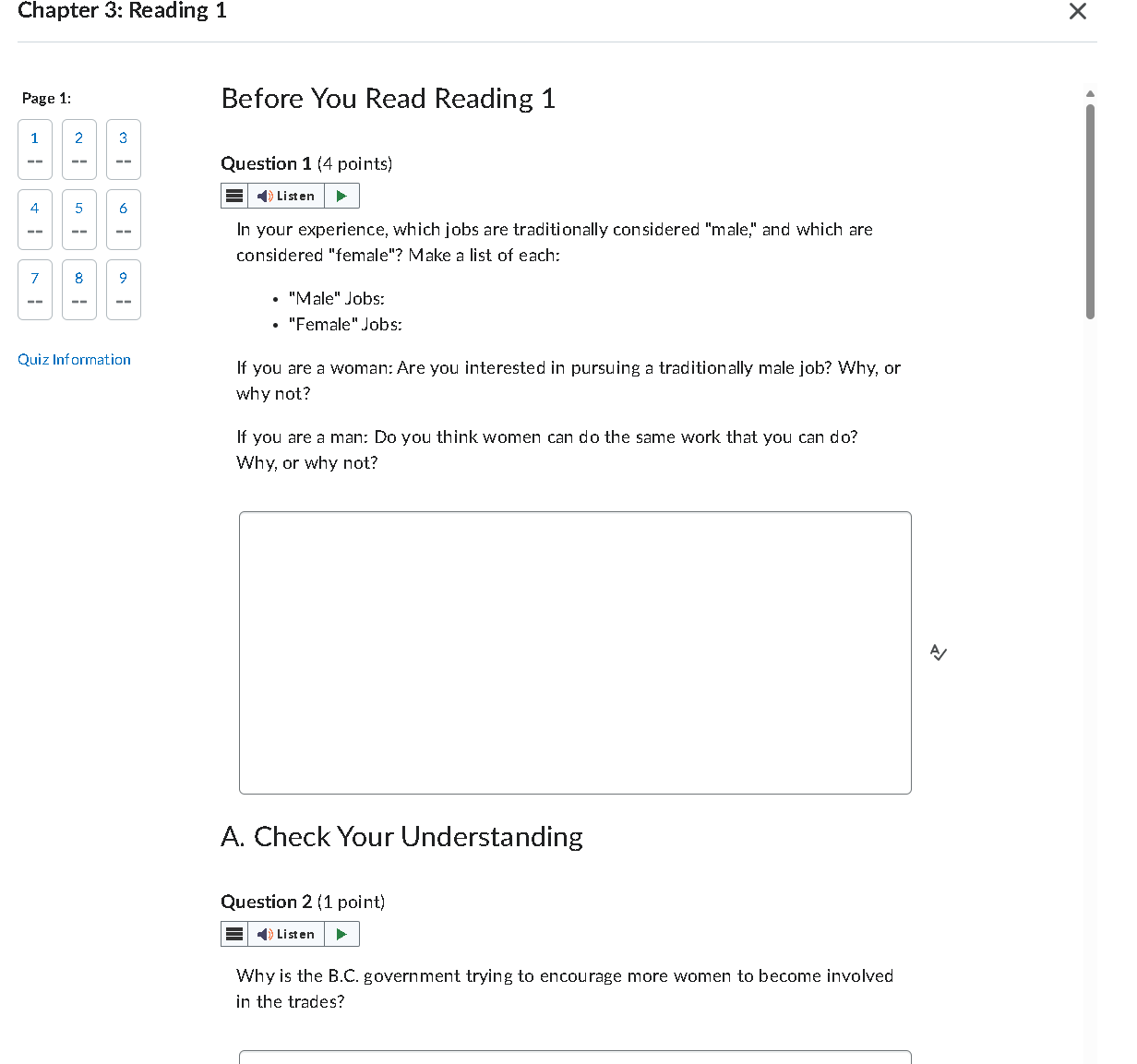
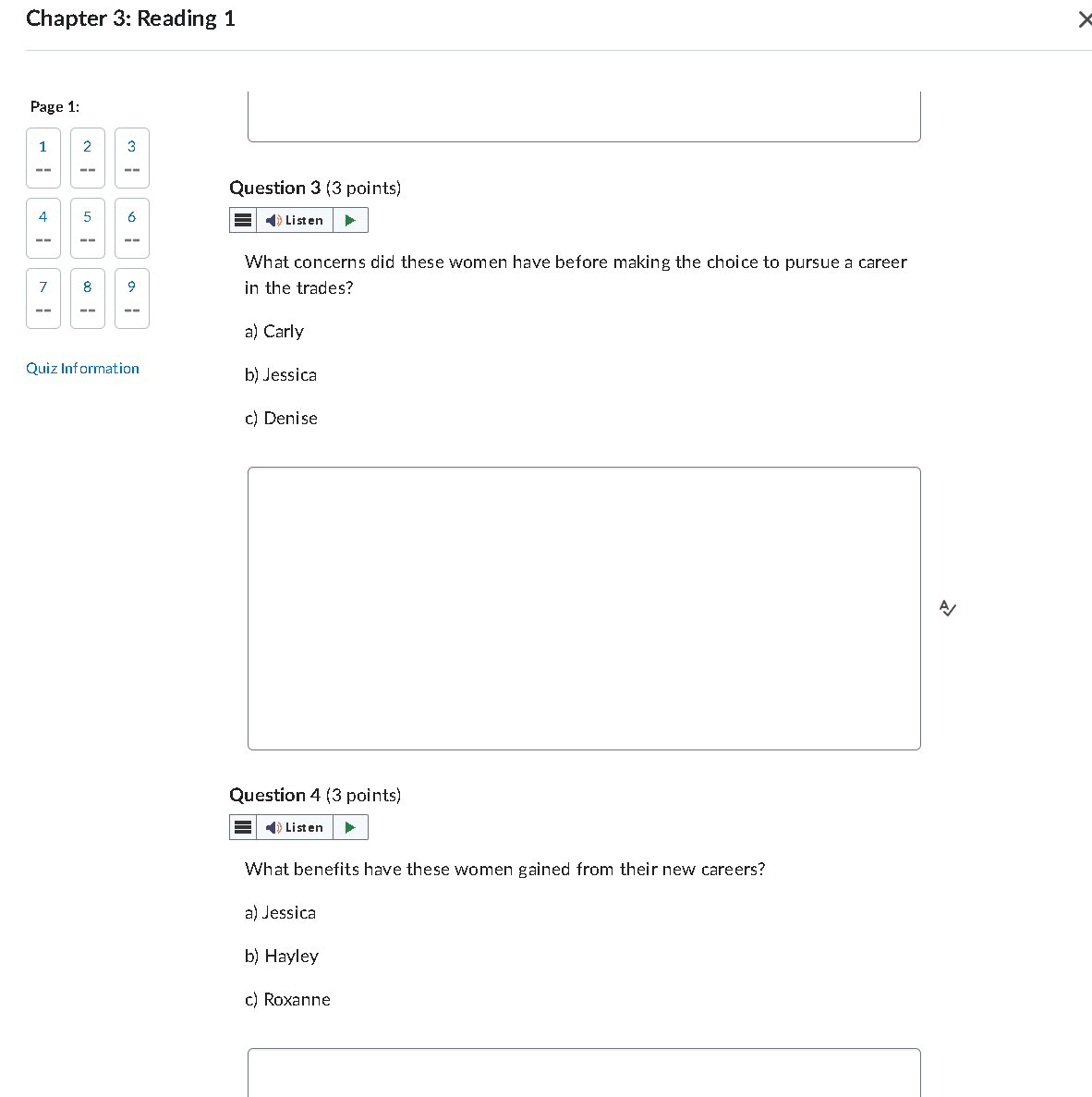
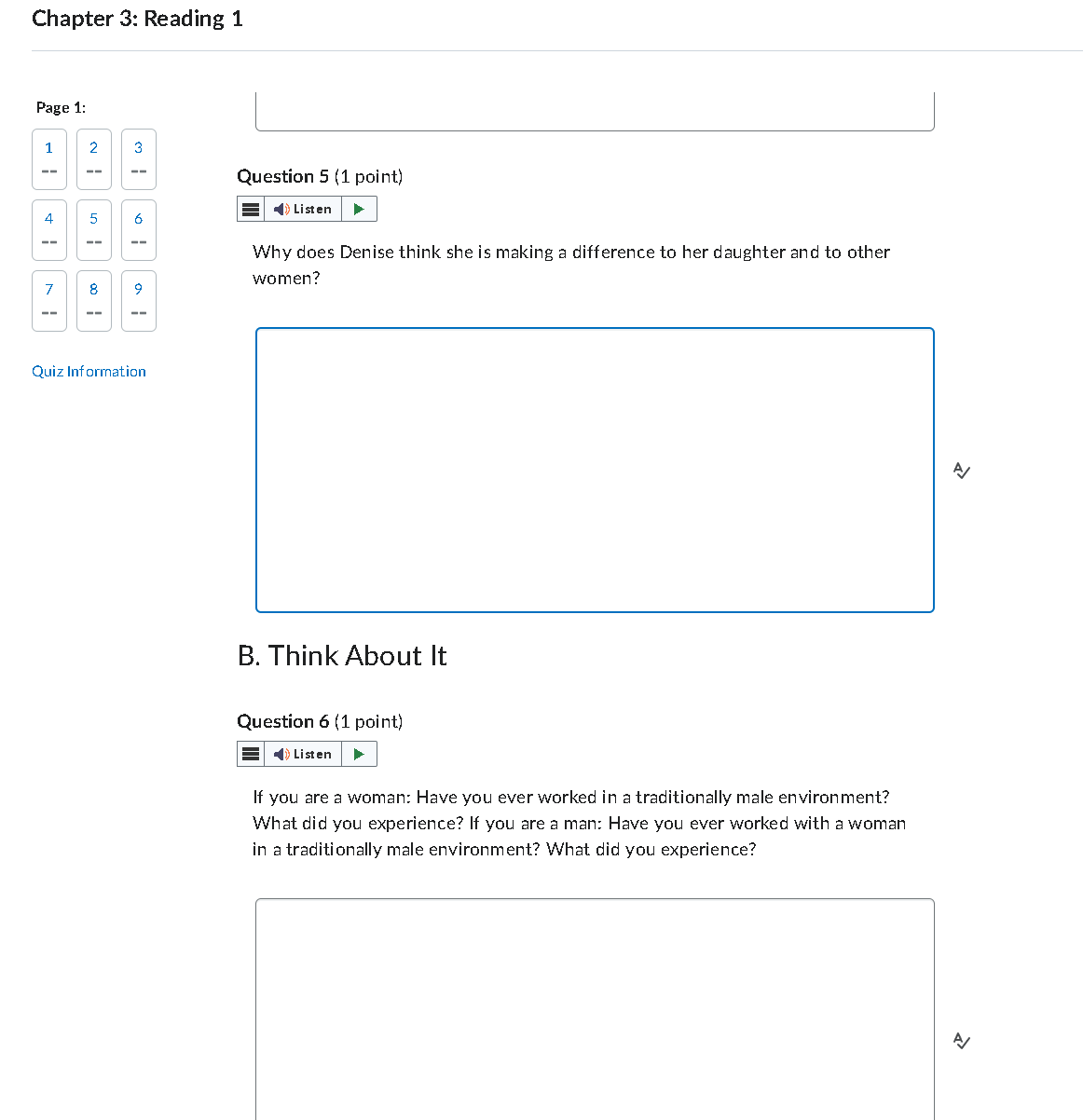
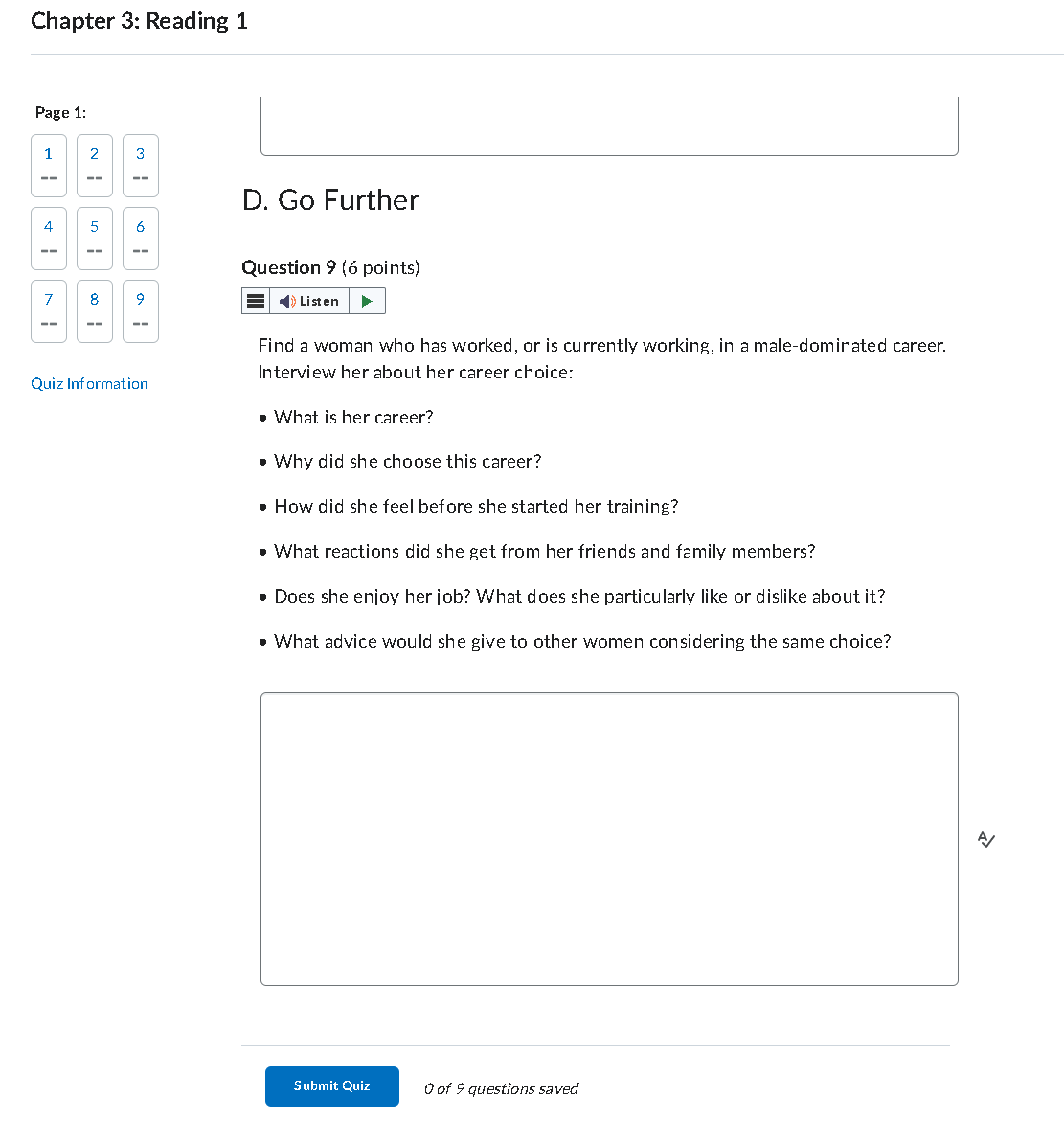
n this unit you will learn to do the following: Think critically about issues related to work. Use different reading strategies: skimming, scanning, and careful reading. Write an illustration paragraph. Identify and use compound sentences to make your writing more fluent. Understand what run-on sentences are, and how to correct them. Manage your time when you are very busy. The Reading Read the article below and answer the questions that follow. 1 Canada is facing a shortage of skilled workers, particularly in fields such as carpentry, bricklaying, plumbing, and mechanics. For Canada to meet its labour needs, participation by women in these traditionally male occupations will become increasingly important. An initiative by the government of British Columbia is making it more possible, and more attractive, for women to pursue jobs in the trades. The Industry Training Authority's Women in Trades Training (WITT) program was set up to facilitate the transition of women into the trades by providing career guidance, mentoring, and financial assistance to those who meet the eligibility requirements. Women who take a chance on non-traditional careers report higher salaries, job satisfaction, and a feeling of empowerment. Here are five examples. Rescing 1: A VWroman's PLAace 67 Carly, 23: \"It doesn't mean I'm not feminine.\" \"Just because I'm training to be a plumber,\" says Carly from Salmon Arm, \"that doesn't mean I'm not feminine.\" Carly's father is a plumber, but following in his footsteps was not an obvious choice for her \"Going into plumbing was the furthest thing from my mind,\" she admits. \"I was interested in clothes and make-up, not unclogging people's toilets. I didn't think that was a job for a woman.\" Carly's change of heart came after high school. \"I didn't go to college right away,\" she remembers. \"I couldn't figure out what I wanted to do. I had a few dead-end jobs, but I wanted something better\" Eager to explore her options, Carly went to an open house at the local college, where she took a tour of the trades facilities. \"There were these women who were working towards a real career,\" she remembers. \"The fact that they were women was not holding them back.\" Carly started accompanying her father on his jobs, and her mind was made up: she enrolled in a college course in plumbing a few months later \"I have a great career ahead of me,\" she says. \"I didn't think that would be possible.\" 6S UNIT 3 WORK Jessica, 34: \"| earn twice as much as | did working in the mall.\" Asa single mom to three children, Jessica was having a hard time making ends mect. \"I was working long hours in the mall in Prince Rupert,\" she says. \"I was only making minimum wage, and I could barely pay my rent. Sometimes I also took on shifts at Tim Hortons. I needed the money, but I barely saw my kids.\" Then, Jessica heard about a cousin who had been offered a grant to study welding. She was intrigued and wondered if she could do the same. \"I was nervous,\" she admits. \"I didn't know one end of a welding rod from the other.\" WITT provided her with financial assistance, and she was on her way. While Jessica was initially motivated by financial rewards, she was surprised to find that she enjoyed her new career. \"There was a lot to learn in the beginning,\" she reports, \"but I learned quickly.\" Now that she has finished her initial training, Jessica is making a lot more money than in her previous work. \"Every time I buy my kids new shoes, I thank my lucky stars I took a chance on this,\" she says. Hayley, 21: \"I'm turning my life around.\" Hayley's life could easily have gone in a different direction. The daughter of an alcoholic mother and an absent father, Atlin resident Hayley was heading for trouble in her teenage years. \"I dropped out of school,\" she says. \"I was drinking, doing drugs, hanging out. I was arrested for shoplifting. Things were not looking good for me. I could easily have ended up on the streets, or I could have gone to jail.\" That all changed when an addictions counsellor handed Hayley a leaflet about the WITT program. \"This all made sense,\" Hayley says. \"I wanted to turn my life around, but I didn't want to be stuck in a classroom, sitting at a desk. Pve always liked working with my hands. Suddenly I could sce a future for myself.\" Hayley got clean, went back to college and is now working towards a career as an electrician. \"I have a goal in life now,\" she says proudly. \"Pm never going back to the way I was.\" Roxanne, 46: \"I love being active and working outdoors.\" When the power goes out in a New Westminster neighbourhood, the person who is called upon to fix the problem may be Roxanne, who has worked as a power line technician for the last five years. \"This is not my first career,\" she laughs. \"I've worked in retail, in restaurants, in offices, you name it. 've been a bicycle courier. Pve pumped gas. None of it did anything for me.\" Roxanne was laid off when the restaurant she was working at went out of business, and she collected unemployment benefits for a while. Wanting something different, Roxanne went online and started to explore non-traditional occupations. That search led her to the WITT program, and after considering several options, she chose to train as a power line technician. \"T like working outdoors,\" she explains. \"And I'm not afraid of heights.\" Today, Roxanne is a Red Seal power line technician, which means her credentials are recognized across Canada. \"I could work anywhere there is a need for my skills,\" she says. \"[ve always wanted to see more of the country. I wonder if they need power line technicians in Newfoundland ... \" Reasoning 1 Questions 69 Denise, 28: \"I'm a trailblazer for other women.\" Growing up in Terrace, Denise had no idea in high school what she wanted to do for a career \"My mom is a bank teller,\" she says, \"but I couldn't sce myself in a bank, or an office, or a daycare centre. Retail didn't appeal, either.\" It didn't occur to Denise to consider a non-traditional career until she saw a poster in her school guidance counsellor's office. \"There was a woman wearing a hard hat and workboots, and it was like a lightbulb went on. That was who I wanted to be.\" Denise decided to train in carpentry. She now works on construction sites in northern B.C. Initially concerned about how her male co-workers would treat her Denise was pleasantly surprised to find that they see her as no different from themselves. \"I'm one of them,\" she says. \"They see beyond my gender, and they recognize my skills.\" There is another reason why Denise considers her job important: \"'m setting a great example to my three-year-old daughter, and I'm blazing a trail for other women,\" she says. The future in B.C. is bright, and women are increasingly part of that future. For more information on training opportunities for women in the trades, contact your local college. For more information about the ITA Women in Trades Training program, go to http:/Avww.itabc.ca+women-trades/overview. Chapter 3: Reading 1 Page 1: 1 2 3 4 5 6 7 & 9 Quiz Information Before You Read Reading 1 > Question 1 (4 points) =| @)Llisten | | In your experience, which jobs are traditionally considered "male," and which are considered "female"? Make a list of each: "Male" Jobs: "Female" Jobs: If you are a woman: Are you interested in pursuing a traditionally male job? Why, or why not? lf you are a man: Do you think women can do the same work that you can do? Why, or why not? A. Check Your Understanding Question 2 (1 point) =| @)Listen | | Why is the B.C. government trying to encourage more women to become involved in the trades? Chapter 3: Reading 1 Page 1: 1 N w -- -- -- Question 3 (3 points) 4 5 6 Listen -- What concerns did these women have before making the choice to pursue a career 8 9 in the trades? a) Carly Quiz Information b) Jessica c) Denise A Question 4 (3 points) Listen What benefits have these women gained from their new careers? a) Jessica b) Hayley c) RoxanneChapter 3: Reading 1 Page 1: 2 Question 5 (1 point) 5 6 > Listen -- -- Why does Denise think she is making a difference to her daughter and to other 8 9 women? -- -- Quiz Information A B. Think About It Question 6 (1 point) >Listen If you are a woman: Have you ever worked in a traditionally male environment? What did you experience? If you are a man: Have you ever worked with a woman in a traditionally male environment? What did you experience? AChapter 3: Reading 1 Quiz Information Question 7 (1 point) =| } Listen > | Could the B.C. government do more to encourage women to choose traditionally male occupations? If $0, what? & Question 8 (1 point) =| 4) Listen | Choose one of the women profiled in the reading. What would you like to say to her? Write her a message in the space below. Chapter 3: Reading 1 Page 1: 1 2 3 D. Go Further 4 5 6 JOE Question 3 (6 points) 7/8/19 | diisten | > | Find a woman who has worked, or is currently working, in a male-dominated career. Interview her about her career choice: Quiz Information # Vhat is her career? # Why did she choose this career? * How did she feel before she started her training? What reactions did she get from her friends and family members? * Does she enjoy her job? What does she particularly like or dislike about it? # What advice would she give to other women considering the same choice? Gof ? questions saved
Step by Step Solution
There are 3 Steps involved in it
1 Expert Approved Answer
Step: 1 Unlock
Question Has Been Solved by an Expert!
Get step-by-step solutions from verified subject matter experts
Step: 2 Unlock
Step: 3 Unlock
Students Have Also Explored These Related Sociology Questions!









 Study Help