







Question: Name 14.4 UNIT 4.7 MONOPOLISTIC COMPETITORS VS. PART A Answer the following questions regarding MONOPOLISTIC COMPETITORS. What is MONOPOLISTIC COMPETITION? Characteristics of MONOPOLISTIC COMPETITORS MANY.
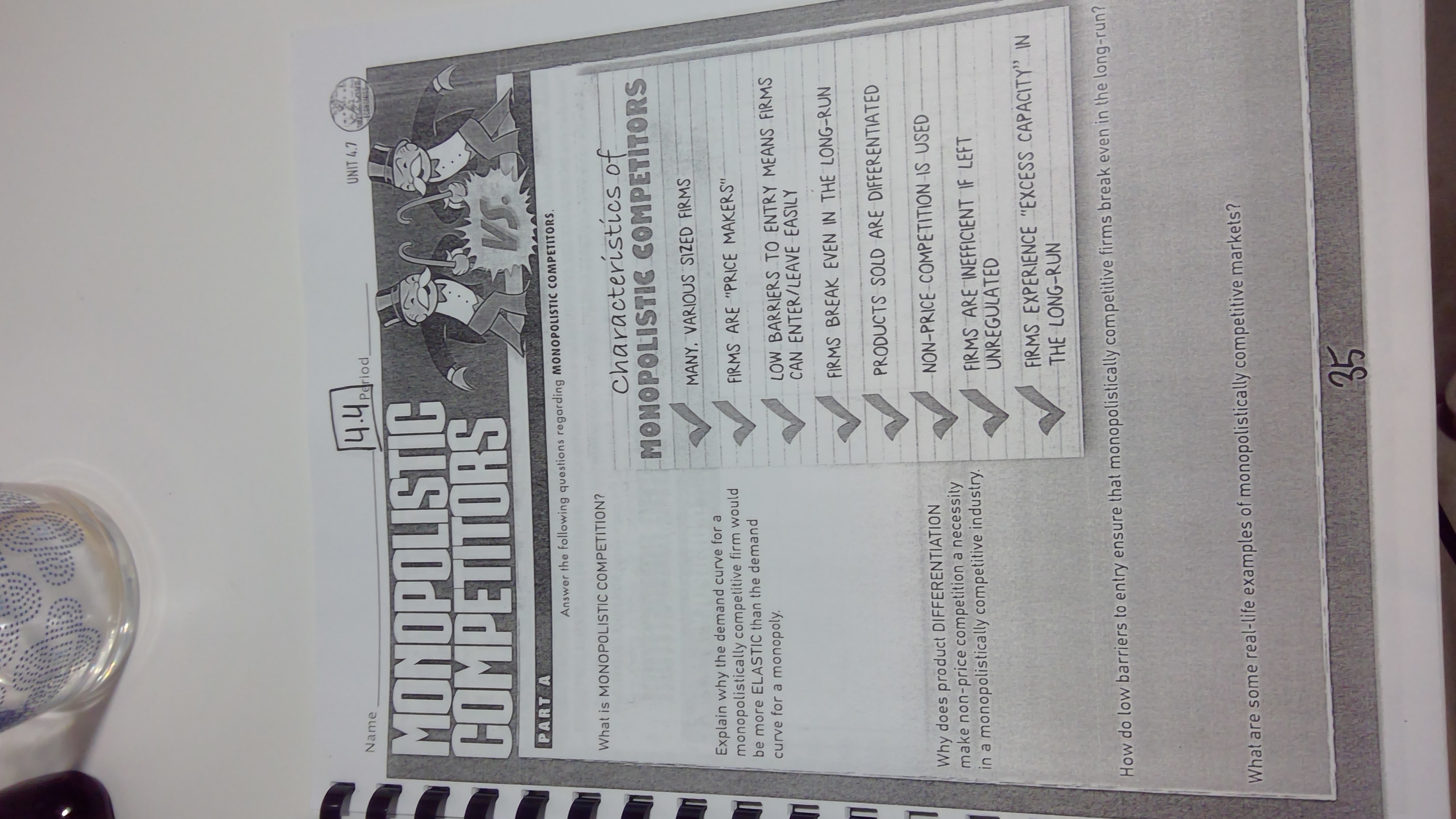
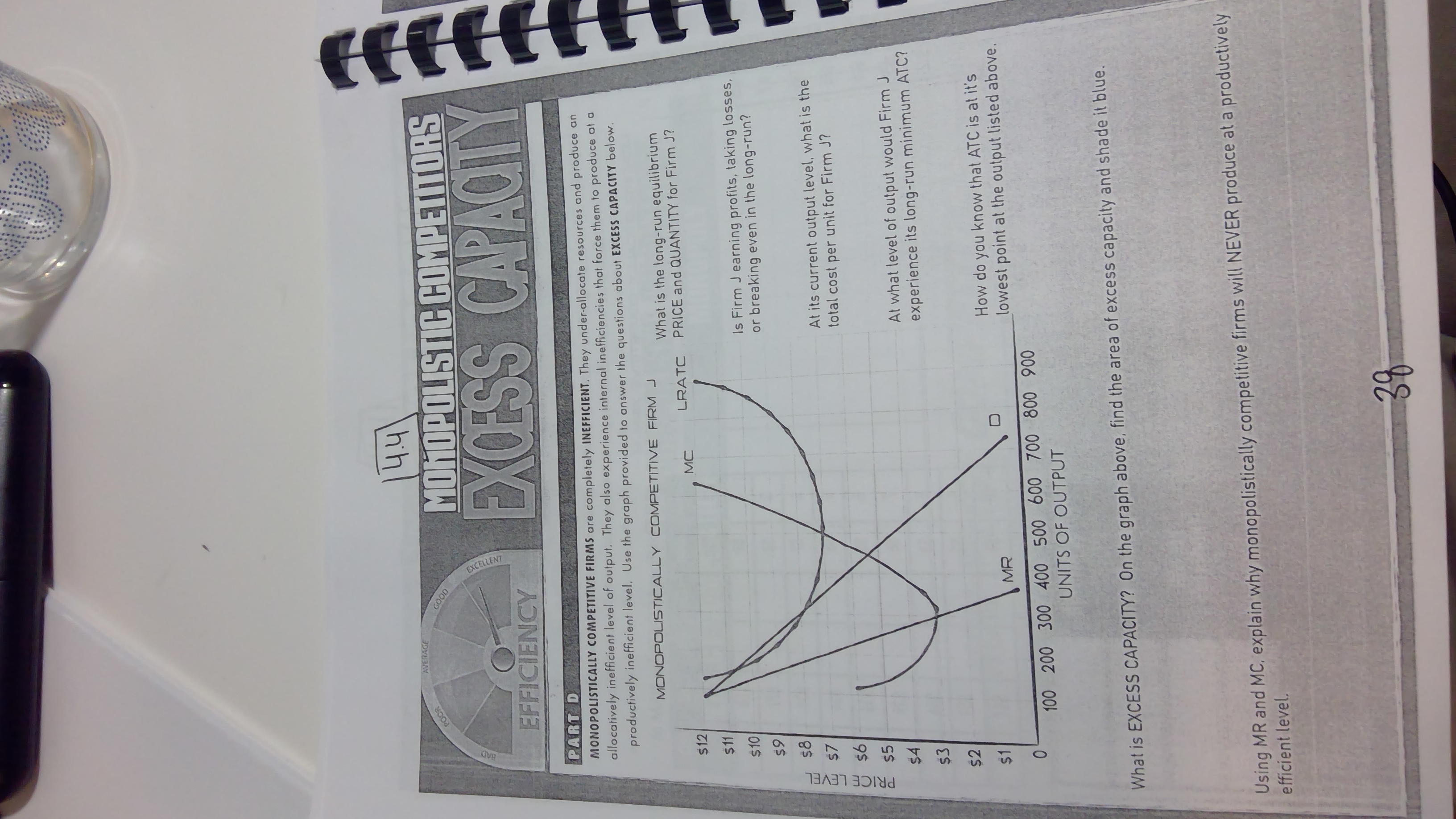
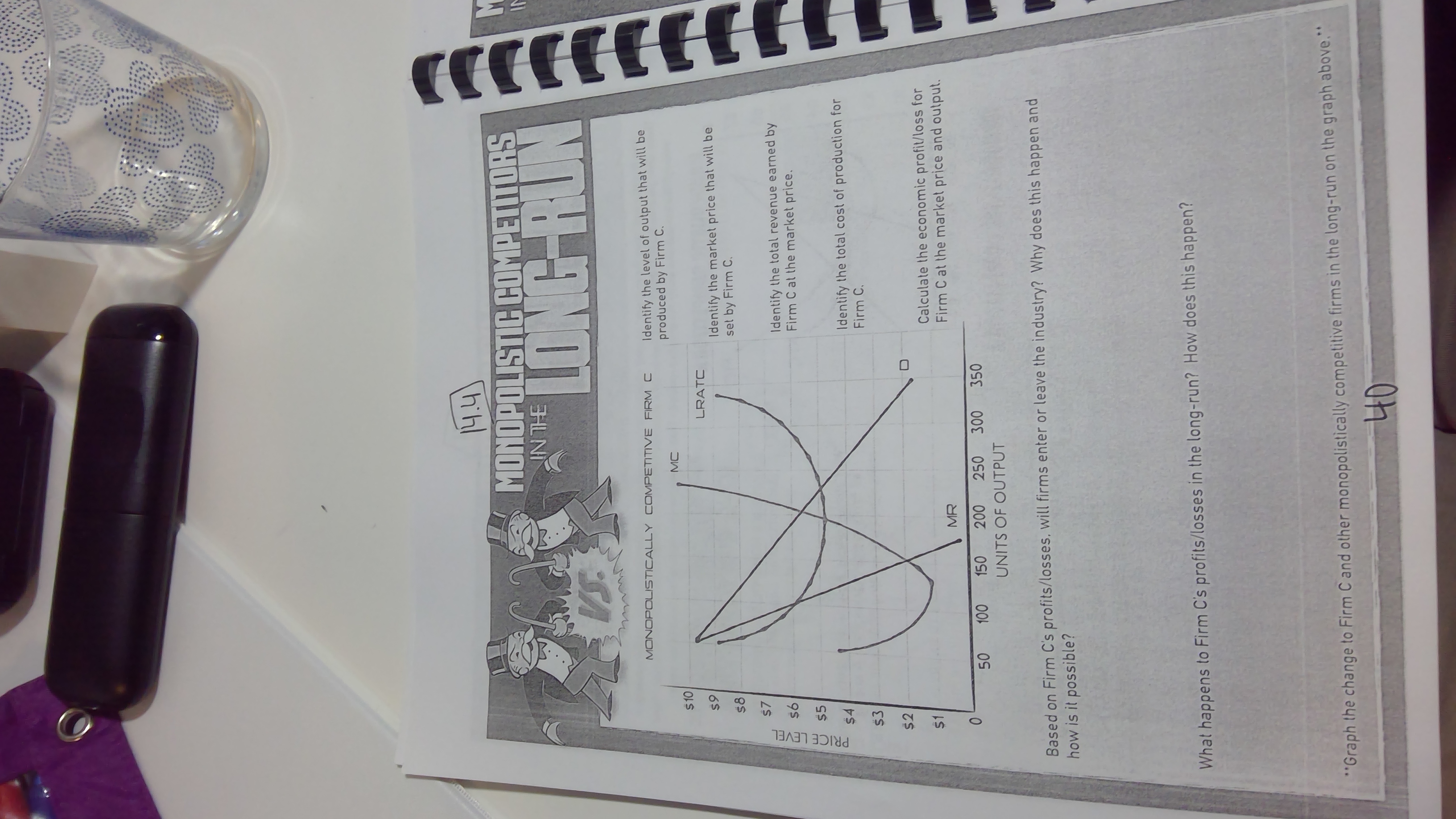
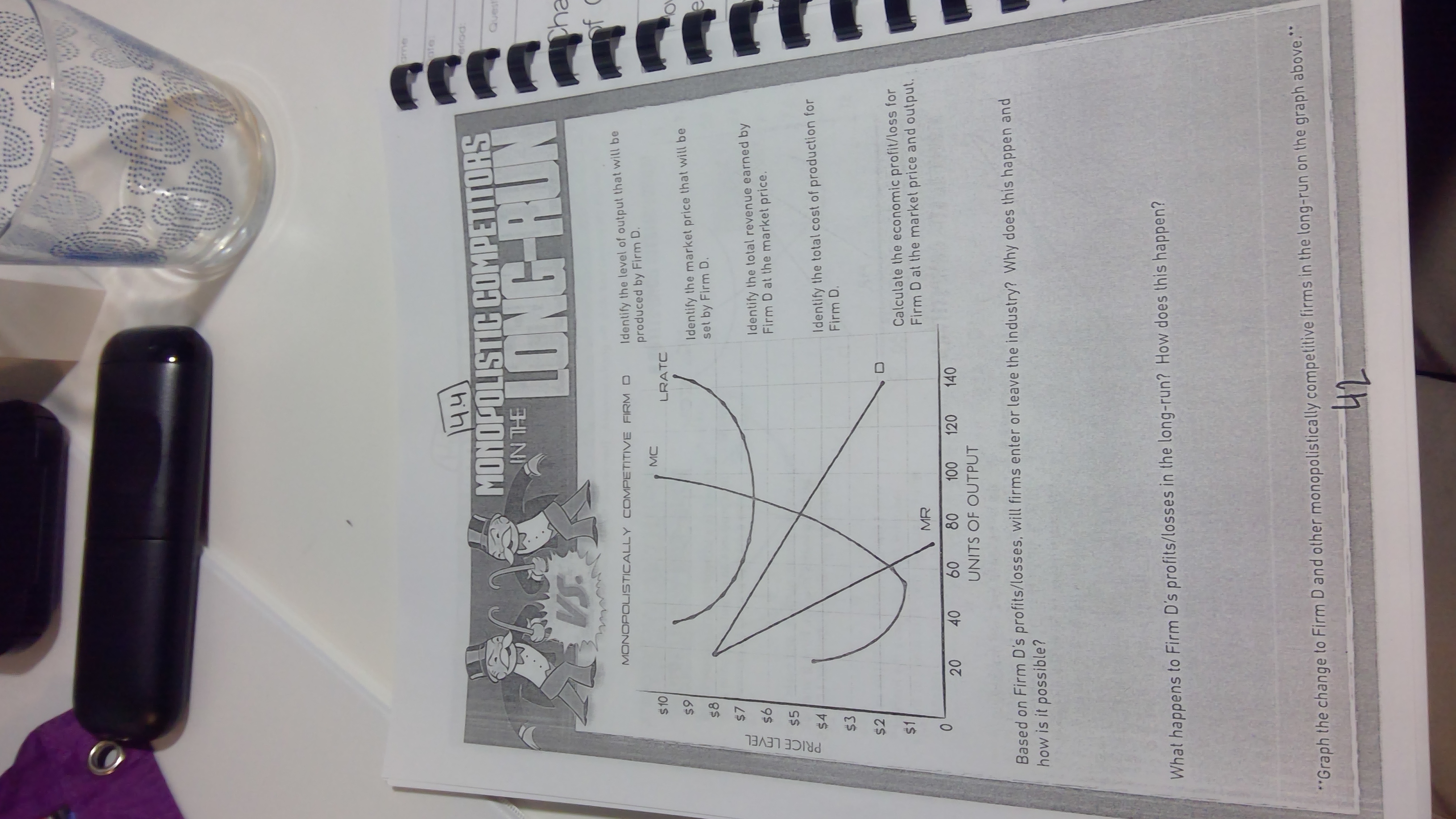
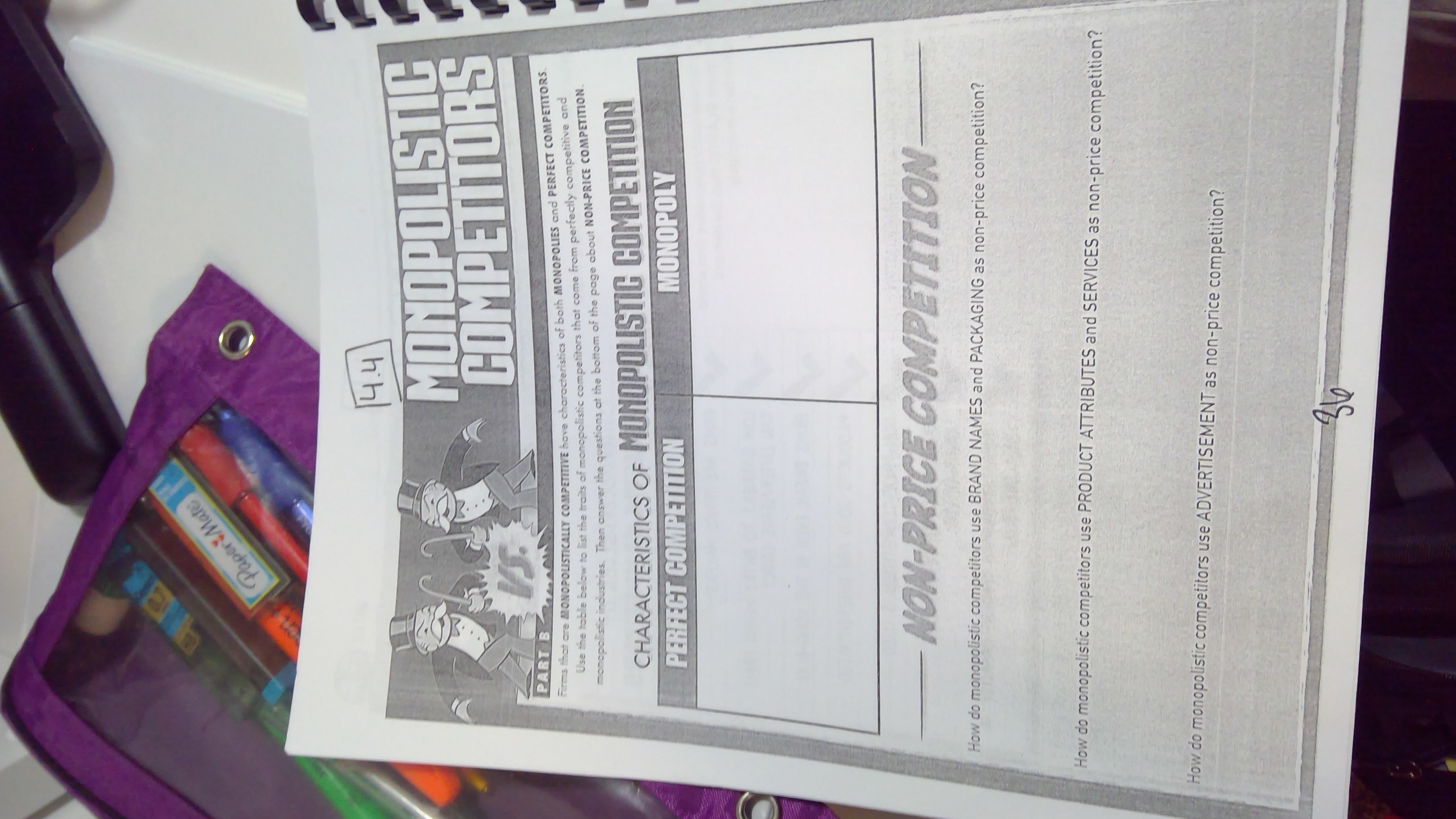
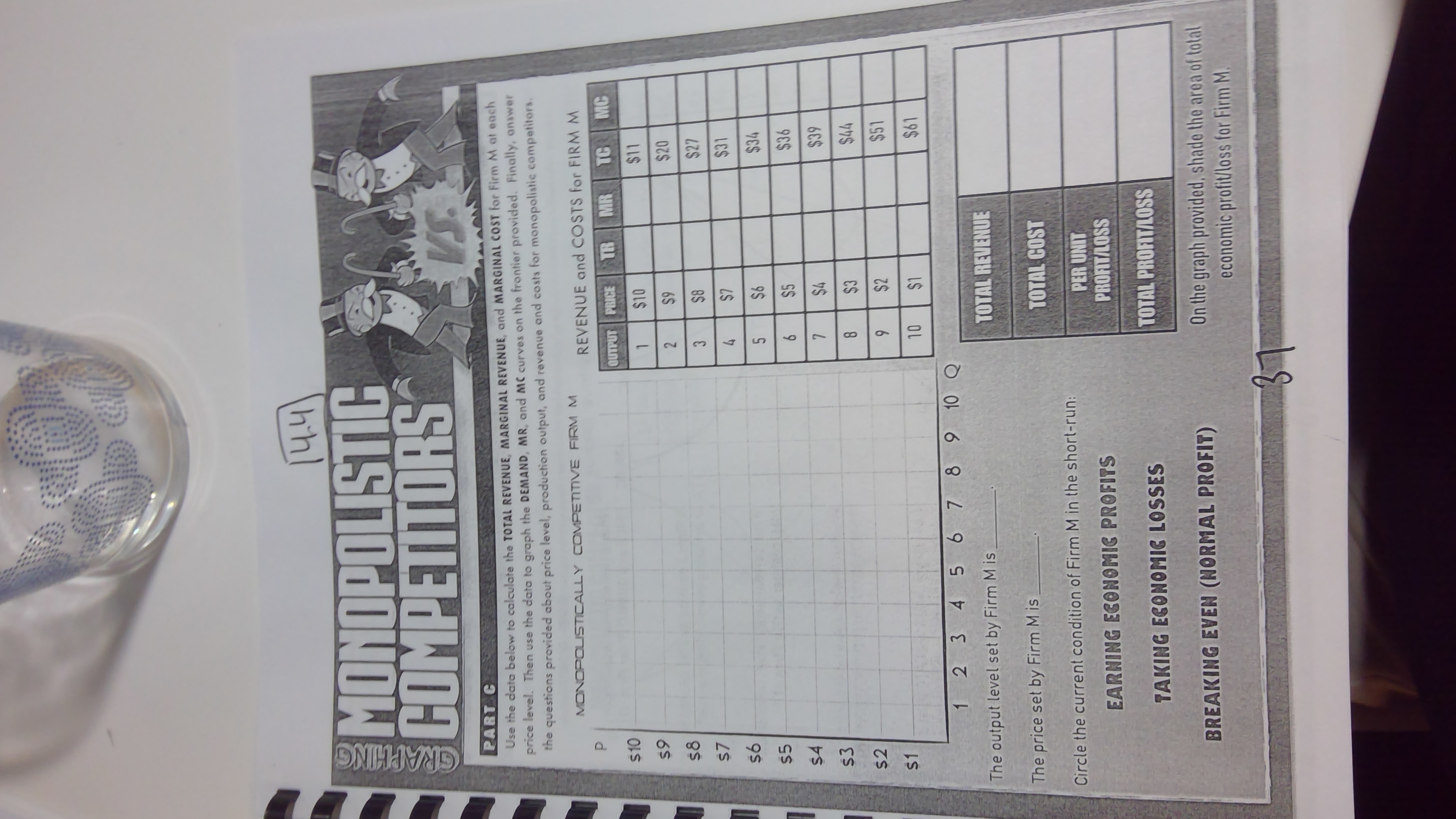
Name 14.4 UNIT 4.7 MONOPOLISTIC COMPETITORS VS. PART A Answer the following questions regarding MONOPOLISTIC COMPETITORS. What is MONOPOLISTIC COMPETITION? Characteristics of MONOPOLISTIC COMPETITORS MANY. VARIOUS SIZED FIRMS Explain why the demand curve for a monopolistically competitive firm would FIRMS ARE "PRICE MAKERS" be more ELASTIC than the demand curve for a monopoly. LOW BARRIERS TO ENTRY MEANS FIRMS CAN ENTER/LEAVE EASILY FIRMS BREAK EVEN IN THE LONG-RUN PRODUCTS SOLD ARE DIFFERENTIATED Why does product DIFFERENTIATION NON-PRICE COMPETITION-IS USED make non-price competition a necessity in a monopolistically competitive industry. FIRMS ARE INEFFICIENT IF LEFT UNREGULATED FIRMS EXPERIENCE "EXCESS CAPACITY" IN THE LONG-RUN How do low barriers to entry ensure that monopolistically competitive firms break even in the long-run? What are some real-life examples of monopolistically competitive markets? 354.4 AVERAGE POOR GOOD MONOPOLISTIC COMPETITORS BAD EXCELLENT O EFFICIENCY EXCESS CAPACITY PART D MONOPOLISTICALLY COMPETITIVE FIRMS are completely INEFFICIENT. They under-allocate resources and produce an allocatingly inefficient level of output. They also experience internal inefficiencies that force them to produce at a productively inefficient level. Use the graph provided to answer the questions about EXCESS CAPACITY below. MONOPOLISTICALLY COMPETITIVE FIRM J What is the long-run equilibrium $12 MC LRATC PRICE and QUANTITY for Firm J? $11 $10 Is Firm J earning profits, taking losses. or breaking even in the long-run? $8 At its current output level, what is the PRICE LEVEL 56 total cost per unit for Firm J? $4 At what level of output would Firm J experience its long-run minimum ATC? $2 $1 MR D How do you know that ATC is at it's lowest point at the output listed above. O 100 200 300 400 500 600 700 800 900 UNITS OF OUTPUT What is EXCESS CAPACITY? On the graph above, find the area of excess capacity and shade it blue. Using MR and MC, explain why monopolistically competitive firms will NEVER produce at a productively efficient level. 3814.4 MONOPOLISTIC COMPETITORS IN THE VS. LONG RUN MONOPOLISTICALLY COMPETITIVE FIRM C Identify the level of output that will be produced by Firm C. MC $1 LRATE Identify the market price that will be set by Firm C. Identify the total revenue earned by Firm C at the market price. PRICE LEVEL $4 Identify the total cost of production for Firm C. $2 D 51 Calculate the economic profit/loss for MR Firm C at the market price and output. 50 100 150 200 250 300 350 UNITS OF OUTPUT Based on Firm C's profits/losses, will firms enter or leave the industry? Why does this happen and how is it possible? What happens to Firm C's profits/losses in the long-run? How does this happen? "Graph the change to Firm C and other monopolistically competitive firms in the long-run on the graph above." 40ime 14.4) MONOPOLISTIC COMPETITORS rod IN THE Que VS. LONG RUN MONOPOLISTICALLY COMPETITIVE FIRM D Identify the level of output that will be produced by Firm D. $ 10 MC LRATE $9 Identify the market price that will be $8 set by Firm D. $7 $6 Identify the total revenue earned by PRICE LEVEL Firm D at the market price. $5 Identify the total cost of production for $3 Firm D. $2 D Calculate the economic profit/loss for MR Firm D at the market price and output. O 20 40 160 80 100 120 140 UNITS OF OUTPUT Based on Firm D's profits/losses, will firms enter or leave the industry? Why does this happen and how is it possible? What happens to Firm D's profits/losses in the long-run? How does this happen? "Graph the change to Firm D and other monopolistically competitive firms in the long-run on the graph above." 42Paper : Mate 14.4 MONOPOLISTIC VS. COMPETITORS PART B MANI Firms that are MONOPOLISTICALLY COMPETITIVE have characteristics of both MONOPOLIES and PERFECT COMPETITORS. Use the table below to list the traits of monopolistic competitors that come from perfectly competitive and mopolistic industries. Then answer the questions at the bottom of the page about NON-PRICE COMPETITION. CHARACTERISTICS OF MONOPOLISTIC COMPETITION PERFECT COMPETITION MONOPOLY NON-PRICE COMPETITION How do monopolistic competitors use BRAND NAMES and PACKAGING as non-price competition? How do monopolistic competitors use PRODUCT ATTRIBUTES and SERVICES as non-price competition? How do monopolistic competitors use ADVERTISEMENT as non-price competition?4.4 MONOPOLISTIC GRAPHING COMPETITORS VS PART C Use the data below to calculate the TOTAL REVENUE, MARGINAL REVENUE, and MARGINAL COST for Firm M at each price level. Then use the data to graph the DEMAND, MR, and MC curves on the frontier provided. Finally, answer the questions provided about price level, production output, and revenue and costs for monopolistic competitors, MONOPOLISTICALLY COMPETITIVE FIRM M P REVENUE and COSTS for FIRM M OUTPUT PRICE TR MR TC MC $ 10 $10 $11 $9 2 59 $20 58 S8 $27 $7 $7 $31 56 $6 $34 $5 6 $36 $4 S $39 53 S $44 $2 $2 $51 10 S $61 1 2 3 4 5 6 7 8 9 10 Q The output level set by Firm M is TOTAL REVENUE The price set by Firm M is TOTAL COST Circle the current condition of Firm M in the short-run: PER UNIT EARNING ECONOMIC PROFITS PROFIT/LOSS TAKING ECONOMIC LOSSES TOTAL PROFIT/LOSS BREAKING EVEN (NORMAL PROFIT) On the graph provided, shade the area of total economic profit/loss for Firm M
Step by Step Solution
There are 3 Steps involved in it

Get step-by-step solutions from verified subject matter experts
 Study Help