







Question: Name: I) Goods held on consignment ane Q never owned by the consignee. b. included in the consignee's ending inventory. c. kept for sale on
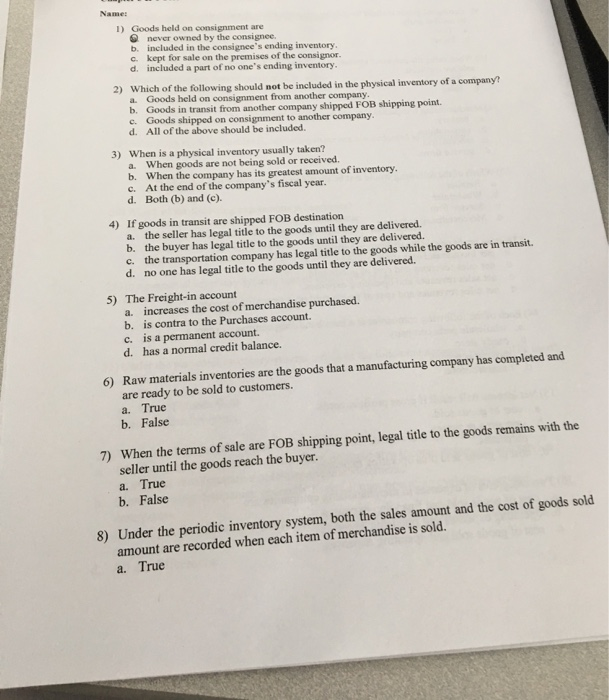
Name: I) Goods held on consignment ane Q never owned by the consignee. b. included in the consignee's ending inventory. c. kept for sale on the premises of the consignor. d. included a part of no one's ending inventory. 2) Which of the following should not be included in the physical inventory of a company Goods held on consignment from another company b. Goods in transit from another company shipped FOB shipping point. c. Goods shipped on consignment to another company. d. All of the above should be included. 3) When is a physical inventory usually taken? a. When goods are not being sold or received. b. When the company has its greatest amount of inventory. c. At the end of the company's fiscal year d. Both (b) and (c). 4) If goods in transit are shipped FOB destination a. the seller has legal title to the goods until they are delivered. b. the buyer has legal title to the goods until they are delivered. c. the transportation company has legal title to the goods while the goods are in transit. d. no one has legal title to the goods until they are delivered 5) The Freight-in account a. increases the cost of merchandise purchased. b. is contra to the Purchases account. is a permanent account. has a normal credit balance. d. c. 6) Raw materials inventories are the goods that a manufacturing company has completed and are ready to be sold to customers. a. True b. False 7) When the terms of sale are FOB shipping point, legal title to the goods remains with the seller until the goods reach the buyer. a. True b. False 8) Under the periodic inventory system, both the sales amount and the cost of goods sold amount are recorded when each item of merchandise is sold. a. True
Step by Step Solution
There are 3 Steps involved in it

Get step-by-step solutions from verified subject matter experts
 Study Help