







Question: need answer for these questions below: Q1: what consideration should a firm have when moving to a cloud-based infrastructure such as Astro's? Q2: why is
need answer for these questions below:
Q1: what consideration should a firm have when moving to a cloud-based infrastructure such as Astro's?
Q2: why is it necessary to review current business processes?
Q3: how will data analytics benefit Astro, and how will AI service such as Amazon's Athena facilitate this?
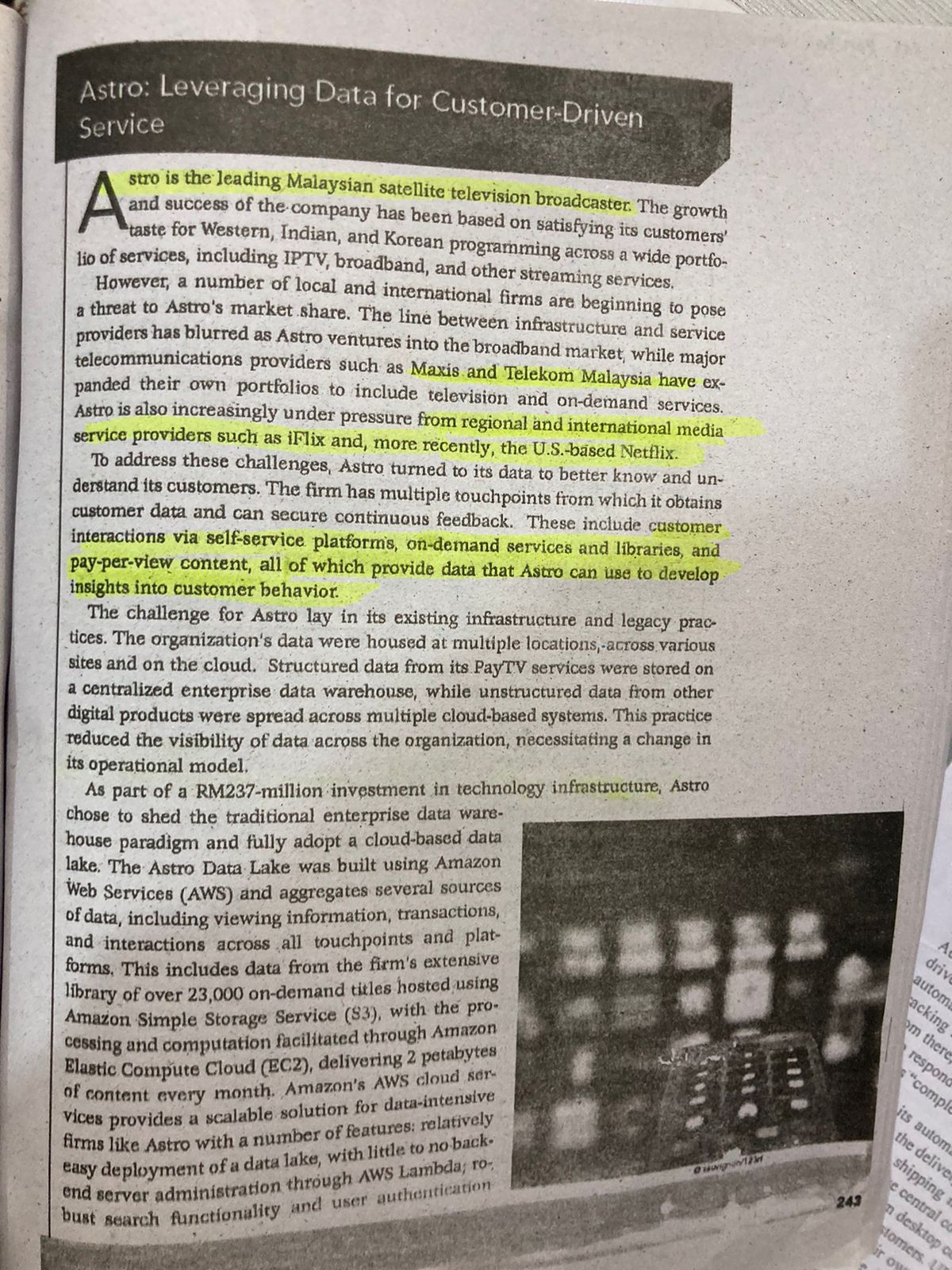
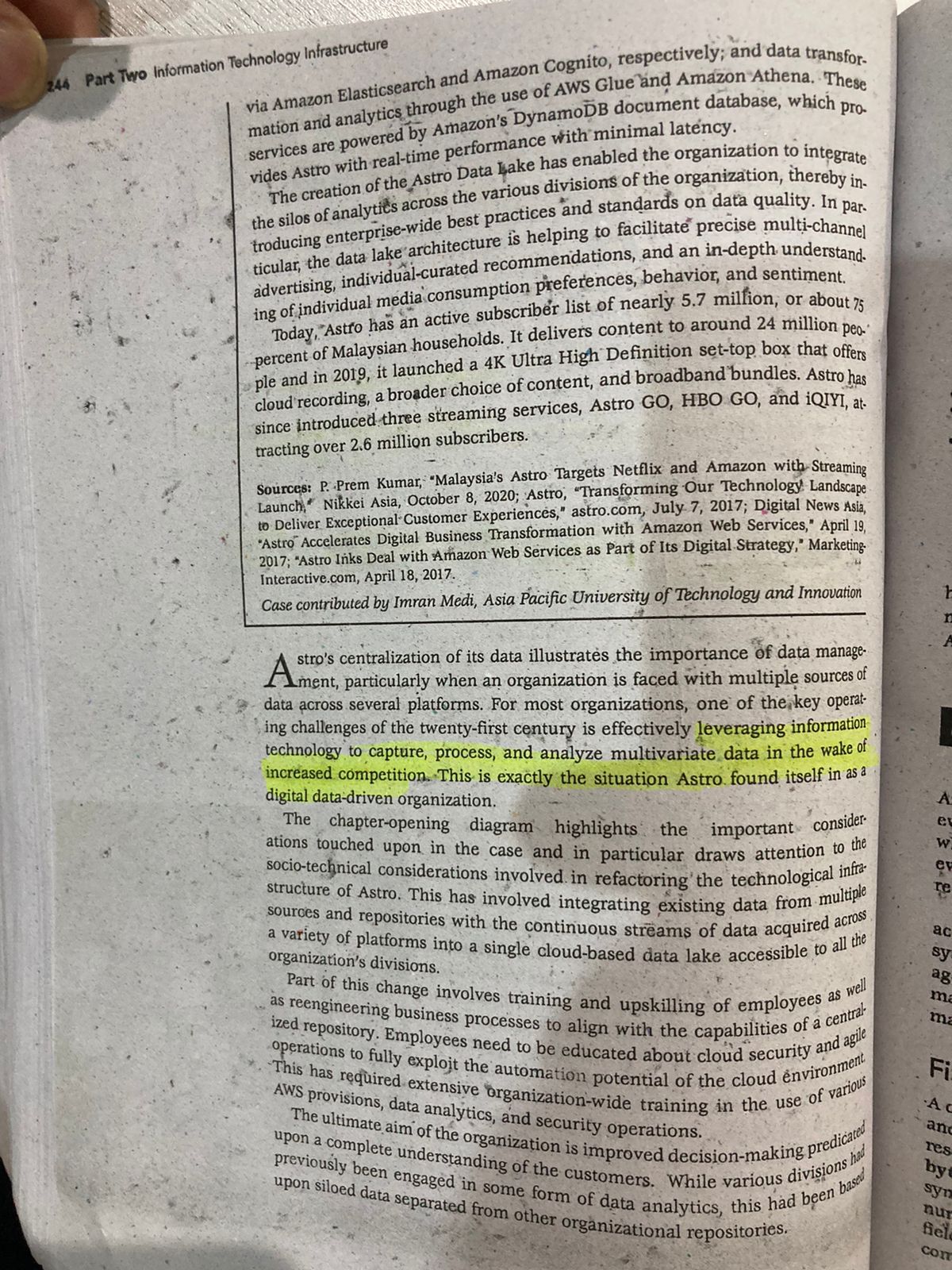
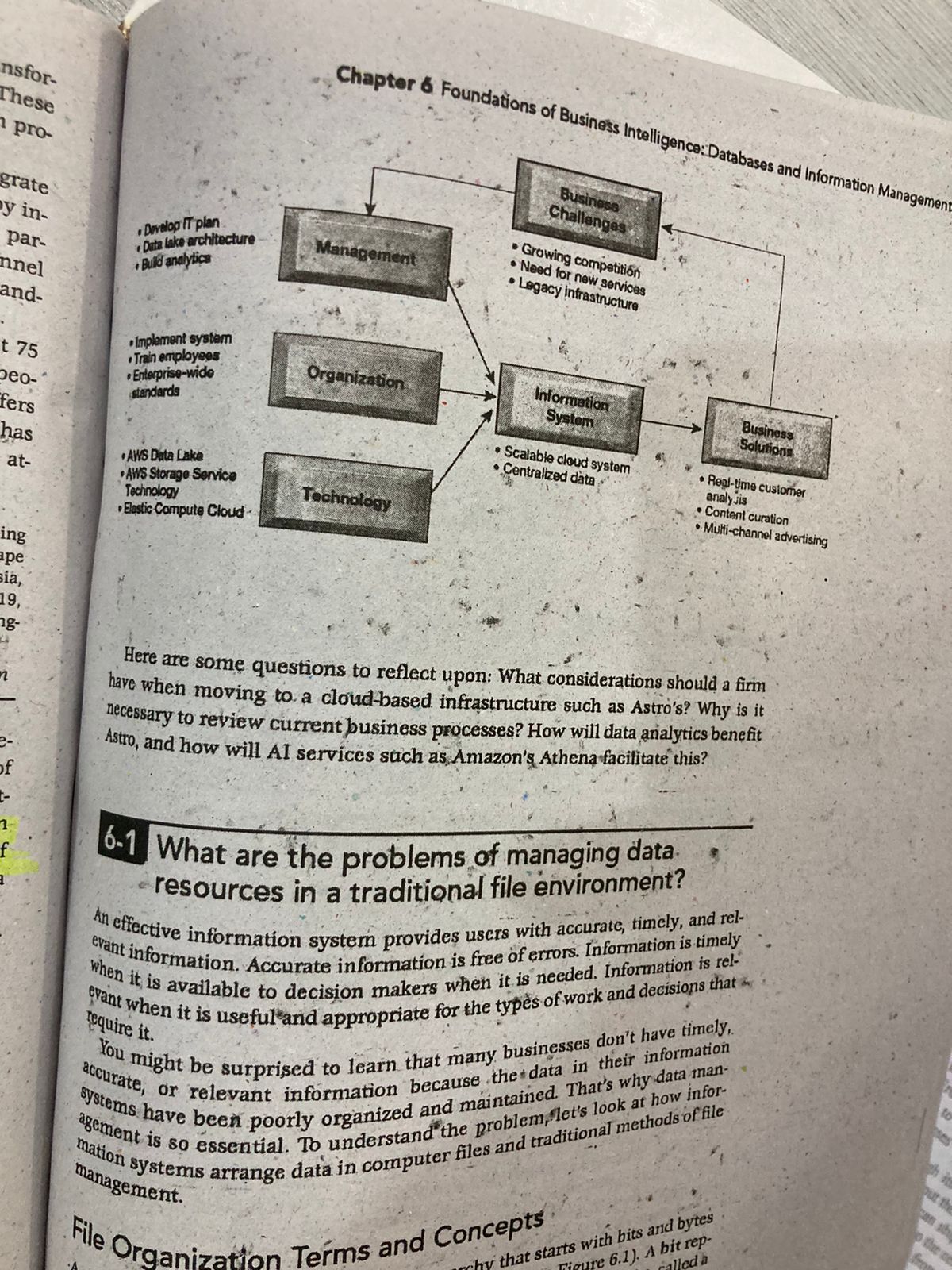
Astro: Leveraging Data for Customer-Driven Service Service stro is the leading Malaysian satellite television broadcaster. The growth and success of the company has been based on satisfying its customers' taste for Western, Indian, and Korean programming across a wide portfolio of services, including IPTV, broadband, and other streaming services. However, a number of local and international firms are beginning to pose a threat to Astro's market share. The line between infrastructure and service providers has blurred as Astro ventures into the broadband market, while major telecommunications providers such as Maxis and Telekom Malaysia have expanded their own portfolios to include television and on-demand services. Astro is also increasingly under pressure from regional and international media service providers such as iFlix and, more recently, the U.S.-based Netflix. To address these challenges, Astro turned to its data to better know and understand its customers. The firm has multiple touchpoints from which it obtains customer data and can secure continuous feedback. These include customer interactions via self-service platformis, on-demand services and libraries, and pay-per-view content, all of which provide data that Astro can use to develop insights into customer behavior. The challenge for Astro lay in its existing infrastructure and legacy practices. The organization's data were housed at multiple locations,-across various sites and on the cloud. Structured data from its PayTV services were stored on a centralized enterprise data warehouse, while unstructured data from other digital products were spread across multiple cloud-based systems. This practice reduced the visibility of data across the organization, necessitating a change in its operational model. As part of a RM237-million investment in technology infrastructure, Astro chose to shed the traditional enterprise data ware- Technology Infrastructure via Amazon Elasticsearch and Amazon Cognito, respectively; and data transformation and analytics through the use of AWS Glue and Amazon Athena. These services are powered by Amazon's DynamoDD document database, which pro. vides Astro with real-time performance with minimal latency. The creation of the Astro Data Eake has enabled the organization to integrate the silos of analytics across the various divisions of the organization, thereby introducing enterprise-wide best practices and standards on data quality. In par. ticular, the data lake architecture is helping to facilitate precise multi-channel advertising, individual-curated recommendations, and an in-depth understanding of individual media consumption preferences, behavior, and sentiment. Today, Astro has an active subscriber list of nearly 5.7 milfion, or about 75 percent of Malaysian households. It delivers content to around 24 million peo. ple and in 2019, it launched a 4K Ultra High Definition set-top box that offers cloud recording, a broader choice of content, and broadband bundles. Astro has since introduced three streaming services, Astro GO, HBO GO, and IQIYI, attracting over 2.6 million subscribers. Sources: P. Prem Kumar, "Malaysia's Astro Targets Netflix and Amazon with Streaming Launch," Nikkei Asia, October 8, 2020; Astro, "Transforming Our Technology. Landscape to Deliver Exceptional Customer Experiences," astro.com, July 7, 2017; Digital News Asia, "Astr Accelerates Digital Business Transformation with Amazon Web Services," April 19, 2017; "Astro Iks Deal with Amazon Web Services as Part of Its Digital Strategy," Marketing Interactive.com, April 18, 2017. Case contributed by Imran Medi, Asia Pacific University of Technology and Innovation stro's centralization of its data illustrates the importance of data management, particularly when an organization is faced with multiple sources of data across several platforms. For most organizations, one of the key operating challenges of the twenty-first century is effectively leveraging information technology to capture, process, and analyze multivariate data in the wake of increased competition. This is exactly the situation Astro found itself in as a digital data-driven organization. The chapter-opening diagram highlights the important considerations touched upon in the case and in particular draws attention to the socio-technical considerations involved in refactoring the technological infre structure of Astro. This has involved integrating existing data from multiple sources and repositories with the continuous streams of data acquired across a variety of platforms into a single cloud-based data lake accessible to all the organization's divisions. Part of this change involves training and upskilling of employees as well as reengineering business processes to align with the capabilities of a centrat ized repository. Employees need to be educated about cloud security and agile operations to fully exploit the automation potential of the cloud environment This has required extensive organization-wide training in the use of variols AWS provisions, data analytics, and security operations. The ultimate aim of the organization is improved decision-making predicalc upon a complete understanding of the customers. While various divisions previously been engaged in some form of data analytics, this had been upon siloed data separated from other organizational repositories. Chapter 6 Foundations of Business intoll: Here are some questions to reflect upon: What considerations should a firm have when moving to a cloud-based infrastructure such as Astro's? Why is it necessary to review current business processes? How will data arialytics benefit Astro, and how will AI services such as Amazon's Athen facilitate this? 6.1 What are the problems of managing data. resources in a traditional file environment? An effective information system provides uscrs with accurate, timely, and relevant information. Accurate information is free of errors. Information is timely when it is available to decision makers when it is needed. Information is relepaint when it is usefuleand appropriate for the types of work and decisions that i Tequire it. You might be surprised to learn that many businesses don't have timely, accurate, or relevant information because the data in their information Systems or relevant information because the data intained. That's why data manafems have been poorly organized and maintained . That's look at how informationt is so essential. To understand the problemp ile it andion methods of file management
Step by Step Solution
There are 3 Steps involved in it

Get step-by-step solutions from verified subject matter experts
 Study Help