Question: need answer fr the case study below.thanks a n Goodyear Tire & Rubber Co. abandoned a performance-rating system for salaried employees just as discrimination attorneys
need answer fr the case study below.thanks
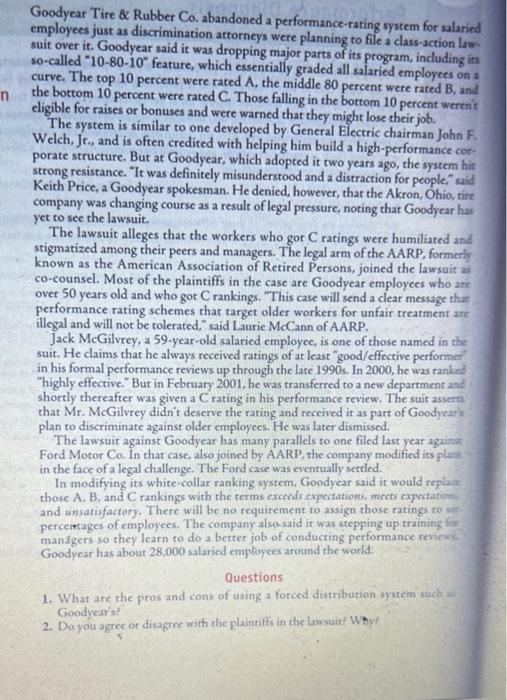
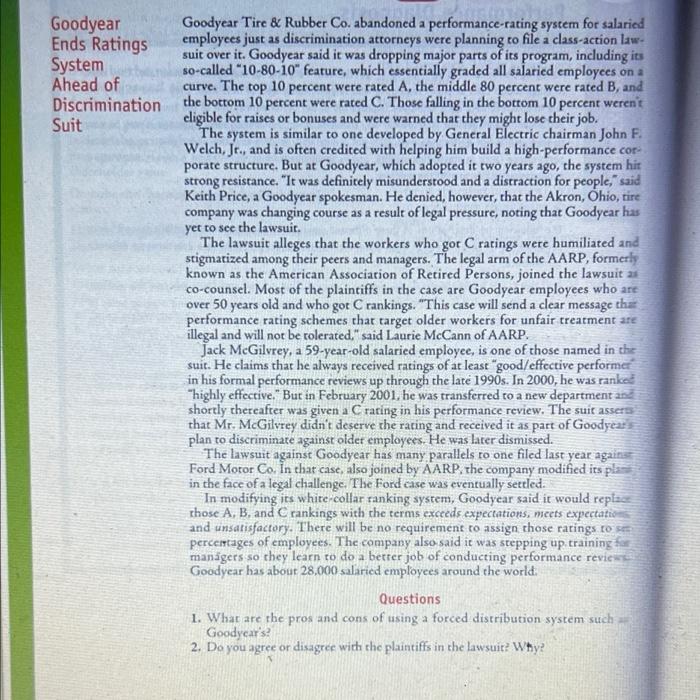
a n Goodyear Tire & Rubber Co. abandoned a performance-rating system for salaried employees just as discrimination attorneys were planning to file a class-action law suit over it. Goodyear said it was dropping major parts of its program, including its so-called "10-80-10" feature, which essentially graded all salaried employees on a curve. The top 10 percent were rated A, the middle 80 percent were rated B, and the bottom 10 percent were rated C. Those falling in the bottom 10 percent weren't eligible for raises or bonuses and were warned that they might lose their job. The system is similar to one developed by General Electric chairman John F. Welch, Jr., and is often credited with helping him build a high-performance cor- porate structure. But at Goodyear, which adopted it two years ago, the system hit strong resistance. "It was definitely misunderstood and a distraction for people." said Keith Price, a Goodyear spokesman. He denied, however, that the Akron, Ohio, tire company was changing course as a result of legal pressure, noting that Goodyear has yet to see the lawsuit. The lawsuit alleges that the workers who got C ratings were humiliated and stigmatized among their peers and managers. The legal arm of the AARP, formerly known as the American Association of Retired Persons, joined the lawsuit 25 co-counsel. Most of the plaintiffs in the case are Goodyear employees who are over 50 years old and who got rankings. "This case will send a clear message that performance rating schemes that target older workers for unfair treatment are illegal and will not be tolerated," said Laurie McCann of AARP. Jack McGilvrey, a 59-year-old salaried employee, is one of those named in the suit. He claims that he always received ratings of at least "good/effective performer in his formal performance reviews up through the late 1990s. In 2000, he was ranked "highly effective." But in February 2001, he was transferred to a new department and shortly thereafter was given a C rating in his performance review. The suit asseres that Mr. McGilvrey didn't deserve the rating and received it as part of Goodyear's plan to discriminate against older employees. He was later dismissed. The lawsuit against Goodyear has many parallels to one filed last year again Ford Motor Co. In that case, also joined by AARP, the company modified its plans in the face of a legal challenge. The Ford case was eventually settled. In modifying its white collar ranking system. Goodyear said it would replace those A, B, and C rankings with the terms exceeds expectations, merts expectati and unsatisfactory. There will be no requirement to assign those ratings to percentages of employees. The company also said it was stepping up training for managers so they learn to do a better job of conducting performance review Goodyear has about 28,000 salaried employees around the world, Questions 1. What are the pros and cons of using a forced distribution system such Goodyear's: 2. Da you agree or disagree with the plaintiffs in the lawsuit? Why? a Goodyear Ends Ratings System Ahead of Discrimination Suit Goodyear Tire & Rubber Co. abandoned a performance-rating system for salaried employees just as discrimination attorneys were planning to file a class-action law- suit over it. Goodyear said it was dropping major parts of its program, including its so-called "10-80-10" feature, which essentially graded all salaried employees on a curve. The top 10 percent were rated A, the middle 80 percent were rated B, and the bottom 10 percent were rated C. Those falling in the bottom 10 percent weren't eligible for raises or bonuses and were warned that they might lose their job. The system is similar to one developed by General Electric chairman John F. Welch, Jr. , and is often credited with helping him build a high-performance cor- porate structure. But at Goodyear, which adopted it two years ago, the system hit strong resistance. "It was definitely misunderstood and a distraction for people," said Keith Price, a Goodyear spokesman. He denied, however, that the Akron, Ohio, tire company was changing course as a result of legal pressure, noting that Goodyear has yet to see the lawsuit. The lawsuit alleges that the workers who gor C ratings were humiliated and stigmatized among their peers and managers. The legal arm of the AARP, formerly known as the American Association of Retired Persons, joined the lawsuit a co-counsel. Most of the plaintiffs in the case are Goodyear employees who are over 50 years old and who got rankings. "This case will send a clear message that performance rating schemes that target older workers for unfair treatment are illegal and will not be tolerated," said Laurie McCann of AARP. Jack McGilvrey, a 59-year-old salaried employee, is one of those named in the suit. He claims that he always received ratings of at least "good/effective performer in his formal performance reviews up through the late 1990s. In 2000, he was ranket "highly effective." But in February 2001, he was transferred to a new department and shortly thereafter was given a C rating in his performance review. The suit asseres that Mr. McGilvrey didn't deserve the rating and received it as part of Goodyear plan to discriminate against older employees. He was later dismissed. The lawsuit against Goodyear has many parallels to one filed last year against Ford Motor Co. In that case, also joined by AARP, the company modified its pla in the face of a legal challenge. The Ford case was eventually settled. In modifying its white collar ranking system, Goodyear said it would replace those A, B. and rankings with the terms exceeds expectations, meets expectatio and unsatisfactory. There will be no requirement to assign those ratings to percentages of employees. The company also said it was stepping up, training for managers so they learn to do a better job of conducting performance revic Goodyear has about 28.000 salaried employees around the world. Questions 1. What are the pros and cons of using a forced distribution system such Goodyear's? 2. Do you agree or disagree with the plaintiffs in the lawsuit? Why? a









 Study Help