







Question: NEED HELP ASSAP!!!! Partial Answers for Checking Work | Refunding Analysis Jan Volk, financial manager of Green Sea Transport (GST), has been asked by her
NEED HELP ASSAP!!!!

Partial Answers for Checking Work

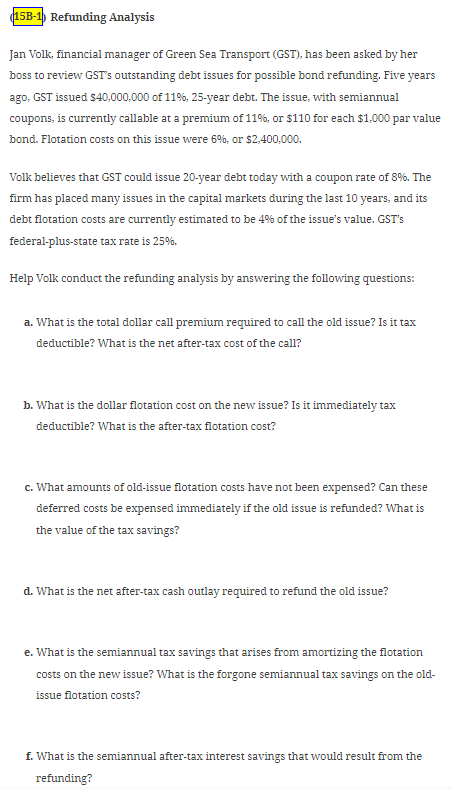
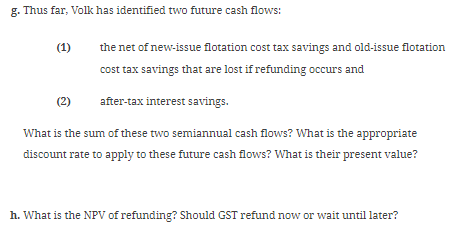
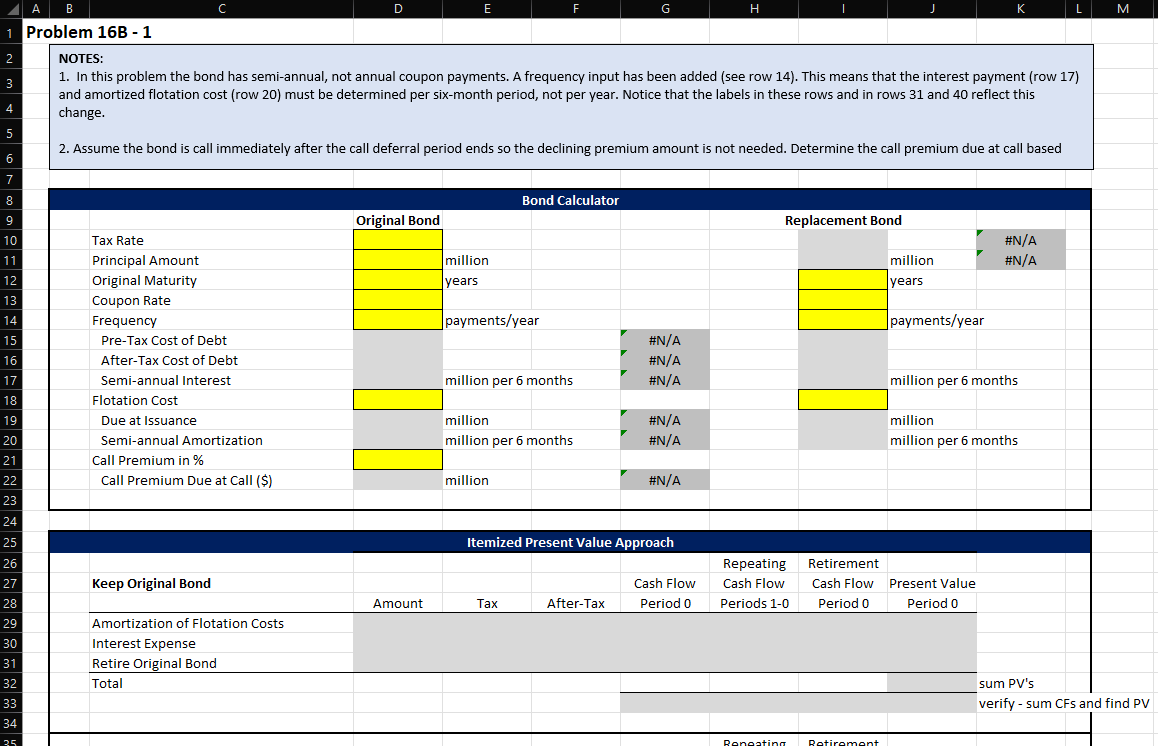
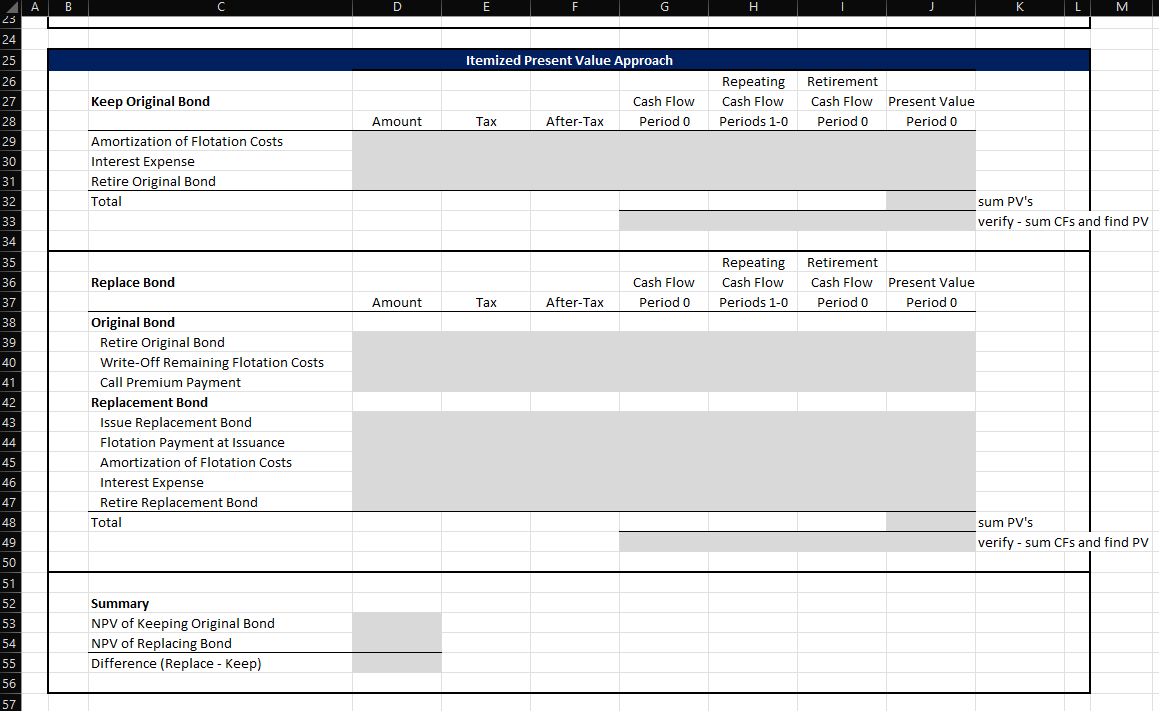
| Refunding Analysis Jan Volk, financial manager of Green Sea Transport (GST), has been asked by her boss to review GST's outstanding debt issues for possible bond refunding. Five years ago, GST issued $40,000,000 of 1196,25 -year debt. The issue, with semiannual coupons, is currently callable at a premium of 11%, or $110 for each $1,000 par value bond. Flotation costs on this issue were 6%, or $2,400,000. Volk believes that GST could issue 20-year debt today with a coupon rate of 8%. The firm has placed many issues in the capital markets during the last 10 years, and its debt flotation costs are currently estimated to be 4% of the issue's value. GST's federal-plus-state tax rate is 25%. Help Volk conduct the refunding analysis by answering the following questions: a. What is the total dollar call premium required to call the old issue? Is it tax deductible? What is the net after-tax cost of the call? b. What is the dollar flotation cost on the new issue? Is it immediately tax deductible? What is the after-tax flotation cost? c. What amounts of old-issue flotation costs have not been expensed? Can these deferred costs be expensed immediately if the old issue is refunded? What is the value of the tax savings? d. What is the net after-tax cash outlay required to refund the old issue? e. What is the semiannual tax savings that arises from amortizing the flotation costs on the new issue? What is the forgone semiannual tax savings on the oldissue flotation costs? f. What is the semiannual after-tax interest savings that would result from the refunding? g. Thus far, Volk has identified two future cash flows: (1) the net of new-issue flotation cost tax savings and old-issue flotation cost tax savings that are lost if refunding occurs and (2) after-tax interest savings. What is the sum of these two semiannual cash flows? What is the appropriate discount rate to apply to these future cash flows? What is their present value? h. What is the NPV of refunding? Should GST refund now or wait until later? - What is the present value of the bond refunding? - What is the present value of keeping the original bond? - What action should Mullet take? NOTES: 1. In this problem the bond has semi-annual, not annual coupon payments. A frequency input has been added (see row 14). This means that the interest payment (row 17) and amortized flotation cost (row 20) must be determined per six-month period, not per year. Notice that the labels in these rows and in rows 31 and 40 reflect this change. 2. Assume the bond is call immediately after the call deferral period ends so the declining premium amount is not needed. Determine the call premium due at call based NPV of Keeping Original Bond =($50.124) million NPV of Replacing Original Bond =($44.189) million | Refunding Analysis Jan Volk, financial manager of Green Sea Transport (GST), has been asked by her boss to review GST's outstanding debt issues for possible bond refunding. Five years ago, GST issued $40,000,000 of 1196,25 -year debt. The issue, with semiannual coupons, is currently callable at a premium of 11%, or $110 for each $1,000 par value bond. Flotation costs on this issue were 6%, or $2,400,000. Volk believes that GST could issue 20-year debt today with a coupon rate of 8%. The firm has placed many issues in the capital markets during the last 10 years, and its debt flotation costs are currently estimated to be 4% of the issue's value. GST's federal-plus-state tax rate is 25%. Help Volk conduct the refunding analysis by answering the following questions: a. What is the total dollar call premium required to call the old issue? Is it tax deductible? What is the net after-tax cost of the call? b. What is the dollar flotation cost on the new issue? Is it immediately tax deductible? What is the after-tax flotation cost? c. What amounts of old-issue flotation costs have not been expensed? Can these deferred costs be expensed immediately if the old issue is refunded? What is the value of the tax savings? d. What is the net after-tax cash outlay required to refund the old issue? e. What is the semiannual tax savings that arises from amortizing the flotation costs on the new issue? What is the forgone semiannual tax savings on the oldissue flotation costs? f. What is the semiannual after-tax interest savings that would result from the refunding? g. Thus far, Volk has identified two future cash flows: (1) the net of new-issue flotation cost tax savings and old-issue flotation cost tax savings that are lost if refunding occurs and (2) after-tax interest savings. What is the sum of these two semiannual cash flows? What is the appropriate discount rate to apply to these future cash flows? What is their present value? h. What is the NPV of refunding? Should GST refund now or wait until later? - What is the present value of the bond refunding? - What is the present value of keeping the original bond? - What action should Mullet take? NOTES: 1. In this problem the bond has semi-annual, not annual coupon payments. A frequency input has been added (see row 14). This means that the interest payment (row 17) and amortized flotation cost (row 20) must be determined per six-month period, not per year. Notice that the labels in these rows and in rows 31 and 40 reflect this change. 2. Assume the bond is call immediately after the call deferral period ends so the declining premium amount is not needed. Determine the call premium due at call based NPV of Keeping Original Bond =($50.124) million NPV of Replacing Original Bond =($44.189) million
Step by Step Solution
There are 3 Steps involved in it

Get step-by-step solutions from verified subject matter experts
 Study Help