







Question: Need help. Java program Exercise 10.16 (Accounts Payable System Modification) It's possible to include the functionality of the pay- roll application (Figs. 10.4-10.9) in the
Need help. Java program
Exercise 10.16(Accounts Payable System Modification) It's possible to include the functionality of the pay- roll application (Figs. 10.4-10.9) in the accounts payable application without modifying Employee subclasses SalariedEmployee , HourlyEmployee , CommissionEmployee or BasePlusCommission- Employee. To do so, you can modify class Employee (Fig. 10.4) to implement interface Payable and declare method getPaymentAmount to invoke method earnings . Method getPaymentAmount would then be inherited by the subclasses in the Employee hierarchy. When getPaymentAmount is called for a particular subclass object, it polymorphically invokes the appropriate earnings method for that subclass. Reimplement Exercise 10.15 using the original Employee hierarchy from the payroll application of Figs. 10.4-10.9. Modify class Employee as described in this exercise, and do not modify any of class Employee 's subclasses.
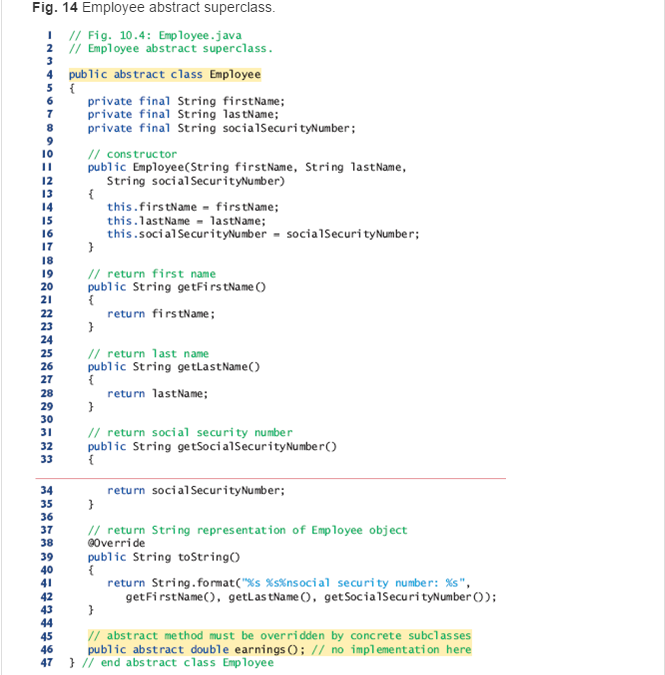
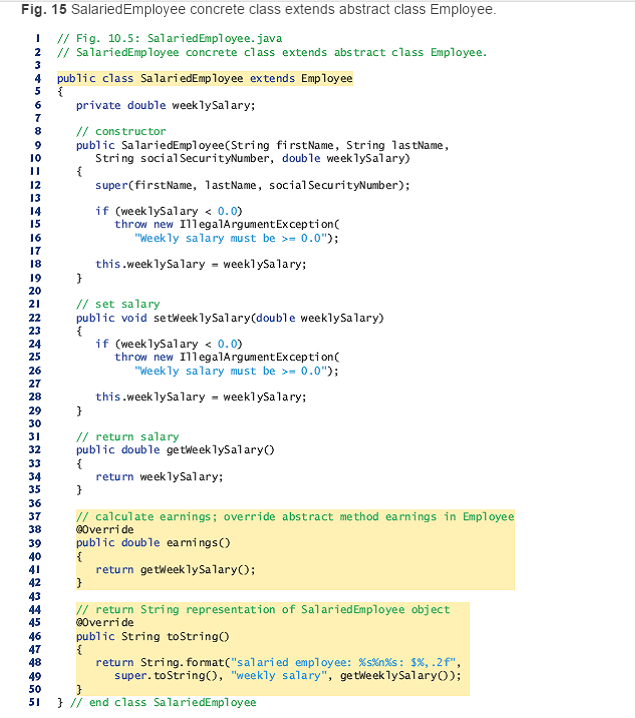
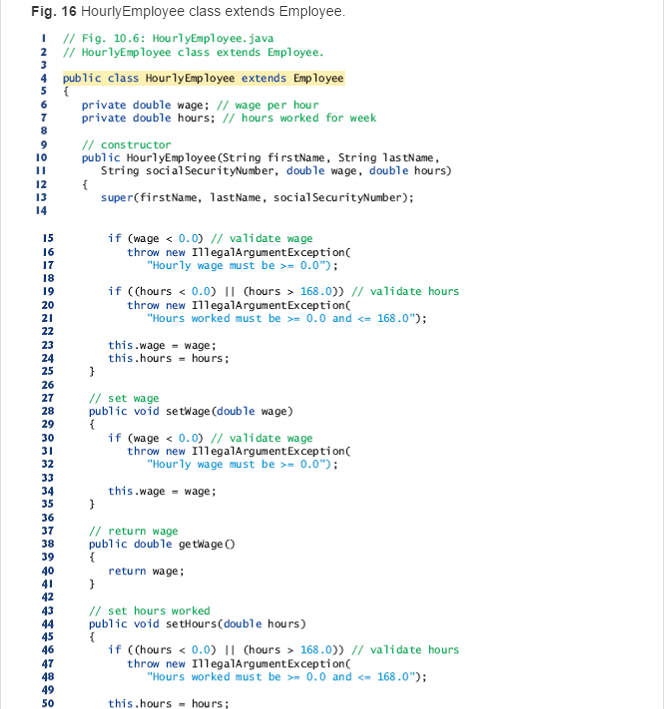
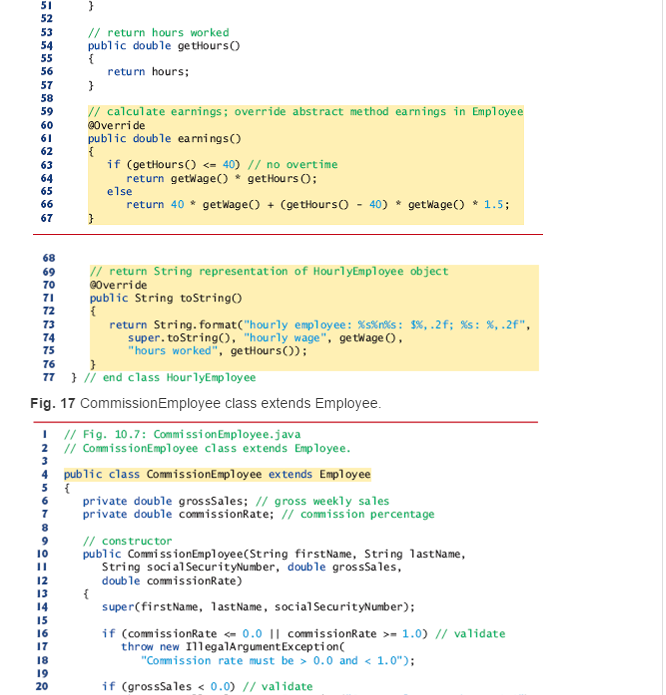
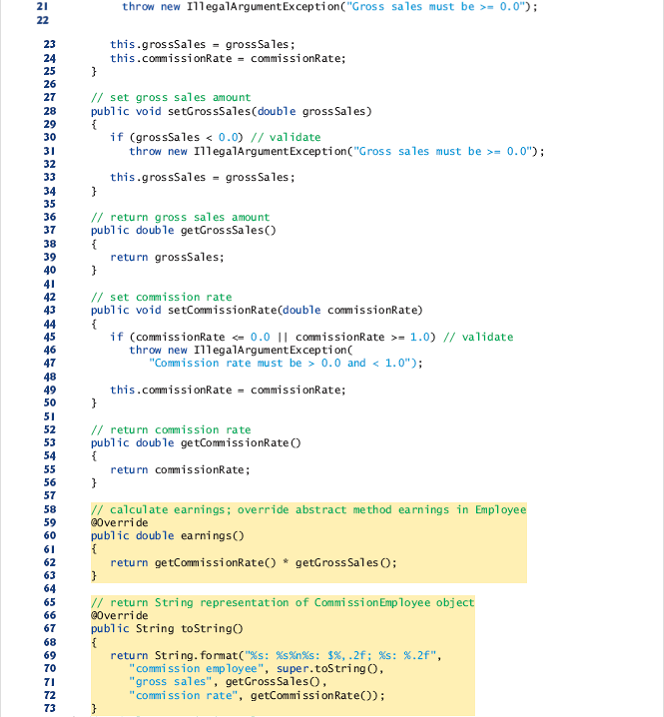
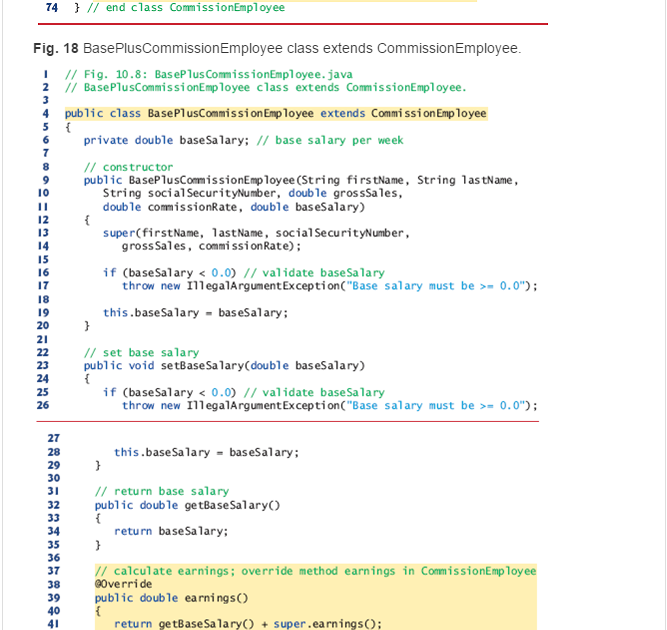
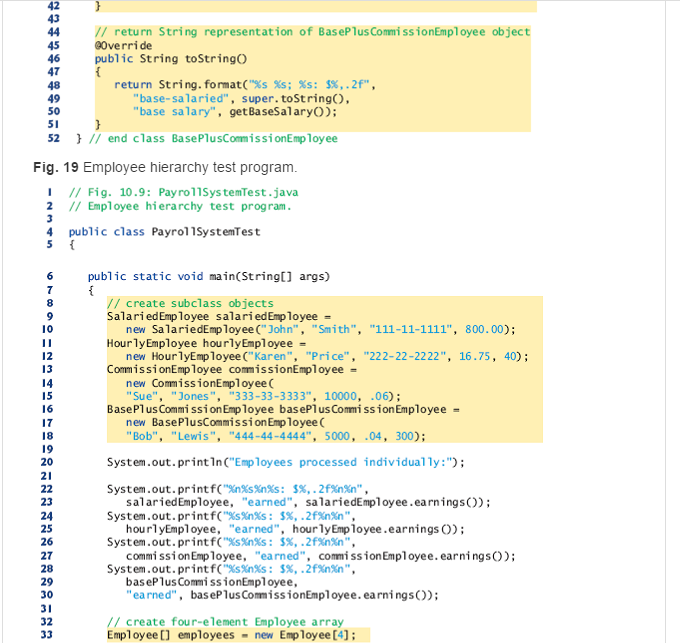
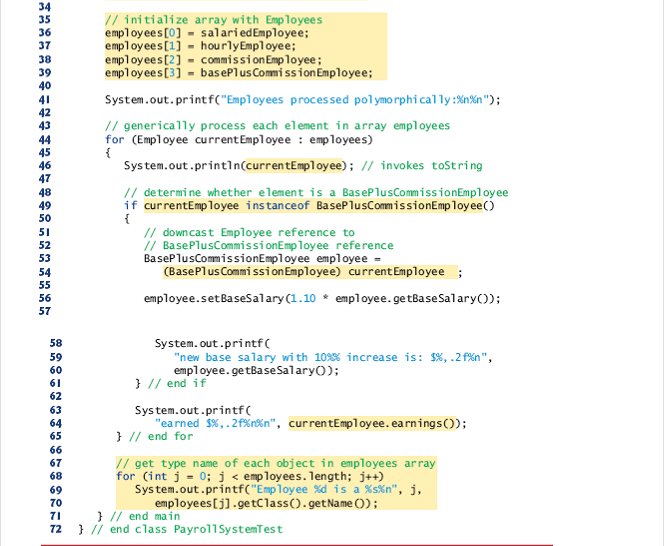
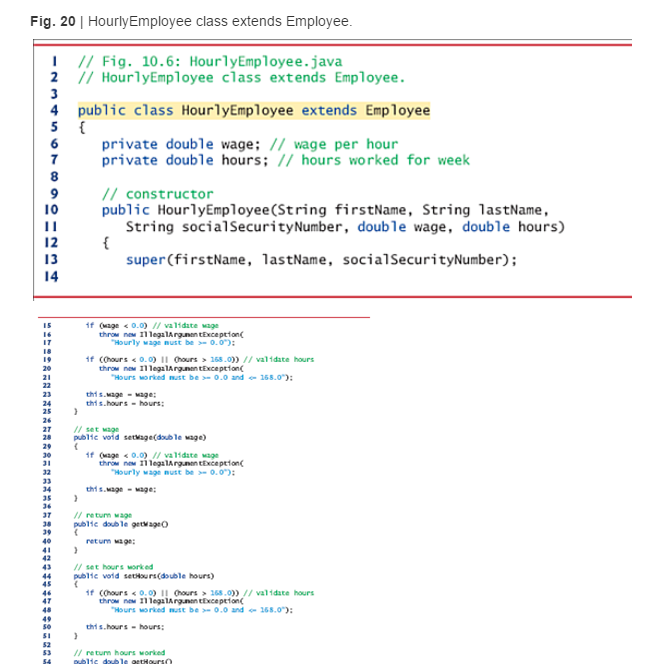
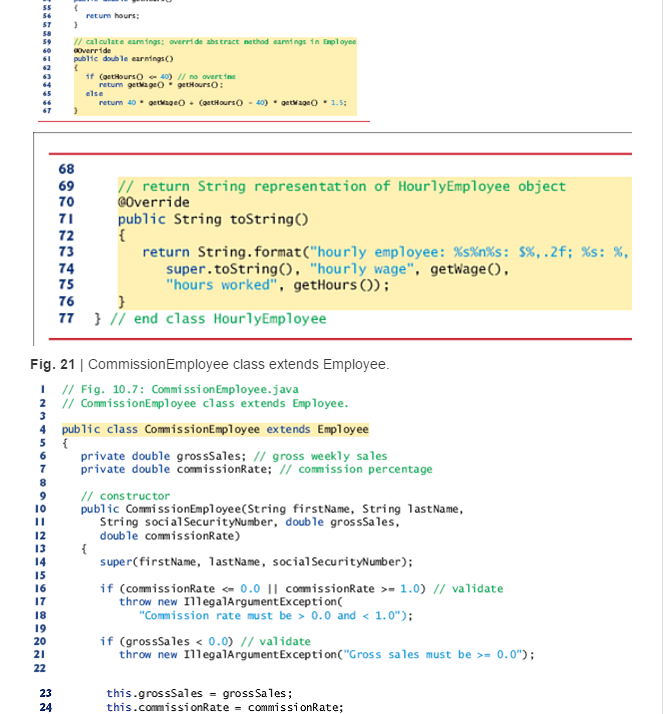
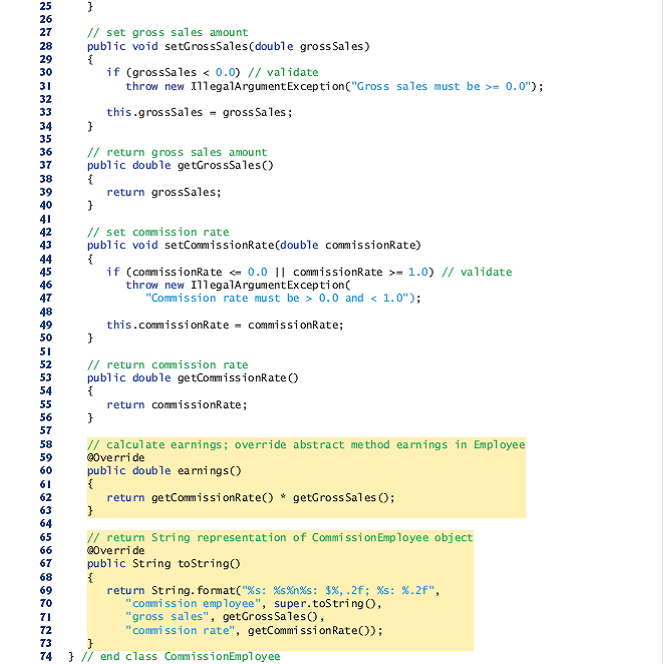
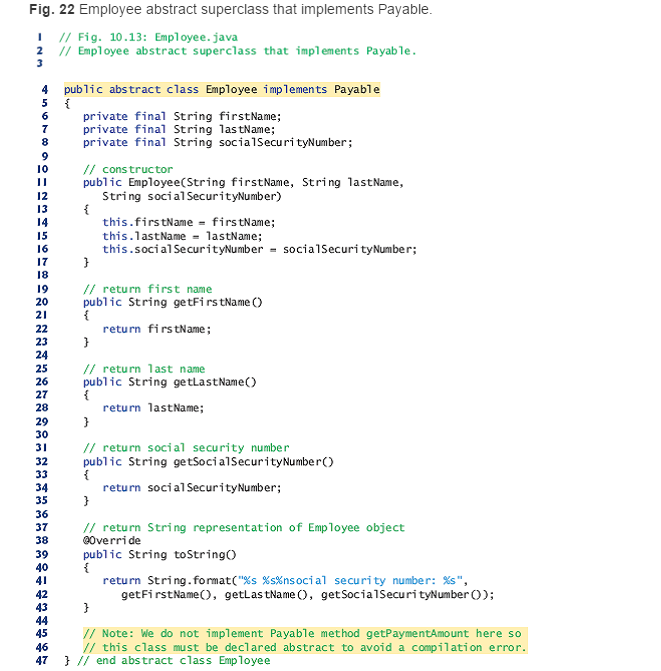
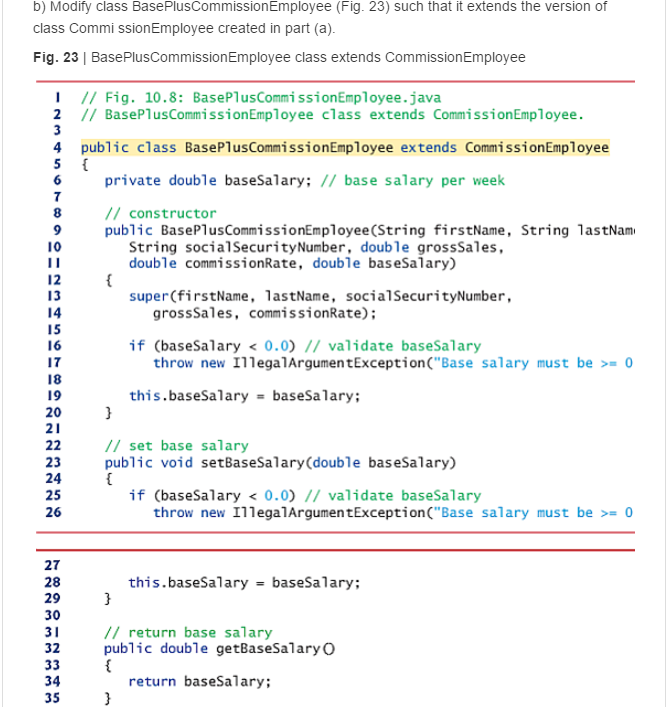
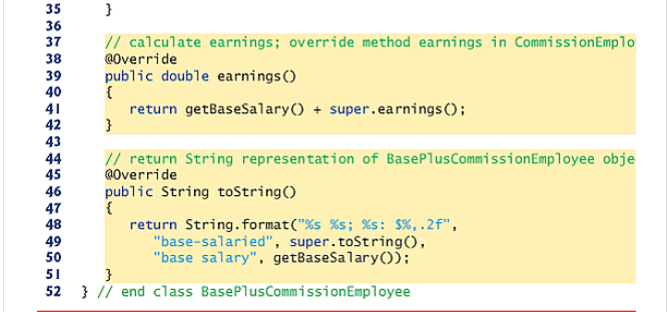
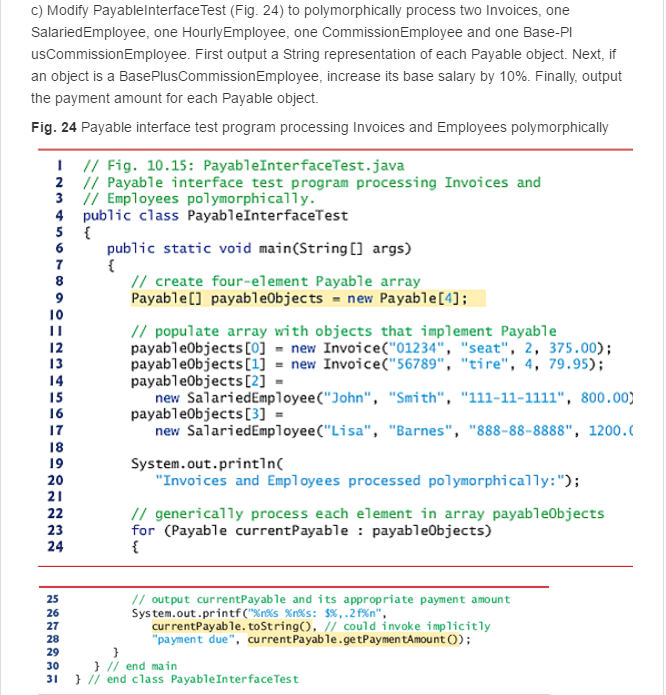
Fig. 14 Employee abstract superclass I I Fig. 10.4: Emp loyee.java 2 / Employee abstract superclass 4 public abstract class Employee private final String firstName; private final String las private final String socialSecurityNumber; tName; 10 // constructor public Employee(String firstName, String lastName, 12 String socialSecurityNumber) this.firstName firstName this.lastName-lastName; this.socialSecurityNumber socialSecurityNumber; 16 17 18 19 20 21 // return first name public String getFirstName O return firstName; 23 24 25 26 27 // return 1ast name public String getLastNameC return lastName 29 30 31 32 // return social security number public String getSocialSecurityNumberO 34 return socialSecurityNumber; 35 37 / return String representation of Employee object 39 0verride public String toStringo return String, format("%s %s%nsocial security number: %s", getFirstNameC), getLas tName O, gtocialSecurityNumber O) 45/ abstract me thod must be overridden by concrete subclasses public abstract double earnings O // no implementation here 47 I/ end abstract class Emp loyee
Step by Step Solution
There are 3 Steps involved in it

Get step-by-step solutions from verified subject matter experts
 Study Help