







Question: Need help solving based off my data Attitude Scale, Joumal of Personality Assessment, 46 (1902), 27 (July 1999), pp. 19-35; K. Yamauchi and D. Templer,
Need help solving based off my data
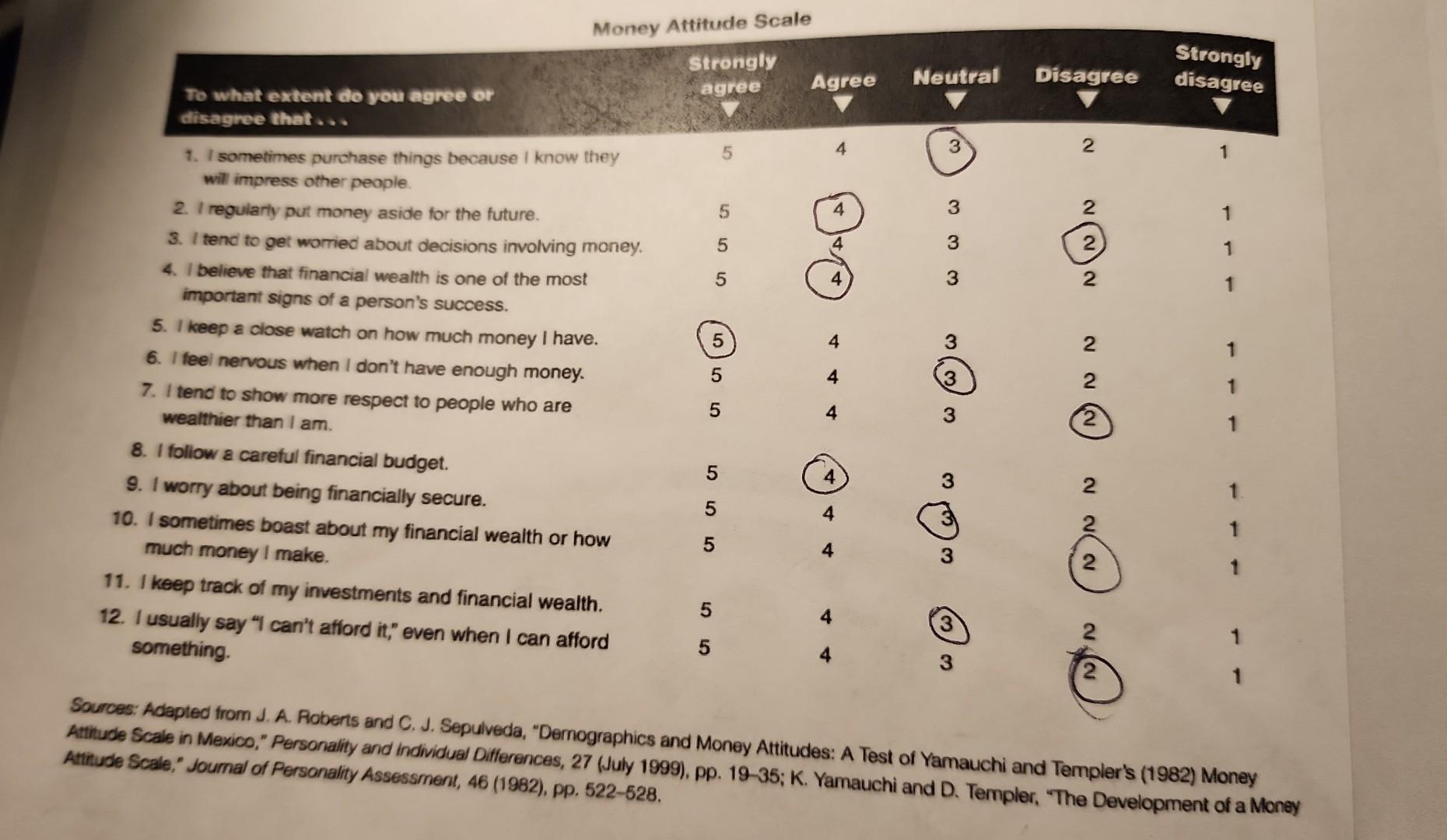
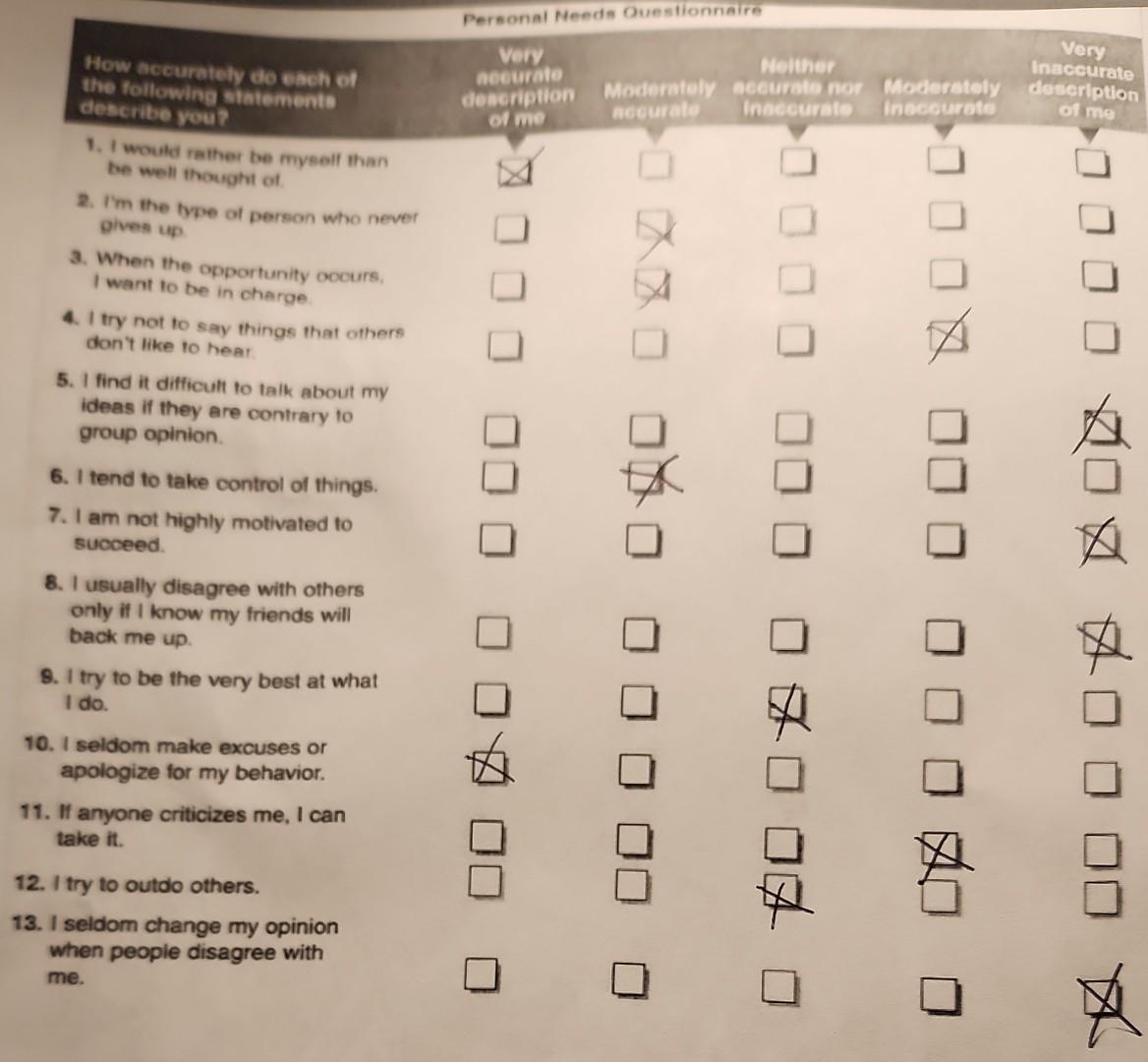
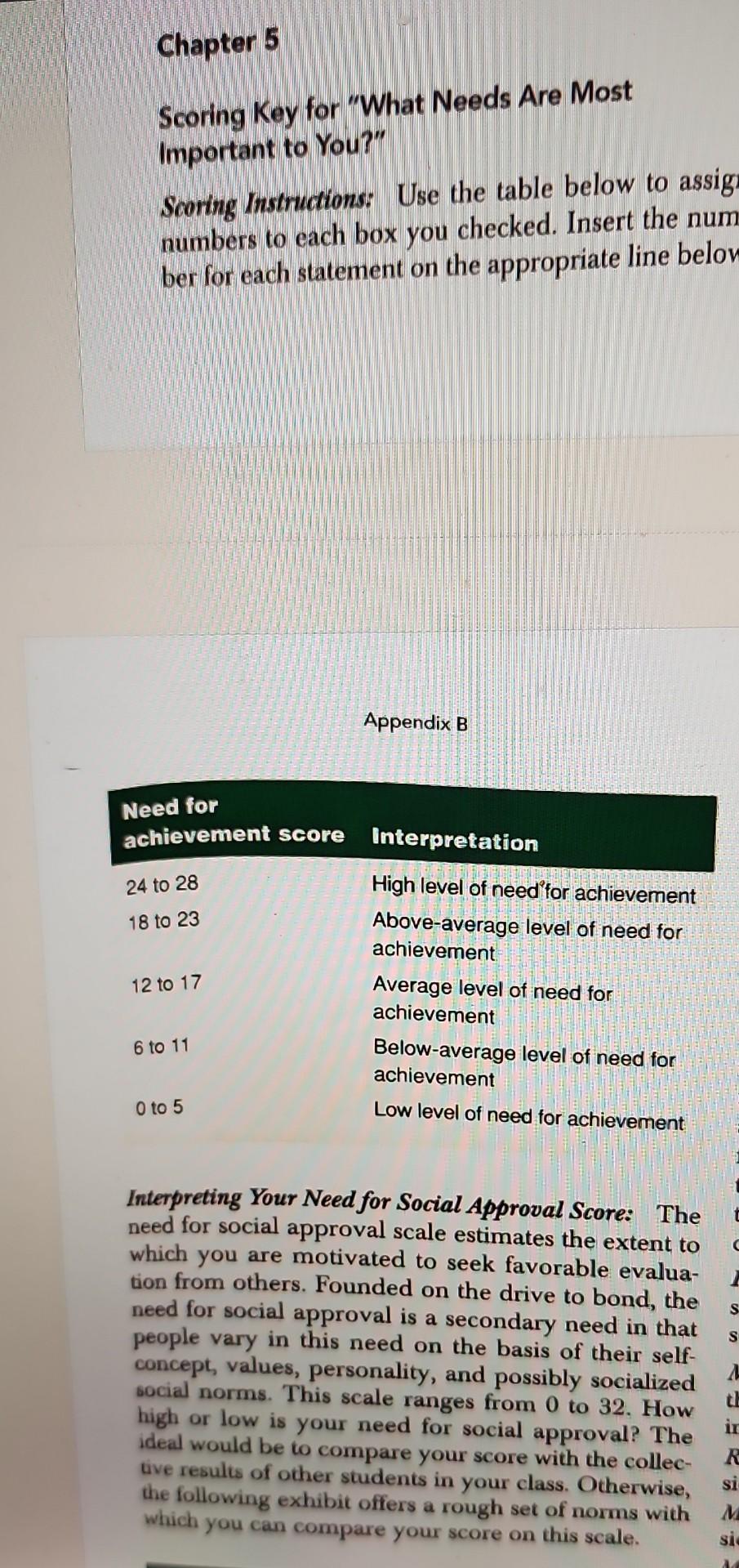
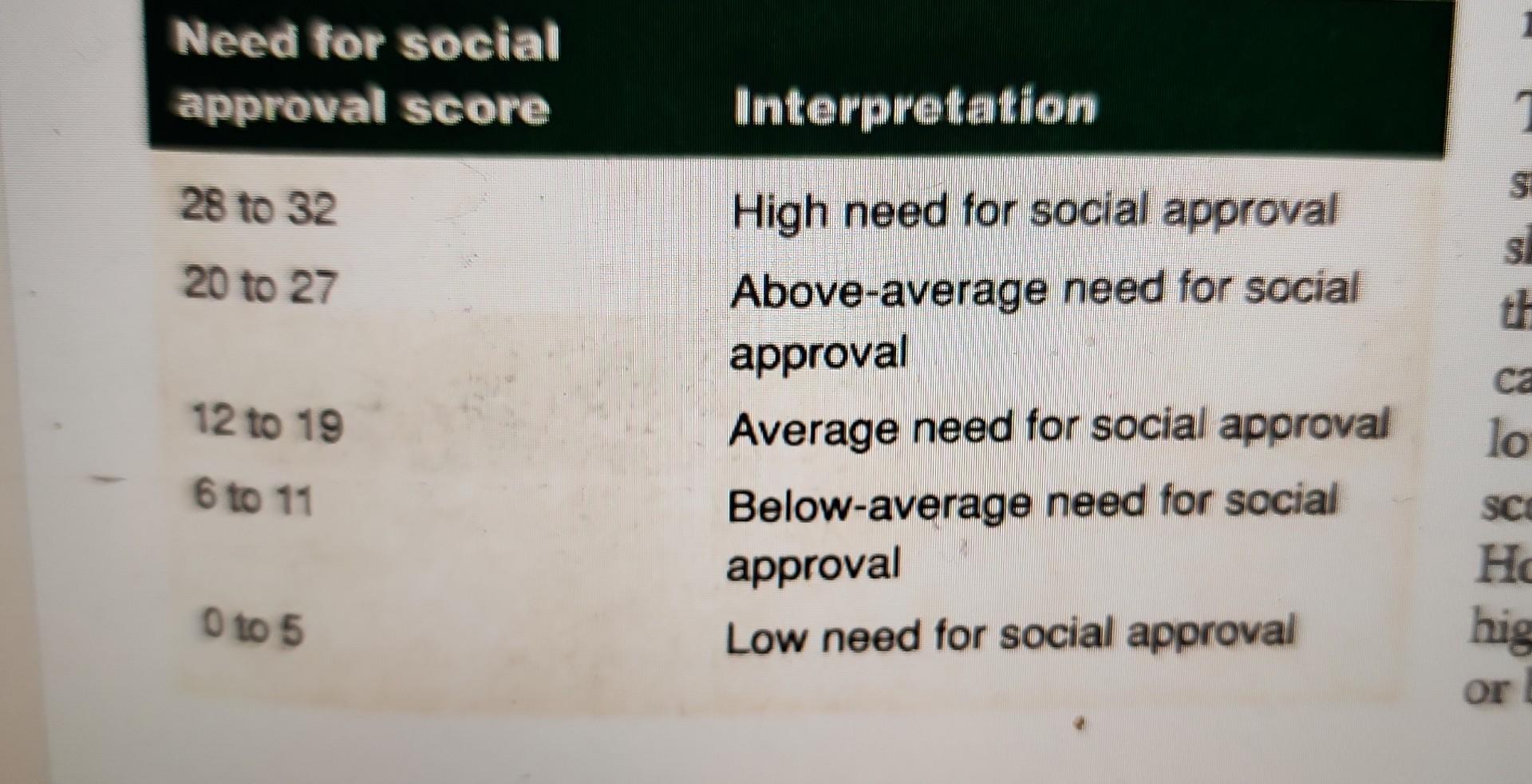
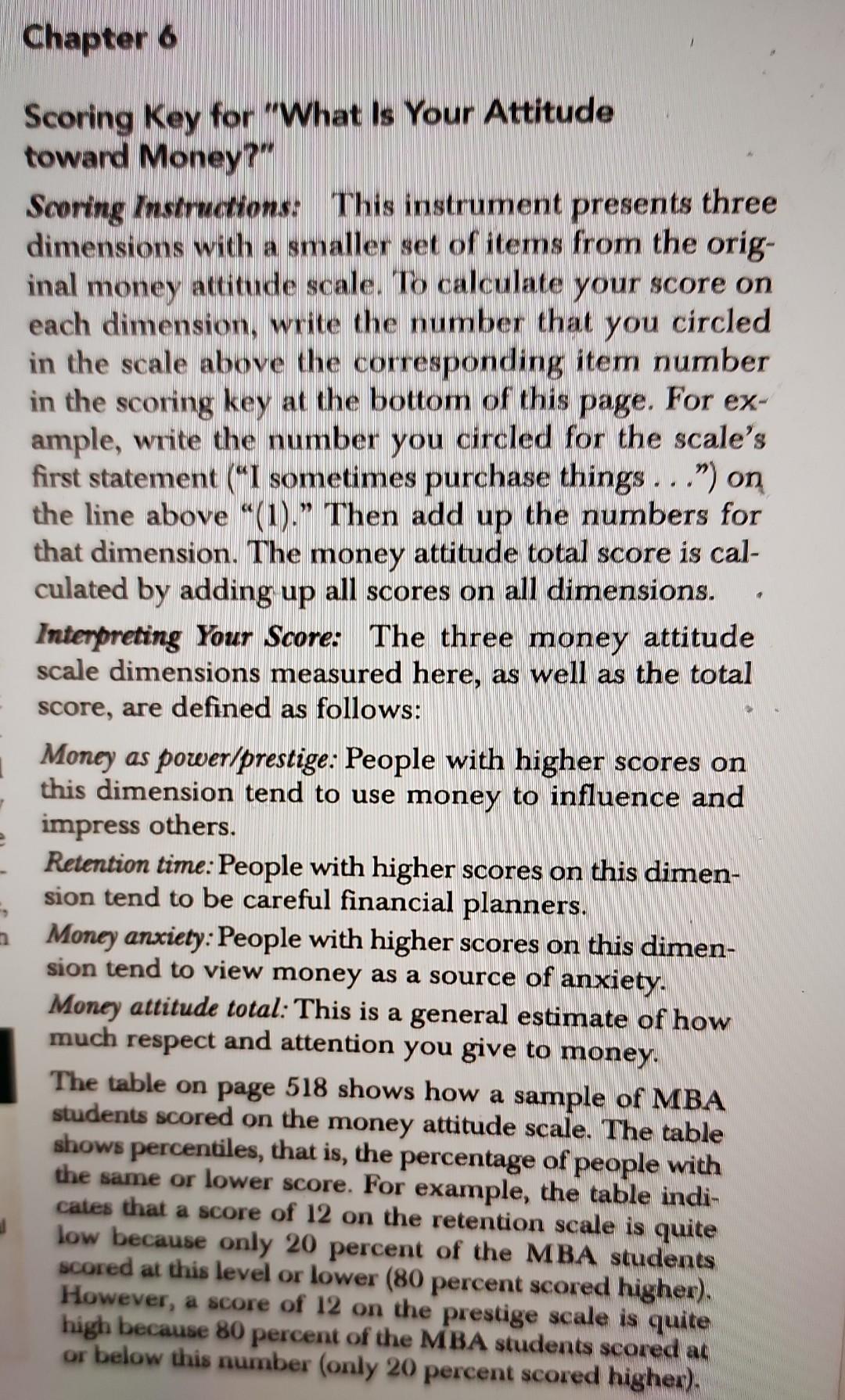
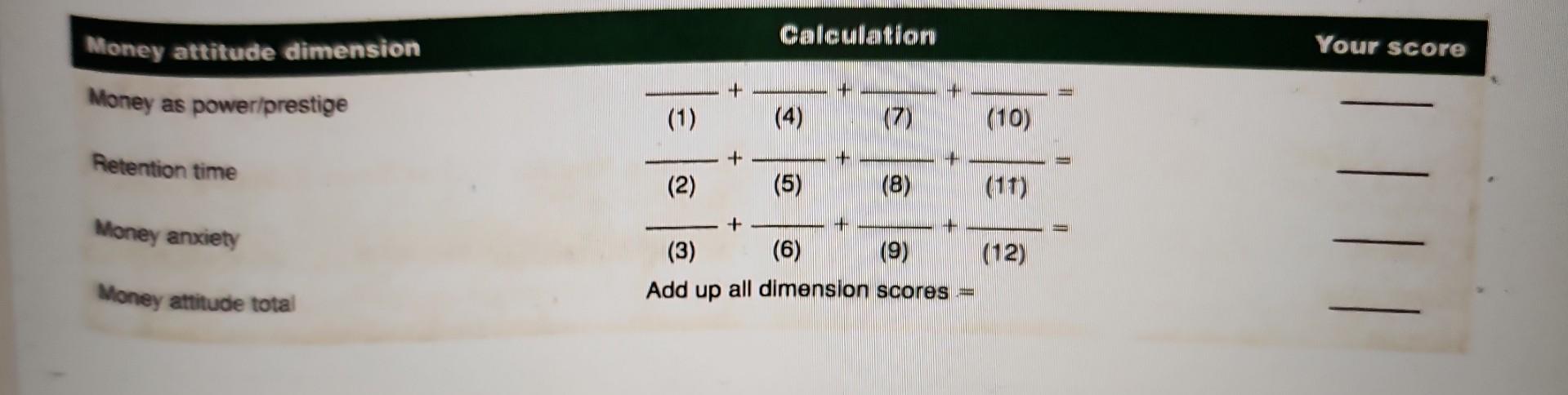
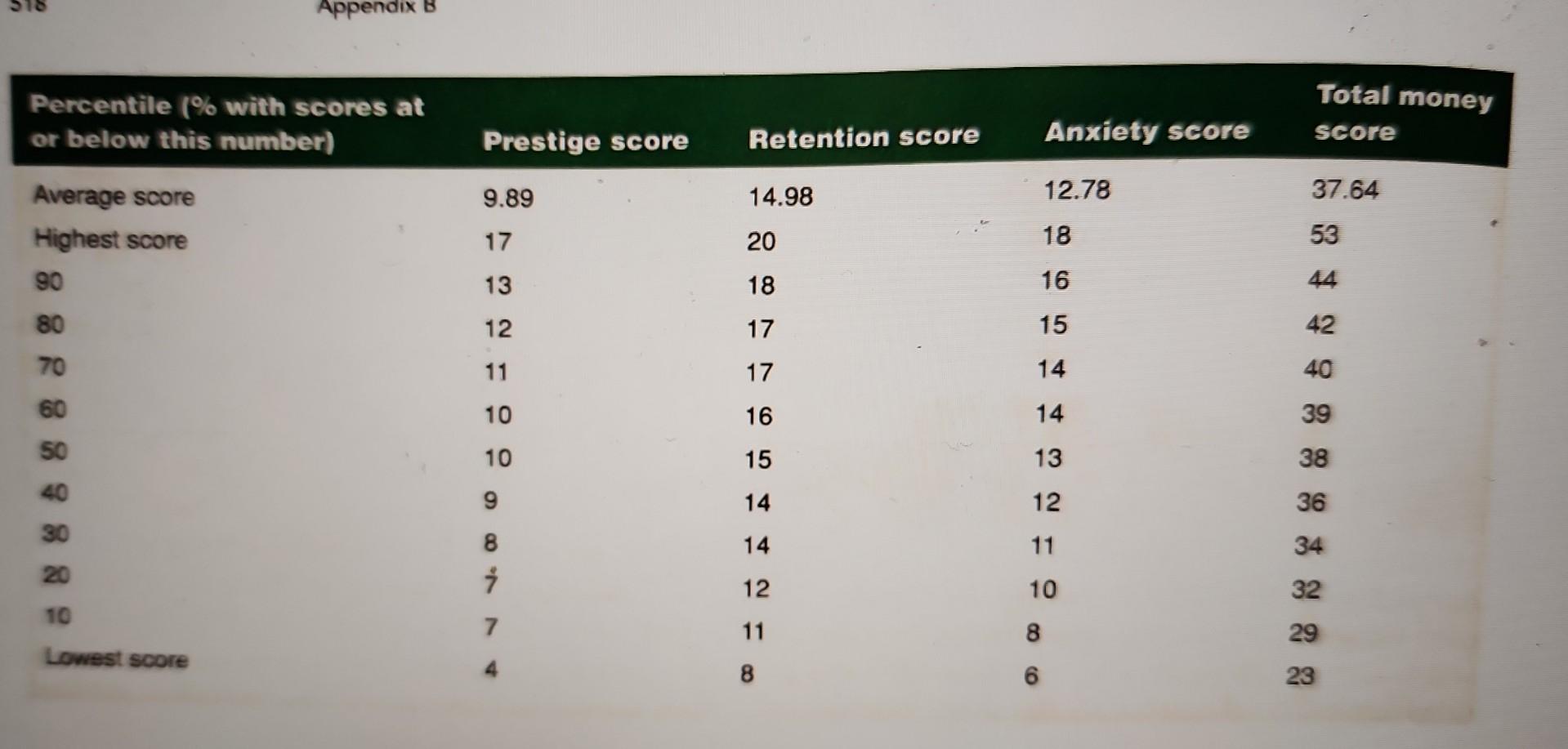
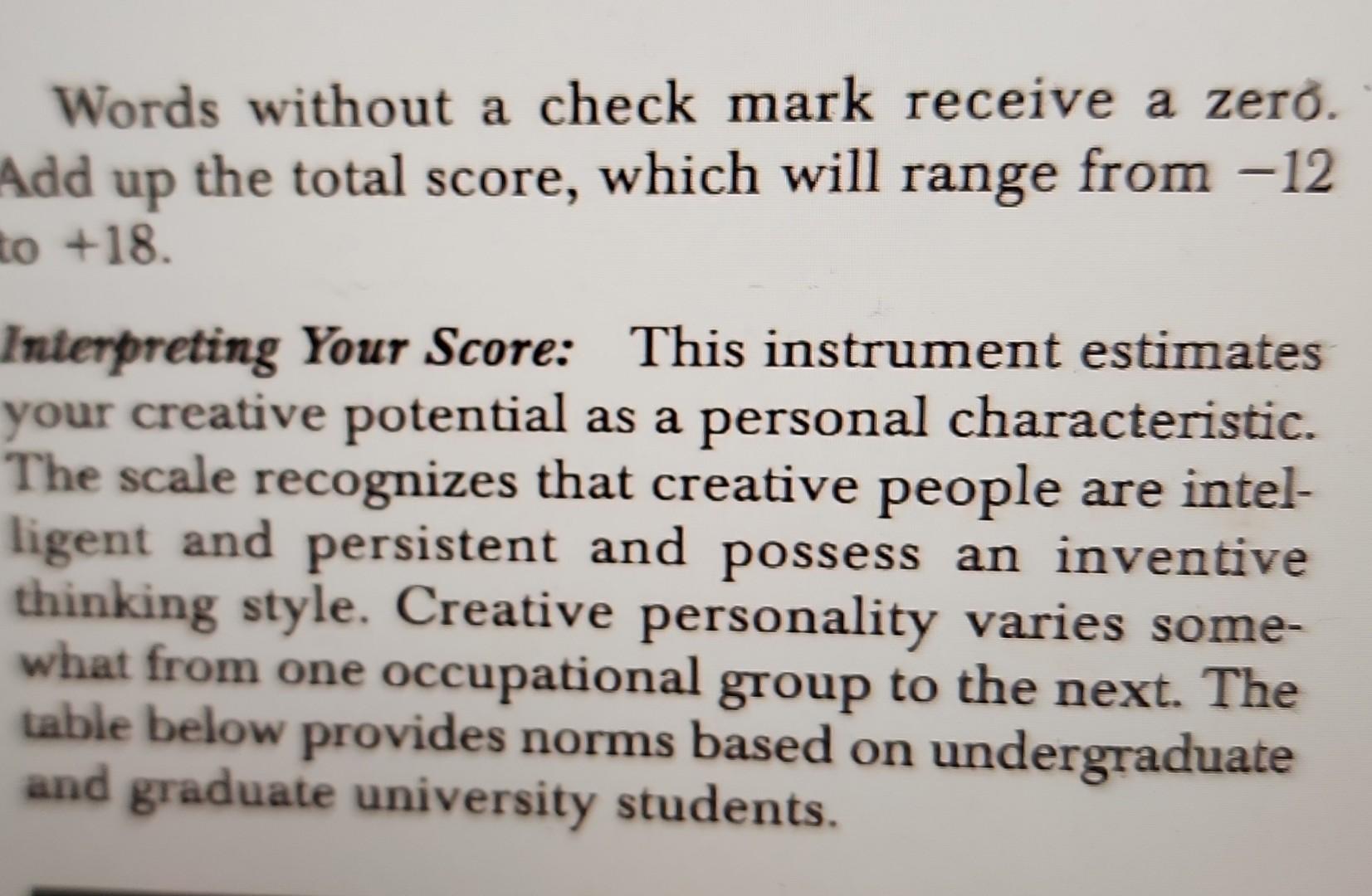
Attitude Scale," Joumal of Personality Assessment, 46 (1902), 27 (July 1999), pp. 19-35; K. Yamauchi and D. Templer, "The Development of a Money Chapter 5 Scoring Key for "What Needs Are Most Important to You?" Scoring Insiructions: Use the table below to assig numbers to each box you checked. Insert the num ber for each statement on the appropriate line belov Appendix B Interpreting Your Need for Social Approval Score: The need for social approval scale estimates the extent to which you are motivated to seek favorable evaluation from others. Founded on the drive to bond, the need for social approval is a secondary need in that people vary in this need on the basis of their selfconcept, values, personality, and possibly socialized social norms. This scale ranges from 0 to 32 . How high or low is your need for social approval? The ideal would be to compare your score with the collective results of other students in your class. Otherwise, the following exhibit offers a rough set of norms with which you can compare your score on this scale. Need for social approval score Interpretation 28 to 32 High need for social approval 20 to 27 Above-average need for social approval 12 to 19 Average need for social approval Below-average need for social approval 0 to 5 Low need for social approval Chapter 6 Scoring Key for "What is Your Attitude toward Money?" Scoring Insiructions: This instrument presents three dimensions with a smaller set of items from the original money attitude scale. To calculate your score on each dimension, write the number that you circled in the scale above the corresponding item number in the scoring key at the bottom of this page. For example, write the number you circled for the scale's first statement ("I sometimes purchase things ...") on the line above "(1)." Then add up the numbers for that dimension. The money attitude total score is calculated by adding up all scores on all dimensions. Intempreting Your Score: The three money attitude scale dimensions measured here, as well as the total score, are defined as follows: Money as power/prestige: People with higher scores on this dimension tend to use money to influence and impress others. Retention time: People with higher scores on this dimension tend to be careful financial planners. Money anxiety: People with higher scores on this dimension tend to view money as a source of anxiety. Money attitude total: This is a general estimate of how much respect and attention you give to money. The table on page 518 shows how a sample of MBA students scored on the money attitude scale. The table shows percentiles, that is, the percentage of people with the same or lower score. For example, the table indicates that a score of 12 on the retention scale is quite low because only 20 percent of the MBA students scored at this level or lower ( 80 percent scored higher). However, a score of 12 on the prestige scale is quite high because 80 percent of the MBA students scored at or below this number (only 20 percent scored higher). Money attitude dimen Money as power/prestige (1)Calculation+(4)2+(7)(7)+(5)(10)+(2)(8)+(6)(11)= (9)(3)+(12)1= Money attitude total Add up all dimension scores = Words without a check mark receive a zero. Add up the total score, which will range from 12 to +18 Interpreting Your Score: This instrument estimates your creative potential as a personal characteristic. The scale recognizes that creative people are intelligent and persistent and possess an inventive thinking style. Creative personality varies somewhat from one occupational group to the next. The table below provides norms based on undergraduate and graduate university students. Attitude Scale," Joumal of Personality Assessment, 46 (1902), 27 (July 1999), pp. 19-35; K. Yamauchi and D. Templer, "The Development of a Money Chapter 5 Scoring Key for "What Needs Are Most Important to You?" Scoring Insiructions: Use the table below to assig numbers to each box you checked. Insert the num ber for each statement on the appropriate line belov Appendix B Interpreting Your Need for Social Approval Score: The need for social approval scale estimates the extent to which you are motivated to seek favorable evaluation from others. Founded on the drive to bond, the need for social approval is a secondary need in that people vary in this need on the basis of their selfconcept, values, personality, and possibly socialized social norms. This scale ranges from 0 to 32 . How high or low is your need for social approval? The ideal would be to compare your score with the collective results of other students in your class. Otherwise, the following exhibit offers a rough set of norms with which you can compare your score on this scale. Need for social approval score Interpretation 28 to 32 High need for social approval 20 to 27 Above-average need for social approval 12 to 19 Average need for social approval Below-average need for social approval 0 to 5 Low need for social approval Chapter 6 Scoring Key for "What is Your Attitude toward Money?" Scoring Insiructions: This instrument presents three dimensions with a smaller set of items from the original money attitude scale. To calculate your score on each dimension, write the number that you circled in the scale above the corresponding item number in the scoring key at the bottom of this page. For example, write the number you circled for the scale's first statement ("I sometimes purchase things ...") on the line above "(1)." Then add up the numbers for that dimension. The money attitude total score is calculated by adding up all scores on all dimensions. Intempreting Your Score: The three money attitude scale dimensions measured here, as well as the total score, are defined as follows: Money as power/prestige: People with higher scores on this dimension tend to use money to influence and impress others. Retention time: People with higher scores on this dimension tend to be careful financial planners. Money anxiety: People with higher scores on this dimension tend to view money as a source of anxiety. Money attitude total: This is a general estimate of how much respect and attention you give to money. The table on page 518 shows how a sample of MBA students scored on the money attitude scale. The table shows percentiles, that is, the percentage of people with the same or lower score. For example, the table indicates that a score of 12 on the retention scale is quite low because only 20 percent of the MBA students scored at this level or lower ( 80 percent scored higher). However, a score of 12 on the prestige scale is quite high because 80 percent of the MBA students scored at or below this number (only 20 percent scored higher). Money attitude dimen Money as power/prestige (1)Calculation+(4)2+(7)(7)+(5)(10)+(2)(8)+(6)(11)= (9)(3)+(12)1= Money attitude total Add up all dimension scores = Words without a check mark receive a zero. Add up the total score, which will range from 12 to +18 Interpreting Your Score: This instrument estimates your creative potential as a personal characteristic. The scale recognizes that creative people are intelligent and persistent and possess an inventive thinking style. Creative personality varies somewhat from one occupational group to the next. The table below provides norms based on undergraduate and graduate university students
Step by Step Solution
There are 3 Steps involved in it

Get step-by-step solutions from verified subject matter experts
 Study Help