







Question: Need help with full explanations! Thanks!!! (1 point) Use the given graphs of the function f (left, in blue) and g (right, in red) to
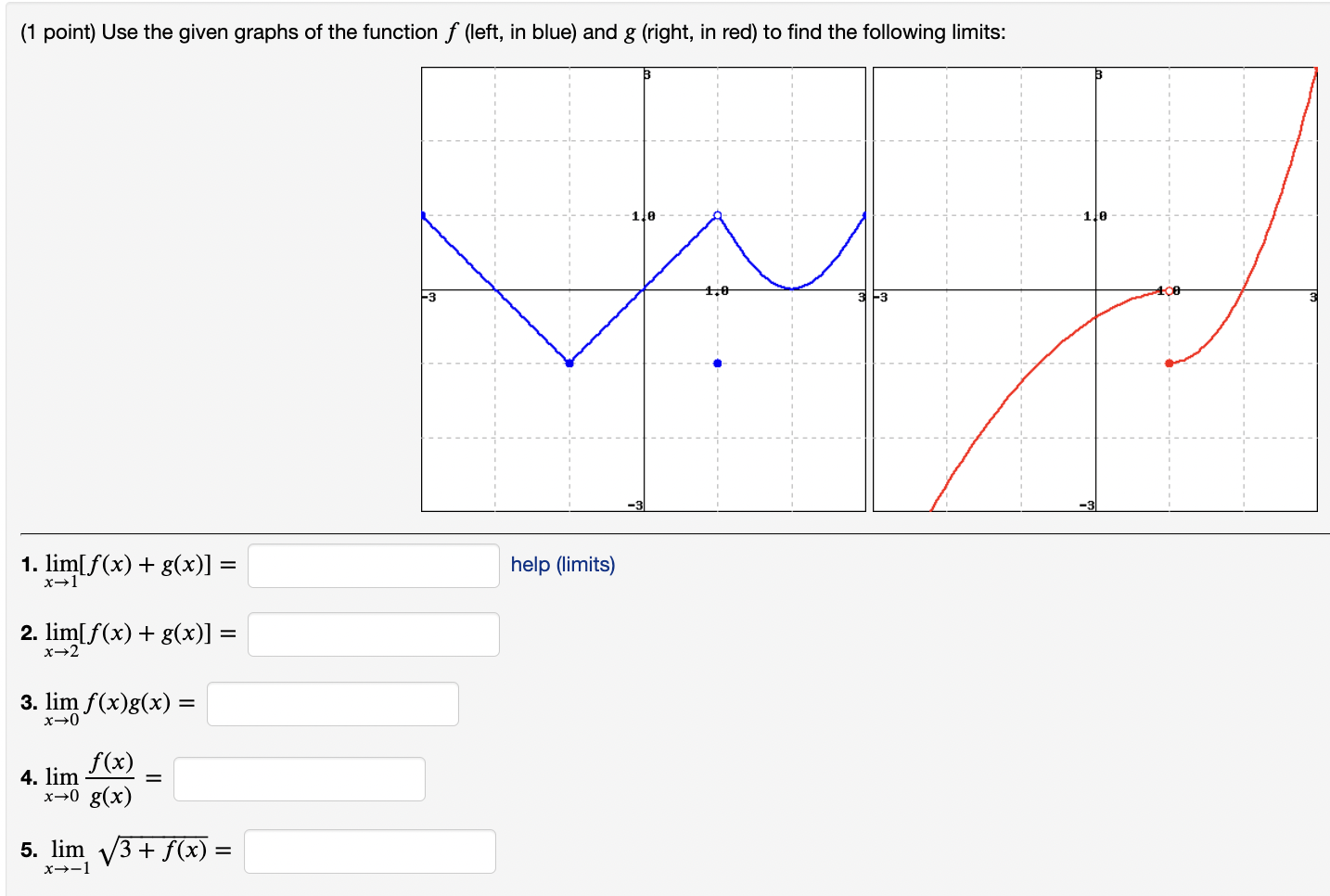
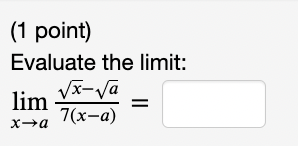
![-108 1. lim[f(x) + g(x)] = x-1 help (limits) 2. lim[f (x)](https://s3.amazonaws.com/si.experts.images/answers/2024/06/666571fb997f1_347666571fb73ba5.jpg)
![+ g(x)] = x-+2 3. lim f(x)g(x) = x-+0 4. lim f(x)](https://s3.amazonaws.com/si.experts.images/answers/2024/06/666571fbe70f7_347666571fbd575f.jpg)
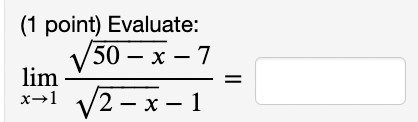
Need help with full explanations! Thanks!!!
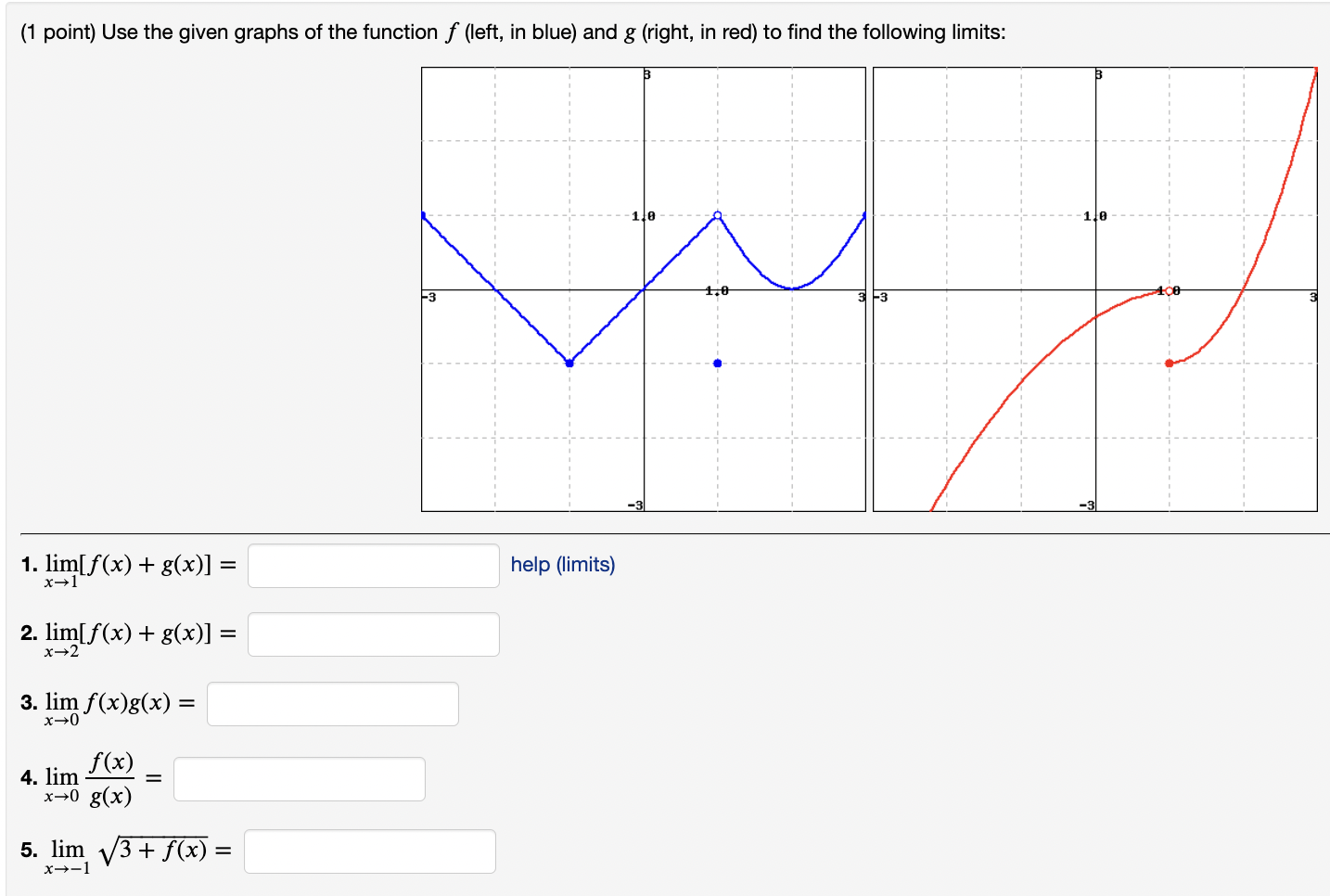
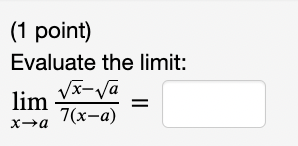
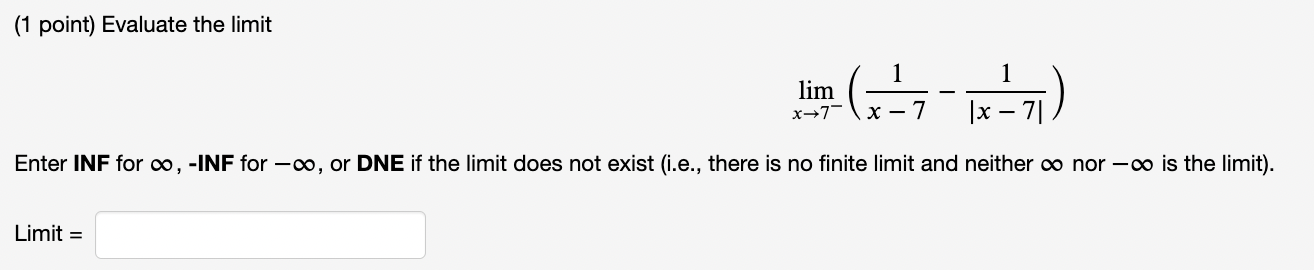
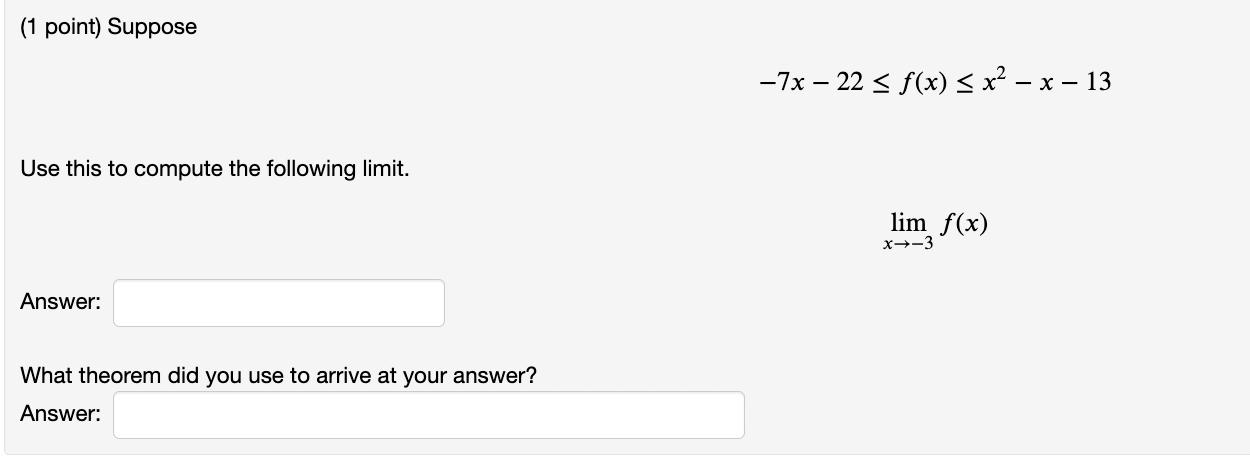
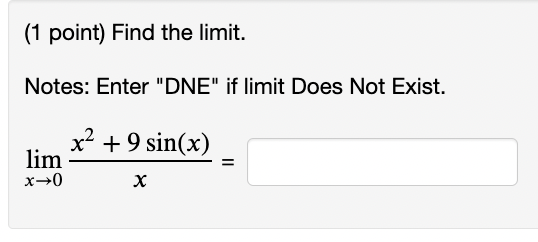
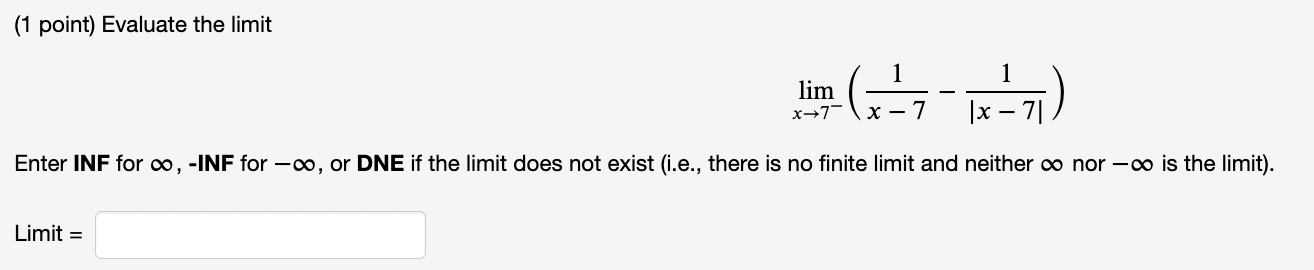
(1 point) Use the given graphs of the function f (left, in blue) and g (right, in red) to find the following limits: -1/0 140 -3 1.0 3 -3 -108 1. lim[f(x) + g(x)] = x-1 help (limits) 2. lim[f (x) + g(x)] = x-+2 3. lim f(x)g(x) = x-+0 4. lim f(x) x-0 g(x) 5. lim V3 + f(x) = x--1\f(1 point) Evaluate the limit . ( 1 1 ) 11m x>7_ x 7 Ix 7| Enter INF for 00, -INF for 00, or DNE if the limit does not exist (i.e., there is no finite limit and neither 00 nor 00 is the limit). Limit = (1 point) Suppose 7x225f(x)5x2x13 Use this to compute the following limit. lim f(x) x>3 Answer: What theorem did you use to arrive at your answer? Answer: (1 point) Find the limit. Notes: Enter "DNE" if limit Does Not Exist. lim + 9 sin(x) = X-0 X
Step by Step Solution
There are 3 Steps involved in it

Get step-by-step solutions from verified subject matter experts
 Study Help