







Question: Need help with the problem being done in Excel Many factors determine how much debt a firm takes on. Chief among them ought to be
 Need help with the problem being done in Excel
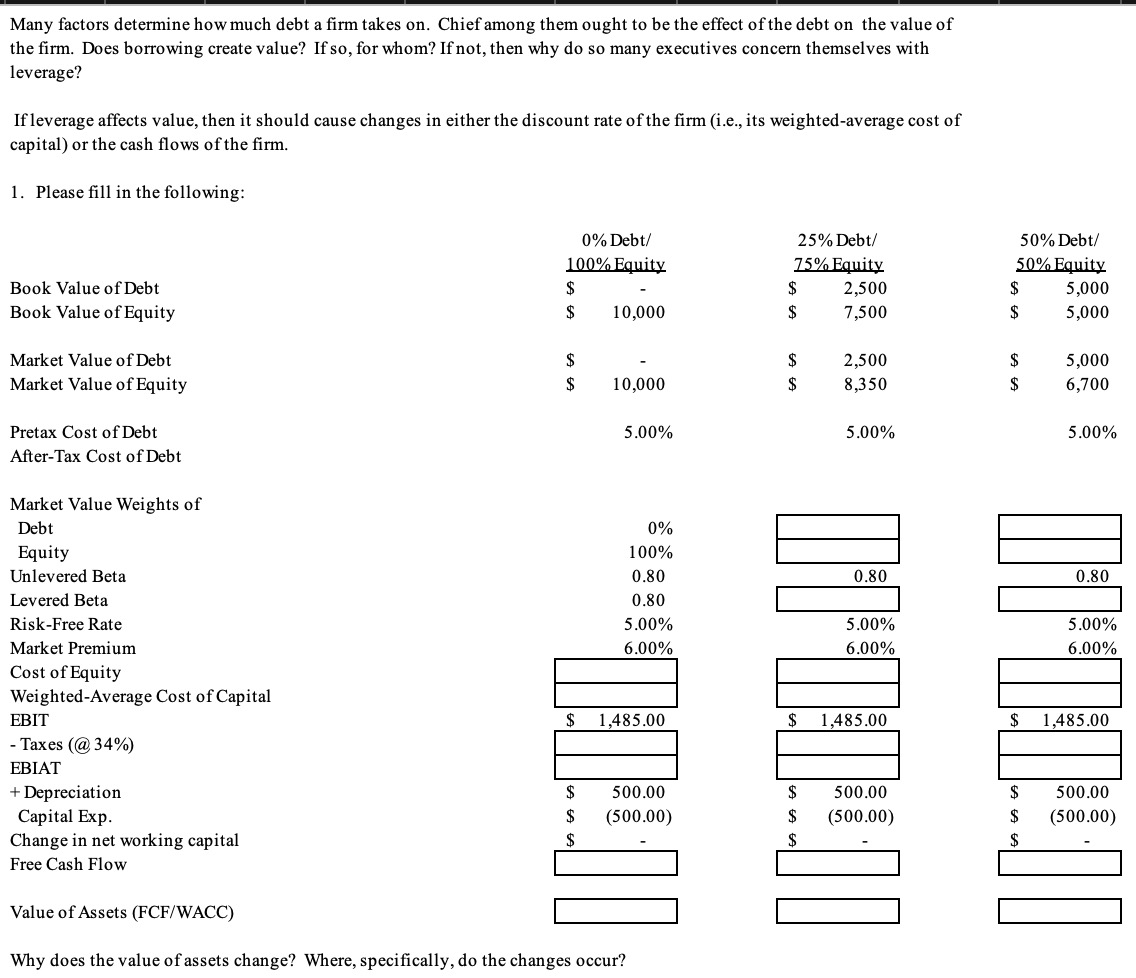
Many factors determine how much debt a firm takes on. Chief among them ought to be the effect of the debt on the value of the firm. Does borrowing create value? If so, for whom? If not, then why do so many executives concern themselves with leverage? If leverage affects value, then it should cause changes in either the discount rate of the firm (i.e., its weighted average cost of capital) or the cash flows of the firm. 1. Please fill in the following: 0% Debt/ 100% Equity 25% Debt/ 75% Equity 2,500 7,500 50% Debt/ 50% Equity $ 5,000 5,000 Book Value of Debt Book Value of Equity 10,000 2,500 Market Value of Debt Market Value of Equity 5,000 6,700 10,000 8,350 5.00% 5.00% 5.00% Pretax Cost of Debt After-Tax Cost of Debt 0.80 0.80 0% 100% 0.80 0.80 5.00% 6.00% 5.00% 6.00% 5.00% 6.00% Market Value Weights of Debt Equity Unlevered Beta Levered Beta Risk-Free Rate Market Premium Cost of Equity Weighted-Average Cost of Capital EBIT - Taxes (@34%) EBIAT + Depreciation Capital Exp. Change in net working capital Free Cash Flow 1,485.00 $ 1,485.00 $ 1,485.00 $ $ 500.00 (500.00) 500.00 (500.00) $ 500.00 (500.00) :00 Value of Assets (FCF/WACC) Why does the value of assets change? Where, specifically, do the changes occur
Step by Step Solution
There are 3 Steps involved in it

Get step-by-step solutions from verified subject matter experts
 Study Help