







Question: Need help with these two questions: Q3. How do Barbcos manufacturing and reporting systems support its key successfactors(key strategic components) of product quality, on-time delivery,
Need help with these two questions:
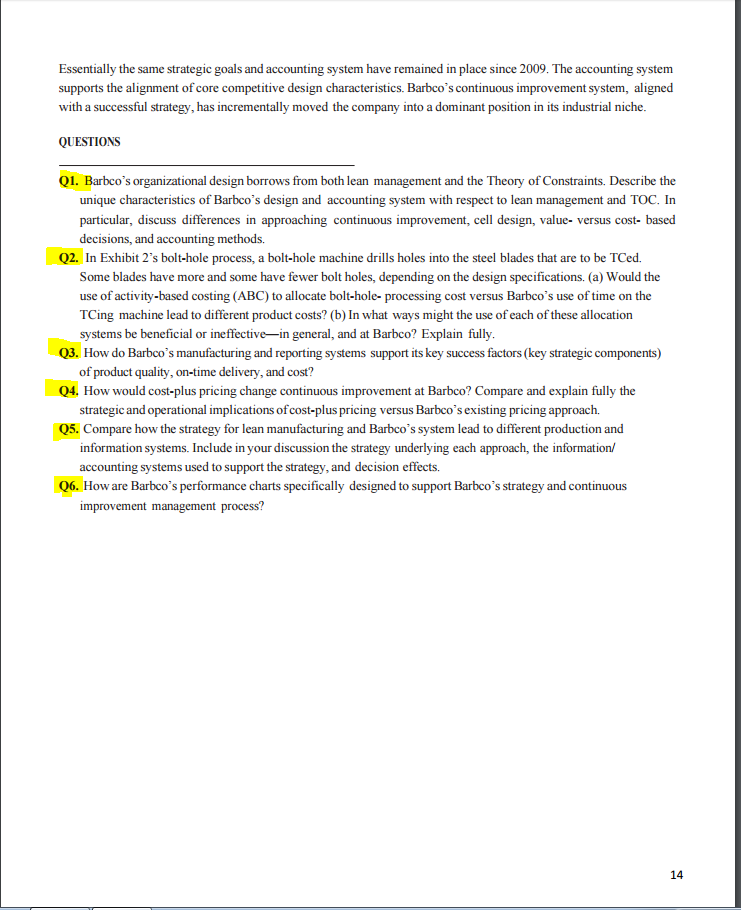
Q3. How do Barbcos manufacturing and reporting systems support its key successfactors(key strategic components) of product quality, on-time delivery, and cost?
Q4. How would cost-plus pricing change continuous improvement at Barbco? Compare and explain fully the strategic and operational implications of cost-plus pricing versus Barbcos existing pricing approach.
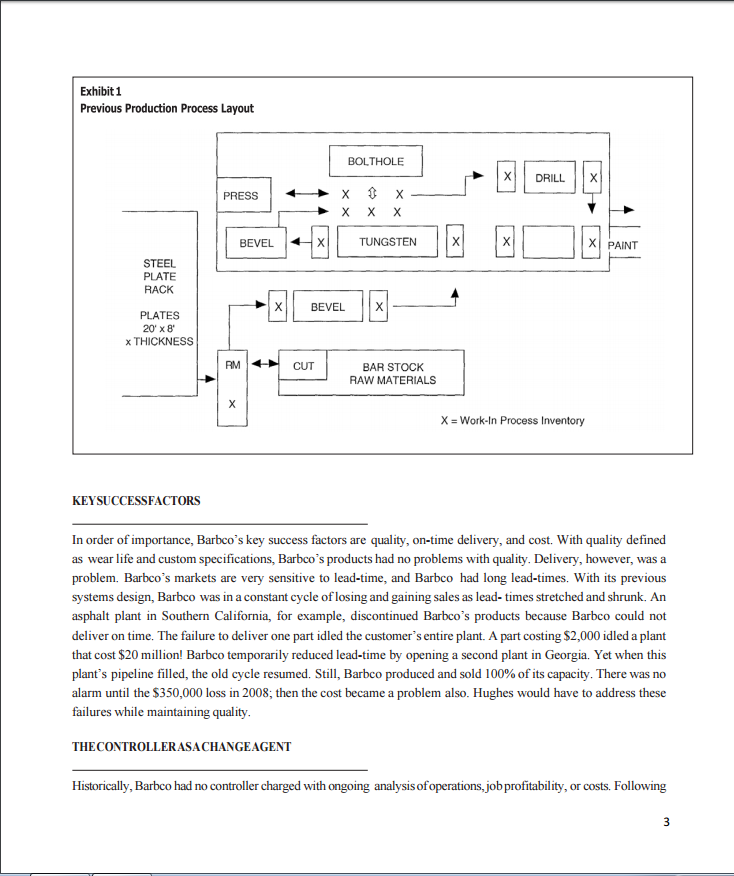
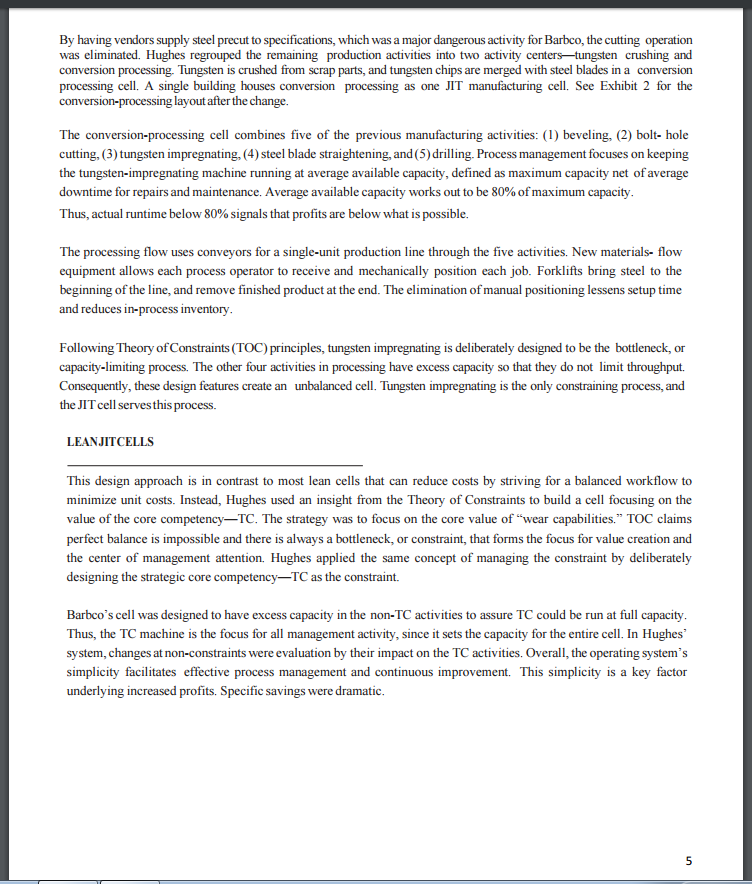
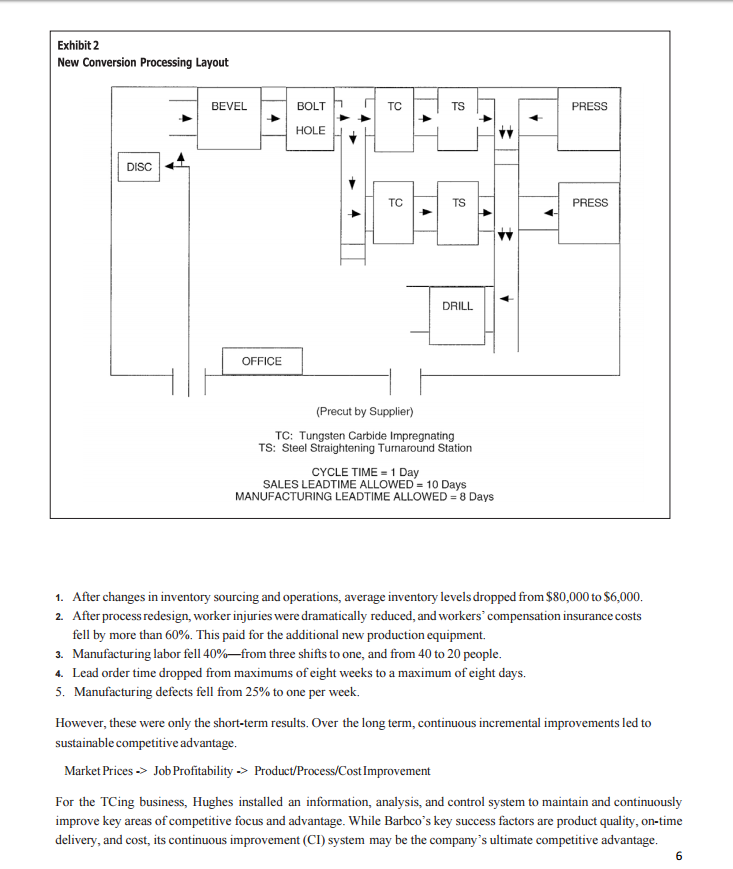
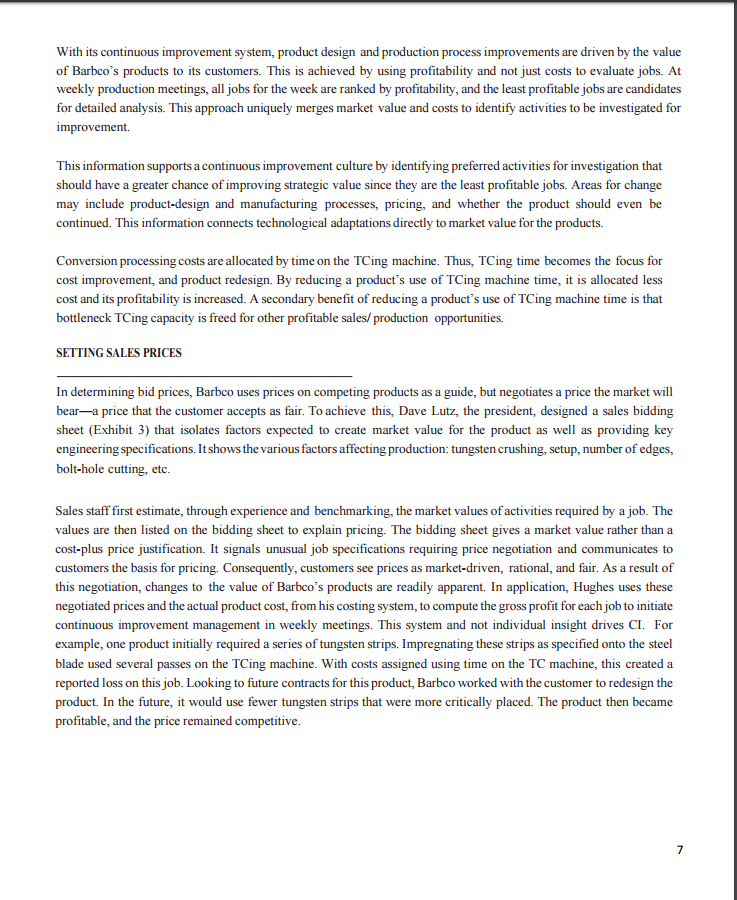
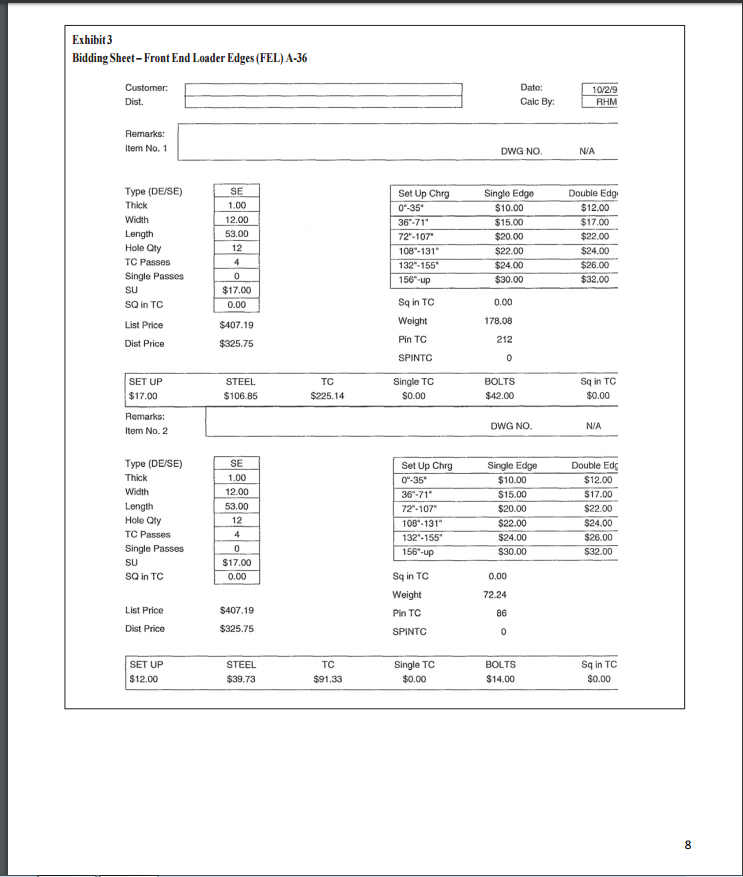
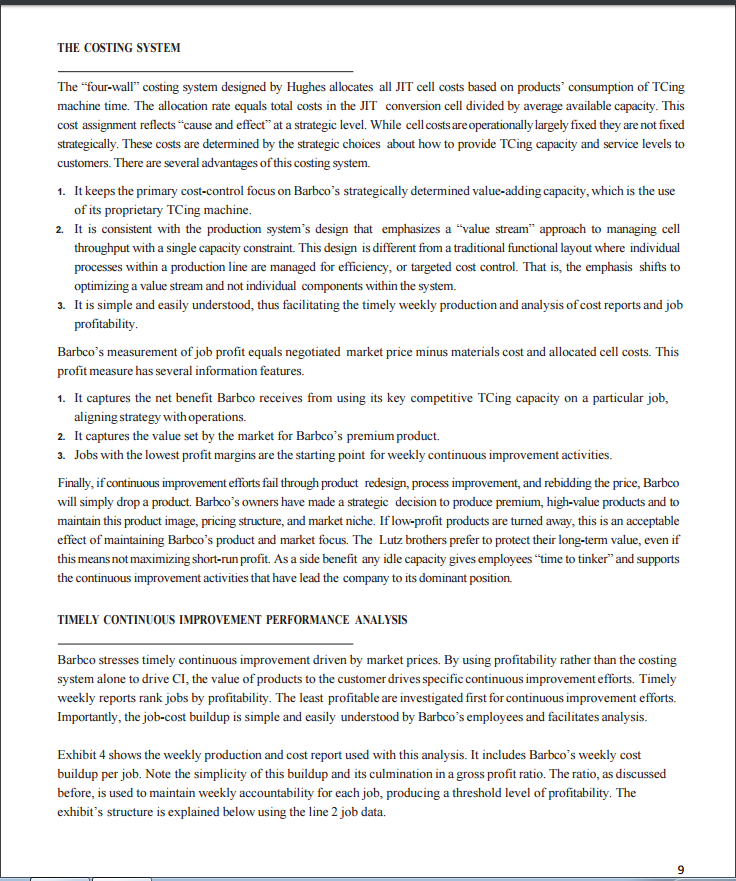
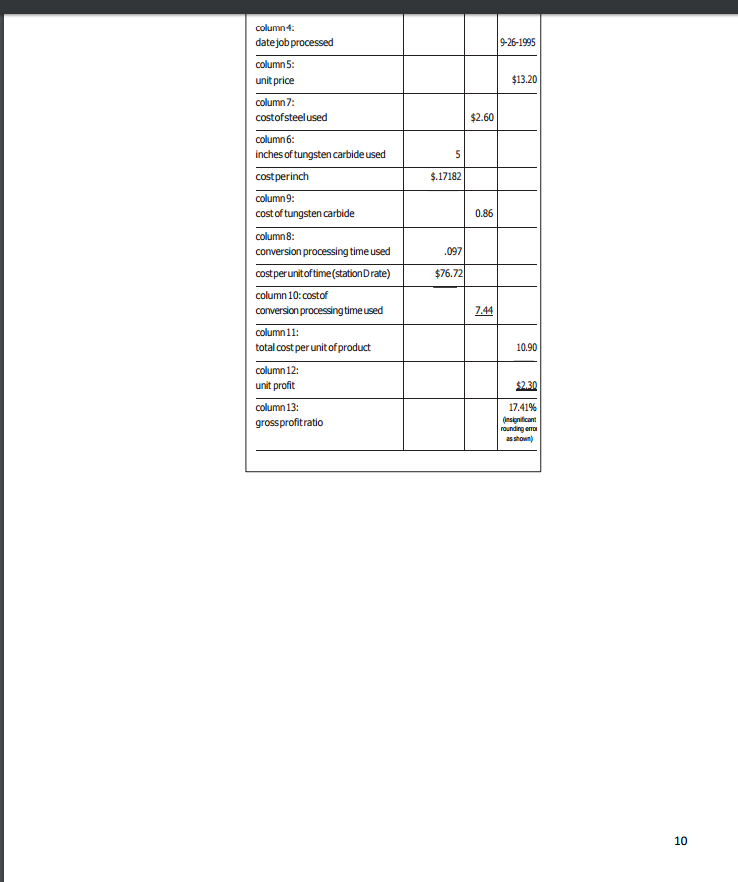
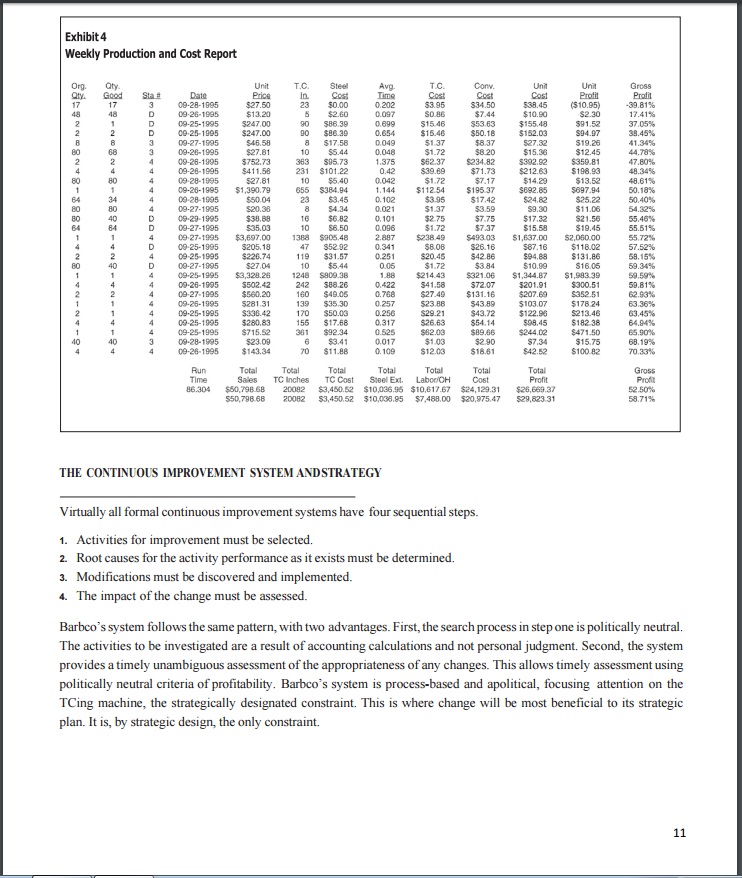
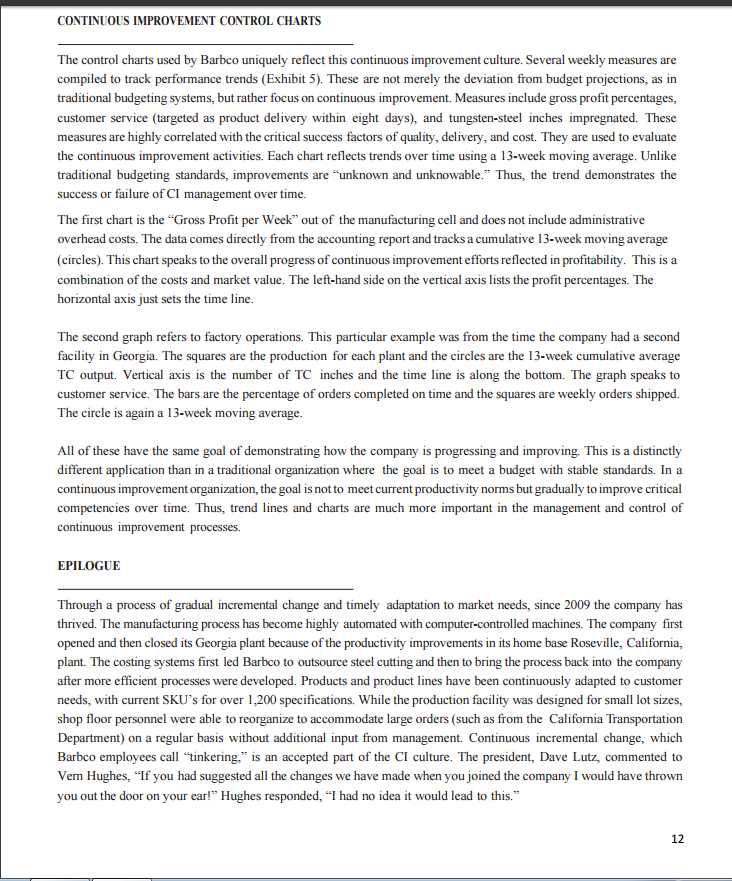
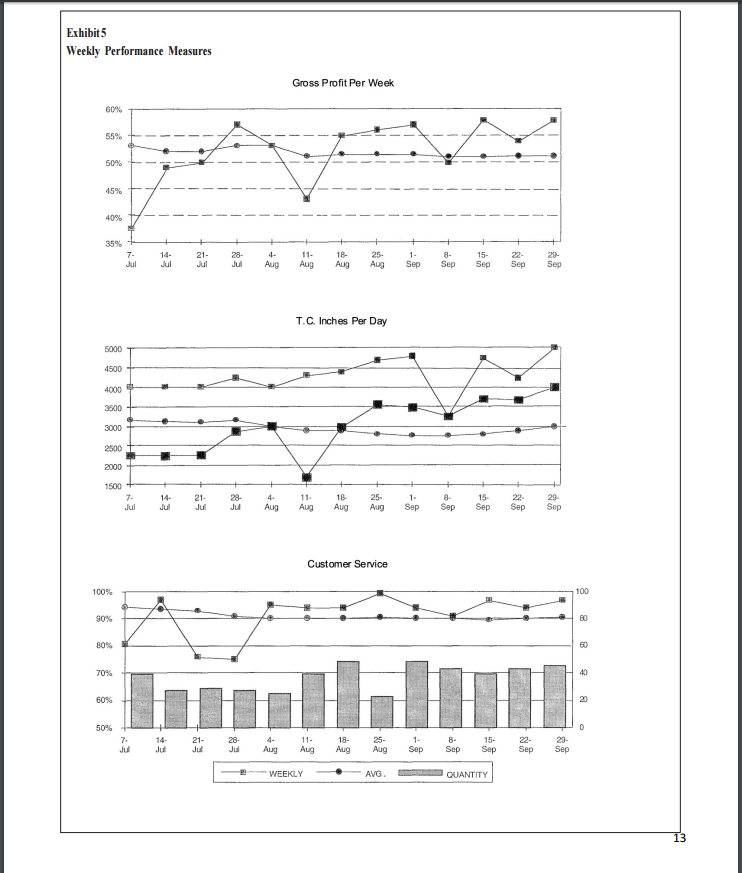
Barbco Engineering Co.: Strategy-Driven Costing and Lean Management HISTORY, CHANGE, AND ENSUING LOSS Reading the 2008 financial statements, Barb Lutz's sons knew their company was in trouble. Their family-owned California manufacturing company had just experienced a reported loss of $350,000-a loss that was approximately one-third of the company's equity. The company is small, with $4-6 million in sales. Although it had sought business with original equipment manufacturers (OEMs), sales are primarily to custom-designed equipment end-users. Sales are obtained through bids based on the custom design characteristics ofthe parts Barbco manufactures The company is now in its second generation of family management and adheres to the same strategy initiated by Barb Lutz, the company's founder-making sales by adding value to customers' equipment. Its castings business segment is largely outsourced for manufacturing and is not the focus of this case. Barbco s other activity and now its largest business segment, is the manufacture of uniquely specified steel blades that are bolted to the edges ofcustomers heavy equipment, such as road grader original-equipment blades or earth-moving tractor buckets. Barbco's engineers work with customers and add their expertise to design the application oftungsten carbide to these add-on blades (called bolt-ons"). Their unique tungsten carbide process hardens the edge and saves the equipment from abrasion and wear. The manufacturing process is called "tungsten carbide impregnating," or TCing. Barbco com based on custom-design engineering, timely delivery, and its proprietary manufacturing process. It adds petes value to customers' equipment, since its relatively inexpensive bolt-ons extend the life of the much more expensive OEM equipment. For example, a $3,000 Barbco bolt-on protects a $50,000 tractor bucket. Generally, it takes two to three times longer for a Barbco-TCed blade to wear out compared to competitors' replacement blades. Thus Barbco's blades lengthen the in-service time of heavy equipment, and Barbco's currently fast cycle time helps c avoid extended downtime ustomers for difficult-to-replace blades Barbco has a strategic advantage with the process that melts the bolt-on blades' edges and impregnates them with tungsten carbide. Its TCing operations are in-house, and it typically processes small orders with lot sizes of 1 to 10 units. Single-unit orders are common. Barbco was profitable from the beginning, and has always focused its efforts on its competitive advantage in designing custom products. For its TCing business, it historically paid little attention to critically evaluating and managing materials sourcing, its manufacturing processes, cost control, and job profitability. It wasn't until the 2008 financial loss that Barbco's owners were forced to deal with fundamental business changes in the nature of their business and the importance of operating issues, job profitability, and information support
Step by Step Solution
There are 3 Steps involved in it

Get step-by-step solutions from verified subject matter experts
 Study Help