







Question: need how with specific ID, Weighted average, FIFO, LIFO please also double if if I'm correct with the answers that are filled in. thank you
need how with specific ID, Weighted average, FIFO, LIFO please also double if if I'm correct with the answers that are filled in. thank you
![you [The following information applies to the questions displayed below.] Laker Company](https://s3.amazonaws.com/si.experts.images/answers/2024/07/669519a0c3ede_456669519a05c8ad.jpg)
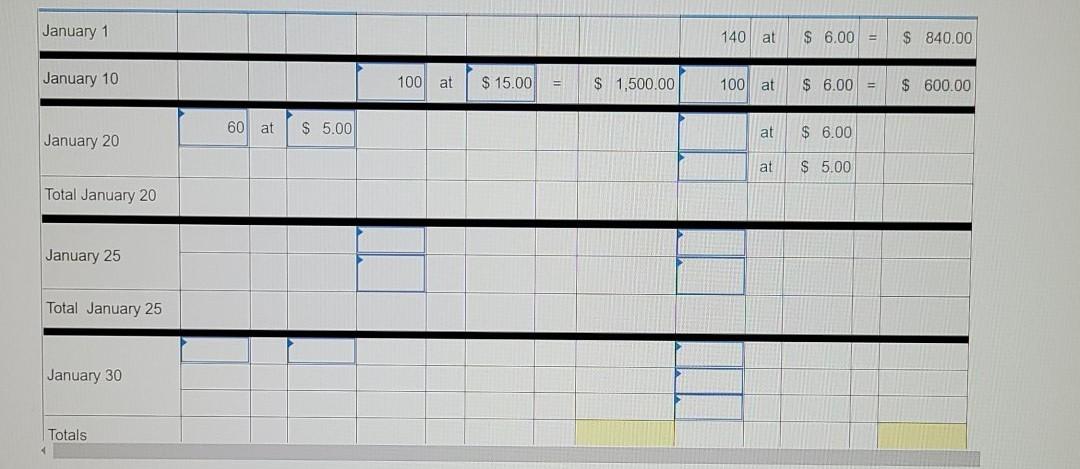
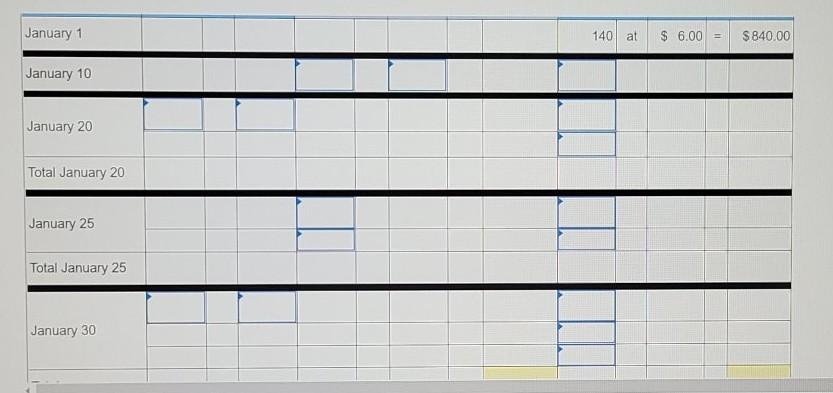
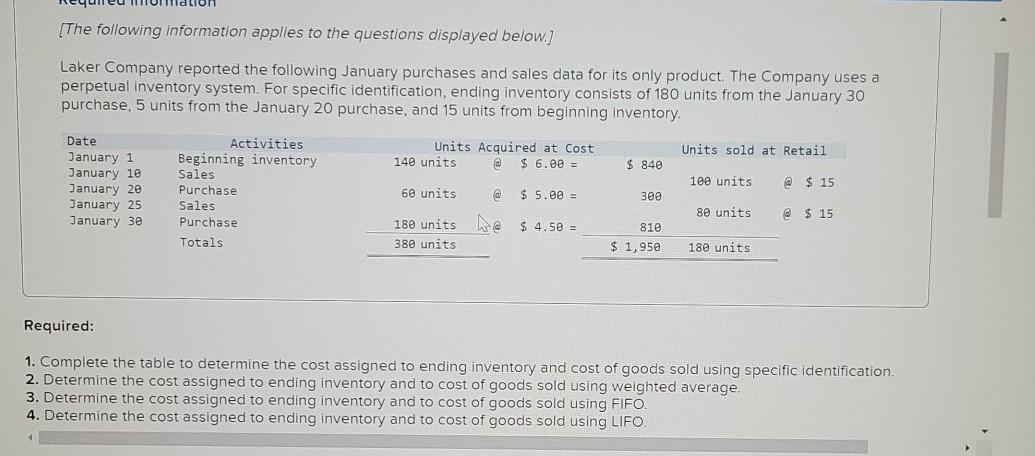
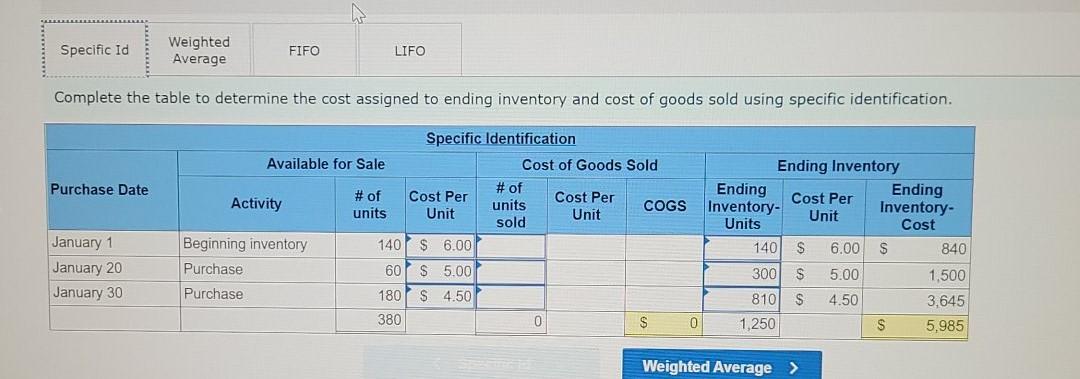
[The following information applies to the questions displayed below.] Laker Company reported the following January purchases and sales data for its only product. The Company uses a perpetual inventory system. For specific identification, ending Inventory consists of 180 units from the January 30 purchase. 5 units from the January 20 purchase, and 15 units from beginning Inventory. Units Acquired at Cost 140 units @ $ 6.00 = Units sold at Retail $ 840 Date January 1 January 10 January 20 January 25 January 30 100 units @ $ 15 Activities Beginning inventory Sales Purchase Sales Purchase Totals 60 units @ $ 5.00 = 300 80 units @ $ 15 $ 4.50 = 180 units 380 units 810 $ 1,950 180 units Required: 1. Complete the table to determine the cost assigned to ending inventory and cost of goods sold using specific identification 2. Determine the cost assigned to ending inventory and to cost of goods sold using weighted average 3. Determine the cost assigned to ending inventory and to cost of goods sold using FIFO. 4. Determine the cost assigned to ending inventory and to cost of goods sold using LIFO. Specific Id Weighted Average FIFO LIFO Complete the table to determine the cost assigned to ending inventory and cost of goods sold using specific identification. Purchase Date Specific Identification Available for Sale Cost of Goods Sold # of # of Cost Per Cost Per Activity units COGS units Unit Unit sold Beginning inventory 140 $ 6.00 Purchase 60 $ 5.00 Purchase 180 $ 4.50 380 0 $ 0 January 1 January 20 January 30 Ending Inventory Ending Ending Cost Per Inventory- Inventory- Unit Units Cost 140 $ 6.00 S 840 300 $ 5.00 1,500 810 $ 4.50 3,645 1.250 s 5,985 Weighted Average > Inventory Balance Weighted Average - Perpetual: Goods Purchased Cost of Goods Sold # of units Cost per Cost of Goods unit unit sold Sold Date # of units Cost per # of units Cost per unit Inventory Balance January 1 140 at S 6.00 = $ 840.00 January 10 100 at $ 15.00 = $ 1,500.00 40 at $ 6.00 = $ 240.00 60lat $ 5.00 40 at $ 6.00 = January 20 60 at $ 240.00 300.00 $ 540.00 'S w $ 5.00 = $ 5.00 Average cost January 20 100 at January 25 80 at $ 15.00 = $ 1,200.00 20 at $ 5.00 = $ 100.00 180 at $ 4.50 January 30 $ 5.00 = 20 at 180 at $ 4.50 = $ 100.00 810.00 $ 910.00 Totals $ 2,700.00 200 at January 1 140 at $ 6.00 $ 840.00 January 10 100 at $ 15.00 $ 1,500.00 100 at $ 6.00 = $ 600.00 60 at $ 5.00 at $ 6.00 January 20 at $ 5.00 Total January 20 January 25 Total January 25 January 30 Totals January 1 140 at $ 6.00 = $ 840.00 January 10 January 20 Total January 20 January 25 Total January 25 January 30
Step by Step Solution
There are 3 Steps involved in it

Get step-by-step solutions from verified subject matter experts
 Study Help