







Question: Net Present Value Method The following data are accumulated by Geddes Company in evaluating the purchase of $135,800 of equipment, having a four-year useful life:
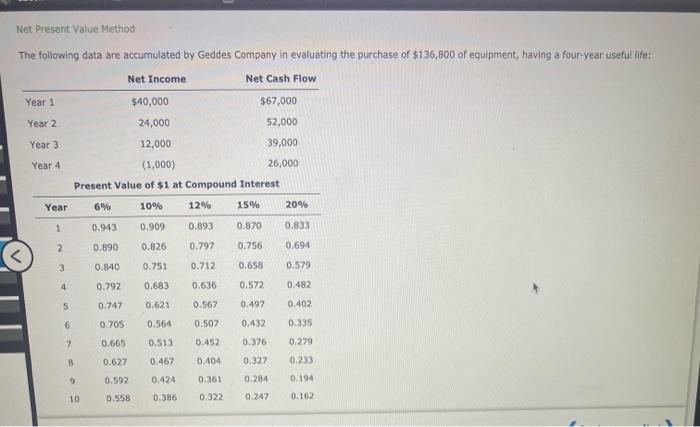
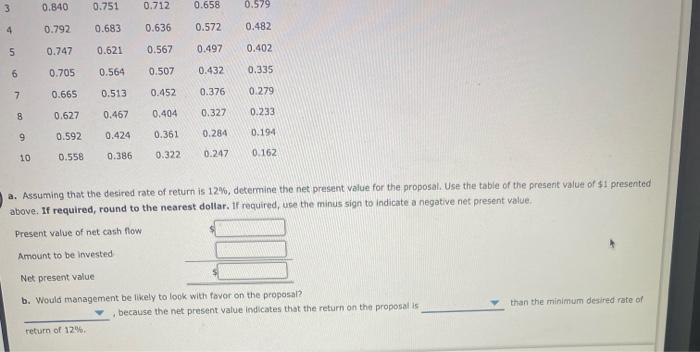
Net Present Value Method The following data are accumulated by Geddes Company in evaluating the purchase of $135,800 of equipment, having a four-year useful life: Net Income Net Cash Flow Year 1 Year 2 Year 3 $40,000 $67,000 24,000 52,000 12,000 39,000 (1,000) 26,000 Present Value of $1 at Compound Interest Year 4 Year 6% 10% 12% 15% 20% 1 0.943 0.893 0.870 0.833 0.909 0.826 2 0.890 0.797 0.756 0.694 0.840 0.751 0.712 0.658 0.579 4 0.792 0.683 0.636 0.572 0.482 5 0.747 0.567 0.49% 0.621 0.564 6 0.705 0.507 0.432 0.376 0.402 0.335 0.279 7 0.665 0.513 0.452 B 0.627 0.467 0.404 0.327 0.233 0.592 0.424 0.361 0.194 0.284 0.247 10 0.558 0.386 0.322 0.162 3 0.840 0.751 0.712 0.658 0.579 4 0.792 0.683 0.636 0.572 0.482 5 0.747 0.621 0.567 0.497 0.402 6 0.705 0.564 0.507 0.432 0.335 7 0.665 0.513 0.452 0.376 0.279 60 0.627 0.467 0,404 0.233 0.327 9 0.592 0.424 0.361 0.194 0.284 10 0.558 0.386 0.322 0.247 0.162 a. Assuming that the desired rate of return is 12%, determine the net present value for the proposal. Use the table of the present value of $1 presented above. If required, round to the nearest dollar. If required, use the minus sign to indicate a negative net present value. Present value of net cash flow Amount to be invested Net present value than the minimum desired rate of b. Would management be likely to look with favor on the proposal? because the net present value indicates that the return on the proposal is return of 12%
Step by Step Solution
There are 3 Steps involved in it

Get step-by-step solutions from verified subject matter experts
 Study Help