Question: New Machine The new machine under consideration was a Delta A390, which offered an increase in capacity of 40 per cent. This capacity was probably
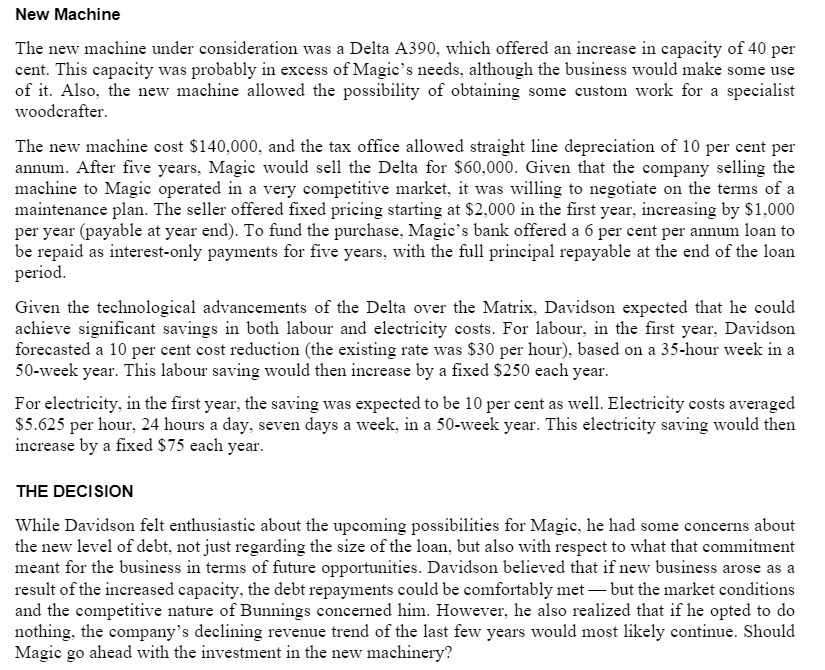
New Machine The new machine under consideration was a Delta A390, which offered an increase in capacity of 40 per cent. This capacity was probably in excess of Magic's needs, although the business would make some use of it. Also, the new machine allowed the possibility of obtaining some custom work for a specialist woodcrafter. The new machine cost $140,000, and the tax office allowed straight line depreciation of 10 per cent per annum. After five years, Magic would sell the Delta for $60,000. Given that the company selling the machine to Magic operated in a very competitive market, it was willing to negotiate on the terms of a maintenance plan. The seller offered fixed pricing starting at $2,000 in the first year, increasing by $1,000 per year (payable at year end). To fund the purchase, Magic's bank offered a 6 per cent per annum loan to be repaid as interest-only payments for five years, with the full principal repayable at the end of the loan period. Given the technological advancements of the Delta over the Matrix, Davidson expected that he could achieve significant savings in both labour and electricity costs. For labour, in the first year, Davidson forecasted a 10 per cent cost reduction (the existing rate was $30 per hour), based on a 35-hour week in a 50-week year. This labour saving would then increase by a fixed $250 each year. For electricity, in the first year, the saving was expected to be 10 per cent as well. Electricity costs averaged $5.625 per hour, 24 hours a day, seven days a week, in a 50-week year. This electricity saving would then increase by a fixed $75 each year. THE DECISION While Davidson felt enthusiastic about the upcoming possibilities for Magic, he had some concerns about the new level of debt, not just regarding the size of the loan, but also with respect to what that commitment meant for the business in terms of future opportunities. Davidson believed that if new business arose as a result of the increased capacity, the debt repayments could be comfortably met - but the market conditions and the competitive nature of Bunnings concerned him. However, he also realized that if he opted to do nothing, the company's declining revenue trend of the last few years would most likely continue. Should Magic go ahead with the investment in the new machinery









 Study Help