



Question: No clue where to get started and would really like help with Task A through J with explanation if possible, also if you can keep
 No clue where to get started and would really like help with Task A through J with explanation if possible, also if you can keep it as simple and basic as possible because I'm new to C++ thanks so much :)
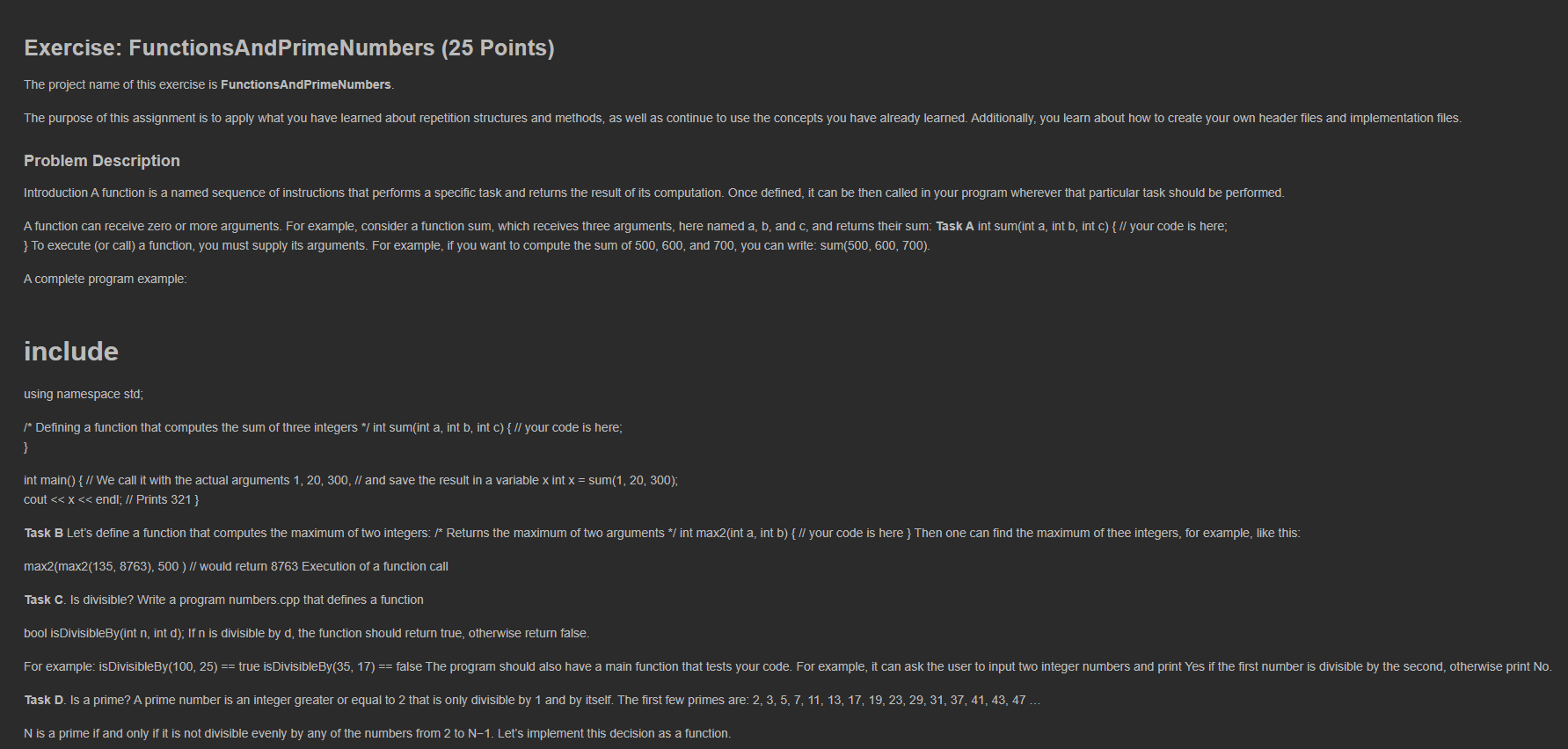
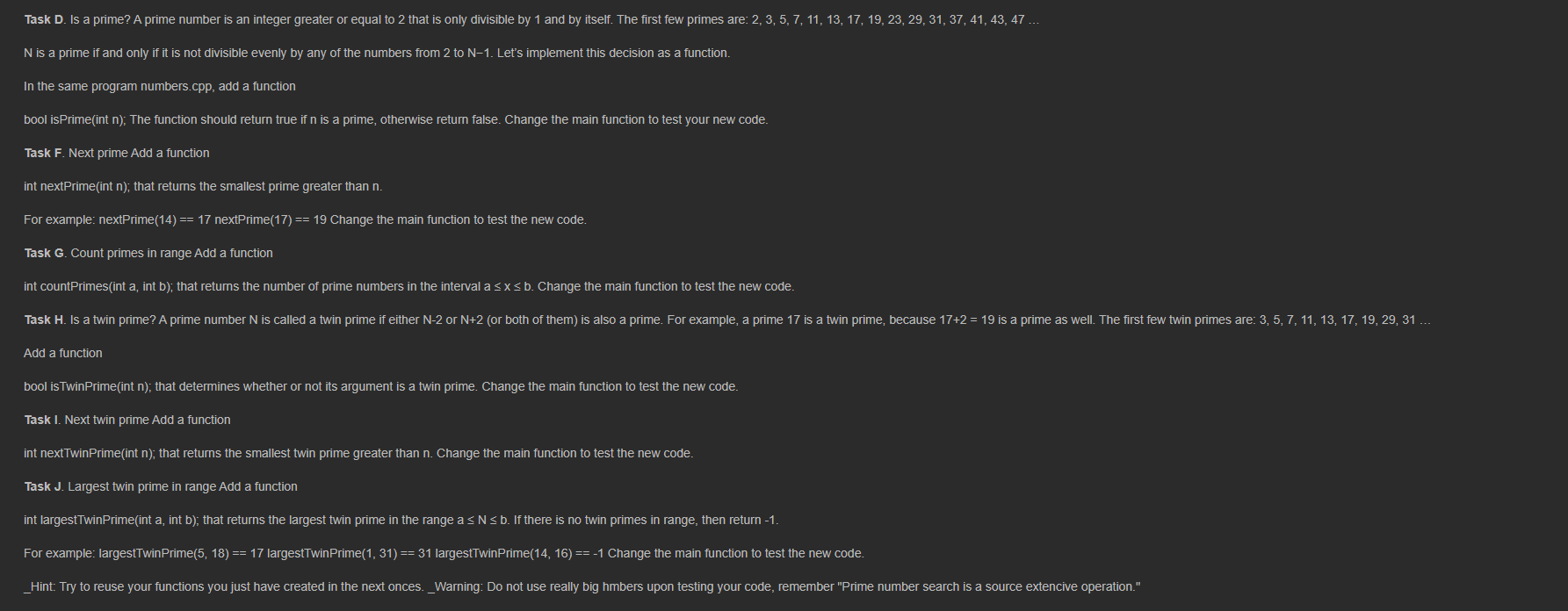
Exercise: FunctionsAndPrime Numbers (25 Points) The project name of this exercise is FunctionsAndPrimeNumbers. The purpose of this assignment is to apply what you have learned about repetition structures and methods, as well as continue to use the concepts you have already learned. Additionally, you learn about how to create your own header files and implementation files. Problem Description Introduction A function is a named sequence of instructions that performs a specific task and returns the result of its computation. Once defined, it can be then called in your program wherever that particular task should be performed. A function can receive zero or more arguments. For example, consider a function sum, which receives three arguments, here named a, b, and c, and returns their sum: Task A int sum(int a, int b, int c) { // your code is here; } To execute (or call) a function, you must supply its arguments. For example, if you want to compute the sum of 500, 600, and 700, you can write: sum(500, 600, 700). A complete program example: include using namespace std; /* Defining a function that computes the sum of three integers */ int sumint a, int b, int c) { // your code is here; } int main() { // We call it with the actual arguments 1, 20, 300, II and save the result in a variable x int x = sum(1, 20, 300); cout
Step by Step Solution
There are 3 Steps involved in it

Get step-by-step solutions from verified subject matter experts