







Question: no hand writing no copy and paste 2.5 Marks Question Four Below are the details of an IPv4 packet: 1. 1st row 1st 8 bits
no hand writing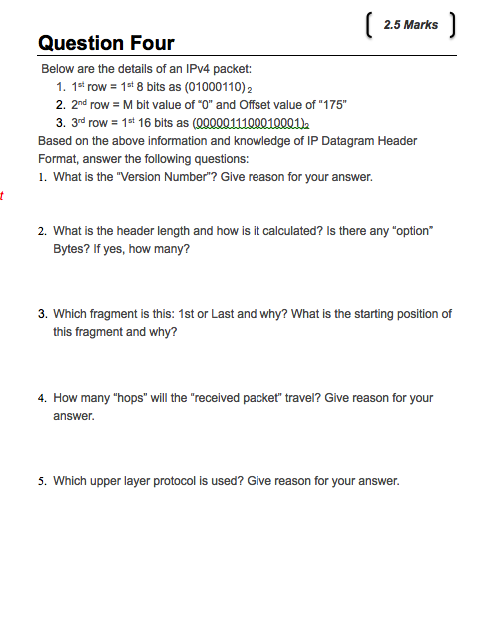 no copy and paste
2.5 Marks Question Four Below are the details of an IPv4 packet: 1. 1st row 1st 8 bits as (01000110)2 2. 2nd row-M bit value of "0" and Offset value of "175" 3. 3rd row1st 16 bits as (0000011100010000a Based on the above information and knowledge of IP Datagram Header Format, answer the following questions: 1. What is the "Version Number"? Give reason for your answer. 2 What is the header length and how is it calculated? Is there any "option" Bytes? If yes, how many? 3. Which fragment is this: 1st or Last and why? What is the starting position of this fragment and why? 4. How many "hops" will the "received packet" travel? Give reason for your answe 5. Which upper layer protocol is used? Give reason for your answer. 2.5 Marks Question Four Below are the details of an IPv4 packet: 1. 1st row 1st 8 bits as (01000110)2 2. 2nd row-M bit value of "0" and Offset value of "175" 3. 3rd row1st 16 bits as (0000011100010000a Based on the above information and knowledge of IP Datagram Header Format, answer the following questions: 1. What is the "Version Number"? Give reason for your answer. 2 What is the header length and how is it calculated? Is there any "option" Bytes? If yes, how many? 3. Which fragment is this: 1st or Last and why? What is the starting position of this fragment and why? 4. How many "hops" will the "received packet" travel? Give reason for your answe 5. Which upper layer protocol is used? Give reason for your
Step by Step Solution
There are 3 Steps involved in it

Get step-by-step solutions from verified subject matter experts
 Study Help