



Question: None of the graphs Testing the motion detector A motion detector measures distance to the nearest object by using a speaker and a microphone. The
None of the graphs\ Testing the motion detector\ A motion detector measures distance to the nearest object by using a speaker and a microphone. The speaker emits "click" sounds 30 times each second. The microphone detects the sound bouncing back from the nearest object in front of it. The computer calculates the time delay between when the click was emitted and when the echo was received. Using the speed of sound in air, the computer can calculate the distance to the object from the time delay.\ If the nearest object in front of the detector is too far away, the echo will not return before the next click is emitted. Once that happens, the computer has no way of knowing which click the echo corresponds to, and the motion detector won't give correct results.\ The speed of sound changes a little bit with temperature, but the computer always calculates distances using the speed of sound at standard room temperature. Changes in temperature can therefore affect the accuracy of measurements made with the motion detector. At standard room temperature,
72\\\\deg F, the speed of sound is
343(m)/(s). At
62\\\\deg F, the speed of sound is about
1%smaller.\ 15\ 1 point\ Suppose that we are again measuring an object
1.5mfrom the detector, but now the temperature is
62\\\\deg F. What is the time delay in seconds that the computer detects between the emitted click and the return of the echo?\ This is an EXACT ANSWER question: round your answer to 6 decimal places.\ 1 point\ If the computer measures the time delay in the previous question, but calculates the distance using the speed of sound at standard room temperature (because it doesn't know the temperature), what is the distance in meters that the computer would report?\ This is an EXACT ANSWER question: round your answer to 3 decimal places.\ 173 points\ When the temperature is lower than standard room temperature:\ Sound travels at a speed.\ Therefore, the time delay between when the click is emitted and the echo returns to the detector
i: than at standard room temperature.\ And therefore, distances measured with the motion detector and reported by the computer will be than
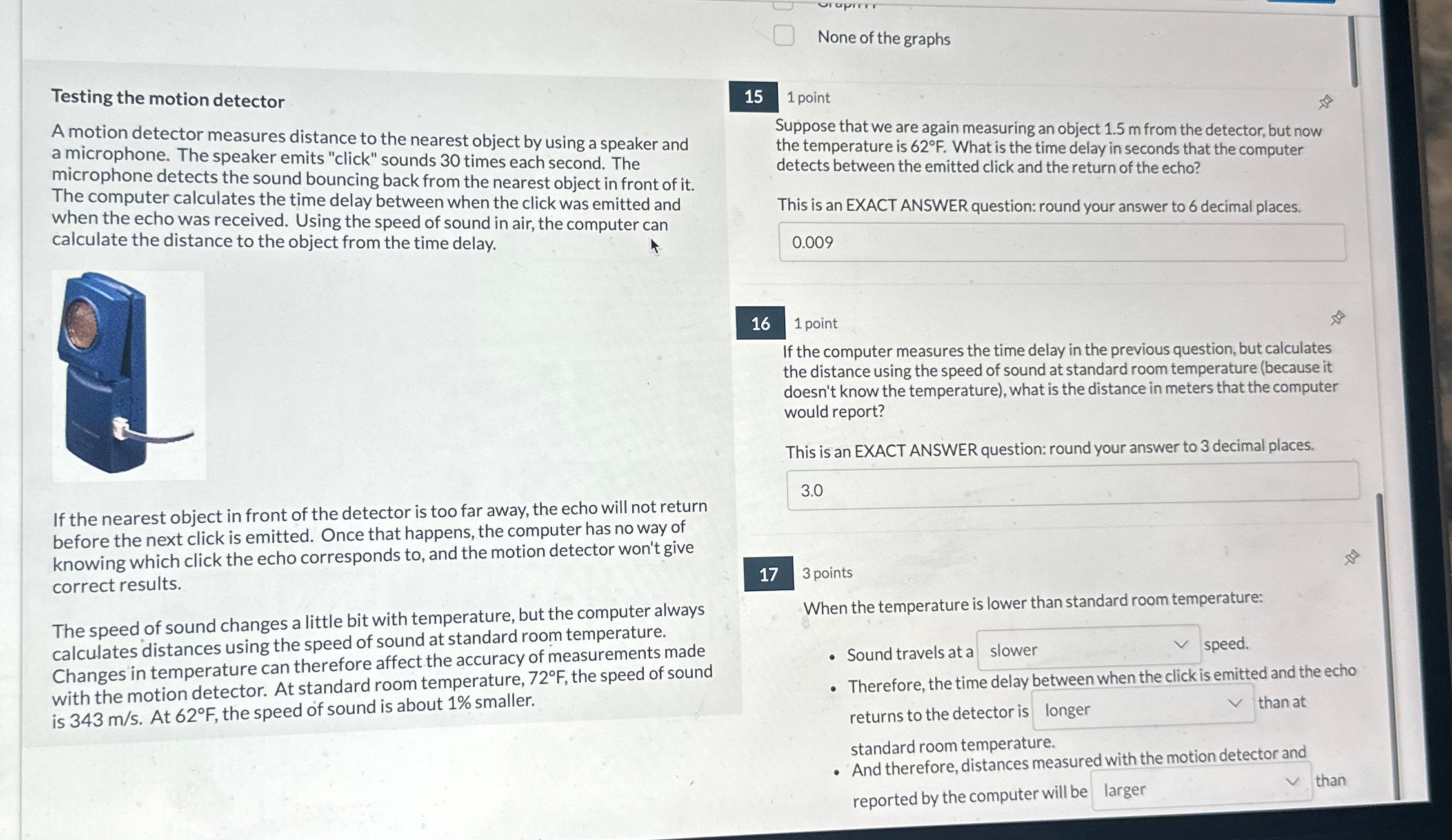
None of the graphs Testing the motion detector A motion detector measures distance to the nearest object by using a speaker and a microphone. The speaker emits "click" sounds 30 times each second. The microphone detects the sound bouncing back from the nearest object in front of it. The computer calculates the time delay between when the click was emitted and when the echo was received. Using the speed of sound in air, the computer can calculate the distance to the object from the time delay. If the nearest object in front of the detector is too far away, the echo will not return before the next click is emitted. Once that happens, the computer has no way of knowing which click the echo corresponds to, and the motion detector won't give correct results. The speed of sound changes a little bit with temperature, but the computer always calculates distances using the speed of sound at standard room temperature. Changes in temperature can therefore affect the accuracy of measurements made with the motion detector. At standard room temperature, 72F, the speed of sound is 343m/s. At 62F, the speed of sound is about 1% smaller. 151 point Suppose that we are again measuring an object 1.5m from the detector, but now the temperature is 62F. What is the time delay in seconds that the computer detects between the emitted click and the return of the echo? This is an EXACT ANSWER question: round your answer to 6 decimal places. 16 1 point If the computer measures the time delay in the previous question, but calculates the distance using the speed of sound at standard room temperature (because it doesn't know the temperature), what is the distance in meters that the computer would report? This is an EXACT ANSWER question: round your answer to 3 decimal places. 173 points When the temperature is lower than standard room temperature: - Sound travels at a speed. - Therefore, the time delay between when the clickis emitted and the echo returns to the detector is than at standard room temperature. - And therefore, distances measured with the motion detector and reported by the computer will be
Step by Step Solution
There are 3 Steps involved in it

Get step-by-step solutions from verified subject matter experts