







Question: Non-parametric tests offer alternatives to parametric tests. However, parametric tests are generally preferable to non-parametric tests. Which of the following is not a sufficient reason
Non-parametric tests offer alternatives to parametric tests. However, parametric tests are generally preferable to non-parametric tests. Which of the following is not a sufficient reason to use a non-parametric test?
a. You failed to reject the null using a parametric test
b. The data contains unusually high variances
c. The data includes undetermined or infinite scores
d. One or more of the assumptions of a parametric test have been violated
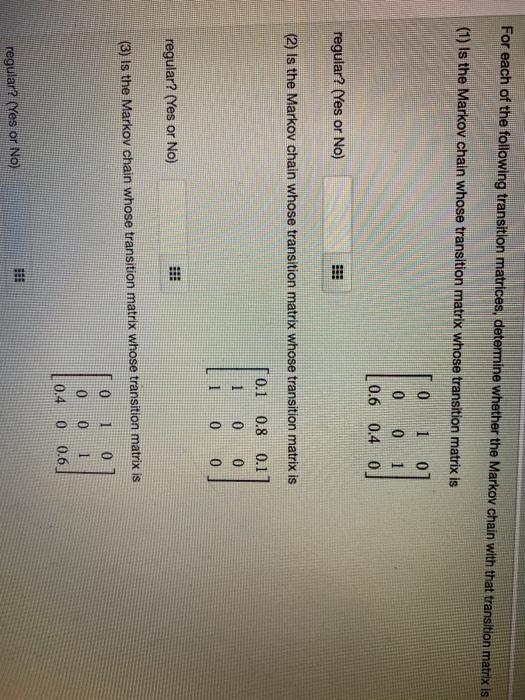
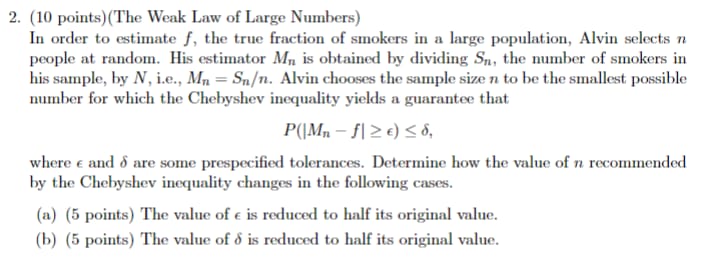
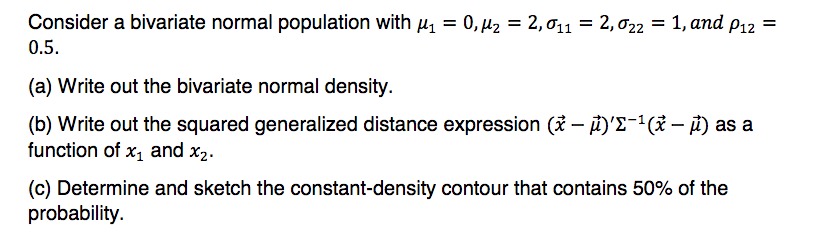
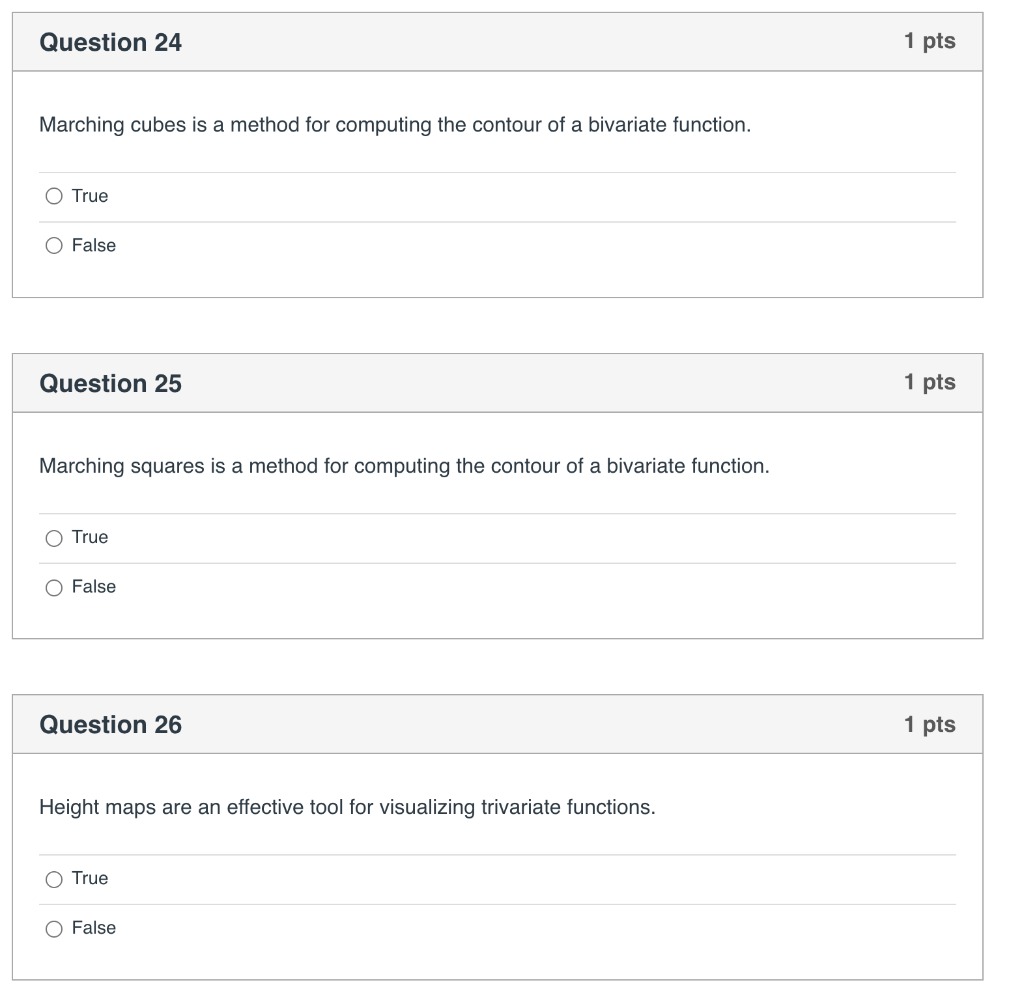
For each of the following transition matrices, determine whether the Markov chain with that transition matrix is (1) Is the Markov chain whose transition matrix whose transition matrix is 0.6 0.4 regular? (Yes or No) (2) Is the Markov chain whose transition matrix whose transition matrix Is 0.1 0.8 0.17 regular? (Yes or No) (3) Is the Markov chain whose transition matrix whose transition matrix is 0.4 0.6 regular? (Yes or No)2. (10 points) (The Weak Law of Large Numbers) In order to estimate f, the true fraction of smokers in a large population, Alvin selects n people at random. His estimator Mn is obtained by dividing Sn, the number of smokers in his sample, by N, i.e., Mn = Sn. Alvin chooses the sample size n to be the smallest possible number for which the Chebyshev inequality yields a guarantee that P(IMn - f1 2 6) 58, where e and o are some prespecified tolerances. Determine how the value of n recommended by the Chebyshev inequality changes in the following cases. (a) (5 points) The value of e is reduced to half its original value. (b) (5 points) The value of o is reduced to half its original value.Consider a bivariate normal population with #1 = 0, /2 = 2, 011 = 2, 622 = 1, and P12 = 0.5. (a) Write out the bivariate normal density. (b) Write out the squared generalized distance expression (x - p)'E-1(x - ) as a function of x, and x2. (c) Determine and sketch the constant-density contour that contains 50% of the probability.Consider a bivariate normal population with #1 = 0, /2 = 2, 011 = 2, 622 = 1, and P12 = 0.5. (a) Write out the bivariate normal density. (b) Write out the squared generalized distance expression (x - p)'E-1(x - ) as a function of x, and x2. (c) Determine and sketch the constant-density contour that contains 50% of the probability.Question 24 1 pts Marching cubes is a method for computing the contour of a bivariate function. O True O False Question 25 1 pts Marching squares is a method for computing the contour of a bivariate function. O True O False Question 26 1 pts Height maps are an effective tool for visualizing trivariate functions. O True O FalseQuestion 24 1 pts Marching cubes is a method for computing the contour of a bivariate function. O True O False Question 25 1 pts Marching squares is a method for computing the contour of a bivariate function. O True O False Question 26 1 pts Height maps are an effective tool for visualizing trivariate functions. O True O False
Step by Step Solution
There are 3 Steps involved in it

Get step-by-step solutions from verified subject matter experts
 Study Help