







Question: NOT NEED AI ANSWER I WILL DISLIKE Write a C++ program that implements a custom memory allocator for managing dynamic memory. Your allocator should provide
NOT NEED AI ANSWER I WILL DISLIKE 
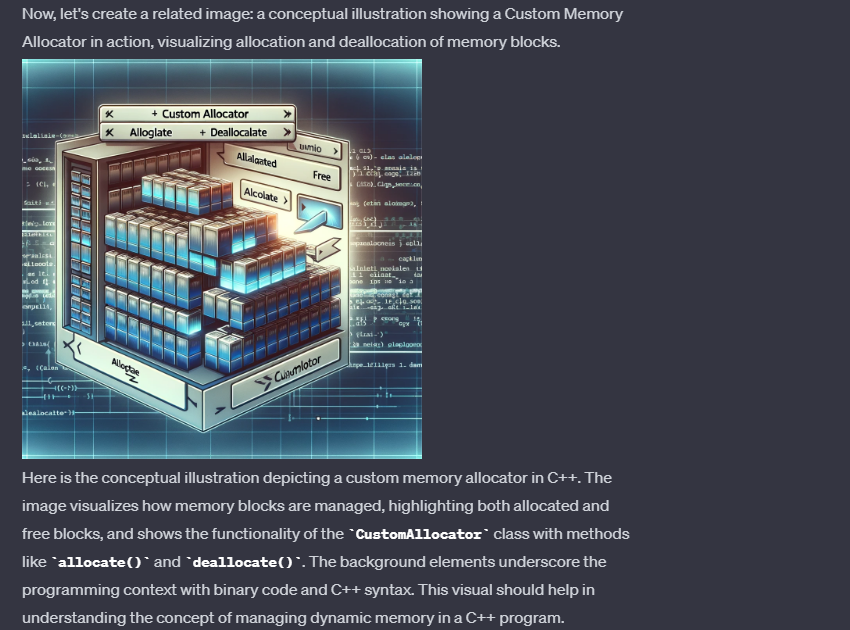
Write a C++ program that implements a custom memory allocator for managing dynamic memory. Your allocator should provide the functionality to allocate and deallocate memory blocks and should keep track of the free and used memory blocks. Additionally, implement a mechanism to avoid memory fragmentation. Requirements: 1. Implement a class 'CustomAllocator' with methods 'allocate(size_t size) " and "deallocate(void* pointer)'. 2. Use a linked list or a similar data structure to keep track of free and used memory blocks. 3. Ensure that the allocator combines adjacent free blocks (coalescing) to avoid fragmentation. 4. Override the new and delete operators to use your custom allocator. 5. Write a demonstration where your allocator is used to allocate and deallocate various sizes of memory blocks. This question tests your understanding of memory management, operator overloading, and class design in C++. image visualizes how memory blocks are managed, highlighting both allocated and free blocks, and shows the functionality of the 'CustomAllocator' class with methods like "allocate () " and "deallocate( ) : The background elements underscore the programming context with binary code and C++ syntax. This visual should help in understanding the concept of managing dynamic memory in a C++ program
Step by Step Solution
There are 3 Steps involved in it

Get step-by-step solutions from verified subject matter experts
 Study Help