







Question: Not sure how to solve this. Please help! Be very careful to report numerical answers to the number of decimal places indicated. To receive full
Not sure how to solve this. Please help!
Be very careful to report numerical answers to the number of decimal places indicated. To receive full credit, your answersmustbe correct to the number of decimal places specified. To ensure this, use maximum precision values in all calculations. Round only for the purpose of entering answers into Moodle. Do not use rounded answers in subsequent calculations. Always use full-precision values in calculations that involve multiple steps.
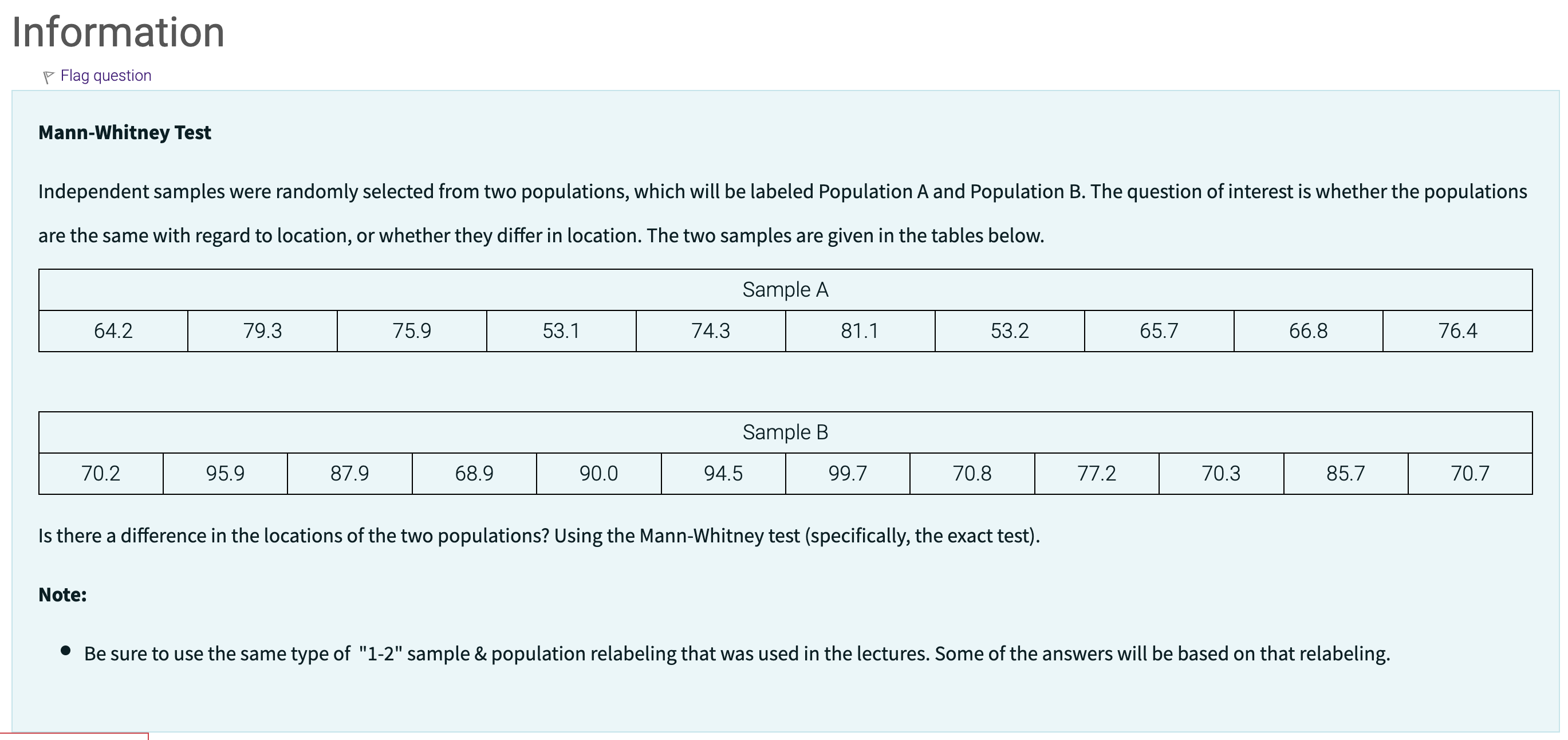
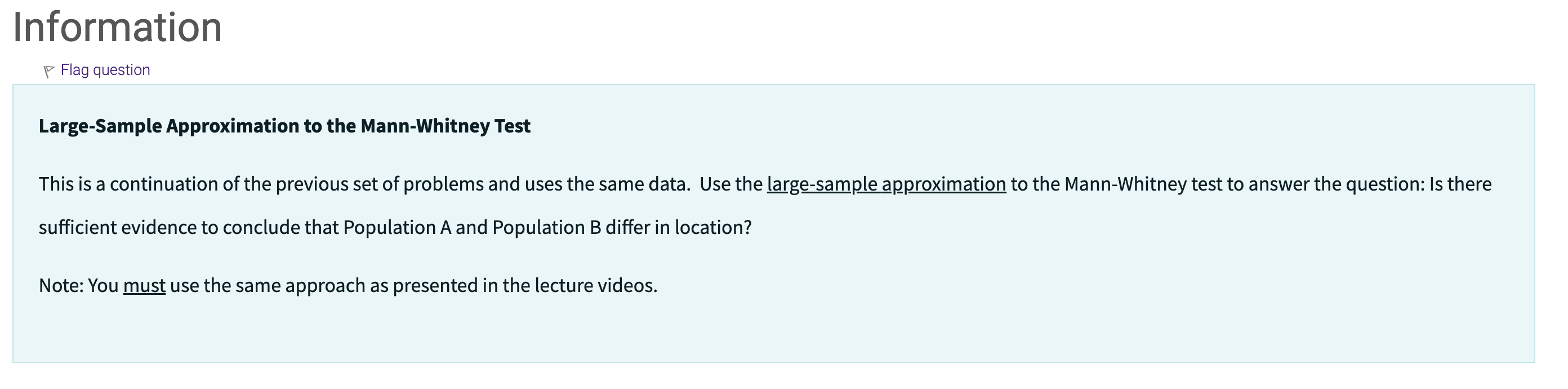
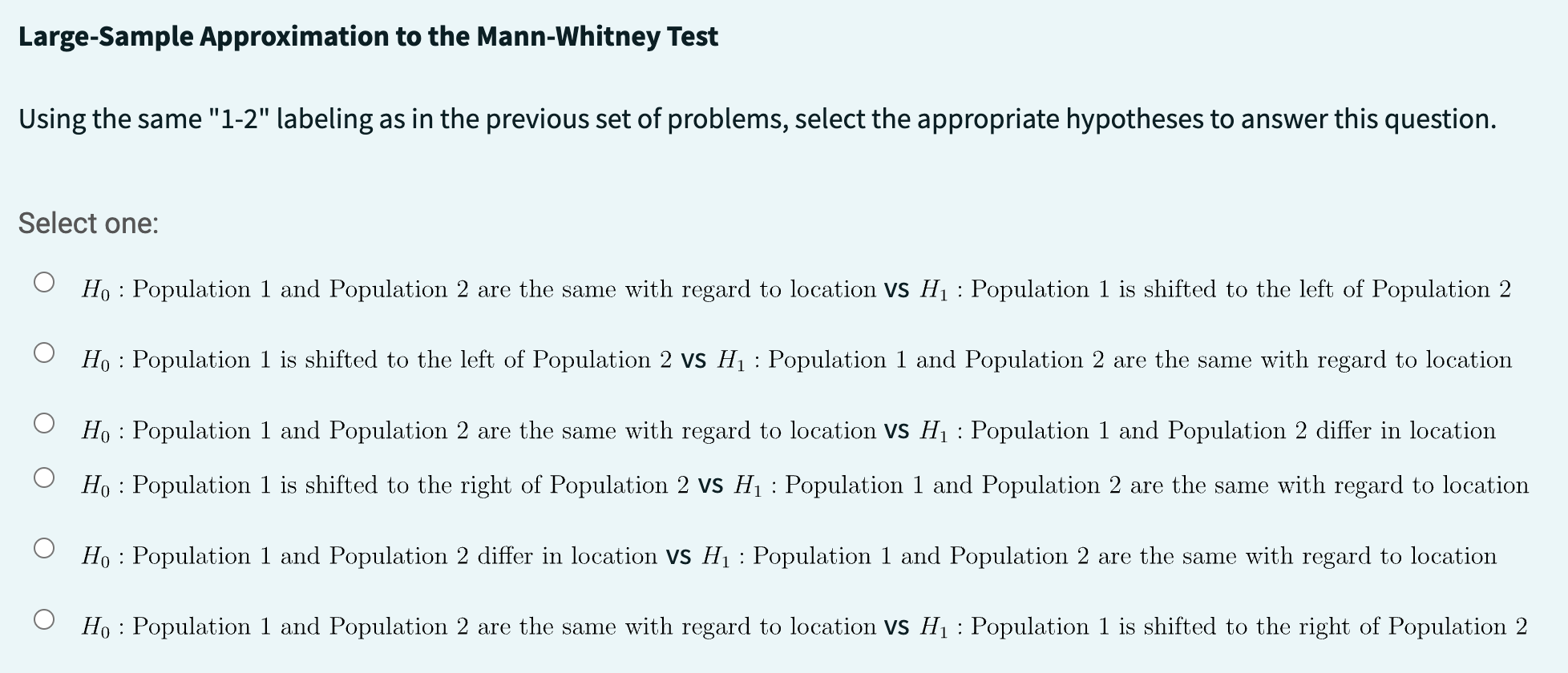
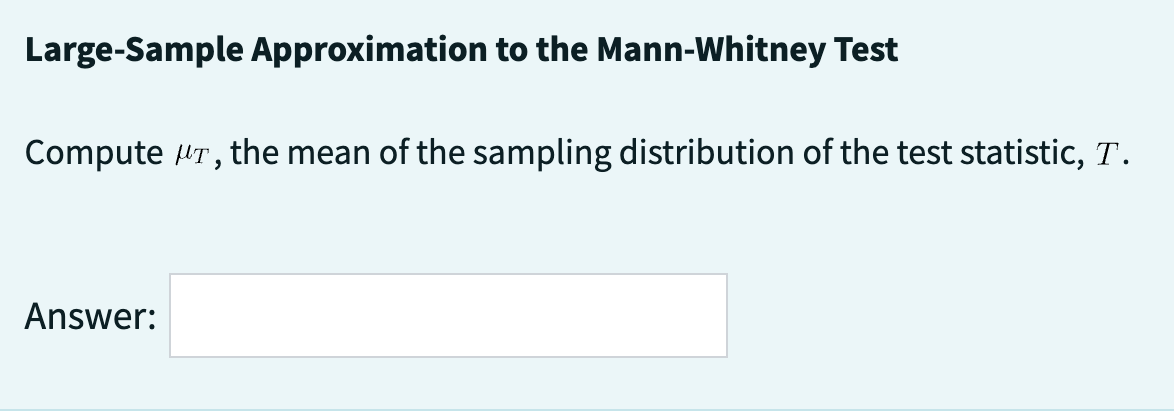
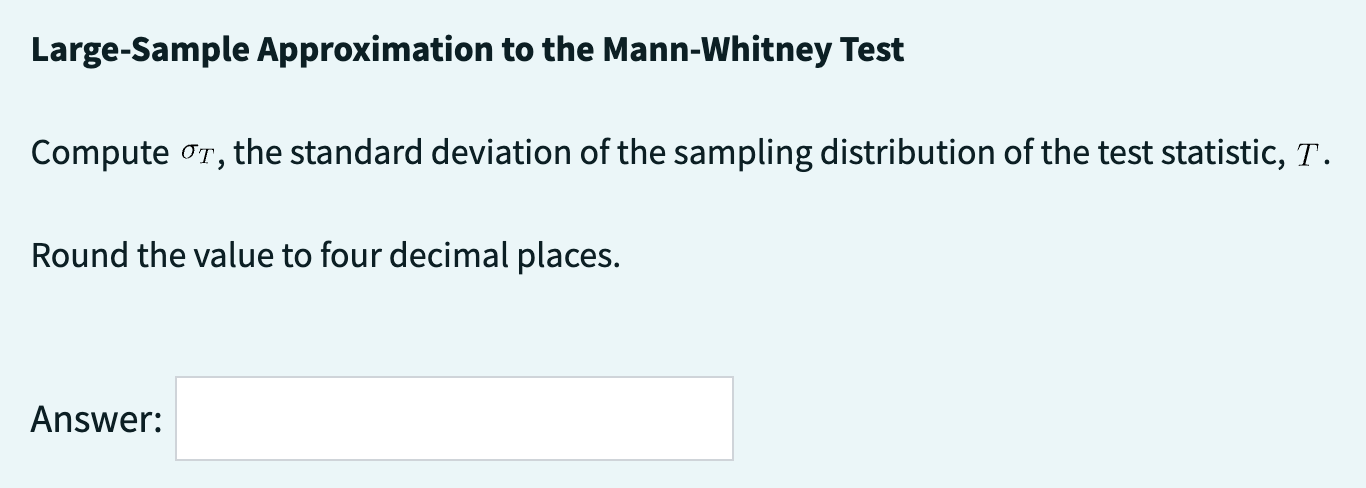
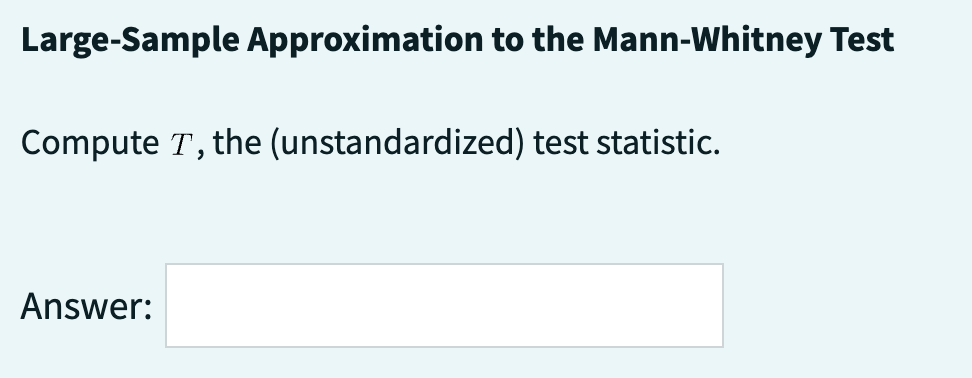
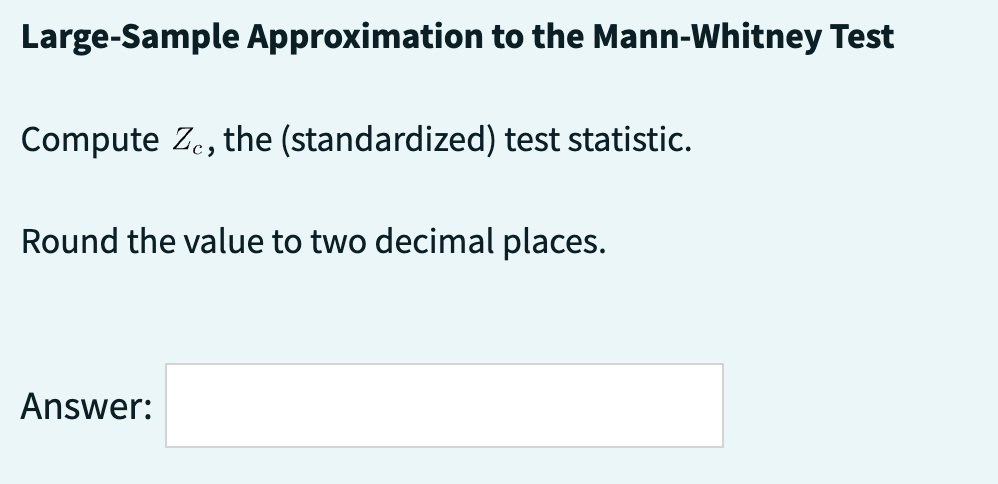
Information Flag question Mann-Whitney Test Independent samples were randomly selected from two populations, which will be labeled Population A and Population B. The question of interest is whether the populations are the same with regard to location, or whether they differ in location. The two samples are given in the tables below. Sample A 64.2 79'3 75.9 53.1 74.3 81.1 53.2 65.7 66.8 76.4 Sample B 70.2 95.9 87.9 68.9 90.0 94.5 99.7 70.8 e 70.3 85.7 70.7 Is there a difference in the locations of the two populations? Using the Mann-Whitney test (specifically, the exact test). Note: Be sure to use the same type of "1-2" sample & population relabeling that was used in the lectures. Some of the answers will be based on that relabeling. Information v Flag question Large-Sample Approximation to the Mann-Whitney Test sufficient evidence to conclude that Population A and Population B differ in location? Note: You must use the same approach as presented in the lecture videos. Large-Sample Approximation to the Mann-Whitney Test Using the same "1-2" labeling as in the previous set of problems, select the appropriate hypotheses to answer this question. Select one: Ho : Population 1 and Population 2 are the same with regard to location VS H1 : Population 1 is shifted to the left of Population 2 Ho : Population 1 is shifted to the left of Population 2 vS H1 : Population 1 and Population 2 are the same with regard to location Ho : Population 1 and Population 2 are the same with regard to location VS H1 : Population 1 and Population 2 differ in location Ho : Population 1 is shifted to the right of Population 2 VS H1 : Population 1 and Population 2 are the same with regard to location Ho : Population 1 and Population 2 differ in location VS H1 : Population 1 and Population 2 are the same with regard to location Ho : Population 1 and Population 2 are the same with regard to location VS H1 : Population 1 is shifted to the right of Population 2Large-Sample Approximation to the Mann-Whitney Test Compute 17, the mean of the sampling distribution of the test statistic, 7. Answer: Large-Sample Approximation to the Mann-Whitney Test Compute or, the standard deviation of the sampling distribution of the test statistic, 7. Round the value to four decimal places. Answer: \fLarge-Sample Approximation to the Mann-Whitney Test Compute Z., the (standardized) test statistic. Round the value to two decimal places
Step by Step Solution
There are 3 Steps involved in it

Get step-by-step solutions from verified subject matter experts
 Study Help