







Question: Note: 1. for column #5, T is the tension, u is the linear density of the string and is a constant of 0.0032 kg/m. Note:2.
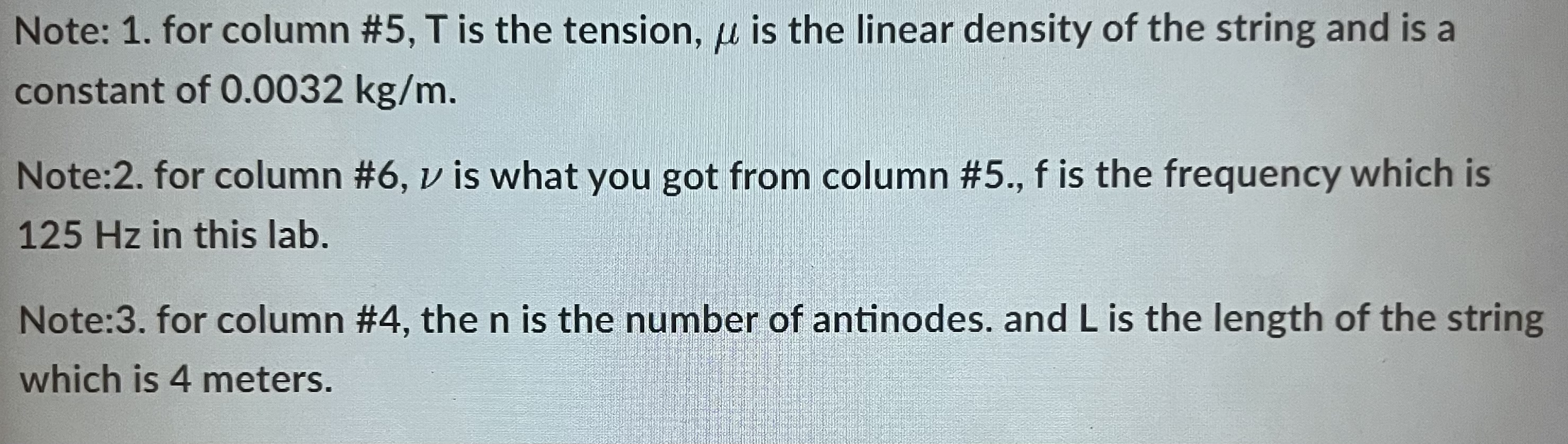
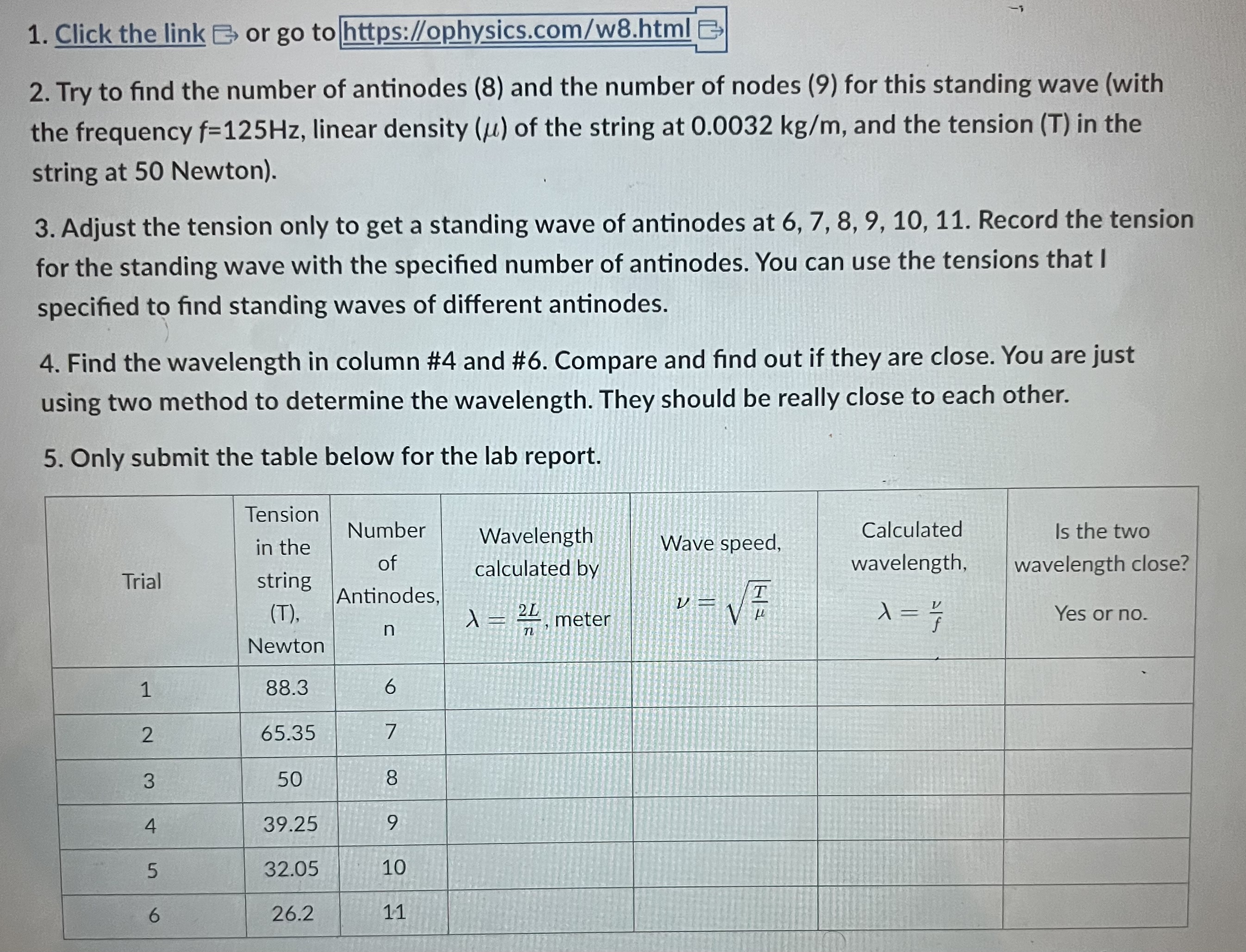
Note: 1. for column #5, T is the tension, u is the linear density of the string and is a constant of 0.0032 kg/m. Note:2. for column #6, v is what you got from column #5., f is the frequency which is 125 Hz in this lab. Note:3. for column #4, the n is the number of antinodes. and L is the length of the string which is 4 meters.1. Click the link E or go to https://ophysics.com/w8.html E 2. Try to find the number of antinodes (8) and the number of nodes (9) for this standing wave (with the frequency f=125Hz, linear density (u) of the string at 0.0032 kg/m, and the tension (T) in the string at 50 Newton). 3. Adjust the tension only to get a standing wave of antinodes at 6, 7, 8, 9, 10, 11. Record the tension for the standing wave with the specified number of antinodes. You can use the tensions that I specified to find standing waves of different antinodes. 4. Find the wavelength in column #4 and #6. Compare and find out if they are close. You are just using two method to determine the wavelength. They should be really close to each other. 5. Only submit the table below for the lab report. Tension Number in the Wavelength Wave speed, Calculated Is the two of Trial string calculated by wavelength, wavelength close? Antinodes, (T). n n meter 1 = 7 Yes or no. Newton 88.3 6 2 65.35 7 3 50 8 4 39.25 9 5 32.05 10 6 26.2 11
Step by Step Solution
There are 3 Steps involved in it

Get step-by-step solutions from verified subject matter experts
 Study Help