







Question: Note, for this question, you may find information from the live session in Module 4 usefil ) You are making a decision about purchasing a
Note, for this question, you may find information from the live session in Module usefil You are making a decision about purchasing a new car.
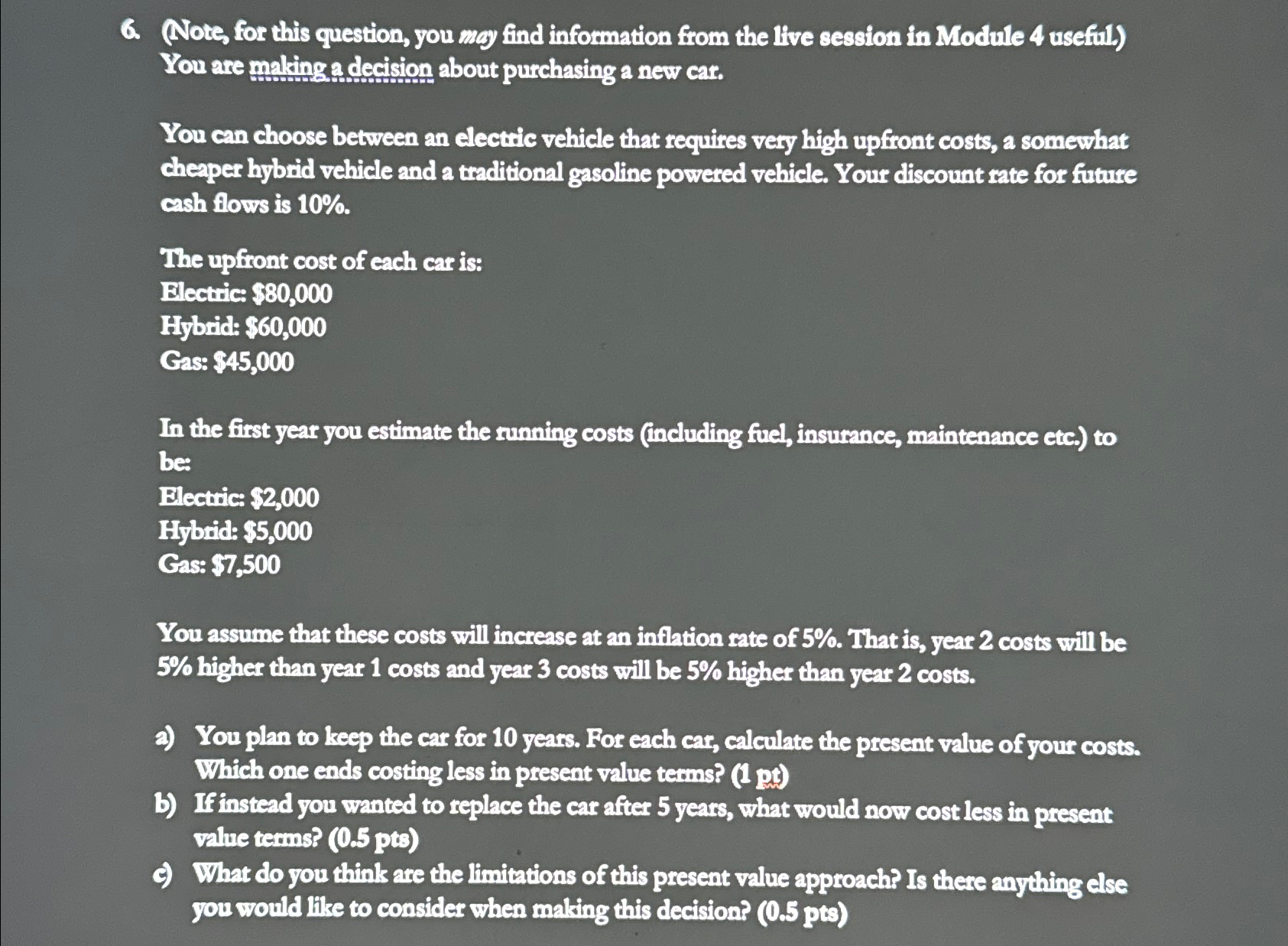
You can choose between an electric vehicle that requires very high upfront costs, a somewhat cheaper hybrid vehicle and a traditional gasoline powered vehicle. Your discount rate for future cash flows is
The upfront cost of each car is:
Electric: $
Hybrid: $
Gas: $
In the first year you estimate the running costs including fuel, insurance, maintenance etc. to be:
Electric: $
Hybrid: $
Gas: $
You assume that these costs will increase at an inflation rate of That is year costs will be higher than year costs and year costs will be higher than year costs.
a You plan to keep the car for years. For each car, calculate the present value of your costs. Which one ends costing less in present value terms? pt
b If instead you wanted to replace the car after years, what would now cost less in present value terms?
What do you think are the limitations of this present value approach? Is there anything else you would tike to consider when making this decision?
Step by Step Solution
There are 3 Steps involved in it
1 Expert Approved Answer
Step: 1 Unlock

Question Has Been Solved by an Expert!
Get step-by-step solutions from verified subject matter experts
Step: 2 Unlock
Step: 3 Unlock
 Study Help