



Question: . Note: If not otherwise stated, assume that: Yield-to-maturity (YTM) is an APR, semi-annually compounded Bonds have a face value of $1,000 Coupon bonds make
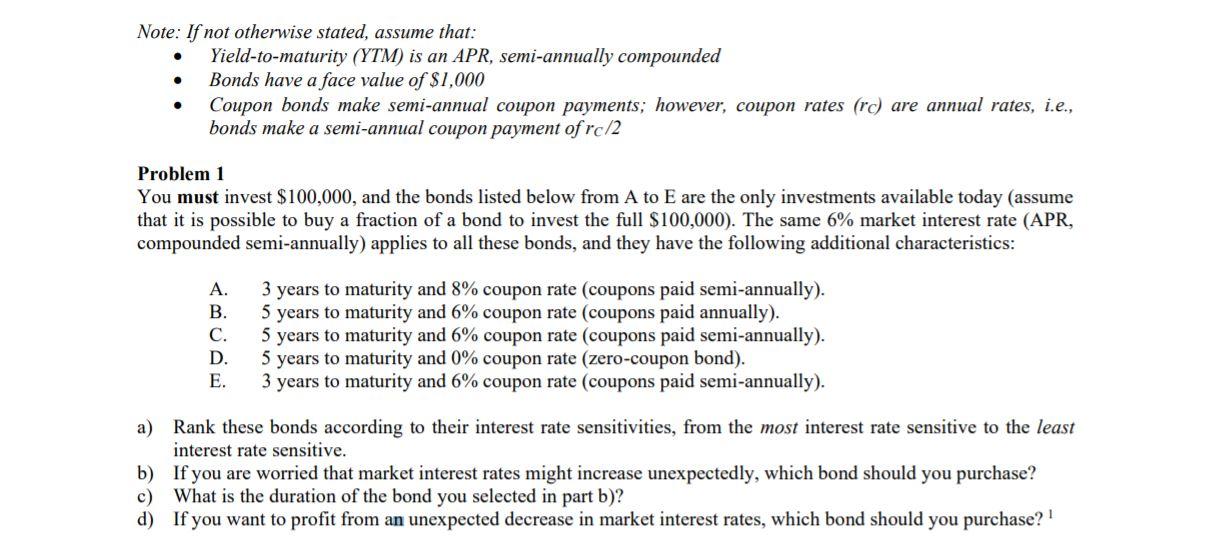
. Note: If not otherwise stated, assume that: Yield-to-maturity (YTM) is an APR, semi-annually compounded Bonds have a face value of $1,000 Coupon bonds make semi-annual coupon payments; however, coupon rates (rc) are annual rates, i.e., bonds make a semi-annual coupon payment of rc/2 . . Problem 1 You must invest $100,000, and the bonds listed below from A to E are the only investments available today (assume that it is possible to buy a fraction of a bond to invest the full $100,000). The same 6% market interest rate (APR, compounded semi-annually) applies to all these bonds, and they have the following additional characteristics: A. B. C. D. E. 3 years to maturity and 8% coupon rate (coupons paid semi-annually). 5 years to maturity and 6% coupon rate (coupons paid annually). 5 years to maturity and 6% coupon rate (coupons paid semi-annually). 5 years to maturity and 0% coupon rate (zero-coupon bond). 3 years to maturity and 6% coupon rate (coupons paid semi-annually). a) Rank these bonds according to their interest rate sensitivities, from the most interest rate sensitive to the least interest rate sensitive. b) If you are worried that market interest rates might increase unexpectedly, which bond should you purchase? c) What is the duration of the bond you selected in part b)? d) If you want to profit from an unexpected decrease in market interest rates, which bond should you purchase
Step by Step Solution
There are 3 Steps involved in it

Get step-by-step solutions from verified subject matter experts