Question: Note: The case study below is about McDonald's restaurants as you know it in its current state for the purpose of this exam, the information
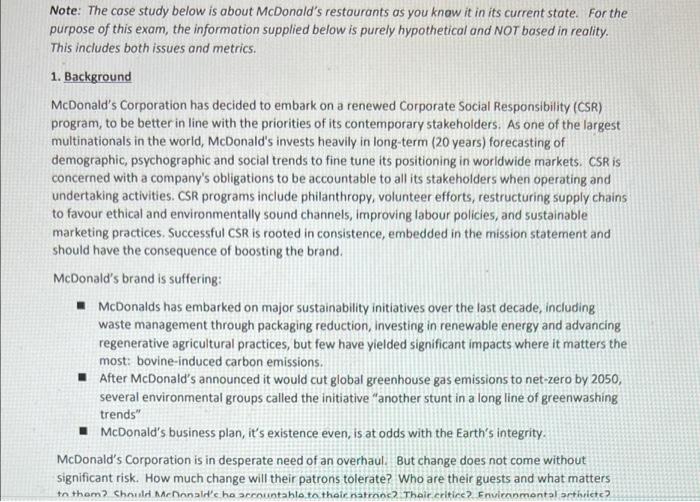
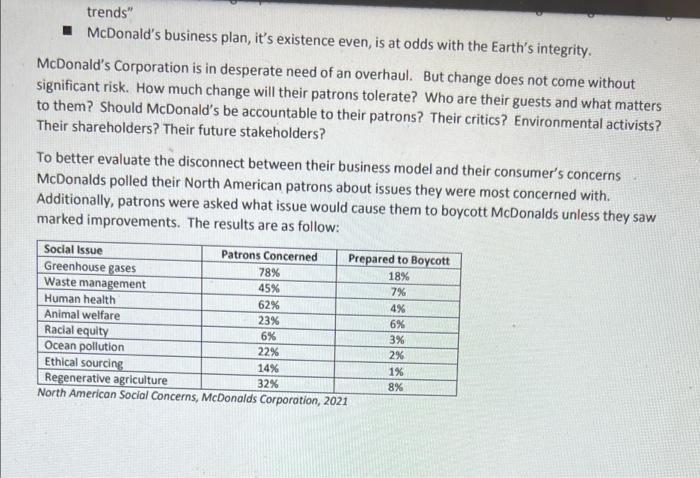
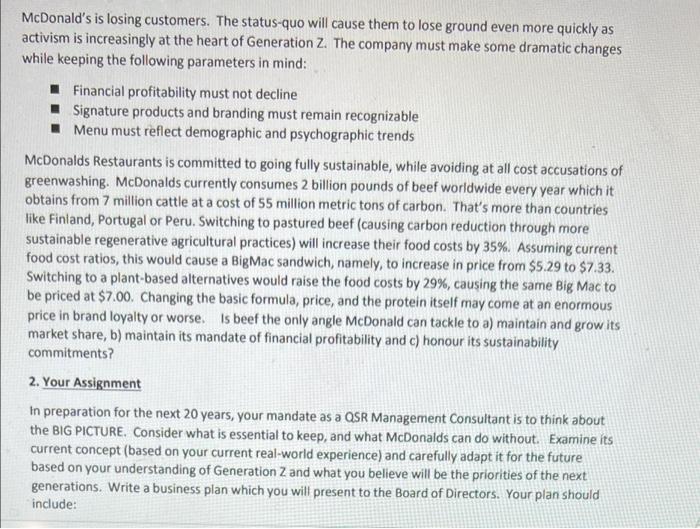
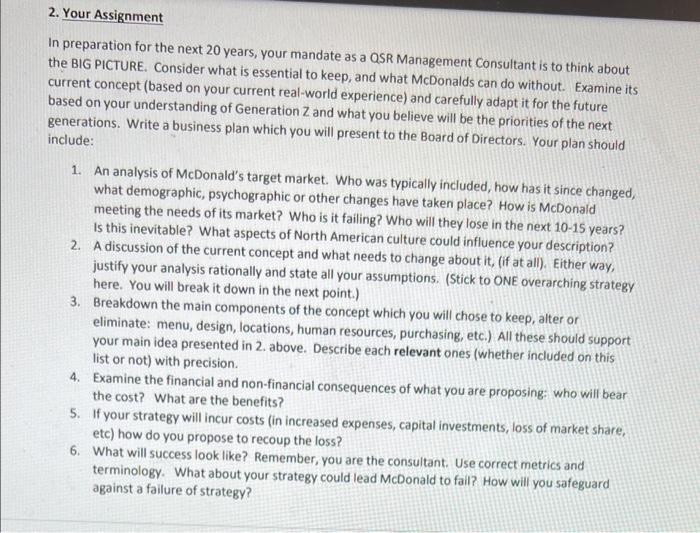
Note: The case study below is about McDonald's restaurants as you know it in its current state for the purpose of this exam, the information supplied below is purely hypothetical and NOT based in reality. This includes both issues and metrics. 1. Background McDonald's Corporation has decided to embark on a renewed Corporate Social Responsibility (CSR) program, to be better in line with the priorities of its contemporary stakeholders. As one of the largest multinationals in the world, McDonald's invests heavily in long-term (20 years) forecasting of demographic, psychographic and social trends to fine tune its positioning in worldwide markets. CSR is concerned with a company's obligations to be accountable to all its stakeholders when operating and undertaking activities. CSR programs include philanthropy, volunteer efforts, restructuring supply chains to favour ethical and environmentally sound channels, improving labour policies, and sustainable marketing practices. Successful CSR is rooted in consistence, embedded in the mission statement and should have the consequence of boosting the brand. McDonald's brand is suffering: McDonalds has embarked on major sustainability initiatives over the last decade, including waste management through packaging reduction, investing in renewable energy and advancing regenerative agricultural practices, but few have yielded significant impacts where it matters the most: bovine-induced carbon emissions. After McDonald's announced it would cut global greenhouse gas emissions to net-zero by 2050, several environmental groups called the initiative "another stunt in a long line of greenwashing trends" McDonald's business plan, it's existence even, is at odds with the Earth's integrity. McDonald's Corporation is in desperate need of an overhaul. But change does not come without significant risk. How much change will their patrons tolerate? Who are their guests and what matters to them? Should McDonald's ha accountable to their natrons. Their critice? Environmental arthiete? trends" McDonald's business plan, it's existence even, is at odds with the Earth's integrity. McDonald's Corporation is in desperate need of an overhaul. But change does not come without significant risk. How much change will their patrons tolerate? Who are their guests and what matters to them? Should McDonald's be accountable to their patrons? Their critics? Environmental activists? Their shareholders? Their future stakeholders? To better evaluate the disconnect between their business model and their consumer's concerns McDonalds polled their North American patrons about issues they were most concerned with. Additionally, patrons were asked what issue would cause them to boycott McDonalds unless they saw marked improvements. The results are as follow: Social Issue Patrons concerned Prepared to Boycott Greenhouse gases 78% 18% Waste management 45% 7% Human health 62% 4% Animal welfare 23% 6% Racial equity 6% 3% Ocean pollution 22% 2% Ethical sourcing 14% 1% Regenerative agriculture 32% 8% North American Social Concerns, McDonalds Corporation, 2021 McDonald's is losing customers. The status quo will cause them to lose ground even more quickly as activism is increasingly at the heart of Generation 2. The company must make some dramatic changes while keeping the following parameters in mind: Financial profitability must not decline Signature products and branding must remain recognizable Menu must reflect demographic and psychographic trends McDonalds Restaurants is committed to going fully sustainable, while avoiding at all cost accusations of greenwashing. McDonalds currently consumes 2 billion pounds of beef worldwide every year which it obtains from 7 million cattle at a cost of 55 million metric tons of carbon. That's more than countries like Finland, Portugal or Peru. Switching to pastured beef (causing carbon reduction through more sustainable regenerative agricultural practices) will increase their food costs by 35%. Assuming current food cost ratios, this would cause a BigMac sandwich, namely, to increase in price from $5.29 to $7.33. Switching to a plant-based alternatives would raise the food costs by 29%, causing the same Big Mac to be priced at $7.00. Changing the basic formula, price, and the protein itself may come at an enormous price in brand loyalty or worse. Is beef the only angle McDonald can tackle to a) maintain and grow its market share, b) maintain its mandate of financial profitability and c) honour its sustainability commitments? 2. Your Assignment In preparation for the next 20 years, your mandate as a QSR Management Consultant is to think about the BIG PICTURE. Consider what is essential to keep, and what McDonalds can do without Examine its current concept (based on your current real-world experience) and carefully adapt it for the future based on your understanding of Generation Z and what you believe will be the priorities of the next generations. Write a business plan which you will present to the Board of Directors. Your plan should include: 2. Your Assignment In preparation for the next 20 years, your mandate as a QSR Management Consultant is to think about the BIG PICTURE. Consider what is essential to keep, and what McDonalds can do without. Examine its current concept (based on your current real-world experience) and carefully adapt it for the future based on your understanding of Generation Z and what you believe will be the priorities of the next generations. Write a business plan which you will present to the Board of Directors. Your plan should include: 1. An analysis of McDonald's target market. Who was typically included, how has it since changed, what demographic, psychographic or other changes have taken place? How is McDonald meeting the needs of its market? Who is it failing? Who will they lose in the next 10-15 years? Is this inevitable? What aspects of North American culture could influence your description? 2. A discussion of the current concept and what needs to change about it, (if at all). Either way, justify your analysis rationally and state all your assumptions. (Stick to ONE overarching strategy here. You will break it down in the next point.) 3. Breakdown the main components of the concept which you will chose to keep, alter or eliminate: menu, design, locations, human resources, purchasing, etc.) All these should support your main idea presented in 2. above. Describe each relevant ones (whether included on this list or not) with precision. 4. Examine the financial and non-financial consequences of what you are proposing: who will bear the cost? What are the benefits? 5. If your strategy will incur costs (in increased expenses, capital investments, loss of market share, etc) how do you propose to recoup the loss? 6. What will success look like? Remember, you are the consultant. Use correct metrics and terminology. What about your strategy could lead McDonald to fall? How will you safeguard against a failure of strategy









 Study Help