



Question: Note: The Wholesale margin was a discount that the distributor parted with when selling to them. especially in smaller towns and villages. The availability of
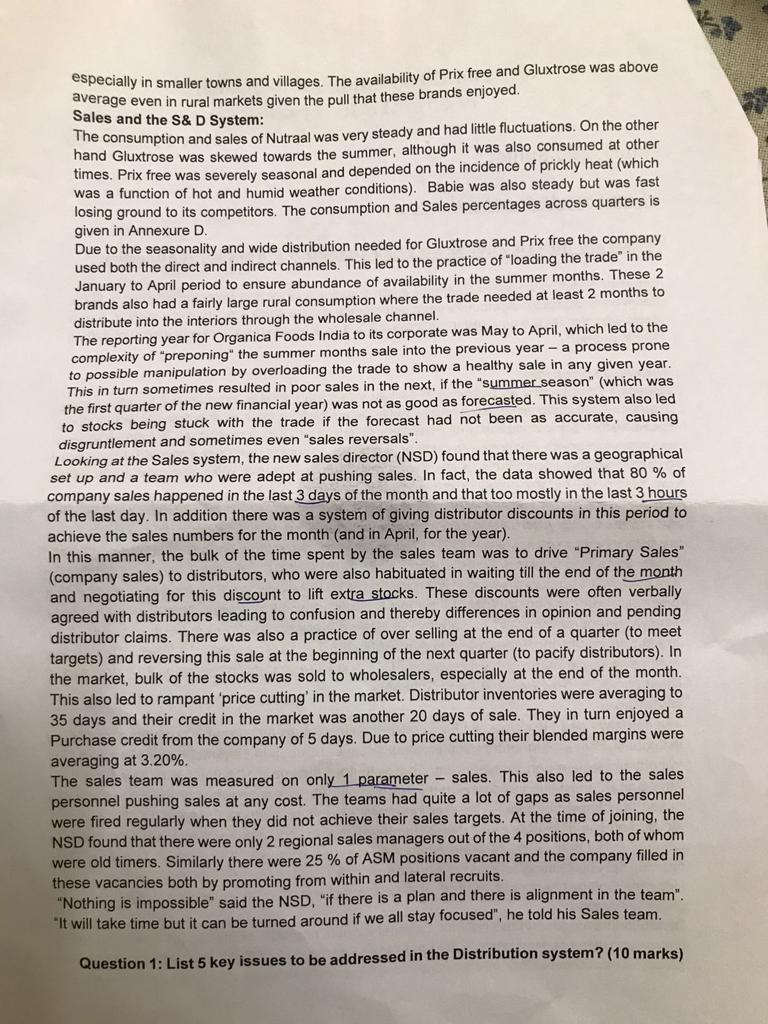
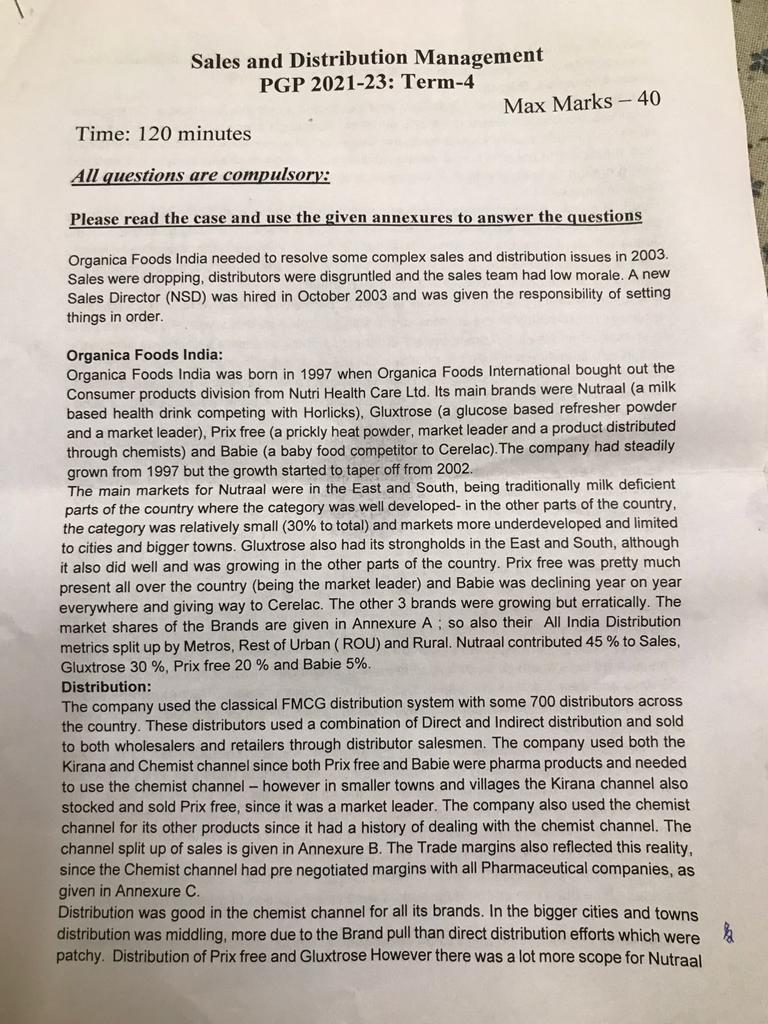
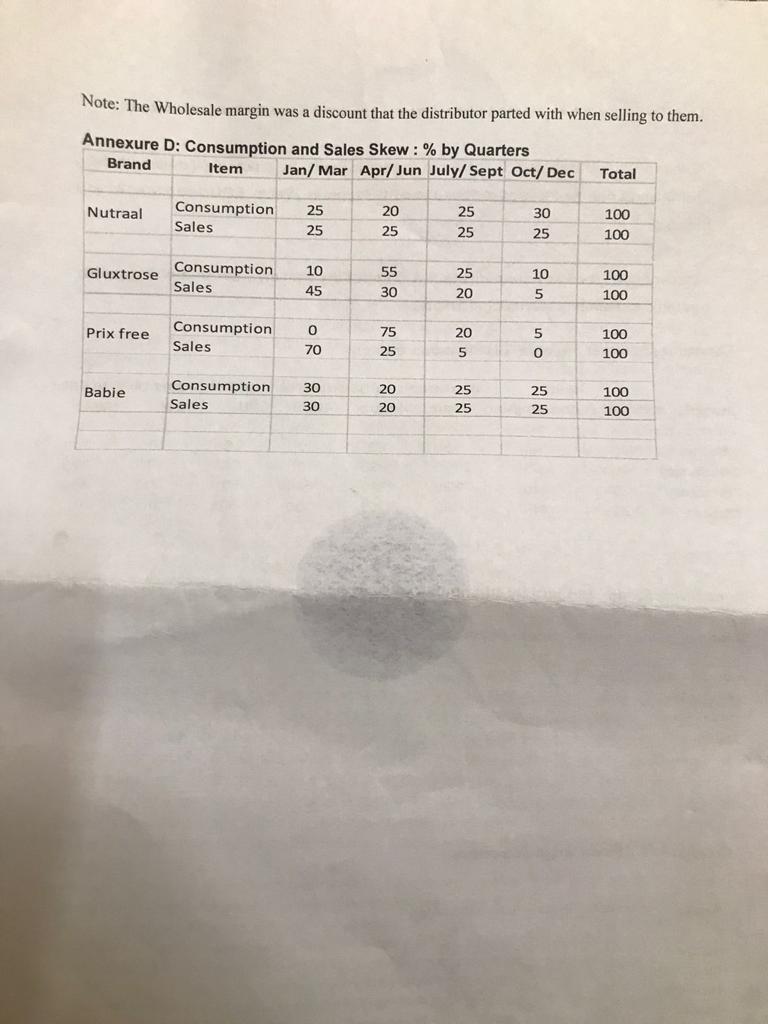
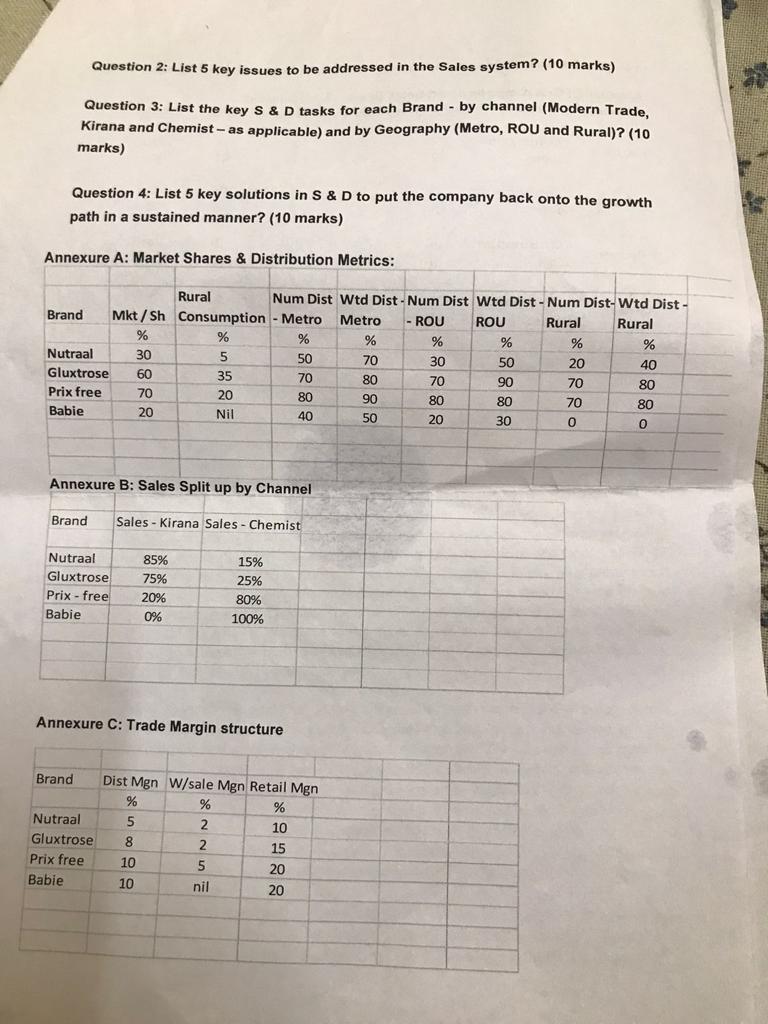
Note: The Wholesale margin was a discount that the distributor parted with when selling to them. especially in smaller towns and villages. The availability of Prix free and Gluxtrose was above average even in rural markets given the pull that these brands enjoyed. Sales and the S\& D System: The consumption and sales of Nutraal was very steady and had little fluctuations. On the other hand Gluxtrose was skewed towards the summer, although it was also consumed at other times. Prix free was severely seasonal and depended on the incidence of prickly heat (which was a function of hot and humid weather conditions). Babie was also steady but was fast losing ground to its competitors. The consumption and Sales percentages across quarters is given in Annexure D. Due to the seasonality and wide distribution needed for Gluxtrose and Prix free the company used both the direct and indirect channels. This led to the practice of "loading the trade" in the January to April period to ensure abundance of availability in the summer months. These 2 brands also had a fairly large rural consumption where the trade needed at least 2 months to distribute into the interiors through the wholesale channel. The reporting year for Organica Foods India to its corporate was May to April, which led to the complexity of "preponing" the summer months sale into the previous year - a process prone to possible manipulation by overloading the trade to show a healthy sale in any given year. This in turn sometimes resulted in poor sales in the next, if the "summer season" (which was the first quarter of the new financial year) was not as good as forecasted. This system also led to stocks being stuck with the trade if the forecast had not been as accurate, causing disgruntlement and sometimes even "sales reversals". Looking at the Sales system, the new sales director (NSD) found that there was a geographical set up and a team who were adept at pushing sales. In fact, the data showed that 80% of company sales happened in the last 3 days of the month and that too mostly in the last 3 hours of the last day. In addition there was a system of giving distributor discounts in this period to achieve the sales numbers for the month (and in April, for the year). In this manner, the bulk of the time spent by the sales team was to drive "Primary Sales" (company sales) to distributors, who were also habituated in waiting till the end of the month and negotiating for this discount to lift extra stocks. These discounts were often verbally agreed with distributors leading to confusion and thereby differences in opinion and pending distributor claims. There was also a practice of over selling at the end of a quarter (to meet targets) and reversing this sale at the beginning of the next quarter (to pacify distributors). In the market, bulk of the stocks was sold to wholesalers, especially at the end of the month. This also led to rampant 'price cutting' in the market. Distributor inventories were averaging to 35 days and their credit in the market was another 20 days of sale. They in turn enjoyed a Purchase credit from the company of 5 days. Due to price cutting their blended margins were averaging at 3.20%. The sales team was measured on only 1 parameter - sales. This also led to the sales personnel pushing sales at any cost. The teams had quite a lot of gaps as sales personnel were fired regularly when they did not achieve their sales targets. At the time of joining, the NSD found that there were only 2 regional sales managers out of the 4 positions, both of whom were old timers. Similarly there were 25% of ASM positions vacant and the company filled in these vacancies both by promoting from within and lateral recruits. "Nothing is impossible" said the NSD, "if there is a plan and there is alignment in the team". "It will take time but it can be turned around if we all stay focused", he told his Sales team. Question 1: List 5 key issues to be addressed in the Distribution system? (10 marks) Question 2: List 5 key issues to be addressed in the Sales system? (10 marks) Question 3: List the key S \& D tasks for each Brand - by channel (Modern Trade, Kirana and Chemist - as applicable) and by Geography (Metro, ROU and Rural)? (10 marks) Question 4: List 5 key solutions in S \& D to put the company back onto the growth path in a sustained manner? (10 marks) Annexure A: Market Shares \& Distribution Metrics: Annexure B: Sales Split un bv Channol Annexure C: Trade Margin structure Sales and Distribution Management PGP 2021-23: Term-4 Max Marks - 40 Time: 120 minutes All questions are compulsory: Please read the case and use the given annexures to answer the questions Organica Foods India needed to resolve some complex sales and distribution issues in 2003. Sales were dropping, distributors were disgruntled and the sales team had low morale. A new Sales Director (NSD) was hired in October 2003 and was given the responsibility of setting things in order. Organica Foods India: Organica Foods India was born in 1997 when Organica Foods International bought out the Consumer products division from Nutri Health Care Ltd. Its main brands were Nutraal (a milk based health drink competing with Horlicks), Gluxtrose (a glucose based refresher powder and a market leader), Prix free (a prickly heat powder, market leader and a product distributed through chemists) and Babie (a baby food competitor to Cerelac). The company had steadily grown from 1997 but the growth started to taper off from 2002. The main markets for Nutraal were in the East and South, being traditionally milk deficient parts of the country where the category was well developed-in the other parts of the country, the category was relatively small ( 30% to total) and markets more underdeveloped and limited to cities and bigger towns. Gluxtrose also had its strongholds in the East and South, although it also did well and was growing in the other parts of the country. Prix free was pretty much present all over the country (being the market leader) and Babie was declining year on year everywhere and giving way to Cerelac. The other 3 brands were growing but erratically. The market shares of the Brands are given in Annexure A; so also their All India Distribution metrics split up by Metros, Rest of Urban (ROU) and Rural. Nutraal contributed 45% to Sales, Gluxtrose 30%, Prix free 20% and Babie 5%. Distribution: The company used the classical FMCG distribution system with some 700 distributors across the country. These distributors used a combination of Direct and Indirect distribution and sold to both wholesalers and retailers through distributor salesmen. The company used both the Kirana and Chemist channel since both Prix free and Babie were pharma products and needed to use the chemist channel - however in smaller towns and villages the Kirana channel also stocked and sold Prix free, since it was a market leader. The company also used the chemist channel for its other products since it had a history of dealing with the chemist channel. The channel split up of sales is given in Annexure B. The Trade margins also reflected this reality, since the Chemist channel had pre negotiated margins with all Pharmaceutical companies, as given in Annexure C. Distribution was good in the chemist channel for all its brands. In the bigger cities and towns distribution was middling, more due to the Brand pull than direct distribution efforts which were patchy. Distribution of Prix free and Gluxtrose However there was a lot more scope for Nutraal
Step by Step Solution
There are 3 Steps involved in it

Get step-by-step solutions from verified subject matter experts