







Question: Now that we've identified the issue and determined the stakeholders, let's start looking at the problem through the first ethical perspective, the Responsibilities Lens.
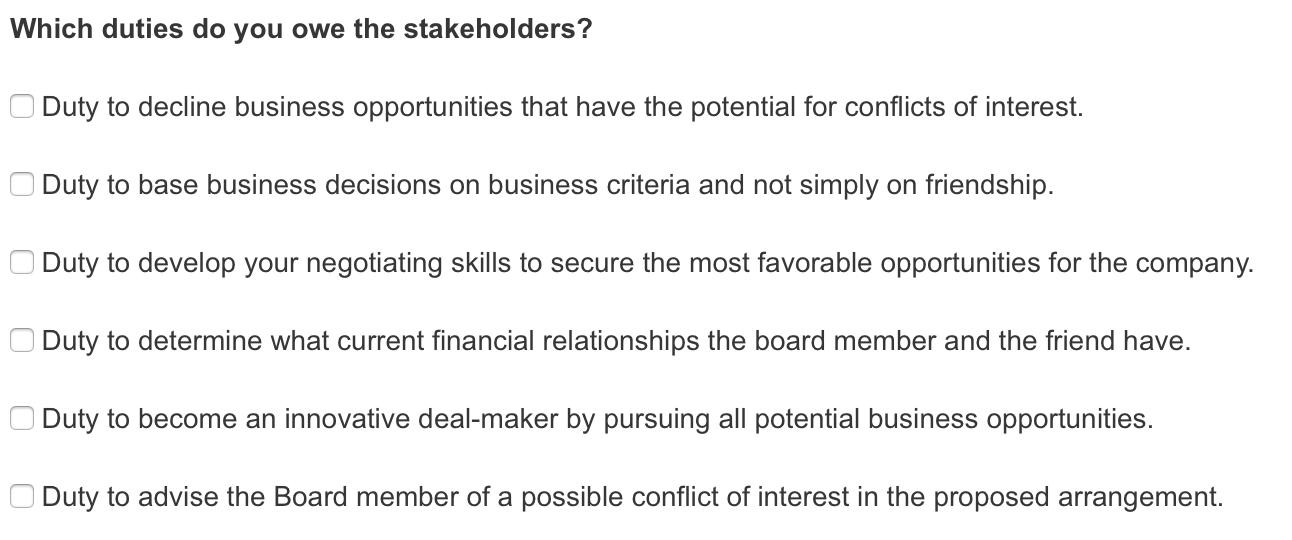
Now that we've identified the issue and determined the stakeholders, let's start looking at the problem through the first ethical perspective, the Responsibilities Lens. People who use the Responsibilities Lens to solve their ethical puzzles use their reason to set them in the right direction. The most important question is: what are my duties-my obligations-in this situation? Since the time we were children, people have been telling us what "good people" do. Part of the task of becoming an ethical adult is to carefully consider what responsibilities we're willing to take on for ourselves. We also set expectations for others as we decide what personal rights we expect the community to support. In answering this question, determining the reason for taking an action is critical. People who like to use the Responsibilities Lens to analyze ethical dilemmas believe that the motive you have for acting is the most important consideration, even more important than the consequences. As we become more ethically aware, we think about why a particular behavior would count as treating someone else ethically. From that reflection, we adopt a list of principles that become the basis for our personal code of ethics. After we define what principles are important to us, the actions we need to take to fulfill our duties become clearer. When our principles are in conflict, we choose options that either will allow us to live into both sets of principles or we choose options that favor the most important principle. One of the reasons that we're able to live in a community is that many people agree on which principles are important. Because we want people who are important to us to see us as ethical, conversations with others shape our own definitions of what principles are important as well as what behaviors are acceptable as we fulfill our duties. Below is a list of duties that you or someone else might say that you should fulfill. Four of the six statements are actually your responsibility according to the principles that are part of common codes of ethics. Considering your role in this situation, check the four duties that you believe are the most important for you to consider in this situation. Which duties do you owe the stakeholders? Duty to decline business opportunities that have the potential for conflicts of interest. Duty to base business decisions on business criteria and not simply on friendship. Duty to develop your negotiating skills to secure the most favorable opportunities for the company. O Duty to determine what current financial relationships the board member and the friend have. Duty to become an innovative deal-maker by pursuing all potential business opportunities. O Duty to advise the Board member of a possible conflict of interest in the proposed arrangement.
Step by Step Solution
3.44 Rating (147 Votes )
There are 3 Steps involved in it
Duties which are responsibility 1Duty to develop negotiating skills to secure ... View full answer

Get step-by-step solutions from verified subject matter experts
 Study Help